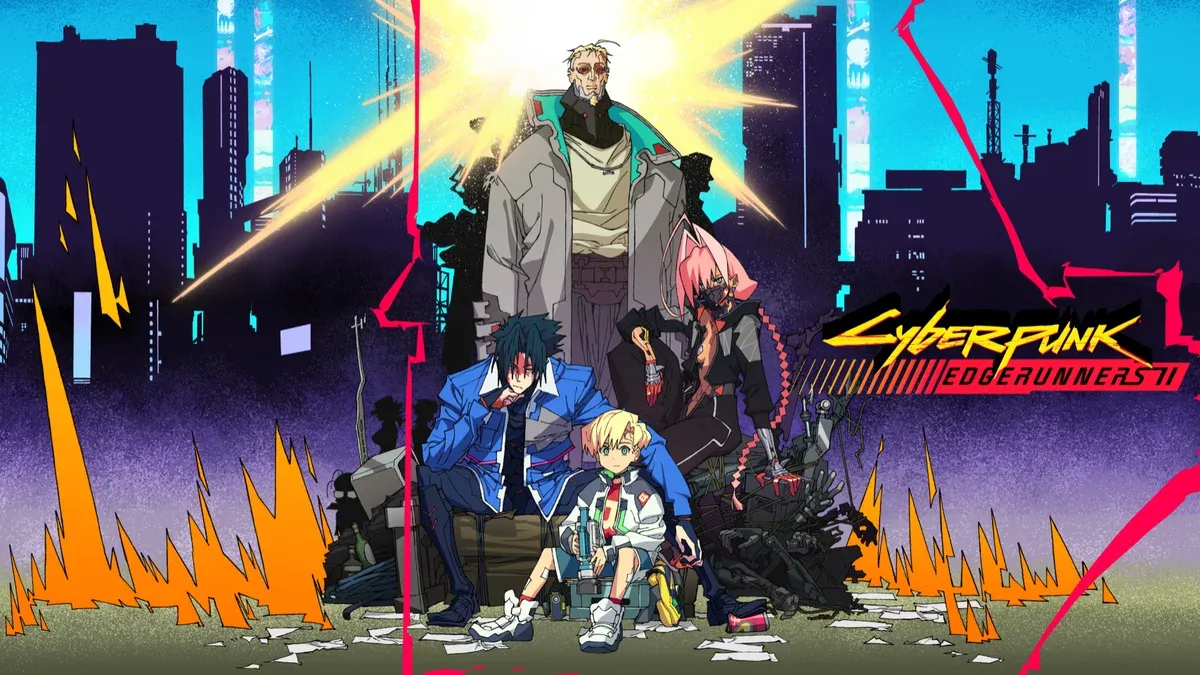


Cyberpunk: Edgerunners Season 2 drops on Netflix on October 20, and new series director Kai Ikarashi has opened up about exactly what makes this installment look and feel nothing like its predecessor. The short version: light is no longer hope, chrome is no longer power, and the music is driving the whole thing forward.
The series is set in the same Night City that fans of Cyberpunk 2077 know well, and the original Cyberpunk: Edgerunners helped reintroduce that world to millions of viewers when it launched in 2022. That first season followed David Martinez, a teenager who installs a military-grade Sandevistan implant and spirals through cyberpsychosis as he replaces more of his body with cybernetics. It was a story about a nobody rising fast and burning out faster, with Studio Trigger's signature animation style making every frame feel like it was about to explode.

Use code TRYHARD33 at checkout to redeem this offer before code expires again.
Get 33% Off GAMES+ Subscription
What Ikarashi is doing with light that season 1 never tried
Ikarashi isn't a newcomer to the series. He served as storyboard artist and animation director on season 1's episode "Girl on Fire," which remains one of the most visually distinctive episodes of the entire run. His approach there used searing, bleached brightness to visualize Maine's descent into cyberpsychosis, isolating the aging edgerunner in a featureless white void before his arc ended in fire.
That philosophy carries directly into his work on season 2, but scaled across an entire series.
"Rather than using light as something that connects us to the outside world, I used it as something that blocks it off," Ikarashi has said. "I depicted light not as hope, but simply as a force."
Here's the thing: that reframing changes the entire emotional register of Night City. The neon and glare that looked electric and alive in season 1 becomes something oppressive. The city doesn't illuminate its residents. It bears down on them.
A legend with nothing left to lose
The new protagonist is Weak (voiced by Clancy Brown), a former cyberpunk legend who has lost all of his cybernetic enhancements. No chrome, no augmentations, no edge. In a city where cyberware is practically oxygen, that makes him physically vulnerable in ways that David and Maine never were.
But Ikarashi isn't primarily interested in what that vulnerability means for fight scenes. His focus is what Weak's unaugmented body reveals about his internal state.
"His physical vulnerability more directly reflects his emotional shifts than his actions," Ikarashi explains. "What I personally want audiences to focus on most is how his spirit confronts what can never be recovered, no matter how hard he struggles."
That's a meaningfully different story engine from season 1. David's arc was about accumulation and loss. Weak's starts from a place of loss already, which inverts the classic edgerunner trajectory entirely.
The score that shapes the animation, not the other way around
Season 2 also brings a new composer: Tsuneo Imahori, whose previous credits include Trigun and Hajime no Ippo. For Ikarashi, the music wasn't something added after the animation was finished. It actively shaped how scenes were built.
"Mr. Imahori's work drove the imagery of this project forward through the raw power of the music itself," Ikarashi says. He's pushed back against the traditional framing of anime scores as "background music," arguing that treating music as supplementary undermines what it can actually do.
That's a real departure from how most anime productions operate, and it likely explains why early footage from season 2 carries a different rhythm from season 1's kinetic, almost frantic pacing.
What most players miss when thinking about the original series is how much "I Really Want to Stay at Your House" by Rosa Walton did the emotional heavy lifting. That track's recurrence through David and Lucy's story gave season 1 a musical spine. Imahori's work sounds like it's being built with the same intentionality, just from a completely different sonic direction.
The speed-and-distance theme connecting both seasons
Ikarashi has hinted at a thematic thread that runs through both seasons: the contrast between one's own speed and the speed of the city around you. David became impossibly fast through the Sandevistan, yet no amount of velocity let him escape Night City or close the emotional distance between himself and Lucy. Weak, stripped of chrome, faces the inverse problem.
The season also features D (voiced by Nazeeh Tarsha), a netrunner whose entire nomad clan was wiped out, now pursuing revenge in Night City. Ikarashi has flagged D's relationship with two specific characters as the season's most ambitious storytelling move, though he's keeping the specifics locked until release.
For fans who have spent time with the world through Cyberpunk 2077's guide collection and lore, the anthology format means season 2 is genuinely uncharted territory. New characters, new emotional architecture, same brutal city.
Edgerunners Season 2 arrives October 20. If Ikarashi's approach lands the way season 1's best episodes did, Night City is about to feel heavier than ever. Check out our gaming guides for more on the broader Cyberpunk universe while you wait.