

Players pushing through mid-to-late progression in Subnautica 2 keep running into the same wall: Enameled Glass. It shows up as a requirement for some of the game's more advanced tools, and if you haven't been collecting the right materials, it stops your crafting cold.
The material itself isn't found in the world as a pickup. You craft it, which is where a lot of players get tripped up.
What Enameled Glass actually is
Enameled Glass is an intermediate crafting material, meaning it exists purely to be used in higher-tier recipes rather than as a standalone item. The most notable example is the Feedback Resonator, the upgraded version of the Sonic Resonator. That tool requires 2 Enameled Glass as part of its crafting recipe, alongside conduit crystals, strontium ingots, and the base Sonic Resonator itself.
The Feedback Resonator is a significant upgrade because the standard Sonic Resonator only works at close range, making it useless against bloom cankers that seal themselves off when you approach. Getting the Feedback Resonator unlocked and built is a real progression milestone, and Enameled Glass is the ingredient that most players are missing when they try to put it together.
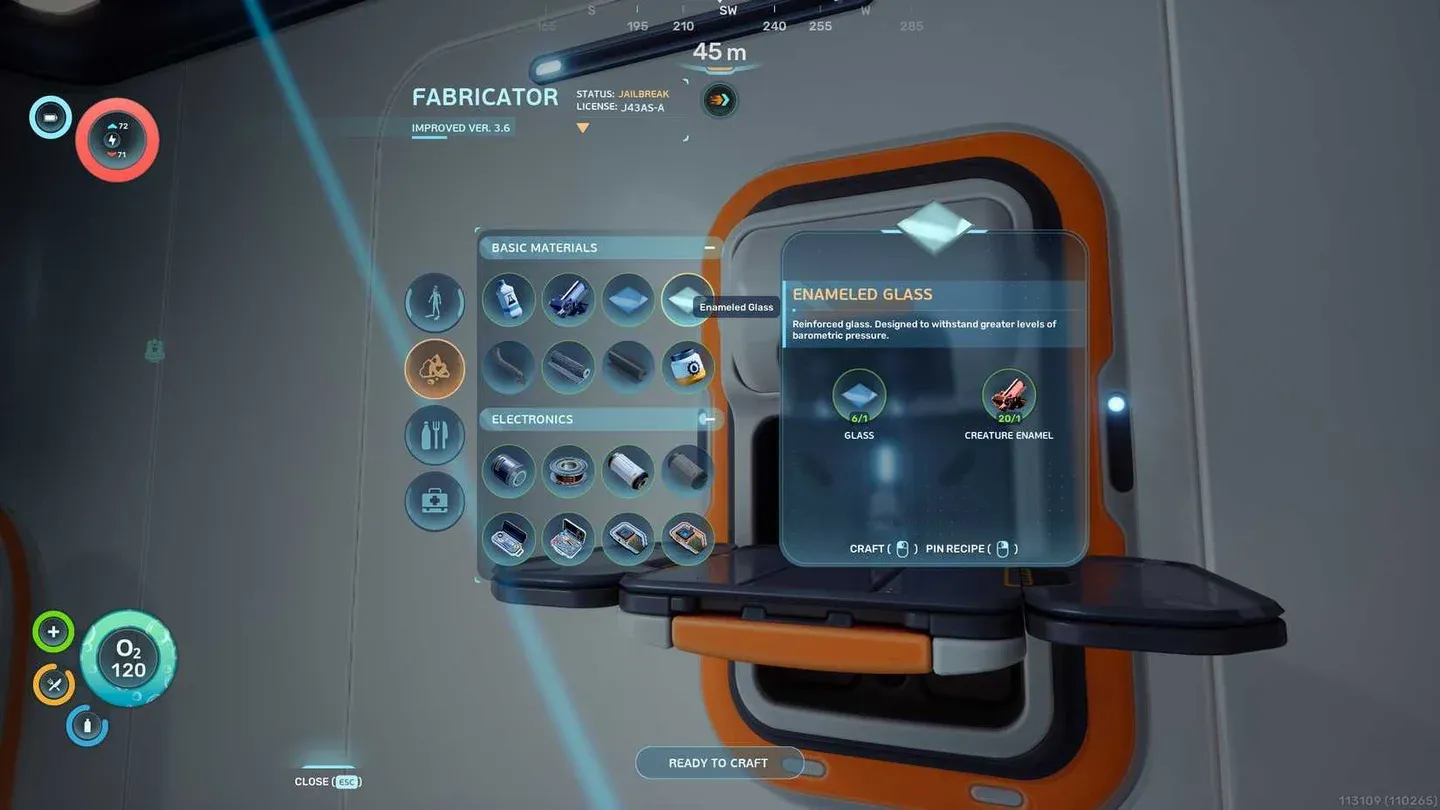
Enameled Glass fabricator recipe
The two ingredients you need
Crafting Enameled Glass requires two components: Glass and Creature Enamel.
- Glass is made from Quartz, which you can find in decent quantities around the Coral Domes near your Lifepod early in the game. If you need a reliable farming route, the Subnautica 2 guide on finding Quartz covers the best early and late-game locations.
- Creature Enamel is the harder ask. It drops from specific creatures and can also be mined from Enamel Deposits near the Alien Ruins area. It's not something you'll stumble into naturally during early exploration.
The Creature Enamel requirement is what makes Enameled Glass feel like a gating mechanic. You can have stacks of Quartz and Glass sitting in your inventory and still be completely blocked if you haven't sourced any enamel yet.
Why this material shows up when it does
Enameled Glass sits at the intersection of two progression tracks: basic resource gathering and creature interaction. Unknown Worlds designed it as a natural checkpoint, one that asks you to engage with the ocean's fauna before you can access more powerful tools. The Feedback Resonator is specifically built for dealing with bloom cankers, so requiring a creature-derived material to craft it has a certain logic to it.
The problem is that nothing in the early game telegraphs this dependency clearly. Players often unlock the Feedback Resonator blueprint, see the Enameled Glass requirement, and then spend time searching for it as a world drop before realizing it needs to be crafted.
Getting the full picture before you go farming
The Subnautica 2 guide on finding Creature Enamel breaks down the exact deposit locations and how to mine them safely, which is worth reading before you head out. The Alien Ruins area where most deposits cluster is also home to some genuinely dangerous creatures, and going in without preparation is a quick way to lose progress.
Here's the thing: Enameled Glass is one of those materials that becomes much less of a problem once you understand the supply chain behind it. Quartz is plentiful, Glass is easy to produce, and Creature Enamel has consistent farming spots once you know where to look. The full Subnautica 2 guide collection has everything you need to get the whole crafting chain sorted without unnecessary detours into the wrong biomes.