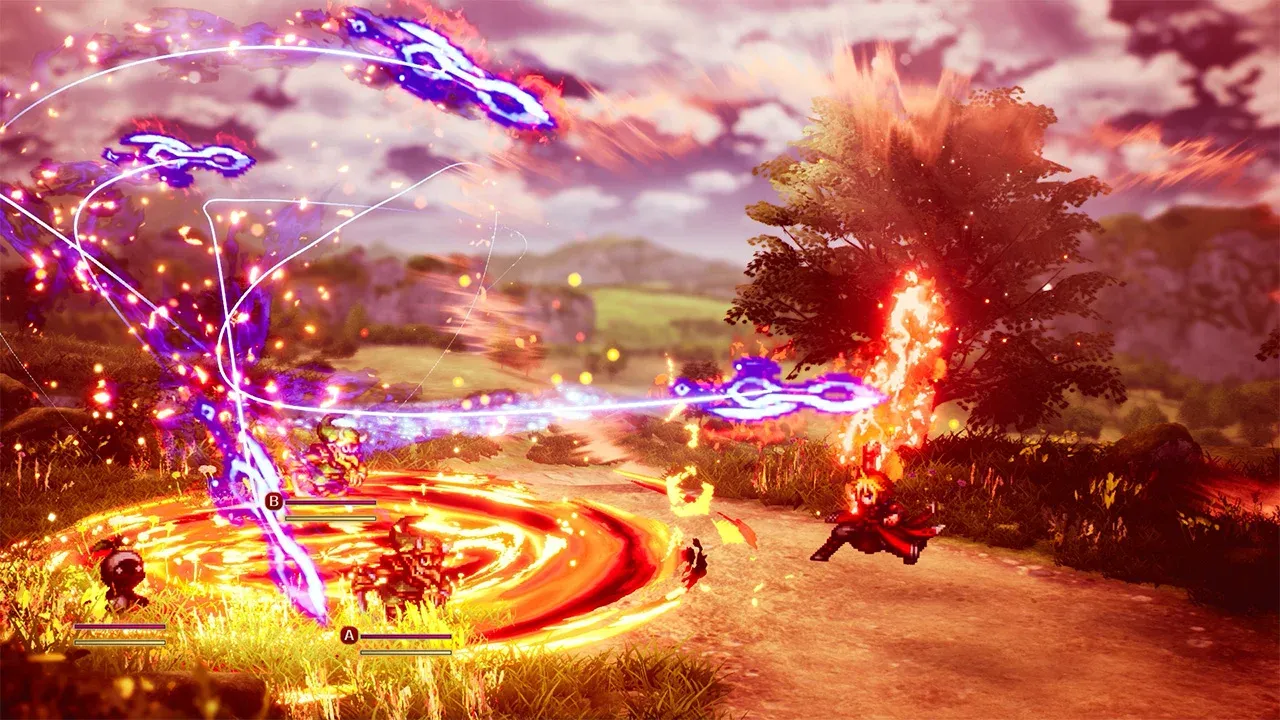


Final Fantasy Resonance launches on 22nd October, and the reason it plays so well comes down to a very specific design question the team at Square Enix asked themselves early in development: what happens if you take the job system from Final Fantasy 5 and the distinctive character personalities from Final Fantasy 6 and smash them together?
The answer, as anyone who has spent time with the free demo can tell you, is that it feels great. For fans of JRPG games, this is shaping up to be one of the more thoughtful takes on classic turn-based combat in a long time.

Use code TRYHARD33 at checkout to redeem this offer before code expires again.
Get 33% Off GAMES+ Subscription
The design experiment behind the combat
Resonance director Hiroto Furuya and producer Keisuke Nakashima have been open about the philosophical starting point for the game's combat. The team wanted to honour Final Fantasy's history while building something that plays well by modern standards. That meant looking at the last two pixel-era mainline entries: 1992's Final Fantasy 5 and 1994's Final Fantasy 6.
The core question Nakashima posed internally was direct: what if each character had the customisable flexibility of FF5's job system, but also carried the distinct, locked-in personality and skill set that made FF6's roster so memorable? That combination had never been attempted in the series before, and it required real design work to make it land.
"This type of experiment hasn't been done in the past, so it required a bit of research and innovation," Nakashima explained. The result is a system where characters feel genuinely different from one another, but players still have meaningful customisation options across the whole party.
How the stagger system fits in
The team didn't stop at the 90s classics. They also examined the stagger mechanic that has defined modern FF combat in the FF7 Remake series and Final Fantasy 16. That system, where you deal "stamina" damage to interrupt enemy turns and create burst windows, was studied and folded into Resonance's turn-based framework.
The result sits in an interesting middle ground. You get the strategic depth of a classic turn-based system with the tactical pressure of a modern stagger loop. It's a combination that rewards players who think a few turns ahead without punishing those who are just getting to grips with the mechanics.
Visions almost didn't make it into the game
Here's the thing: the "Visions" system, where classic Final Fantasy characters join your party with their own unique abilities and CG sequences, nearly got cut entirely. Furuya confirmed the team explored shipping Resonance without any series legacy characters at all.
"There was a time in development where we explored leaving the Final Fantasy series characters out," Furuya said. The concern was that blending the worldview of Resonance's original cast with iconic figures like Cloud and his Cross-Slash would be difficult to pull off without one side feeling like a gimmick.
They ultimately kept the Visions, and it was the right call. The system adds genuine tactical variation to the party building, and the CG sequences land with the kind of spectacle that makes the series feel like an event.
From a mobile game to a full pixel RPG
Resonance's origins matter here. The game grew out of the now-shuttered mobile title Final Fantasy Brave Exvius, and that lineage is visible in how the Visions system works (it was a core mechanic of the mobile game). What Lancarse and Square Enix have done is take that foundation and rebuild it as a proper HD-2D pixel RPG, the kind of thing that sits comfortably next to Octopath Traveler in terms of visual craft.
Furuya put the team's approach plainly: "We have the sensibility of knowing Final Fantasy's history, as well as the general feeling of playing more modern games." That dual awareness shows in the final product. Resonance doesn't feel like a nostalgic exercise or a mobile port dressed up in new art. It feels like a game that genuinely understands why people loved FF5 and FF6, and builds on that understanding.
For players jumping into the broader FF ecosystem right now, the Final Fantasy VII Rebirth beginner's guide and weapon abilities and character build breakdowns are worth bookmarking as companion reading while you wait for Resonance to drop on PC, PS5, Switch 2, and Xbox Series X/S on 22nd October.