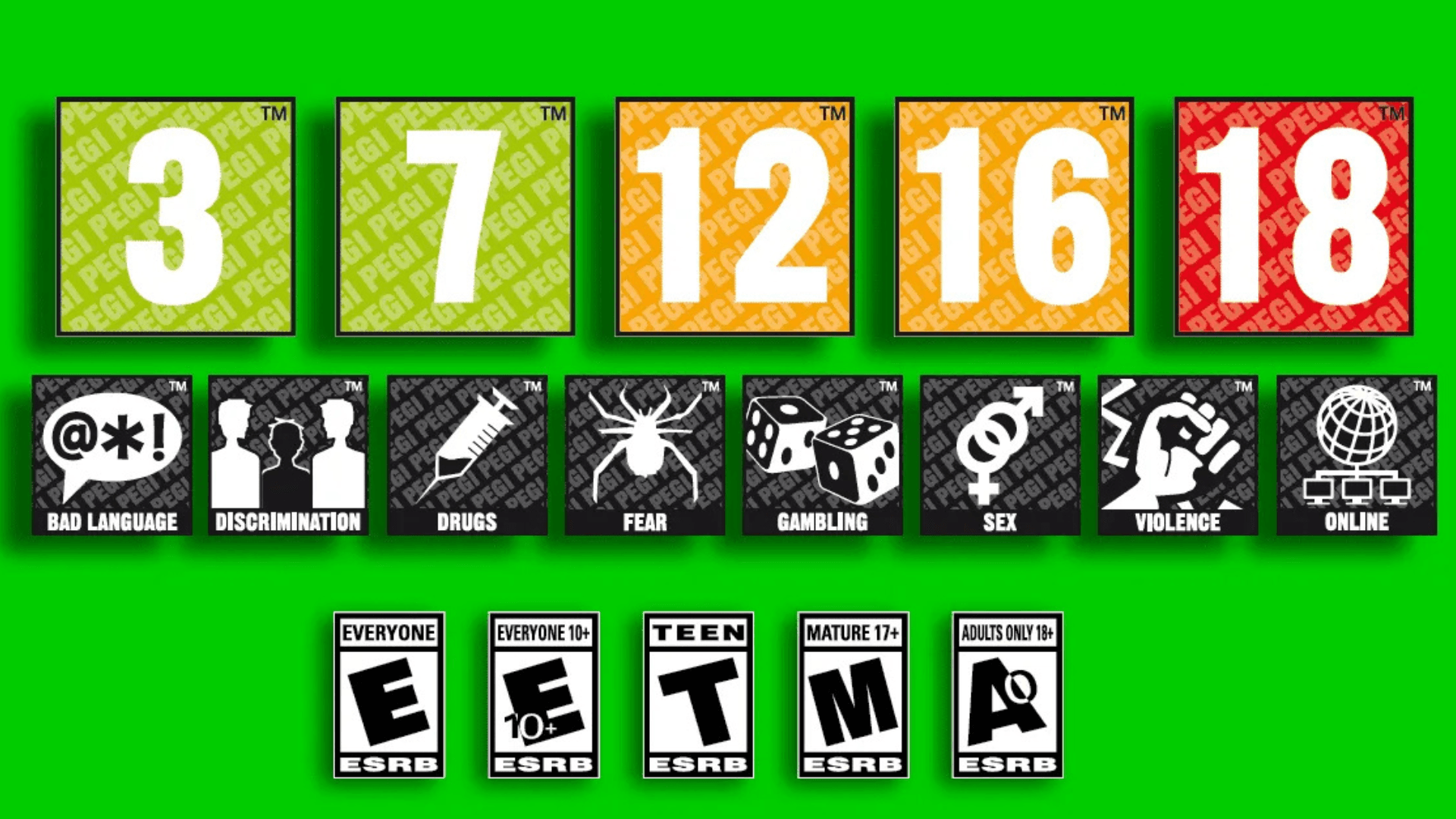

Video game age ratings play a key role in guiding players and parents toward suitable content. A recent analysis of 1,895 games examined how different types of content influence age classification. The findings reveal surprising patterns in how violence, language, and sexual material contribute to the rating a game receives.

Use code TRYHARD33 at checkout to redeem this offer before code expires again.
Get 33% Off GAMES+ Subscription
Violence and Its Impact on Ratings
Stylized or less realistic violence rarely pushes a game into the M (Mature) category. Most titles featuring cartoonish or exaggerated combat land in the T (Teen) bracket instead. The data shows a clear trend: the more stylized the violence, the less likely it triggers a higher age rating. Rating boards weigh presentation style as heavily as the violent acts themselves when determining what's appropriate for younger players.
Language Has a Stronger Influence Than Expected
Explicit language carries more weight than many expect. Only 2% of games with strong profanity received a T rating, with the overwhelming majority bumped to M. This pattern challenges the assumption that violence drives higher ratings more than anything else. Language turns out to be a decisive factor that rating boards take seriously when classifying content.
Sexual Content and the Adults-Only Category
Sexual content significantly affects age classification, though the impact depends on how explicit it gets. Out of the sample, 27 games landed in the AO (Adults Only) category. These typically feature explicit pornography, real-money gambling mechanics, or content that platforms refuse to distribute. The recent Horses controversy, where Epic Games Store labeled it AO despite the developer's claim of an M rating, shows how complicated these classifications can become in practice.
Implications for Developers and Players
The research exposes the nuanced factors behind video game ratings. Developers aiming for broader audiences need to consider language and sexual content just as carefully as violence. For players and parents, these patterns offer clearer guidance when picking games for different age groups.
Source: Skala
Frequently Asked Questions (FAQs)
What factors determine a video game's age rating?
Age ratings depend on violence, language, sexual content, and other mature themes. Rating boards evaluate both what's in the game and how it's presented.
Why does language affect age ratings more than violence?
Data reveals that explicit language consistently pushes games into the M category, while stylized violence usually keeps them at T. Boards treat profanity as a major factor when deciding what's suitable for teens.
What types of games receive an Adults-Only (AO) rating?
AO ratings are rare and typically apply to games with explicit pornography, real-money gambling, or content that standard distribution channels won't carry.
How can players use age ratings to make informed choices?
Understanding what T (Teen), M (Mature), and AO (Adults Only) actually mean helps players and parents choose games that match specific age groups.
Does sexual content always result in a high age rating?
Not always. The explicitness and context matter most. Highly explicit material can trigger an AO rating, while milder sexual themes typically stay at M.