The gaming industry faced a turbulent 2024, with 14,600 professionals losing their jobs across multiple companies. This marks a sharp 39% jump from the 10,500 layoffs recorded in 2023. Looking further back, 2022 saw 8,500 job cuts, revealing a concerning three-year pattern of accelerating workforce reductions.
Largest Layoff Events of 2024
Major industry players drove the highest numbers. Microsoft cut 2,800 positions from its gaming division. Unity eliminated 1,800 roles, and Sony reduced its headcount by 1,339. Even the biggest names in gaming couldn't escape the wave of restructuring and cost-cutting measures that defined the year.
The heaviest period of job losses hit early in 2024. January alone brought 33 separate layoff announcements, followed by 26 more in February. After that initial spike, the pace eased—no month for the rest of the year recorded more than 18 announcements.
Generic Image of Game Controller
Context and Trends
These figures come from Game Industry Layoffs, a platform that compiles publicly reported job cuts in the gaming sector. When companies don't disclose exact numbers, the tracker provides estimates to fill in the gaps.
The 2024 surge continues a troubling multi-year trajectory. Economic headwinds, evolving market conditions, and internal restructuring have all contributed to the rising toll on gaming jobs.
The scale of these cuts carries real consequences. Fewer developers means slower project timelines, less experimentation, and potential stagnation in an industry that thrives on innovation. The long-term effects on growth and creativity remain to be seen.
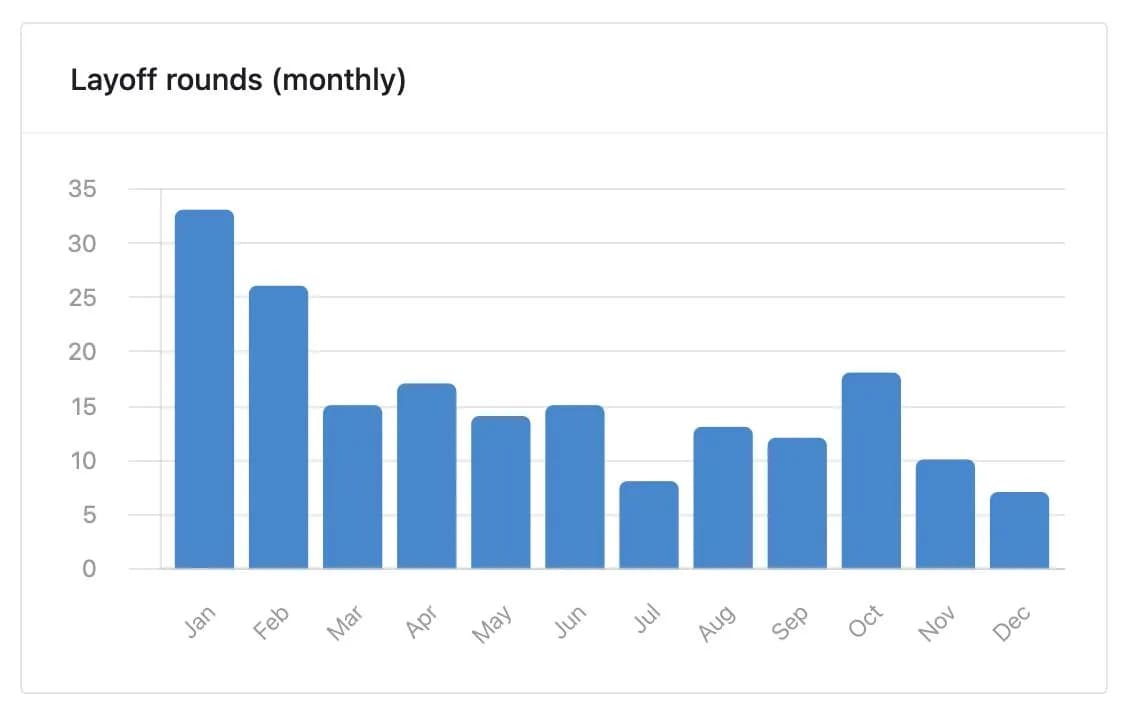
Layoff Rounds (Monthly)
Relevance to Crypto Gaming
The layoff wave matters for the web3 gaming sector. As traditional studios shrink under financial strain, blockchain-based gaming—built on decentralized economies and player-owned assets—could absorb displaced talent and drive fresh ideas.
But the same pressures that hammered traditional gaming apply to web3 projects. Sustainable business models, responsible scaling, and meeting player expectations aren't optional. The blockchain gaming space needs the same strategic discipline that traditional studios are now learning the hard way. Adaptability and smart resource management will decide which projects survive and which become another cautionary tale.