
R2, R2, L1, R2, Left, Down, Right, Up, Left, Down, Right, Up. If your fingers just twitched reading that, you already know exactly what this is about.
Grand Theft Auto 6 is coming, and with every new trailer drop and gameplay reveal, a very specific question keeps surfacing in the community: will Rockstar bring back proper cheat codes? It sounds like a small ask. It isn't.
What cheat codes actually were (and weren't)
The moral panic crowd had it backwards. GTA cheat codes in the PS2 era weren't about skipping the game or cheating in any meaningful competitive sense. They were a toolkit for turning a living open world into a personal physics lab. Spawn a tank. Set every pedestrian against each other. Unlock the full weapons arsenal before the first mission. Each code was essentially a variable in an ongoing experiment.
Here's the thing: the players who spent hours running five-star wanted level survival runs with a full loadout often understood Rockstar's world-building more deeply than those who followed the story beat by beat. They knew how NPC drivers reacted to explosions. They understood traffic flow patterns. They had mapped the exact escalation curve of police response. That knowledge came from repetition and experimentation, not cutscenes.
The all-weapons code for GTA 3 (and its equivalents across Vice City and San Andreas) became so muscle-memorized that players could input them without looking at the controller. That's not shallow engagement. That's the kind of retention you get when a system is genuinely worth exploring.

Why Rockstar's worlds reward breaking
The reason cheat codes worked so well in GTA specifically comes down to what makes Rockstar's open worlds different from almost everyone else's. Vice City doesn't feel like a theme park with scripted ride sequences. It feels like an ant farm. Drivers have opinions. Pedestrians have reactions. The city operates on systems that keep running whether you're paying attention or not.
When you fire a rocket into a traffic jam you've spent ten minutes engineering, the result is never exactly what you expect. That unpredictability is the point. Cheat codes removed the grind between experiments and let players run more of them, faster. The sandbox became genuinely scientific.
Compare that to something like The Legend of Zelda: Tears of the Kingdom, which has one of the most impressive physics and crafting systems in recent memory. The tools to truly stress-test it are locked behind hours of resource collection. Players who want to push the Zonai building system to its absolute limits have to earn that access slowly. There's no equivalent of spawning a full parts inventory and just building whatever comes to mind. The experimentation ceiling is real.
The culture shift that killed built-in cheats
Something changed in the late 2000s and early 2010s. Achievements and trophies arrived, and with them came an implicit social contract: cheating invalidates the run. Suddenly, using a built-in cheat code felt like it cost you something. The leaderboard pressure and completionist culture that followed made sandbox experimentation feel like a waste of time rather than the point.
Modern developers also ship games under enormous scrutiny. Every bug is a headline, every exploit goes viral. The instinct to lock things down and prevent players from breaking anything became standard practice. PC players can still pull up a console command in an Elder Scrolls game and spawn whatever they want, but that access is increasingly seen as a modder's tool rather than a core feature.
The result is that mainstream console players lost something. Not the ability to finish games, but the permission to treat them as playgrounds.

Five stars, full chaos, pure fun
What the GTA 6 reveal tells us about sandbox potential
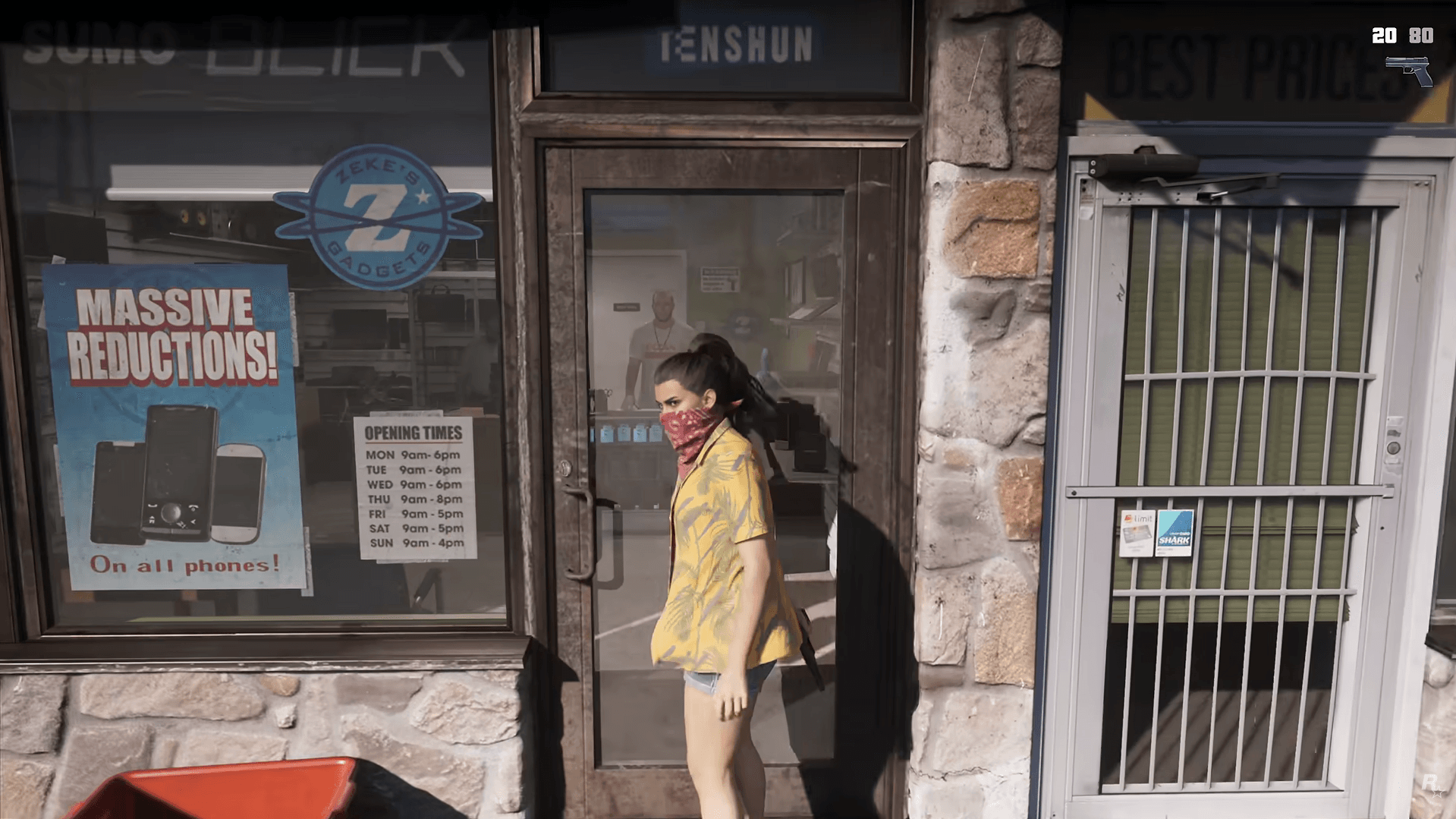
The 26-minute extended look at Grand Theft Auto 6 that Rockstar released recently showed a world that looks more reactive and alive than anything in the series so far. Jason shooting at a helicopter from the back of a moving car is a cool set piece. But what happens if you swap the gun for a rocket launcher? What does the game do with that? Those are the questions that matter most to the generation that grew up with cheat codes.
Rockstar has built a reputation on systemic depth, on worlds where the rules interact in ways that produce genuinely surprising outcomes. If GTA 6 continues that tradition, and every indication is that it does, then cheat codes aren't just a nostalgia request. They're the most direct way to let players actually study what Rockstar built.
The key here is that breaking a well-designed game teaches you more about it than playing it straight ever could. You'll want to know how the new wanted system escalates. You'll want to see how NPCs in Leonida handle full-scale chaos differently from Liberty City or San Andreas. A proper all-weapons code on day one would let players start running those tests immediately.
The case for Rockstar bringing them back
Cheat codes in GTA were never really about making the game easier. They were about making it wider. More variables. More chaos. More data. The players who memorized AEZAKMI and BAGUVIX in San Andreas weren't avoiding the game, they were extending it in directions the story mode couldn't reach.
GTA 6 is shaping up to be the most technically ambitious open world Rockstar has ever built. Letting players loose in it with a full toolkit, from day one, without grinding for access, would be a genuine gift to the community that has been waiting years for this release.
For everything you need to know before launch, including editions, pre-order bonuses, and exclusive content, the GTA 6 strategy guides collection has you covered going into release day.