The PC and console gaming market in 2025 has become increasingly difficult for independent developers. Developer Aaron San Filippo notes that many small studios have had to lay off staff in the past year, while revenue prospects for new releases have dropped. Data shows that the average Steam game priced above five dollars in 2020 earned around five thousand dollars in lifetime sales, compared to about seventeen thousand dollars for games released in 2015.
How Catalog Sales Sustain Supra Games
Bundles have lost much of their effectiveness as a sales strategy, while investment opportunities and platform deals have become both fewer and less valuable. This difficult landscape has made sustainability harder to achieve. While some studios do find success with new releases, others are relying more heavily on catalog sales of older titles to maintain cash flow. One example of this approach is Supra Games, a German-based studio known for the Supraland and Supraworld series.
How Catalog Sales Sustain Supra Games
The Growth of Supraland
Supraland entered Steam Early Access in March 2018, developed primarily by the studio's founder, David Münnich. The game blends adventure design inspired by Zelda, puzzle mechanics reminiscent of Portal, and non-linear exploration associated with Metroidvania titles. Its distinctive setting, where players control tiny toy figures navigating human-sized environments, helped it stand out.
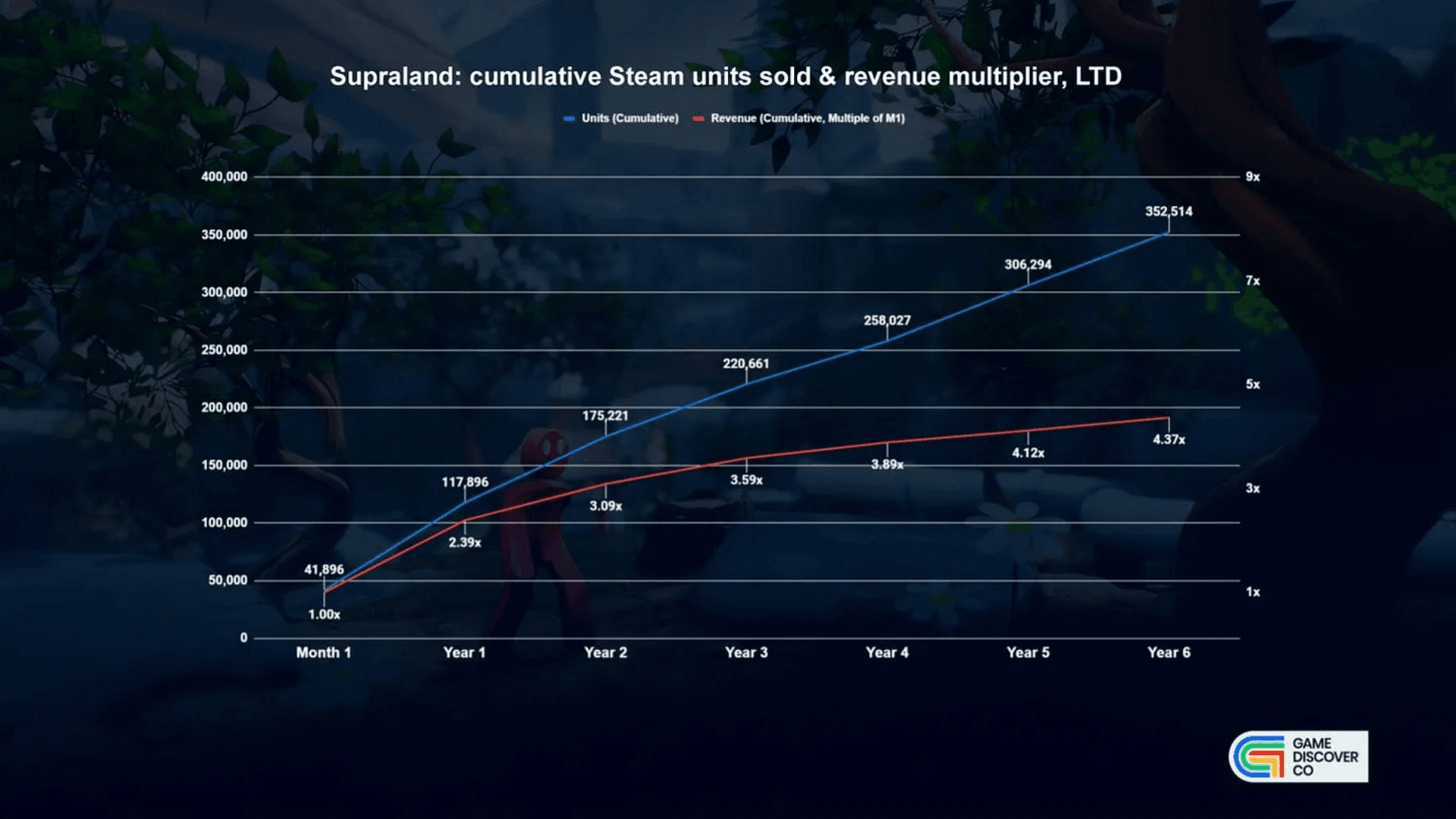
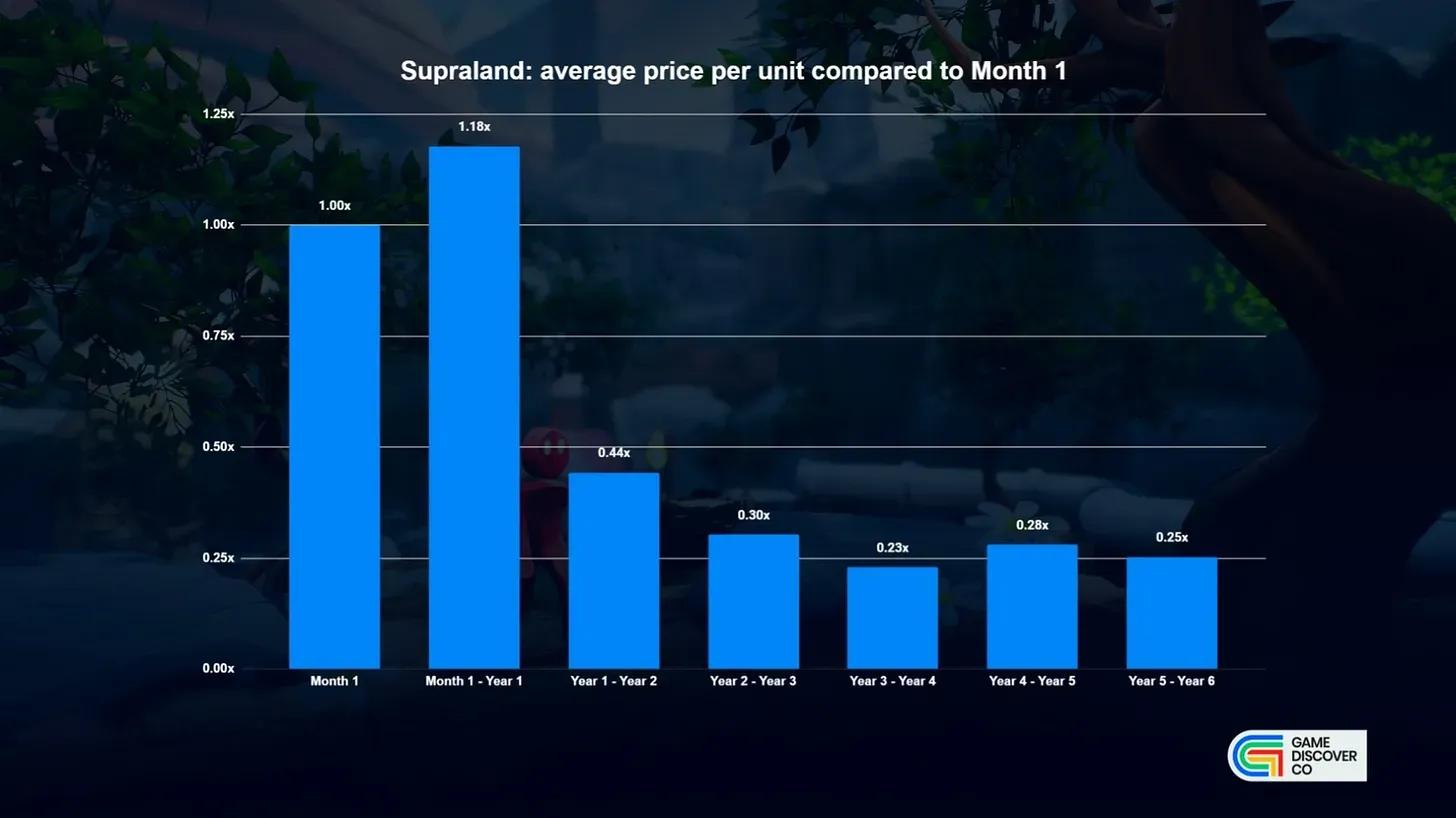
The game sold about forty-two thousand copies in its first month on Steam. Over six years, this number grew almost ninefold, with total sales surpassing 350,000 units. Much of this growth came from discount-driven catalog sales rather than new release momentum. While cumulative revenue increased more than fourfold compared to the launch period, average revenue per unit decreased as the game was frequently discounted to between five and eight dollars during sales events.
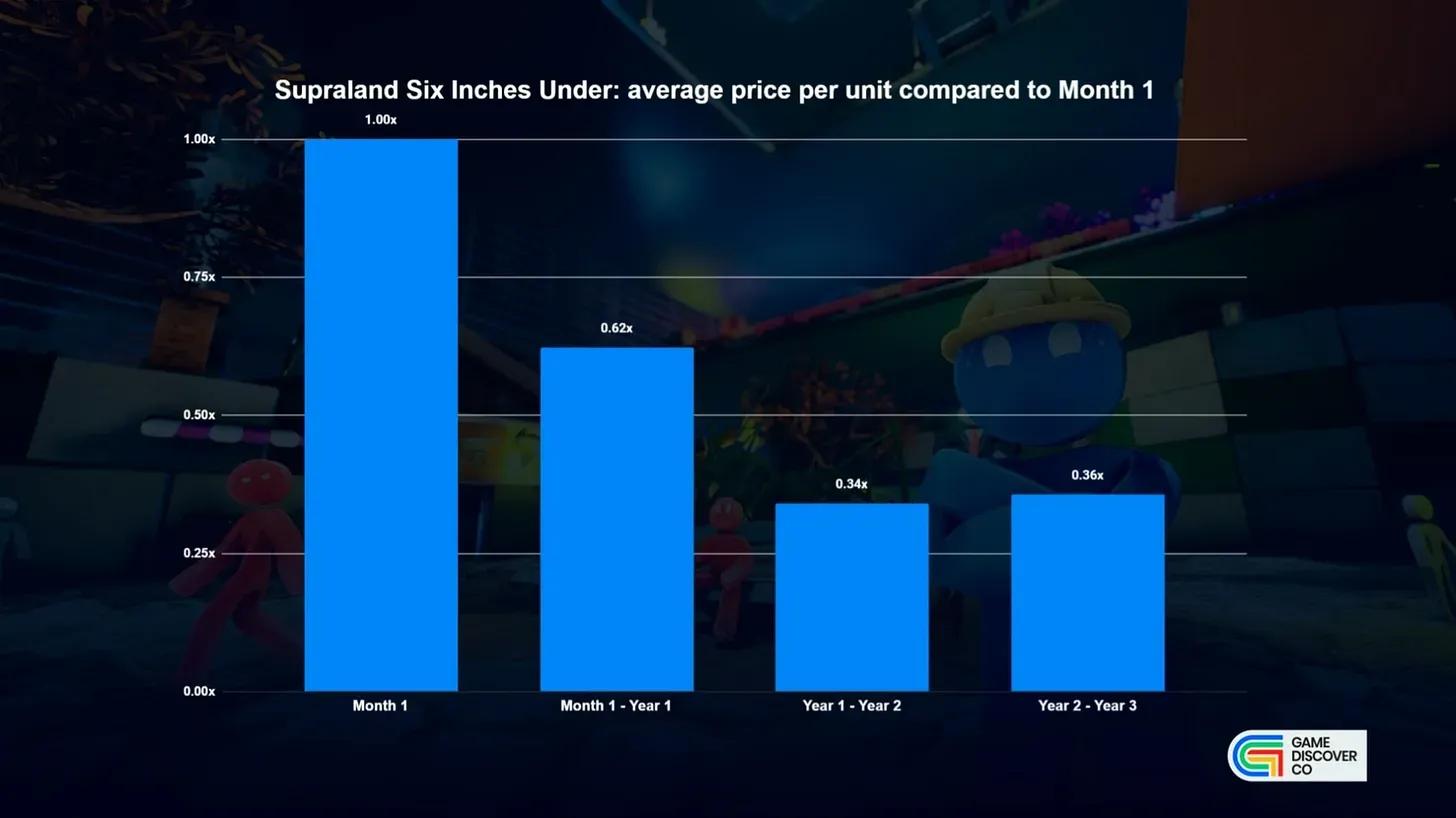
Supraland's pricing history reflects the balance between value and accessibility. Initially priced at fifteen dollars, the game later rose to twenty-five dollars before settling at a twenty-dollar base price. Despite this shift, the average per-unit revenue fell to about one-quarter to two-fifths of the launch price in later years. The title continues to sell around fifty thousand units annually, demonstrating the long-term viability of catalog-driven demand.
How Catalog Sales Sustain Supra Games
Expansions and Standalone Follow-Ups
Supra Games built on Supraland's success with additional content. In 2020, the studio released Supraland Crash, a paid downloadable expansion that has sold over 100,000 units, with about 59,000 of those bundled alongside the base game. The expansion continues to sell 15,000 to 20,000 units annually, showing the ongoing value of paid DLC in extending a game's lifecycle.
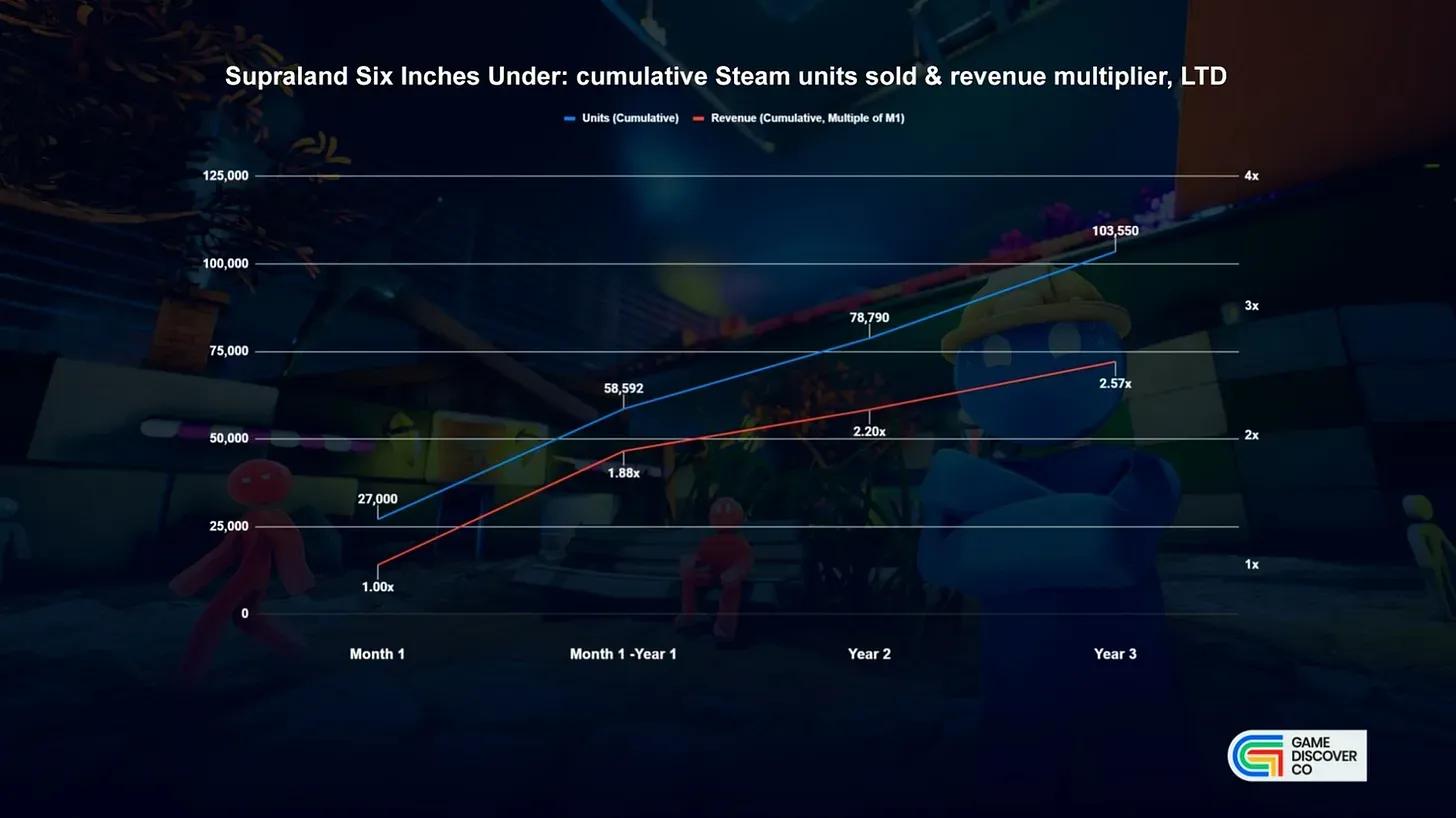
In 2022, the studio introduced Supraland: Six Inches Under. Initially conceived as a training project for new employees, it expanded into a full standalone release priced at twenty dollars. The game reached over 100,000 sales on Steam, though its revenue curve has been more frontloaded than the original Supraland. Additional income came from its inclusion in Xbox Game Pass. The game received strong player reception, reflected in its "Overwhelmingly Positive" Steam reviews.
How Catalog Sales Sustain Supra Games
The Launch of Supraworld
In August 2025, Supra Games released Supraworld in Early Access. Built on the latest Unreal Engine technology, it continues the studio's established formula of first-person exploration and puzzle-solving. At launch, the game received "Very Positive" reviews and reached a peak of 1,600 concurrent players. This figure, while modest by industry standards, was higher than the peak for the original Supraland, which topped out at 1,400 concurrent players despite selling significantly more copies over time.
While Supraworld's early performance may not represent a major breakout hit, its impact extends beyond launch sales. The new release has sparked renewed interest in the studio's earlier catalog. Both Supraland and Six Inches Under have seen an increase in demand, with the latter becoming the studio's best-selling game by units in September 2025, aided by promotional pricing on Steam.
How Catalog Sales Sustain Supra Games
Catalog as a Business Model
Supra Games' trajectory illustrates how catalog sales can provide stability in a challenging market. Each new release generates direct revenue and encourages players to revisit earlier titles, often at discounted prices. Some players may purchase only one game, while others may choose to collect the full series over time.
The studio, which now employs six people with additional freelance support, has developed a sustainable model by combining initial sales, ongoing DLC performance, and long-tail catalog revenue. This approach reduces reliance on major external funding and platform exclusivity deals, both of which have become harder to secure.
Final Thoughts
The case of Supra Games demonstrates how catalog-focused strategies can help independent studios remain sustainable in an uncertain market. With Supraland, its expansions, Six Inches Under, and now Supraworld, the studio has shown that long-term catalog management and consistent franchise development can provide a reliable foundation.
In a period when investment is limited and new releases are risky, Supra Games' experience highlights that sustainability often depends less on single hits and more on the continued performance of a well-managed catalog.