
The indie game marketing trends that matter going into 2027 are versions of one problem: more games than attention. Steam releases hit a record in 2025, demos are crowding Next Fest, and the store is shifting toward video. Teams breaking through are leaning on launch quality, shareable gameplay and a clear position on AI, not bigger ad budgets.
Here are nine trends grounded in 2025 or 2026 data, what they mean for small studios, and one action to take this month.
How we picked these trends
Every number below links to its source. Secondary reporting and vendor figures are identified, while paragraphs marked Prediction are our judgment about 2027, not data. For the fundamentals, see our complete game marketing guide and no-budget indie marketing playbook.
| Trend | One action for Q1 2027 |
|---|---|
| Supply keeps outrunning attention | Benchmark your page against your genre |
| Older games own the playtime | Plan a six-month post-launch calendar |
| Demo glut at Next Fest | Release the demo before the fest |
| Wishlists forecast sales badly | Prioritize playtests over buying wishlists |
| Streamable co-op hits | Build one clip-ready moment |
| A video-first Steam store | Re-cut your first trailer for six-second previews |
| Discounts as a marketing beat | Schedule your first sale around the 2027 calendar |
| AI scrutiny from players and peers | Write a one-line AI statement |
| Pay-for-verified-play campaigns | Judge campaigns on hours played, not installs |
1. Supply keeps outrunning attention
The data: By mid-December, SteamDB counted about 19,200 Steam releases in 2025, a record. About 2,200 had no reviews and another 7,100 had nine or fewer. Close to half therefore had fewer than 10 reviews, up from 43.56% in 2024. Only 6.2% passed 500 reviews, versus 7.2% in 2024. Meanwhile, Alinea Analytics estimated Steam revenue at $16.2 billion for the first 11 months of 2025, versus just over $15 billion throughout 2024 (WN Hub, reporting SteamDB).
What it means: The market grew, but so did the long tail. Visibility, not supply, is the bottleneck. Basic store-page quality remains the cheapest place to start.
Prediction: Release counts in 2027 will match or exceed 2025, leaving the median game invisible.
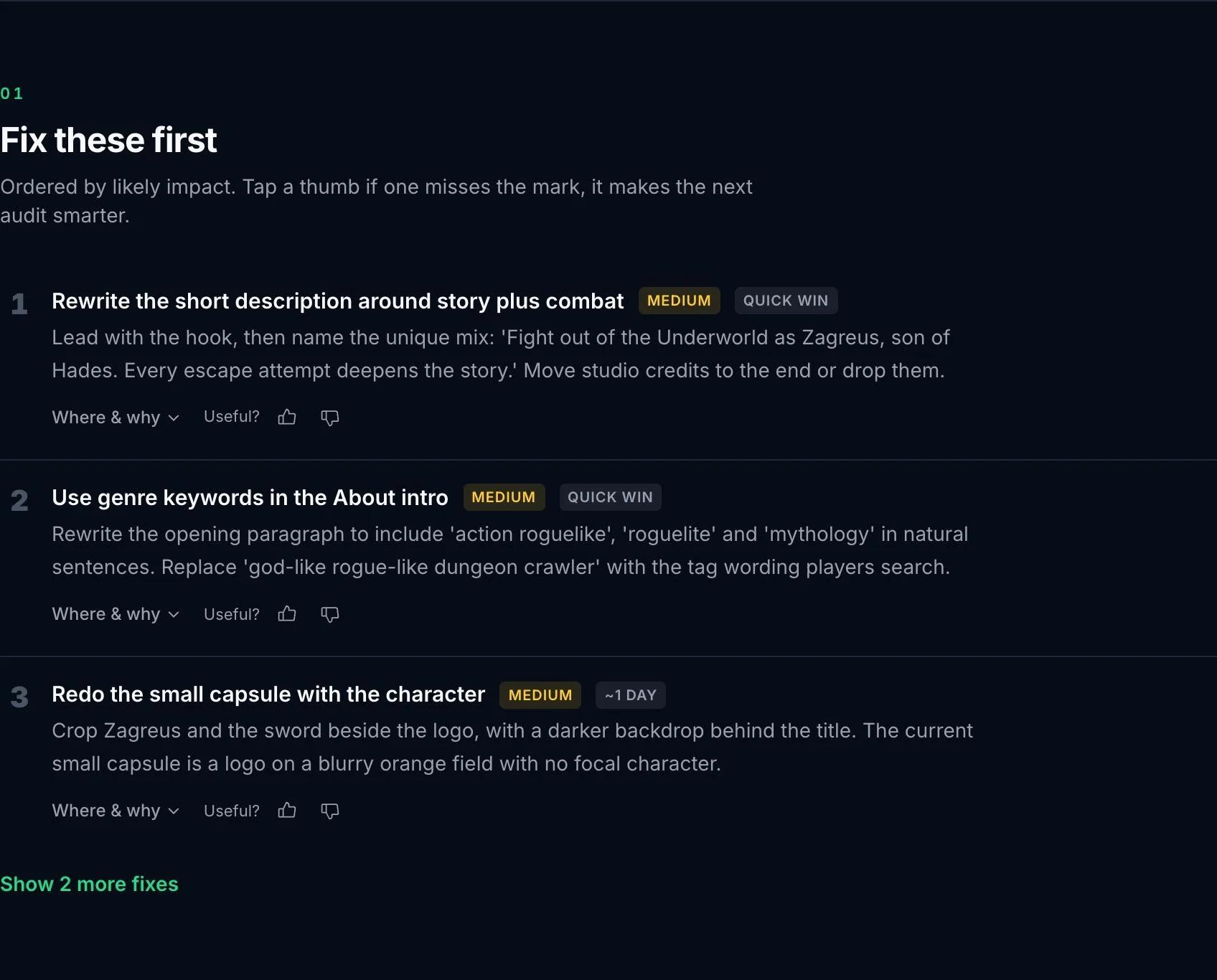
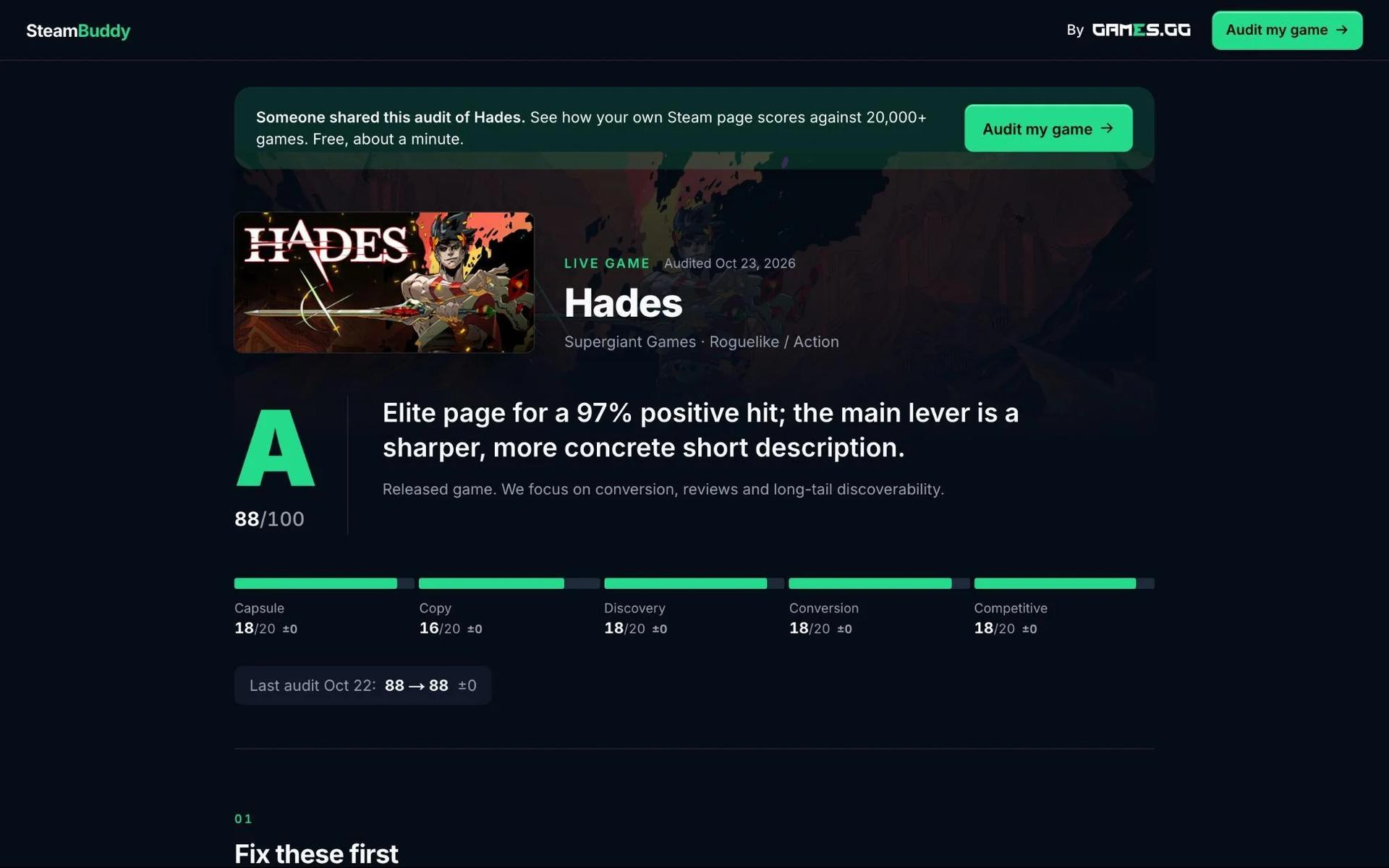
Do this: Run a free SteamBuddy audit and compare your capsule with similar games. Across its 22,429-game dataset, typical games have nine screenshots versus 10 for top games, and 214-character short descriptions versus 224 for top games, against a 300-character limit.
2. Older games own the playtime
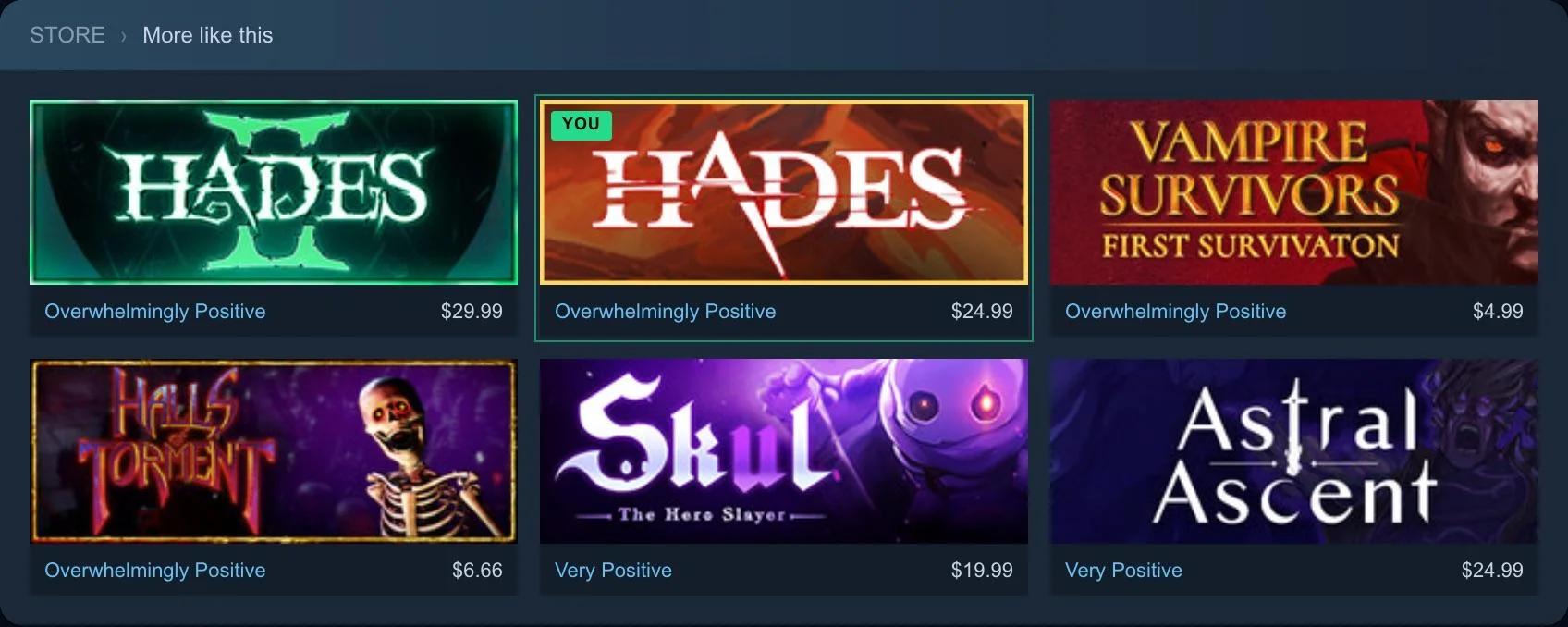
The data:Steam Replay 2025 put just 14% of playtime into games released that year. Games one to seven years old took 44% on average; games eight years or older took 40% (MP1st, reporting Steam Replay).
What it means: Your competition includes every good game your audience already owns. A launch spike is one beat, not the whole plan.
Do this: Before launch, draft a six-month calendar with two or three content updates, one community event and one discount. Give creators and returning players reasons to talk about the game again.
3. Demo glut at Next Fest
The data: June 2026 Next Fest hosted a record 4,382 demos, up 66% from 2,645 in June 2025. Top-10% games gained about 121 followers, down roughly 25% from 163. The top 1% gained about 1,330, versus 1,759. GameDiscoverCo roughly estimates 121 followers as equivalent to 3,000 wishlists (GameDiscoverCo).
What it means: A demo is table stakes, not a differentiator. Winners included co-op, dark fantasy, Souls-likes and single-player demos: there is no single formula.
Do this: Release your demo well before the fest. Steam Page Analyzer reports that demos available months ahead earned about 2.5x the median wishlists of fest-week releases. That is correlation,earlier demos may be better finished,but arriving with players already onboard makes sense. The 2027 fests run February 22–March 1 and June 14–21 (Steamworks).
4. Wishlists forecast sales badly
The data:GameDiscoverCo found median week-one sales of 0.15x launch wishlists for games with more than 25,000 wishlists, and 0.10x for games priced above $10. Outcomes varied 10–20x either way. The weakest converters had a median seven-day review score of 67% (Mixed), versus 91% for the top 20 sellers. They also averaged 411 days on Steam before launch, versus 214 for top converters (GameDiscoverCo, Oct 2025, partly paywalled).
What it means: A large list cannot rescue a Mixed launch. These correlations favor finished games over lengthy store-page campaigns.
Do this: Treat wishlists as a leading indicator, not the goal. Prioritize playtests and review-risk bugs before buying more reach. Steam wishlist campaigns work best when the page already converts.
5. Streamable co-op hits
The data: In the same analysis, co-op indies greatly exceeded wishlist expectations: Mage Arena by 78x, R.E.P.O. by 68x, Webfishing by 67x and PEAK by 266x. Casual and longer-playtime co-op titles also performed well at June 2026 Next Fest (GameDiscoverCo).
What it means: Sales came from outside the wishlist funnel. Short, streamable co-op games spreading through clips fits that pattern, but the sources do not prove the mechanism; that is our reading.
Prediction: More studios will design clip-friendly moments in 2027, crowding the format.
Do this: Find the 10-second moment a stranger would send a friend and make it easy to capture. Add photo mode, replay or streamer-safe music, and put that moment in your first trailer.

6. A video-first Steam store
The data:Steam refreshed its home page on June 4, 2026, following an April 1 beta. Hovering over cover art now plays a microtrailer, while the Discovery Queue opens within the home page (OutOfGames, Tech Insider). Steam automatically builds that six-second loop from six one-second clips of your first store-page video. You cannot customize it (Steamworks docs).
What it means: Your first trailer now does capsule work as well as selling the page. A slow logo intro can leave Steam with dead seconds to stitch together.
Do this: Keep strong gameplay throughout the first video, not only its opening. Check the static capsule too: shoppers still see it before hovering.
7. Discounts as a marketing beat
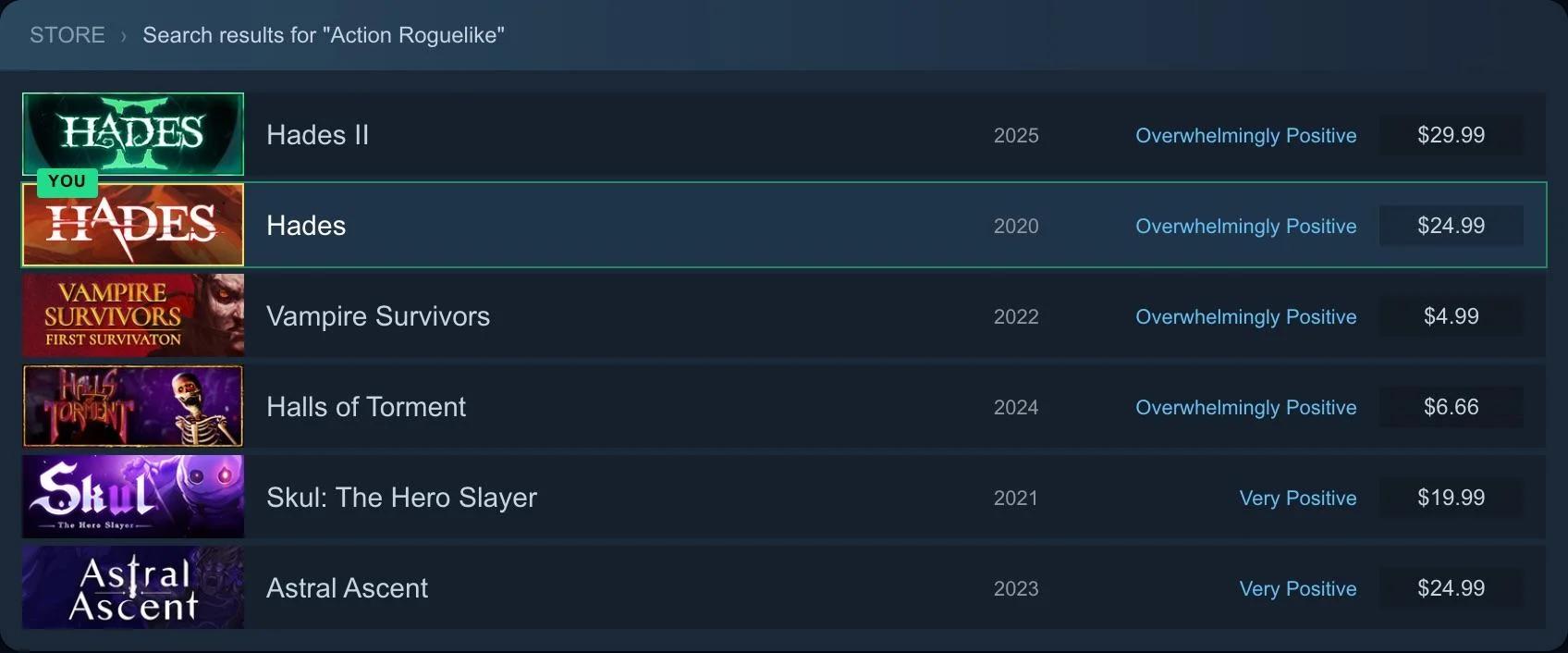
The data: The refreshed home page permanently displays games on sale from your wishlist and recommended DLC on sale; those sections previously appeared only during major seasonal sales (OutOfGames). GameDiscoverCo also reports revised promotional pages putting discounted offers at the top (source).
The announced 2027 seasonal windows include Spring Sale, March 18–25, and Summer Sale, June 24–July 8, alongside themed events such as Couch Co-Op Fest, February 8–15 (Steamworks).
What it means: Discounts offer year-round placement in front of existing wishlisters, giving the audience you built another reason to buy.
Do this: Choose a matching themed fest, schedule your first discount around it, and connect it to your post-launch calendar.
8. AI scrutiny from players and peers
The data: Valve's AI disclosure appeared on 26.5% of June 2026 Next Fest demos,1,163 games,up from 21.2% in February (GameDiscoverCo). Sulka Haro's census of 53,597 Steam releases found disclosure on 19.9% of 2025 releases and 30.8% of 2026 releases so far. Those games represented an estimated 10–27% of recent sales (summary of the study, one analyst's work.
Meanwhile, 52% of GDC 2026 survey respondents called generative AI's industry impact negative, up from 30% the previous year and 18% the year before that (GDC). Steam's content survey separates pre-generated from live-generated content.
What it means: AI use is common and increasingly judged. Do not be surprised when players read your disclosure.
Do this: Disclose honestly, explain where AI was and was not used in one plain sentence on your page or press kit, and keep capsules and key art human-made. Behind-the-scenes use is a different matter: the same GDC survey found 58% of respondents at publishers, support and marketing/PR firms used generative AI, with research and brainstorming the leading use at 81%.
9. Pay-for-verified-play campaigns
The data:Discord's R.E.P.O. case study says its Play Quest rewarded an avatar for 15 minutes of play, costing $0.15 per 15-minute session and $1.12 per new user. New or lapsed players accounted for 38% of participants (Discord internal data, 2025, self-reported).
What it means: Campaign measurement is moving from impressions or installs toward verified play. Treat vendor numbers as a signal, not a benchmark.
Prediction: More studios will request hours played or progression milestones as success metrics in 2027.
Do this: Define proof of a real player,a cleared level or an hour played,before spending.
A free game listing offers a no-cost first step toward reaching a gaming audience.
What to do first in 2027
| When | Window | What to do |
|---|---|---|
| Now to January | Pre-fest preparation | Audit the page, fix the capsule, re-cut the first trailer and publish the demo |
| February 22–March 1 | Steam Next Fest | Have the demo live early, creator keys out and a community event running |
| March 18–25 | Spring Sale | First discount for launched games |
| June 14–21 | Steam Next Fest | Another opportunity for games not ready in February |
| June 24–July 8 | Summer Sale | Pair a discount with an update |
Event dates are from the Steamworks events page. Spending depends on your tier and goals; our game marketing budget guide covers benchmarks and allocation by budget level. Whatever the budget, fix the page before paying to send players there.
Where to start
Start with trend 1: run the free SteamBuddy audit and fix the top two items. If you need help with reach afterward, see indie game marketing with GAMES.GG.