

Clair Obscur: Expedition 33 has done something remarkable. It reminded a whole generation of players that turn-based RPG games can hit harder emotionally than almost anything else in the medium. Now the question everyone is asking is: what do you play next?
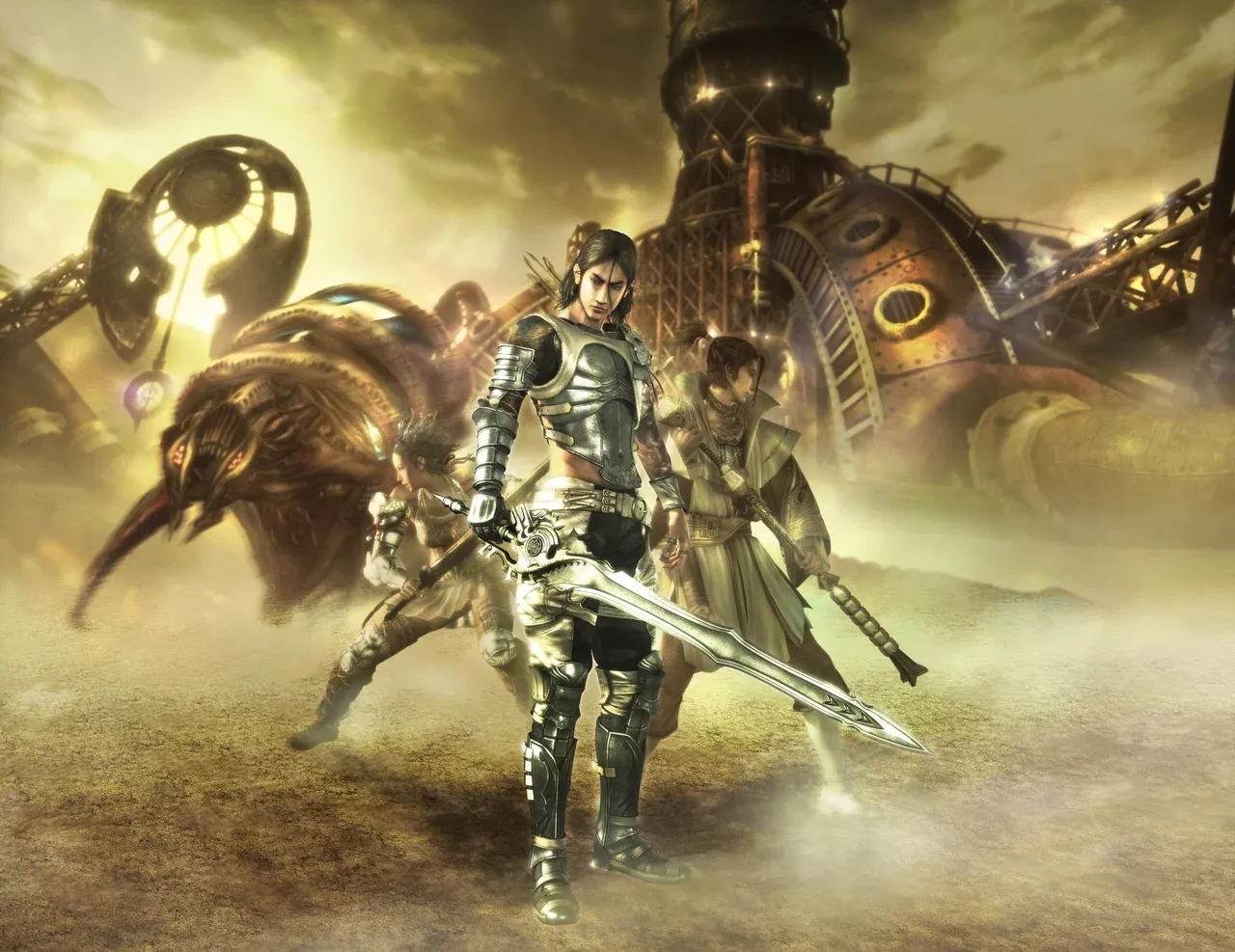
Here's the lowdown: the answer has been sitting on Xbox backwards compatibility for years, largely ignored outside of a devoted cult following. Lost Odyssey, the 2008 JRPG from Hironobu Sakaguchi and developer Mistwalker, is the game that fills that Expedition 33-shaped void. And if you haven't played it, you're missing one of the most quietly affecting RPGs ever made.
What Sakaguchi built when he left Square
Sakaguchi is the man who created Final Fantasy. After departing Square Enix, he founded Mistwalker with one clear mission: make the kind of JRPG that Square had stopped making. Lost Odyssey was the result, a four-disc epic built around Kaim Argonar, a millennium-old immortal warrior who has watched everyone he ever loved die, and can't remember why.
The setup sounds familiar, but the execution is anything but. Scattered throughout the game are short prose pieces called A Thousand Years of Dreams, written by award-winning Japanese novelist Kiyoshi Shigematsu. These aren't lore dumps or optional codex entries. They're delivered as slow, text-based vignettes that force you to stop and read. One follows a young girl Kaim meets on the road, then tracks her entire life from childhood to old age across three brief encounters. It takes maybe four minutes to read. It will wreck you.
That emotional precision is exactly what Expedition 33 players have been responding to. Both games understand that grief and memory are more compelling than any world-ending threat.
The Xbox 360 era's best-kept secret
Lost Odyssey launched in 2008, when the genre was genuinely struggling for relevance on home consoles. The Xbox 360 was not exactly the natural home for turn-based JRPGs, and the game sold modestly despite strong critical reception. It never got a PC port. It never came to PlayStation. It just... existed on one platform, and eventually faded from mainstream conversation.
Here's the thing: that obscurity is entirely undeserved. The combat system alone holds up remarkably well. Five-character parties, a front-row protection mechanic that actually forces tactical thinking, and a ring system where you time button presses during physical attacks to maximize damage. Interrupting enemy spell charges by dealing enough damage before their turn resolves adds a layer of tension that most modern turn-based games still don't replicate.
The immortal vs. mortal party dynamic is the real stroke of genius. Immortal characters self-revive after a couple of turns, but they can only learn new skills by fighting alongside mortal party members who already possess them. It creates genuine interdependence between characters rather than just slotting in whoever hits hardest.
Where it echoes Expedition 33
The comparison to Clair Obscur: Expedition 33 isn't just surface-level. Both games center on characters processing loss across impossible timescales. Both use their fantastical settings to explore very human grief. Both feature emotionally devastating moments involving children and parents that arrive without warning and linger long after the credits roll.
Kaim's reunion with the daughter he believed had died in childhood, only to lose her again moments later as an old woman, is the kind of scene that earns its tears. It doesn't manipulate. It just shows you something true about what immortality actually costs.
The world itself draws a similar contrast between old and new. A 30-year magic-industrial revolution has transformed Lost Odyssey's fantasy setting into something closer to a feudal society that stumbled into electricity and war machines. Soldiers with spears line up beside robotic war constructs. The tension between progress and tradition runs through everything, including the game's own existence as a deliberately old-fashioned JRPG released at a moment when the genre was sprinting in other directions.
What most players miss is that this conservatism is the point. Sakaguchi wasn't being lazy. He was making an argument that the classical JRPG form still had something to say, and then proving it across roughly 60 hours of play.
The honest caveat
Lost Odyssey is not a perfect game. Random encounters will test your patience, especially in large cities where the scale makes thorough exploration feel more like a chore than an adventure. Some party members, particularly the comic-relief mortal Jansen, have aged poorly in ways that are hard to ignore. Certain boss difficulty spikes arrive with almost no warning, most notoriously an early encounter with a griffin-like creature called Grilgan that has been humbling underprepared players since 2008.
These are real friction points. But they're also part of what makes Lost Odyssey feel like a genuine artifact of a specific moment in RPG history rather than a sanitized nostalgia product. The rough edges are inseparable from the ambition.
With Expedition 33 proving there's a massive audience hungry for exactly this kind of emotionally serious, turn-based storytelling, Lost Odyssey's moment for rediscovery feels overdue. Check out our gaming guides for more on the best RPGs worth hunting down, and keep an eye on our Chrono Odyssey as another upcoming title looking to carry that same torch for a new generation.