MapleStory Universe (MSU) has published a whitepaper titled "Introducing NXPC: A Protocol for Lasting Rewards." The document lays out the project's tokenomics framework, developer infrastructure, and community engagement model. At the center of this system is NXPC, the ecosystem's primary token, built to enable sustainable in-game rewards and decentralized growth.
About MapleStory Universe
MapleStory Universe integrates web3 mechanics to give players a direct role in shaping the game's development, rewarding their contributions, and building a more interconnected ecosystem. To make this work, the team needed infrastructure that could scale and adapt as the platform grows.
MapleStory Universe's NXPC Token Model
NFT Supply Caps and Support for Developers
MSU caps NFT supply to keep in-game assets scarce. NXPC powers a two-way exchange system called "fission and fusion," letting users break down or combine NFTs. This creates flexibility in how digital items are used and traded without flooding the market.
The whitepaper also covers the MapleStory Universe SDK, which lets third-party developers build standalone apps on top of MSU. Developers can repurpose NFTs and fork existing creations, opening the door for user-generated content and decentralized collaboration — a core goal in blockchain gaming.
A Dynamic System for Player Rewards
Reward distribution in MSU adjusts based on player activity across regions and worlds. Less-trafficked areas offer higher rewards, nudging players toward underexplored parts of the game. The idea is to spread engagement more evenly and keep the ecosystem balanced over time.
NXPC: A Protocol for Lasting Rewards
Defining and Measuring Contribution
Contribution in MapleStory Universe means any activity that supports platform growth and sustainability. That includes boosting NFT utility or keeping players engaged longer. The whitepaper tracks two main metrics: time spent in apps and spending through NESO in-app purchases. These determine who gets rewarded and how much.
NXPC Token Utility and Distribution
NXPC has a fixed supply of one billion tokens, similar to Bitcoin's deflationary model. It functions as a reward mechanism, a medium for NFT trades, and a payment method for gas fees. It's also interchangeable with NESO, giving users flexibility across the ecosystem.
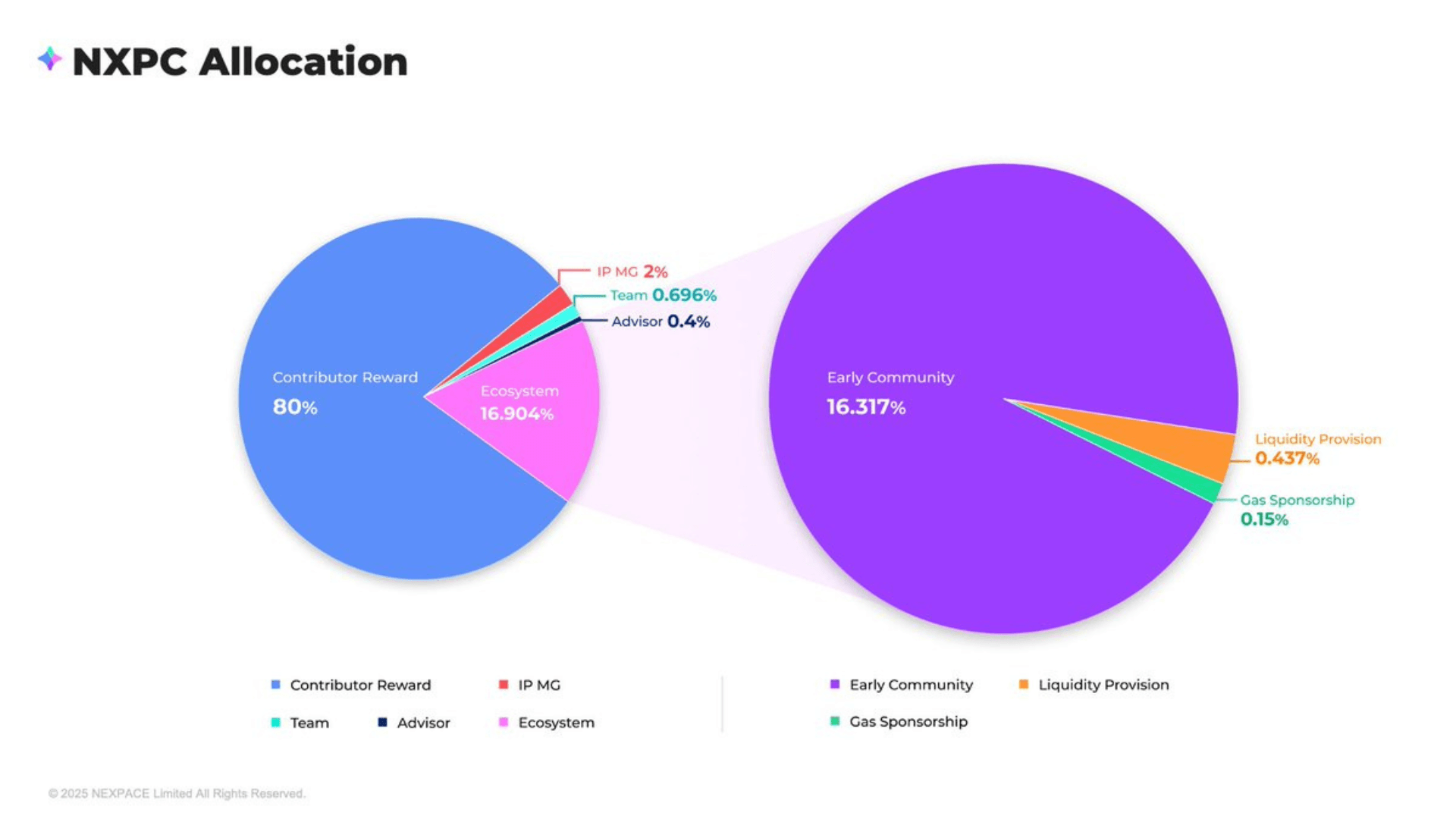
At launch, 20 percent of NXPC will be distributed through token buckets, with the remaining 80 percent released in seven-day cycles. The Contribution Reward pool gets 80 percent of the total supply, reinforcing the contribute-to-earn model. The dev team receives just 0.696 percent, relying instead on trading and usage fees. Early community members get 16.31 percent — more than initially planned, reflecting the project's focus on grassroots support before the token generation event.
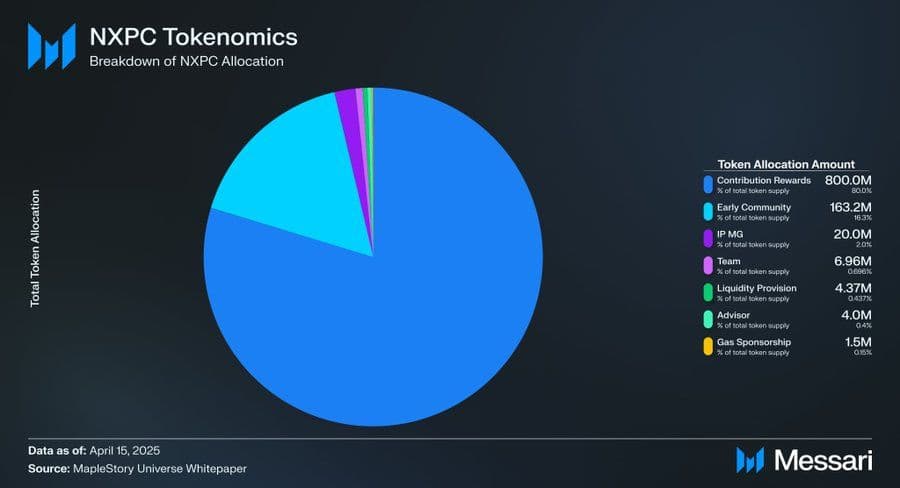
NXPC Tokenomics
Community Participation and Market Outlook
Around 17 percent of NXPC will be in circulation at launch, putting a lot of control in the hands of users. Whether they hold or sell will shape the token's market performance. Some analysts think this setup could cap short-term gains and that sustained retail interest will be needed to support long-term value. That said, MapleStory's established IP gives the project a built-in audience beyond the usual web3 crowd.

MapleStory Universe Key Art
Positioning MSU in the Web3 Gaming Landscape
MapleStory Universe leans hard into contribute-to-earn, encouraging developers and creators of all sizes to build within its ecosystem. The goal is to grow the in-game economy by increasing user attention, participation, and liquidity. Many blockchain games have tried user-generated content and failed because the core gameplay was weak. MSU has a strong legacy IP and an existing player base, which could give it a real shot at long-term success in web3 gaming.
The whitepaper presents a structured approach to integrating NFTs, tokenomics, and community contribution into a web3 gaming environment. Whether it works depends on sustained developer engagement, community participation, and how the broader market responds to its economic design.