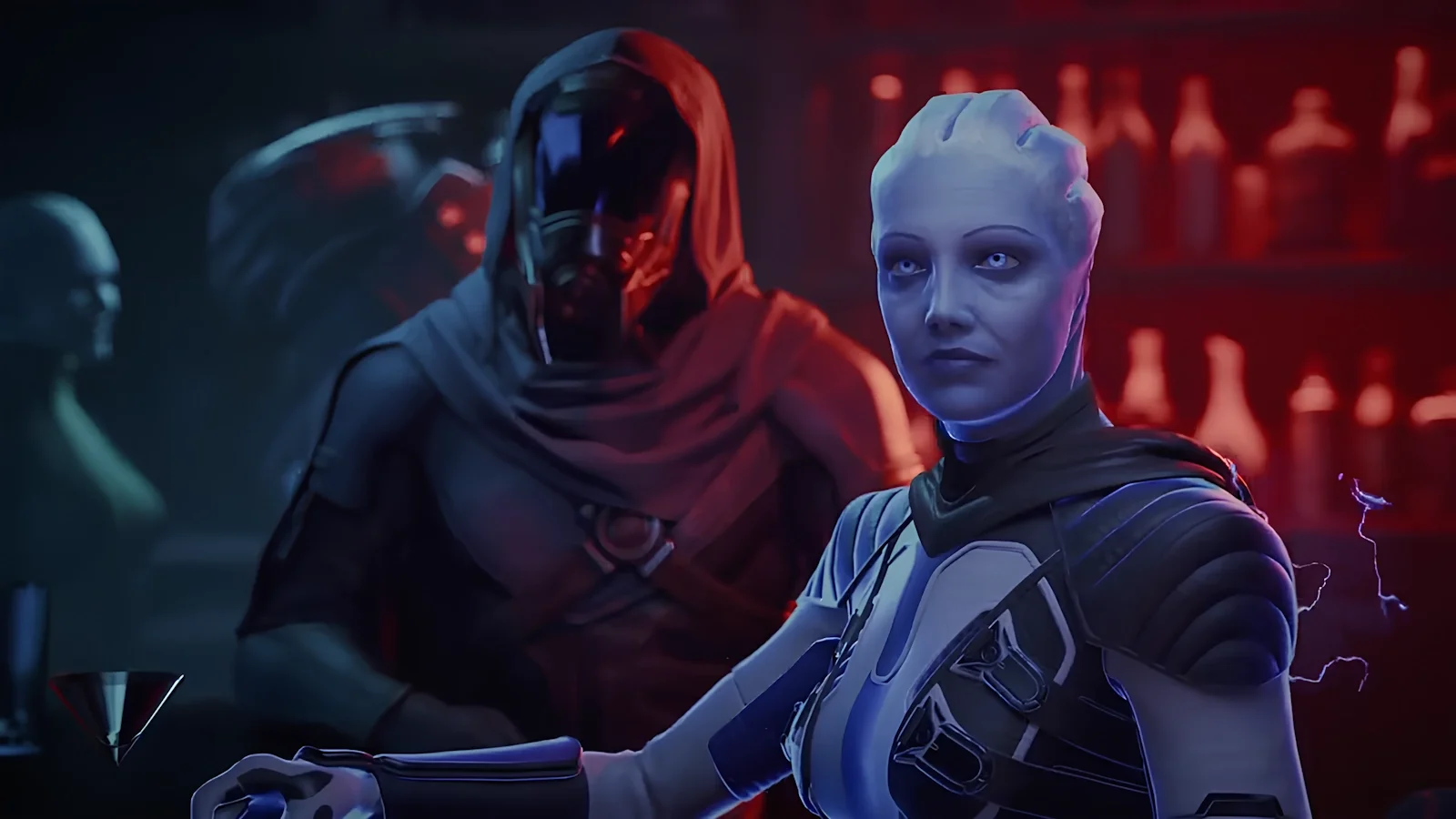
The music for Mass Effect 5 will never play over a loading screen or a cutscene. But at least now you can hear what could have been.
Composer Austin Wintory, best known for his work on Journey and Sword of the Sea, has uploaded 20 minutes of music to his personal YouTube channel that he originally pitched to BioWare and EA as part of years of conversations about joining the Mass Effect Legendary Edition franchise's next chapter. The pitch was presented as a surprise to both companies in 2025, created without any knowledge of the new game's narrative direction.
The timing is bittersweet. BioWare shut down last week, taking Mass Effect 5 with it after EA's decision to cancel the project and close the studio entirely, resulting in 50 BioWare employees losing their jobs alongside a further 350 cuts across other EA-owned studios.
What Wintory built without a brief
The collection contains eight tracks total. Wintory describes the work as a "direct homage" to original Mass Effect composers Jack Wall and Sam Hulick, leaning heavily into analog synths combined with what he calls "a more complex integration of the orchestra." He compares the hybrid approach to the score work behind The Matrix films.
The tracklist has some immediately recognizable ambitions. The opening piece, The Legacy of Shepard, contains what Wintory describes as "deliberate winks" to the original Mass Effect theme. The second track, Sailing the Relays, is where the synth-orchestra blend hits hardest. The eighth and final track closes the set with a remix of that first Legacy of Shepard composition, bringing everything full circle.
Here's the thing: Wintory built all of this speculatively. No story documents, no character briefs, no world-building materials. Just a composer who understood the series deeply enough to reverse-engineer what its next chapter might sound like emotionally, and then pitch that vision cold.
A note on what was lost
Wintory's video description doesn't hide how he feels about BioWare's closure. He wrote that receiving the news "alongside everyone else" was "a deeply felt loss," and noted the difficulty of watching friends lose their jobs and "this beloved franchise seemingly vanish forever."
He closed with a direct thank-you to BioWare and EA's music departments: "Thank you nonetheless to everyone at BioWare and EA's music department for gifting me the chance to dream in your sandbox. It was a privilege to do even that much."
The wider fallout from BioWare's closure has been significant. Voices across the industry have spoken out against the decision. A Canadian political party leader has publicly called for federal support to help former BioWare employees buy back the studio. All of this sits in the context of EA's $55 billion private acquisition involving Jared Kushner and Saudi Arabia's Savvy Games Group earlier this year.
The Mass Effect sound, and why it mattered
What makes Wintory's release particularly resonant for fans is how precisely he identified the sonic identity of the original trilogy. The first Mass Effect's score by Wall and Hulick was genuinely distinctive, that specific blend of cold electronic textures and sweeping orchestral moments that made the Citadel feel alien and ancient at the same time. Subsequent entries shifted that balance, and not always for the better.
Wintory's pitch suggests he wanted to pull the series back toward that original register. Whether that would have been the right call for a game set to learn from Baldur's Gate 3 and The Witcher's approach to player autonomy is something the development team will never get to answer.
For fans who want to revisit the series while processing the news, the Mass Effect Legendary Edition guides cover the trilogy in full. The music Wintory released sits on YouTube now, untethered from any game, which is both the saddest and most honest version of what it was always going to be: a dream someone had for a series that no longer has a future.