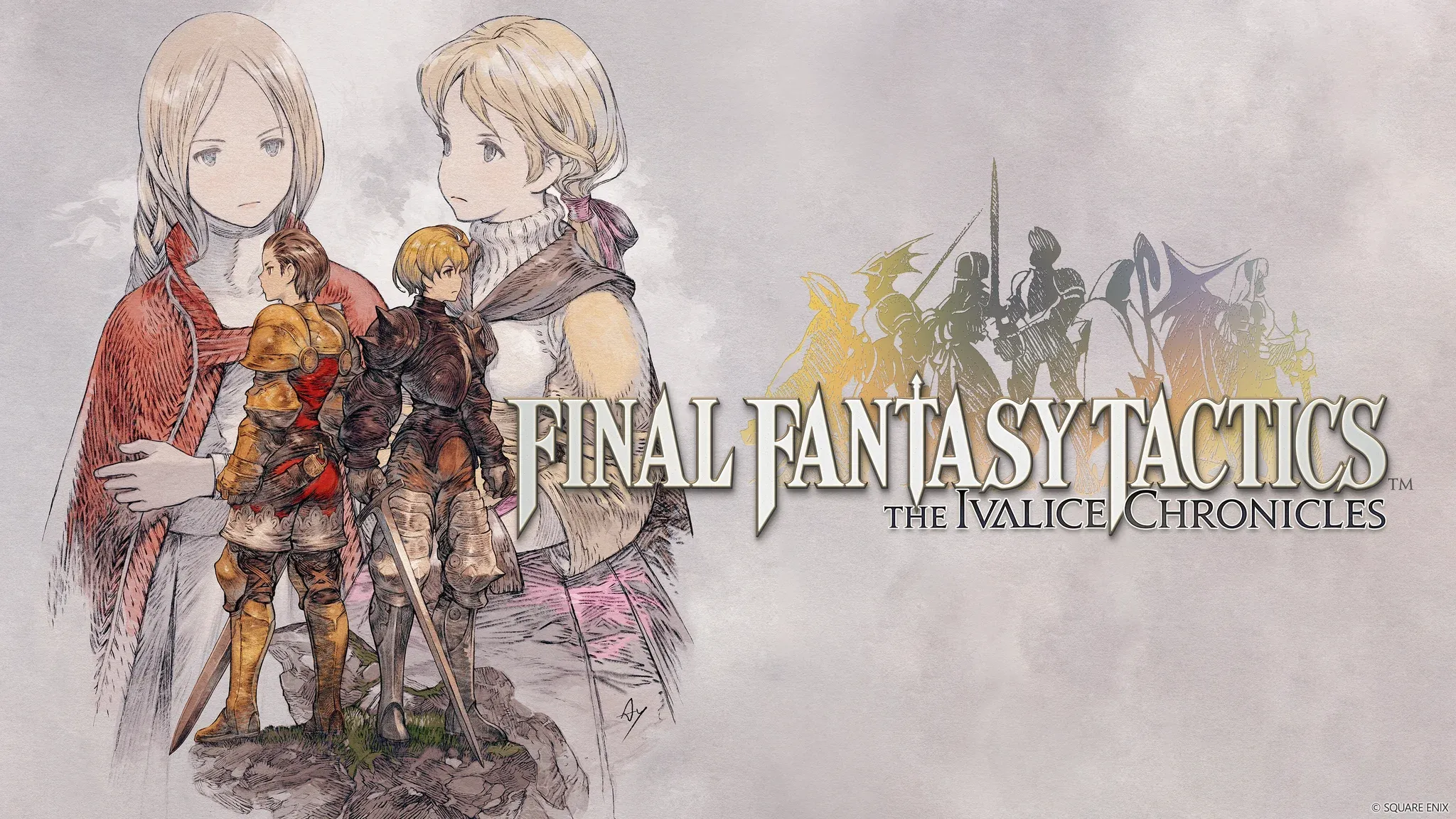


Edmund McMillen and Tyler Glaiel have revealed that Final Fantasy Tactics was the decisive influence that shaped Mewgenics into the tactical roguelike it became, after the game spent years stuck in development limbo with a very different combat concept. Speaking to Edge, the duo recalled how Final Fantasy Tactics: The Ivalice Chronicles ultimately won out over a Pokemon-style battle system during the game's long, winding road to release.
From cat fights to tactical grids
Mewgenics was first announced back in 2012, which makes its release earlier this year one of the longer development arcs in indie gaming history. The version shown at PAX Seattle 2013 was a very different animal. McMillen recalls that the team "only had one functional minigame, the cat fights, which was this Pokemon-esque turn-based combat game." The core loop was creature-focused, but the combat itself was straightforward head-to-head battling.
Glaiel was the one who pushed things in a different direction. "I remember suggesting back then: 'Why not try Final Fantasy Tactics-style combat instead of Pokemon combat?'" he explained. His reasoning was direct: "they're on the same tree, kind of, but you can do a lot more with the positioning stuff."
McMillen's response to that framing was blunt and quotable: "Yeah. One has depth, and the other has the illusion of depth."
The depth question that divides fans
Here's the thing: that quote is going to sting for a certain subset of players. Pokemon has a dedicated competitive scene built around EVs, IVs, held items, speed tiers, and team composition. That's real complexity. But McMillen's point holds up when you're talking about what happens inside a single battle. Pokemon combat, at its core, is pick a move and hope your type matchup wins. The spatial dimension just isn't there.
Final Fantasy Tactics flips that completely. Positioning relative to enemies, terrain elevation, attack cones, and unit facing all feed into every single decision. You can lose a fight you should have won because one unit was standing in the wrong square. That kind of tactical texture is exactly what Glaiel was pointing at when he said you can "do a lot more with the positioning stuff."
The key here is that both games are turn-based, both involve building a roster of characters with distinct abilities, but they ask fundamentally different questions of the player. Pokemon asks "what move?" FFT asks "what move, from where, targeting whom, and what does that leave exposed?"
The long road through Team Meat
The combat pivot didn't happen in isolation. McMillen's original Team Meat collaborator Tommy Refenes had drifted away from the project, eventually prioritizing Super Meat Boy Forever. McMillen left Team Meat in 2017. Even before that split, McMillen was still trying to sell Refenes on the concept, framing it in genres he thought would land. "I was still pitching it to Tommy before I left. I was trying to wrap it in a genre that I thought he would be excited about," McMillen explained, also referencing a version of the game that drew closer to Spelunky.
The game that finally shipped in 2026 bears little resemblance to that PAX 2013 demo. The FFT-inspired combat system Glaiel suggested is central to everything Mewgenics became.
What this means for players coming from FFT
For anyone who has spent time with rpg games in the tactical space, Mewgenics will feel immediately legible. The positioning logic, the range considerations, the way a single misplaced unit can unravel a whole encounter. That DNA is clearly FFT's.
What most players miss is how much the roguelike structure changes the calculus compared to a traditional SRPG. In FFT you can grind your way out of a bad build. In Mewgenics, a bad run is a bad run. The tactical depth Glaiel and McMillen borrowed from FFT gets compressed and intensified by the roguelike format.
Pro tip: if you're jumping into Mewgenics with a Final Fantasy Tactics background, the beginner strategies guide is worth revisiting to sharpen the foundational FFT instincts that translate most directly into Mewgenics encounters.