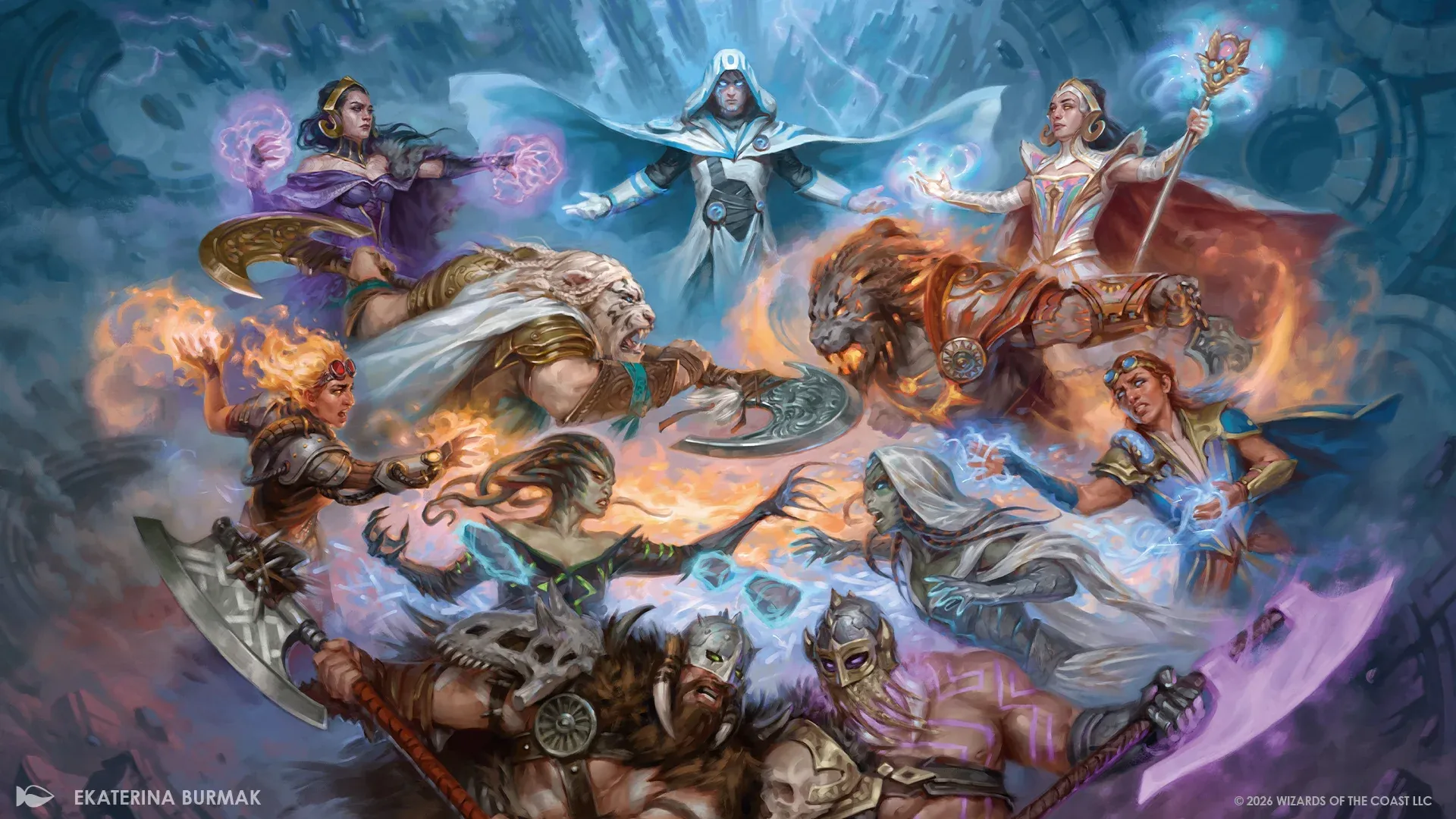


Three years of setup is finally paying off. Since the Wilds of Eldraine set, Magic: The Gathering's core expansions have been threading a single overarching storyline toward one climactic moment, and Reality Fracture is where it all lands.
The short version: planeswalker Jace Beleren attempted to build a new multiverse, one scrubbed clean of every existential threat the setting has accumulated over the years, from the Phyrexians to the Eldrazi. The catch is that his new multiverse would overwrite the existing one once complete. The result is a set built entirely around mirror matches, where beloved characters come face to face with alternate versions of themselves.
The mirror match concept at the heart of the set
Here's the thing about the character pairings in Reality Fracture: they only hit hard if you already know who these people are. Chandra, the pyromantic planeswalker, faces a cryomantic version of herself. Liliana, Magic's resident necromancer, is up against a mirror self who practices life magic and, perhaps most horrifying of all, wears white. These contrasts are sharp and clever if you have years of lore behind you. If you don't, they land flat.
That's exactly the problem Wizards of the Coast solved with a smart packaging decision: Reality Fracture booster packs will include echoed pairs together. Pull Tomik Vrona, and you'll get both his original card and his mirror version in the same pack. Tomik is a lawyer embedded in the shady Orzhov Syndicate, a man whose whole identity is built around exploiting legal loopholes. His Reality Fracture counterpart is a sparkmage who delights in breaking the laws of physics. Seeing both cards side by side makes the contrast land instantly, no tie-in novel required.
Three years of story reaching a tipping point
What most players miss is just how long Wizards of the Coast has been building toward this. The throughline connecting Wilds of Eldraine to Reality Fracture is one of the longer sustained narrative arcs Magic has attempted in recent memory. The payoff is a multiverse-threatening crossover that is, as the source material puts it, very comic book in execution. That framing is accurate and not a criticism. Magic has always borrowed from comics, and a multiverse-shattering event with doppelgangers and alternate-reality versions of fan favorites is exactly the kind of story that genre does well.
The key here is that the paired-pack mechanic does something the story alone cannot: it makes the lore accessible at the point of play. You don't need to have read every story beat to understand what's happening when fire and ice versions of the same character are sitting next to each other on the table.
What the Arena release means for digital players
For players on Magic: The Gathering Arena, the September 29 digital launch means Reality Fracture cards will be available to draft and build around before the physical pre-release weekend even begins. Arena has consistently been the fastest way to get hands on new sets, and for a set built around paired interactions, the digital format is well suited to surfacing those echoed card dynamics quickly through draft pools.
The broader context here is that Reality Fracture represents the kind of internally focused storytelling Magic hasn't leaned into as heavily during its recent run of external crossovers. After sets built around Universes Beyond collaborations, returning to a story rooted in Magic's own characters and lore feels like a deliberate course correction, one that rewards players who have been following along since Eldraine.
For anyone wanting to get ahead of the set before it drops, the Magic: The Gathering Arena strategy guides are a solid place to start building context around the planeswalkers you'll be seeing on both sides of the mirror.