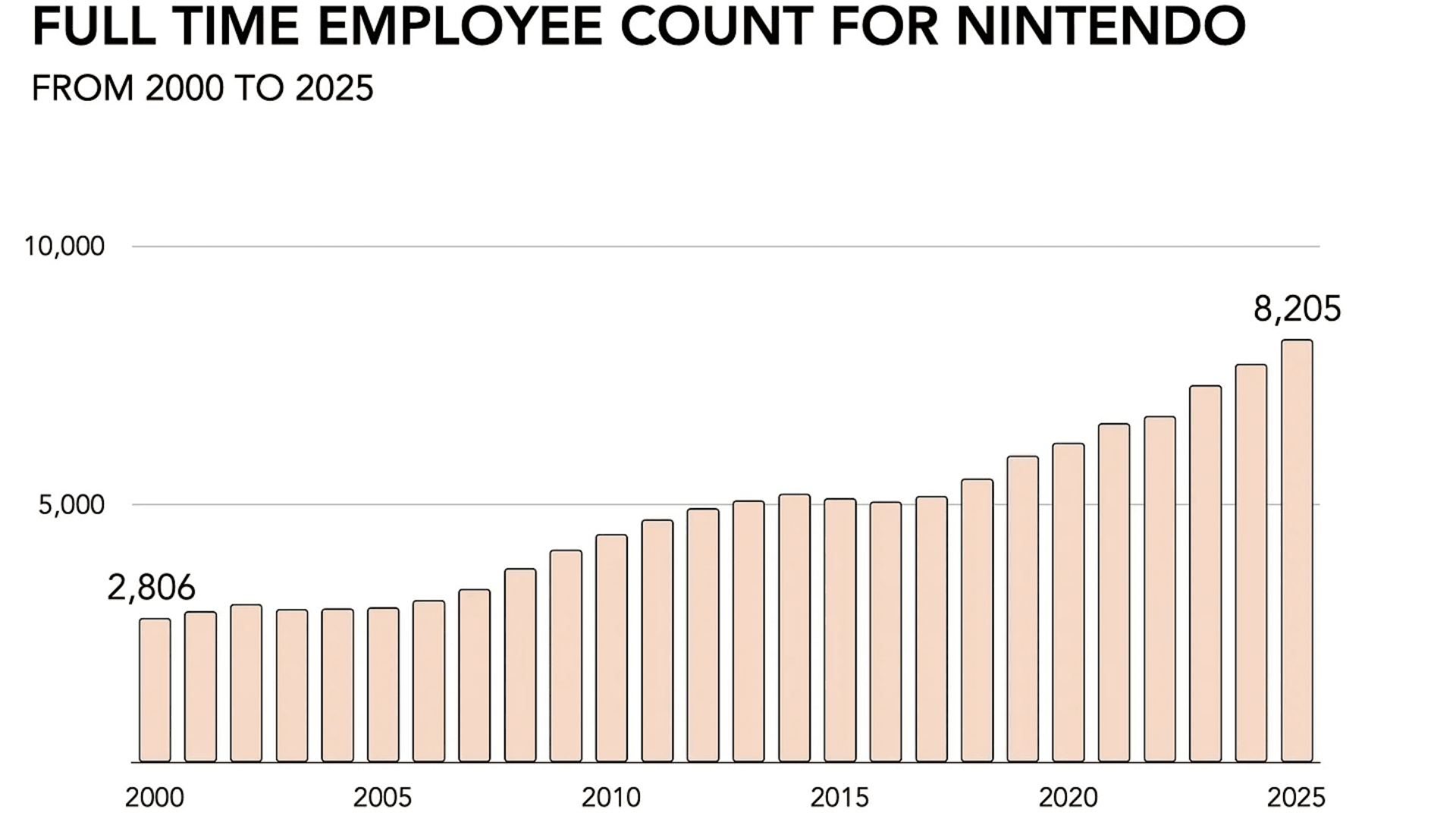
In an industry widely affected by layoffs, Nintendo is an outlier with continued hiring and workforce expansion. The Kyoto-based company's most recent financial report shows its employee count jumped 6%, from 7,724 to 8,205 — the highest staffing level in company history.
Nintendo's attrition rate sits below 2%, a sharp contrast to an environment where many companies use "efficiency" as code for cutting costs and reducing headcount. This growth runs directly counter to the broader trend among public game companies, pointing to a fundamentally different approach to workforce management.
Nintendo's Workforce Growth Amid Industry Layoffs
Public vs private: a clear divide
The gaming industry's employment trends split cleanly along ownership lines. Public gaming firms in North America and Europe have shed roughly 9% of their workforce year-over-year, while many privately held European studios are actively growing their teams.
Looking at the fifty largest European game makers, the pattern is stark: publicly traded firms have cut their workforce by about 25% since 2023. Private companies, meanwhile, have increased headcount by around 8%. Dream Games exemplifies this growth, expanding from 219 employees to 364 over two years — a 67% jump while competitors downsized.
Video Game Industry Workforce Tracker 2025
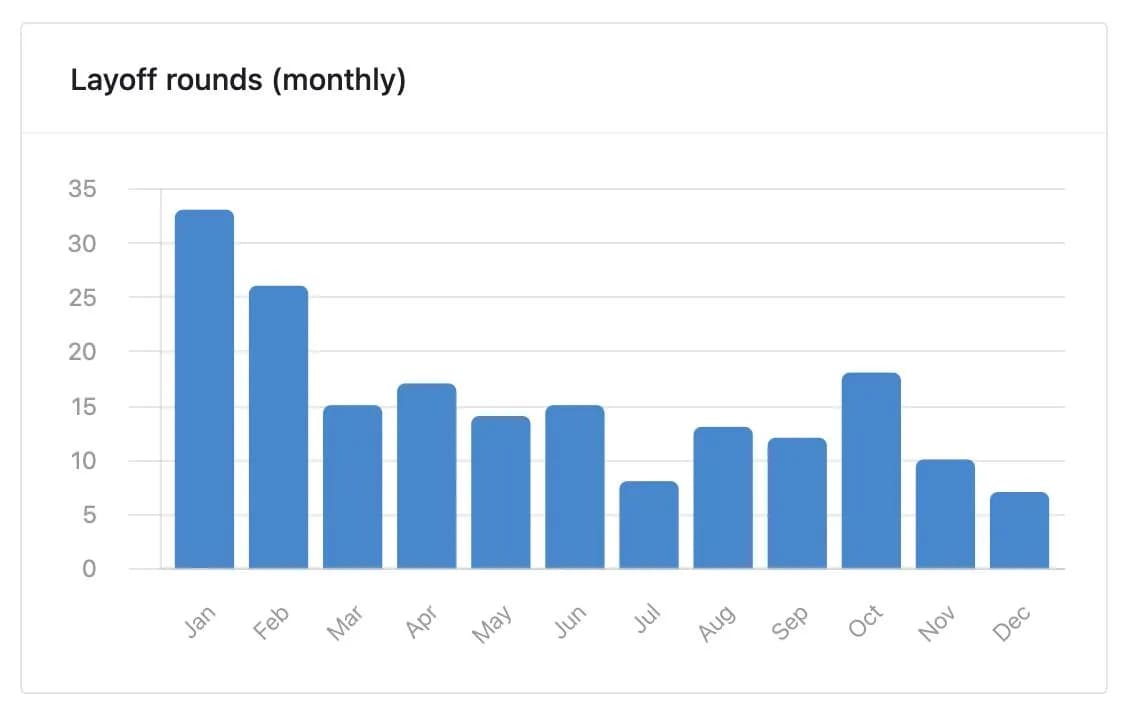
Private studios like Moon Active and Huuuge Games show similar patterns of steady headcount increases. The difference comes down to pressure. Public firms answer to quarterly earnings expectations and investor scrutiny, making layoffs a fast, visible tool for cost control.
Private companies can adjust budgets, pause projects, or accept lower short-term profits without immediate market consequences. Jason Kingsley, CEO of private studio Rebellion, described the approach as carefully controlling budgets to create quality games with reasonable profitability expectations, rather than chasing rapid growth. This strategic focus lets some private studios maintain or grow their workforce even when market conditions turn difficult.
Video Game Industry Workforce Tracker 2025
Two different business models
The labor strategy gap between public and private companies reflects deeper structural differences. Public companies operate like financial instruments, focusing on meeting investor expectations through cost management and efficiency measures — often meaning layoffs.
Private firms function more like product-oriented businesses, emphasizing creative control, long-term planning, and talent retention. This leads to different staffing decisions: public companies cut headcount to hit margin targets, while private studios adjust other parts of their operations to preserve development capacity.
This divergence also highlights a tension between market demands and creative needs. Financial markets want predictability and steady returns. Successful game development requires experimentation and risk-taking. Larger public companies, despite their resources, avoid significant creative risks and frequently outsource innovation to smaller private studios that operate with greater flexibility and urgency, even with fewer resources.
The labor trends visible in Europe aren't limited to that region or to mobile gaming. They're part of a wider industry realignment: public companies consolidating and reducing staff, private studios investing in talent and innovation despite financial pressures.

Nintendo's Workforce Growth Amid Industry Layoffs
Nintendo's long game
Nintendo's consistent workforce growth during industry contraction shows a different model of efficiency. Instead of optimizing short-term margins through layoffs, Nintendo prioritizes productive capacity and sustained value creation. The company manages staffing levels carefully, makes focused investments, and takes a long-term perspective that resists market pressures for immediate cost-cutting.
This strategy suggests efficiency isn't just about reducing expenses — it's about maintaining the capacity to develop high-quality products over time. Nintendo's steady staffing increases indicate an emphasis on preserving the resources necessary for long-term growth and innovation.
What this means
The gaming industry's labor market is realigning along clear lines. Publicly traded firms cut staff in response to investor demands and financial pressures. Private studios and companies like Nintendo maintain or grow their workforce by focusing on long-term planning and creative capacity.
This divergence represents a shift in risk management: public companies de-risk operations through staff reductions, while private studios absorb more risk to sustain innovation and development. Nintendo's approach demonstrates how steady workforce growth, aligned with long-term objectives, could define the industry's next phase.