

"The Wolverine V3 Pro 8K is unapologetically built for competitive play on PC: no latency, no RGB, no rumble, no console support, no Bluetooth." That line from reviewer Kizito Katawonga at PowerUp sums up Razer's latest controller better than any spec sheet could.
Razer links take you to its online store. GAMES.GG may earn a commission from qualifying purchases.
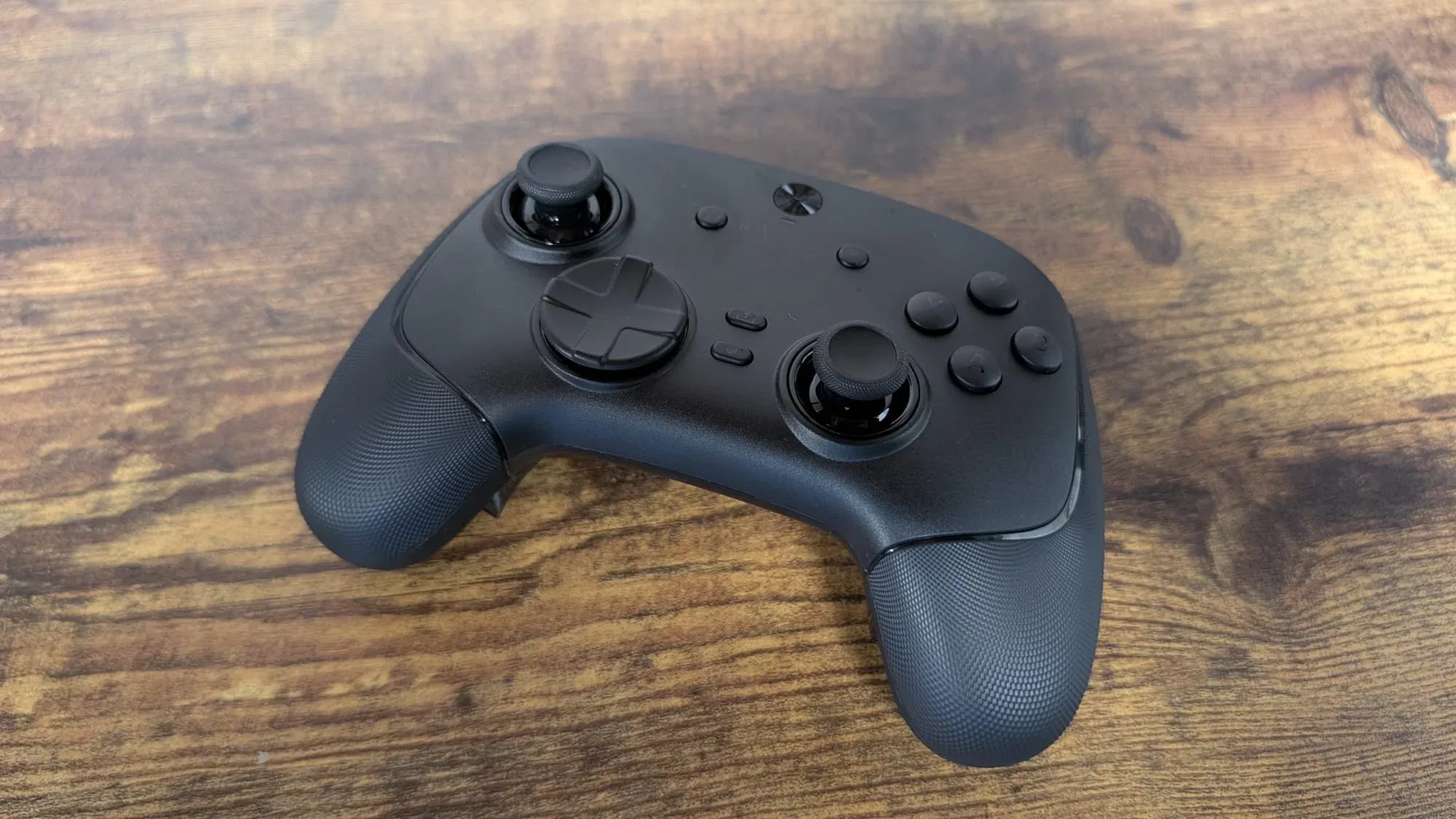
The Razer Wolverine V3 Pro 8K launched at $329.95 and sits in a very specific lane. No RGB, no console compatibility, no Bluetooth, no haptics. What you get instead is an 8000 Hz polling rate, TMR analog thumbsticks, six extra inputs baked into the shell, and a design that has shed every gram that wasn't earning its place.

Use code TRYHARD33 at checkout to redeem this offer before code expires again.
Get 33% Off GAMES+ Subscription
What Razer actually stripped out (and why it matters)
The standard Wolverine V3 Pro was already a well-regarded PC controller. The 8K variant takes that foundation and removes the vibration motors entirely, which makes the controller noticeably lighter and easier to hold through long sessions. After hours in Call of Duty: Black Ops 7 multiplayer, hands reportedly stayed fresh rather than cramped.
There's no RGB light show, no removable faceplates, no garnish beyond a Razer Green color option. The hardware customization comes down to the TMR thumbstick caps: shorter, domed caps for faster snappy movement, and taller concave caps for precision and micro-control. That's a deliberate signal about who this controller is for.
The one genuine gap at this price point is the back paddles. Unlike the Raiju V3 Pro, none of the extra controls here are removable or modular. Four mouse-click back buttons and two claw bumpers are baked into the shell permanently. For a $329.95 controller, swappable or removable paddles feel like they should be standard.
The 8K polling rate in real-world play
Here's the thing: 8000 Hz polling sounds like a marketing number until you actually feel it in a sweaty ranked lobby. The controller checks in with your PC 8,000 times per second, wired or wireless. Razer's Deathadder V4 Pro mouse runs the same polling rate, so the technology is proven, and bringing it to a controller is a logical next step.
In practice, micro-adjustments on the sticks feel tight and predictable in a way that starts to approach mouse-like precision. The mecha-tactile face buttons and mouse-click triggers push that feeling further.
That compatibility dance is a real friction point. When a game does play nice with the full 8K rate, the connection between thumb movement and on-screen response feels nearly instant. When it doesn't, you're manually switching profiles before launching.
TMR sticks and the six-button cluster
Razer's TMR (True Magnetic Resistive) thumbsticks use magnetic sensors rather than a physical wiper scraping a contact pad. The practical result is that the sticks sit at a true center when released, with no gradual drift developing over time. For anyone who has spent time fighting phantom stick drift mid-match, that consistency alone is worth paying attention to.
The precision around the center of the stick travel is tight, with no vague dead zone where input disappears before suddenly snapping into movement. Paired with the two cap sets, it genuinely feels like you can tune the physical feel of aiming to match your hands and play style.
The six extra inputs around those sticks, four back buttons and two claw bumpers, are fast and light to actuate without shifting your grip. Once jump, slide, reload, and melee are mapped to that cluster, the face buttons are mostly freed up. The Pro HyperTriggers add a switch on each trigger to flip between an ultra-short mouse-click pull for instant firing and a longer analog pull for driving games or deliberate shooters.
Synapse 4 tuning and battery life
Razer Synapse 4 is where the depth lives. Inner and outer stick deadzones are fully adjustable, response curves can be shaped from perfectly linear to custom profiles that keep small inputs gentle while ramping hard at the edges, and trigger sensitivity can be dialed in precisely. All of this saves to onboard profiles, so the settings travel with the controller without needing the software open.
Battery life is oddly undocumented. Razer's own spec sheet lists "None" under battery life, which is a strange omission for a wireless controller. In two weeks of daily sessions ranging from 30 minutes to two hours, the controller never died mid-match and only needed charging when the reviewer happened to notice it had been a while. Stripping out RGB, haptics, and audio passthrough means there's very little drawing power in the background.
For serious controller-main PC players, this is the current benchmark. Casual players and anyone who games across PC and console will find better value elsewhere, but that's exactly the point. You can browse latest reviews for comparisons across the full controller market if you're still weighing your options. The Wolverine V3 Pro 8K is not trying to be everything. It's trying to be the best at one specific job, and by most accounts, it is.