
Both Scuf and Razer have done something that seemed impossible until recently: each brand launched a second officially licensed PS5 controller within the same console generation. The result is two of the most feature-dense gamepads PlayStation players have ever had access to, both wireless, both loaded with six extra buttons, and both priced at around $210. The question is which one actually holds up when you're in the middle of a sweaty ranked match.

Use code TRYHARD33 at checkout to redeem this offer before code expires again.
Get 33% Off GAMES+ Subscription
What both controllers get right
Before getting into why one pulls ahead, it's worth acknowledging how much common ground these two share. Both the Razer Raiju V3 Pro and the Scuf Omega feature TMR (True Magnetic Resonance) thumbsticks, which are more precise and longer-lasting than the standard potentiometer sticks found in the base DualSense. Both use clicky microswitch face buttons that feel noticeably snappier than Sony's stock offering. Both are symmetrical in layout, which will feel immediately natural to any PS5 player. Neither supports haptic feedback or adaptive triggers, a consequence of the licensing parameters both brands operate under.
The PC companion apps for each controller are also solid. You can remap buttons, adjust trigger sensitivity, and tweak thumbstick response curves on both. For competitive players who want granular control over their setup, that kind of software support matters.
Here's the thing, though: shared specs only tell part of the story. The design decisions each brand made around those shared specs are where the real differences emerge.
The side button problem that tips the scales
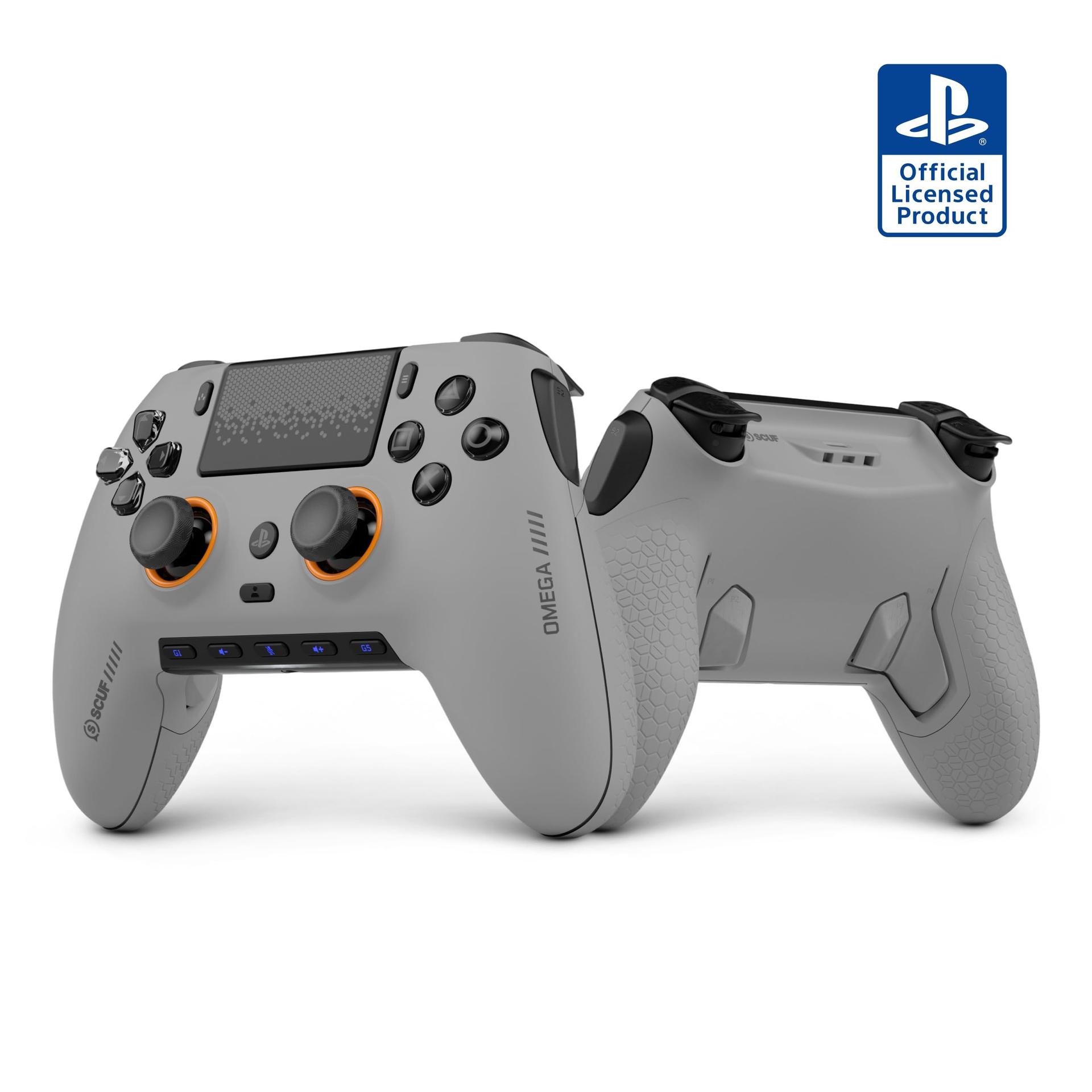
The Scuf Omega's most distinctive feature is its side bumpers, two extra buttons positioned along the controller's sides so you can press them with your inner index knuckles. On paper, that sounds like a smart ergonomic choice. In practice, it's the Omega's biggest liability.
The actuation force on these side buttons is light enough that accidental presses happen regularly, and not just during an adjustment period. The angle and placement mean that during normal grip, your fingers naturally rest against them. Swap out the side bumpers for the blank covers included in the box and you've solved the accidental press problem, but then you're down to four extra buttons versus the Raiju's six. At that point, the Raiju wins the extra button count outright.
The Razer Raiju V3 Pro takes a more conventional approach with its extra buttons: two pairs of back buttons integrated into the grips, positioned for your middle and ring fingers. They're microswitch-based, so the click is fast and deliberate. The two pairs sit one above the other, which some players find slightly close together, but the positioning is accurate enough that muscle memory kicks in quickly. For most players, this layout is going to feel more reliable under pressure.
Thumbstick texture and FPS performance
Scuf markets itself heavily toward FPS players, which makes its thumbstick texture choice genuinely puzzling. The Omega's sticks ship with minimal surface grip. For small, precise adjustments, especially the kind you need when tracking a target at range, that lack of texture forces you to press down harder on the sticks to maintain control. The swappable thumbstick tops in the carry case improve things somewhat, but the base experience is a step behind what competitors offer.
The Raiju's thumbsticks have better out-of-the-box texture. Combined with the TMR internals both controllers share, that translates to more confidence when making micro-adjustments in a firefight. For competitive FPS play specifically, the difference is noticeable.
What most players miss when comparing pro controllers is that thumbstick texture affects more than comfort. It directly impacts how much mental overhead you spend managing your grip, and in a high-stakes moment, that overhead costs you.
Where the gap narrows
Set aside the side buttons and thumbstick texture, and the two controllers are closer than the headline verdict suggests. The Omega does have a few design wins. Its trigger stop switches are elegantly hidden inside the triggers themselves, giving the controller a cleaner look. The trade-off is that flipping one on mid-match is fiddly compared to the Raiju's more accessible external switches.
The Omega also uses a four-way D-pad in the PlayStation tradition, while the Raiju opts for a floating 8-way design. For fighting game players or anyone who uses the D-pad heavily, the Raiju's 8-way option is more versatile. The four-way feels familiar but limited by comparison.
Customization is one area where Scuf holds a genuine edge. The brand offers a wider range of colorways and custom configurations than Razer currently does for the Raiju line, so if a personalized look matters to you, that's a real differentiator.
| Feature | Razer Raiju V3 Pro | Scuf Omega |
|---|---|---|
| Extra buttons | 6 (back buttons) | 6 (back + side bumpers) |
| Thumbstick type | TMR | TMR |
| Thumbstick texture | Good out of the box | Minimal, requires swaps |
| Back button style | Grip-integrated pairs | Horizontal wrap-around |
| D-pad | Floating 8-way | 4-way |
| Trigger stops | External switches | Hidden in-trigger |
| Custom colorways | Limited | Extensive |
The verdict
The Razer Raiju V3 Pro is the stronger buy for most PS5 players. The back button layout is more reliable, the thumbstick texture holds up better for FPS play, and you avoid the accidental side button presses that dog the Omega in competitive moments. At similar price points, the Raiju simply has fewer friction points between you and your best performance.
The Scuf Omega isn't a bad controller. Players who have used Scuf's back button layout before and prefer it, or who want a custom colorway that Razer can't match, have legitimate reasons to choose it. But for anyone coming in fresh, the Raiju is the safer, more consistent option.
For more hardware breakdowns and deep dives across gaming peripherals and titles, check out the gaming guides hub. If you're also exploring what's worth playing on PS5 right now, the game reviews section has you covered.