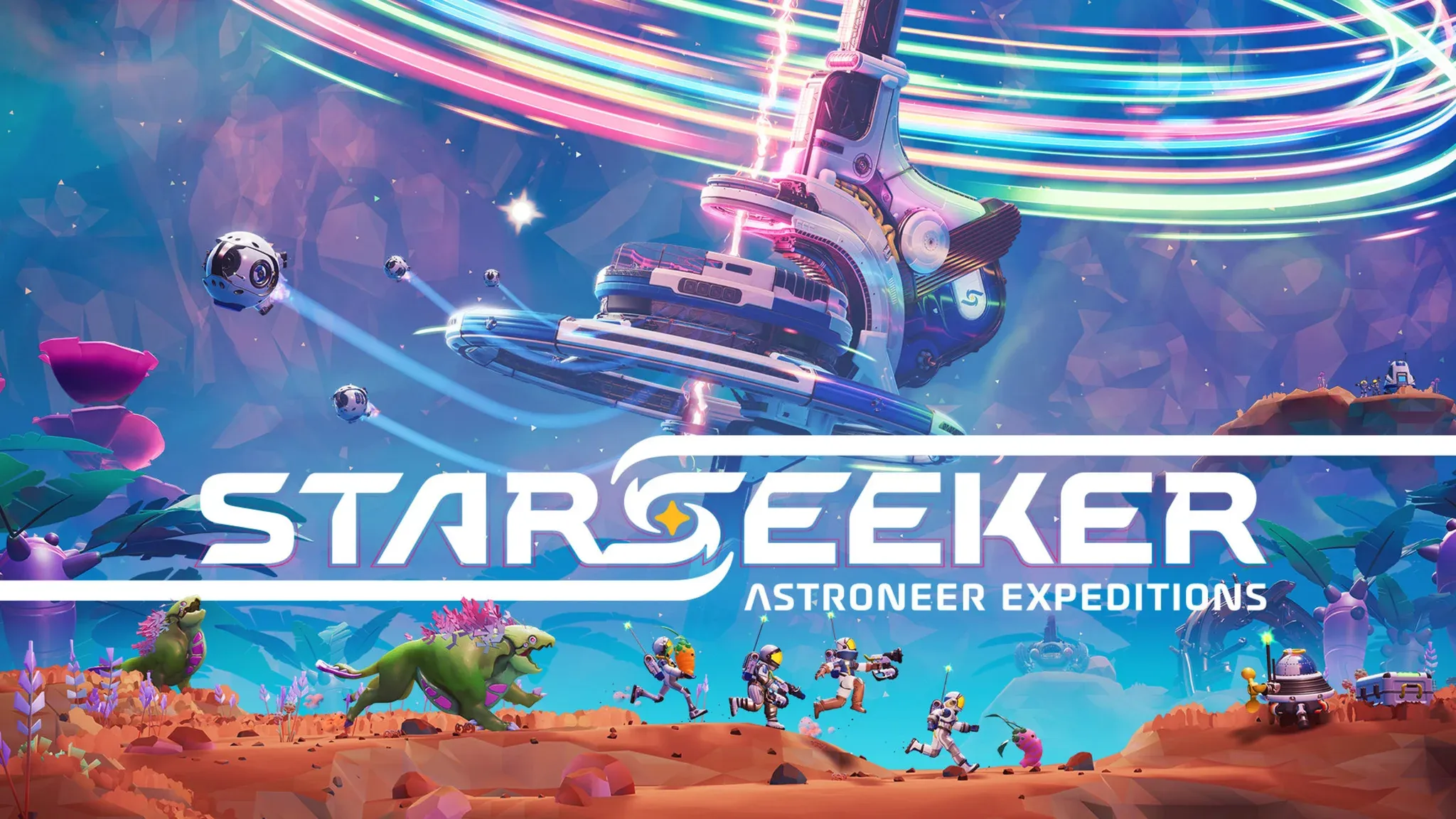


ASTROBOTANICA fans who have been watching the broader survival-adventure space will want to pay attention to what System Era Softworks just did with the Astroneer brand. Nearly a decade after the original Astroneer quietly became one of the most beloved sandbox survival games around, the studio has launched Starseeker: Astroneer Expeditions in Early Access on the Switch 2 eShop, priced at $29.99. The catch: this is not a sequel. It is a genre pivot.
The original Astroneer was built on patience. You landed on a planet, reshaped the terrain with your multi-tool, gathered resources at your own pace, and built something lasting. Starseeker keeps the cartoony aesthetic and the satisfying terrain-deformation loop, but strips out the persistence entirely. Here, every excursion is a timed 30-minute extraction run. Your O2 meter is the clock. When it hits zero, the expedition ends and you head back to the ESS Starseeker hub station, resources in hand.
That single design decision separates Starseeker from its predecessor more than anything else. Players who loved the chilled, freeform rhythm of the original may find the timeboxed format jarring at first.

Use code TRYHARD33 at checkout to redeem this offer before code expires again.
Get 33% Off GAMES+ Subscription
What the expedition loop actually looks like
The ESS Starseeker hub is where the live-service structure becomes visible. Between runs, players craft and upgrade gear, accept quests from NPCs, and assemble a crew from whoever is online. Then it is down to the dropships and onto a planet surface.
Unlike Astroneer's procedurally generated worlds, Starseeker uses bespoke biomes with hand-crafted layouts. Huge mountain ranges, dense coloured forests, and scattered environmental lore give each planet a distinct identity. The terrain deformation still works exactly as you would expect, which means you can carve through obstacles or bury yourself in a hillside to escape a threat.
And threats are a real factor now. Alien creatures patrol the maps in varying sizes, and solo players will run into situations where the combat system has not yet clicked and a large creature ends an entire run in two hits. With a full crew, those encounters become manageable. Alone, they are punishing.
Early access reality check
The Early Access label is doing real work here. During hands-on time with the current build, bugs and progress-blocking issues appeared frequently enough to force restarts and cost accumulated progress. System Era Softworks has been pushing patches regularly, and the built-in Astroneer fanbase gives the game a head start on population, but stability is not where it needs to be yet.
Performance on Switch 2 is mostly solid. The cartoonish art style runs cleanly in both docked and handheld modes, and server connections held stable during play sessions. The hub area is the exception: frame rates dropped noticeably when other players were present, at one point tanking with only a handful of people online.
The microtransaction situation is worth flagging. System Era Softworks had previously stated the game would not include them. Starseeker does include them. Cosmetics can be purchased with in-game currency earned through normal play, and there is a decent selection available that way, but the reversal from the studio's earlier position is something players should know going in.
Who Starseeker is actually built for
Here is the thing: Starseeker is not trying to replace Astroneer. It is a co-op spin-off that borrows the visual identity and core tool feel of the original while building something structurally closer to a session-based extraction game. The compulsion loop works. Completing field ops, hunting specific resources, and expanding your gear loadout between runs creates a rhythm that pulls you back toward the dropships.
The question is whether that loop holds once the Early Access roughness is accounted for. Right now, playing without a regular crew makes the experience noticeably thinner. Server populations were sparse during testing, which pushed most expeditions into solo territory, and the game simply does not sing the same way without other players around.
System Era Softworks has committed to a live-service structure designed to reduce FOMO, with the studio specifically calling out casual players as a target audience. If that promise holds through the full release roadmap, Starseeker could find a comfortable audience among Astroneer fans who want something more social. For now, the $29.99 Early Access price is a reasonable ask for players who already have a crew lined up and a tolerance for rough edges.
For a broader look at adventure games in the same vein, or to dig into co-op survival mechanics before your first drop, the gaming guides hub has resources worth checking before you commit to the expedition.


![Walking in GTA V - Los Santos International Airport [ 4K Ultra - Natural Vision Evolved ]](https://assets.games.gg/gta_5_flights_v_mod_airports_hero_1af1376cf2.webp)