

The Celestial Sword from the Suikoden series doesn't greet you warmly. His first words upon being awakened are "he who awakens me, be cursed" before immediately sending your entire party 500 years into the past. No hello. No exposition dump. Just a masculine face embedded in a sword hilt, red eyes gleaming, and zero patience for whatever heroic quest you've dragged him into.
Polygon's Jen Glennon put it well this week: the Celestial Sword is "a garden-variety coot, perpetually annoyed by the chipper youngsters in his midst." That's the thing about this weapon. In a genre full of ancient blades that communicate through dusty tomes or sage NPCs, Suikoden handed you a sword that could just... complain directly to your face.
The Celestial Sword speaks

Use code TRYHARD33 at checkout to redeem this offer before code expires again.
Get 33% Off GAMES+ Subscription
From PlayStation 1 to the HD remaster: what made this sword work
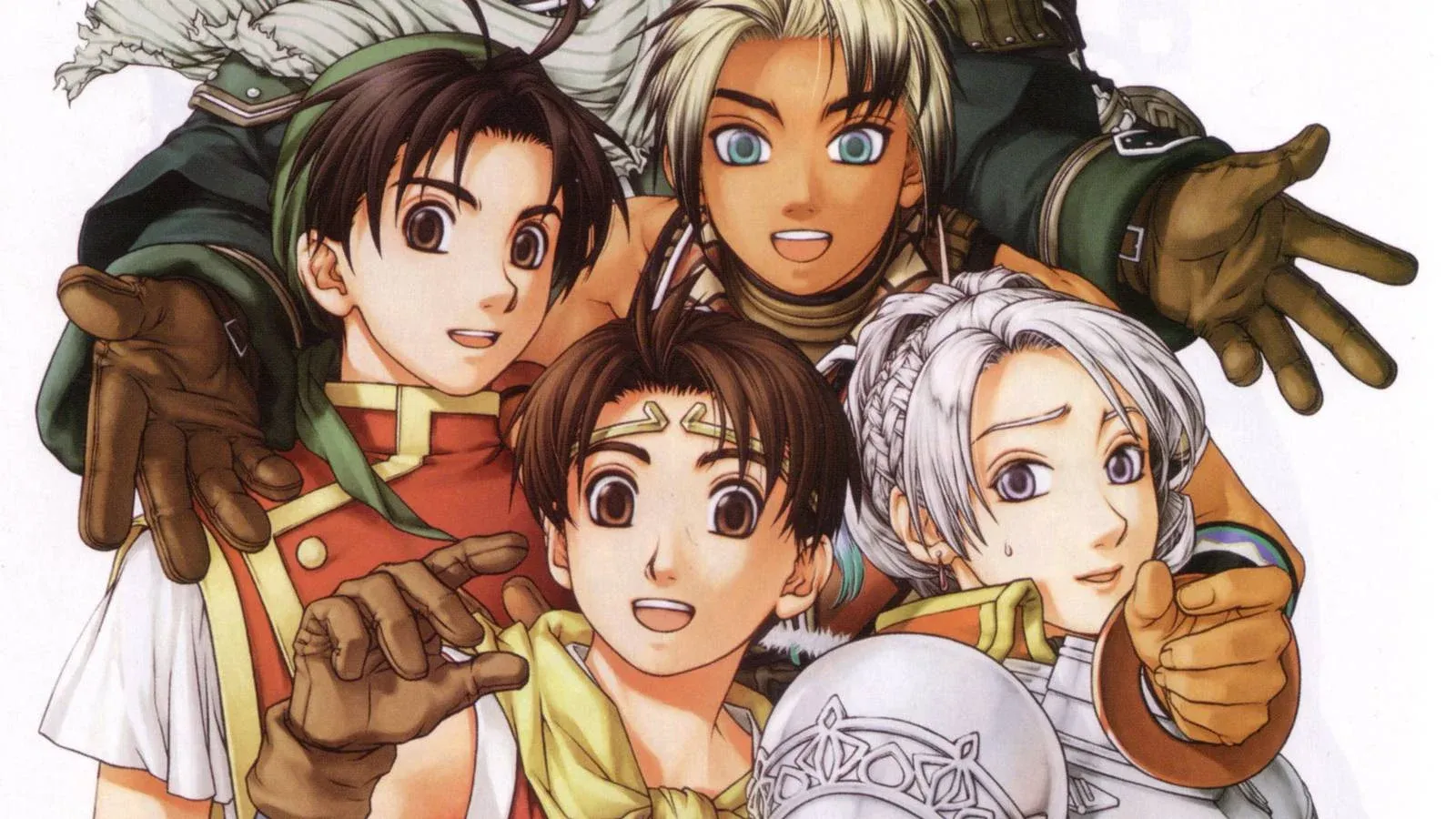
The original Suikoden launched on PlayStation in 1996, and the Celestial Sword (called the Star Dragon Sword in early translations) shows up about midway through the story. The setup is classic RPG: you need to defeat the vampire Neclord, but he's immune to every attack in your arsenal. You fight your way through his entire castle, get absolutely demolished, and then have to go find a workaround.
That workaround is a sentient, irritable sword in a cave.
Once Viktor, the mercenary accompanying protagonist Tir, reveals that Neclord destroyed his family and hometown, the Celestial Sword agrees to become his "partner." What follows is one of the more quietly funny dynamics in late-'90s RPG writing. The sword spends most of its dialogue insulting Viktor for being a hotheaded oaf. Viktor tolerates it because the alternative is losing to a vampire again.
Here's the thing: this dynamic worked because it punctured RPG tropes that were already feeling stale by 1996. The world-weary ancient weapon who has seen too many eager young heroes come and go is a smarter archetype than the solemn magical blade that speaks in riddles. One feels like a character. The other feels like a plot device.
The sequel did something even better with him
Suikoden 2, released in 1999 and widely considered the high point of the series, brought Neclord back from the dead. Viktor needed the Celestial Sword again. There was just one problem: between games, Viktor had ditched the sword in a cave because he got sick of listening to it.
That detail alone is funnier than most RPG writing from that era.
New protagonist Riou and Viktor retrieve the sword, but first they have to beat it in a boss fight, because of course they do. Once that's settled, the party heads to Neclord's new base for a rematch. The Celestial Sword gets the final word before the killing blow: "Crumble and die, vampire."
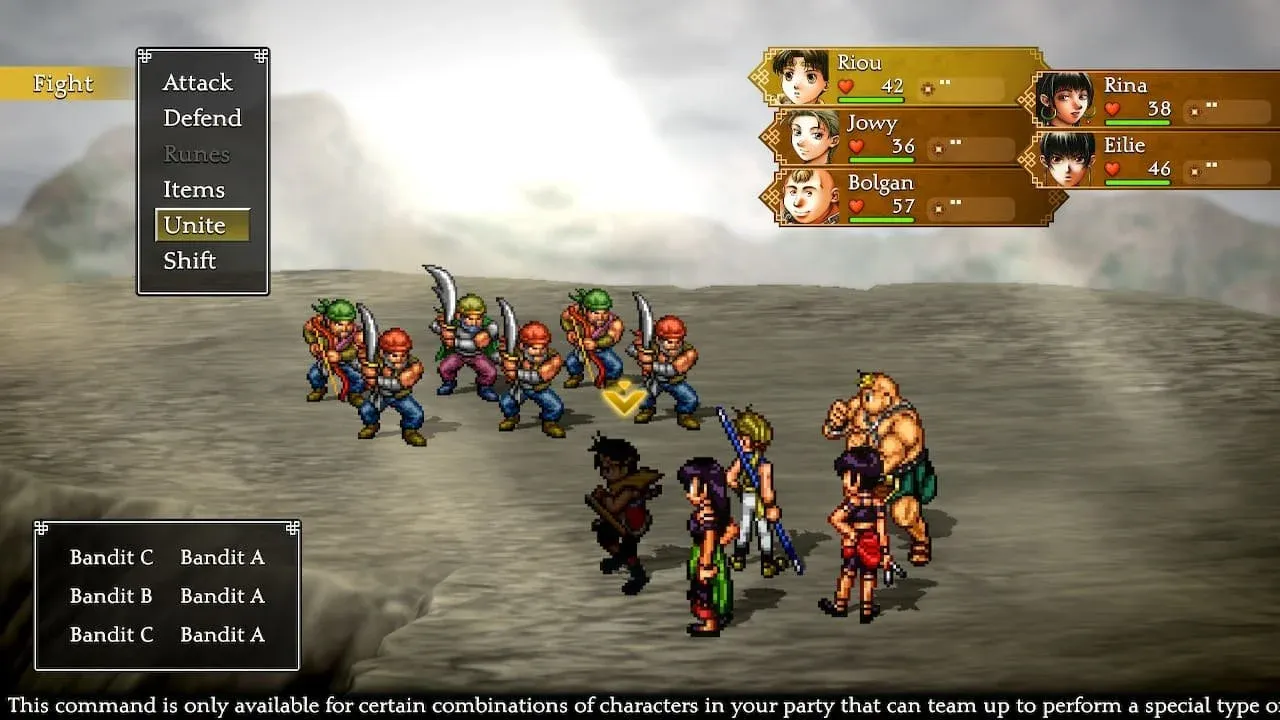
Viktor's party, Suikoden 2
Why modern RPGs keep getting this wrong
The key here is that the Celestial Sword works because it has a specific personality, not a general one. It's not "wise ancient weapon" or "corrupted dark blade." It's a cranky old man who happens to be a sword, has a specific grudge against vampires, and has spent centuries watching humans make the same mistakes. That specificity is what makes him memorable across two games and a 30-year gap.
Compare that to most modern RPG weapons with lore. You get journals. You get loading screen text. You get an NPC who explains the sword's tragic past in a cutscene. What you rarely get is the sword itself telling you to stop being an idiot.
Games like Baldur's Gate 3 came close with certain enchanted items carrying personality, and the Talking Weapon trope has a long history across fantasy fiction. But the Celestial Sword's execution in Suikoden, across two separate games with a continuous character arc, remains a high-water mark the genre hasn't really revisited.
For a series that asked players to recruit over 100 characters, making a sword one of the most memorable figures in the roster is a genuine achievement. Check out our game reviews for coverage of the Suikoden remasters and other classic RPG revivals worth your time.
The case for bringing this energy back
Glennon's piece arrives in the context of what Polygon is calling "Cool Sword Day," a loose editorial theme running across several pieces this week. But the argument lands beyond the gimmick.
RPG writing has gotten more sophisticated in a lot of ways since 1996. Companion dialogue is richer. World-building is denser. But the talking weapon with a distinct personality and an actual arc across multiple games? That slot in the genre is still basically empty.
Suikoden's Celestial Sword never fully lived up to its potential, partly because the games never answered basic questions about him. How did he end up in a sword? Can he ever get out? Those threads were left dangling. But even as an incomplete idea, he stands out in a catalog of more than 100 recruitable characters.
That's the bar. A sword with a bad attitude and a vampire grudge, and he's still more interesting than most of the humans around him. For anyone looking to revisit the series or discover it for the first time, our gaming guides have you covered on where to start with the remasters.
Roblox Resources
Check out Roblox Gift Cards on Amazon here.
Learn about other popular Roblox experiences: