Talus, a platform built for on-chain AI agents, has partnered with Sui blockchain to push the boundaries of what AI can do in decentralized environments. The deal centers on using Sui's high-speed, low-cost infrastructure to give Talus' AI agents the juice they need for real-time decisions and automation across DeFi, gaming, and social apps.
Enhancing AI Automation
Talus lets developers build tokenized AI agents that handle complex workflows — think automated trading strategies or self-running in-game economies. Plugging into Sui's parallel execution engine means these agents can scale without choking on transaction costs or latency. The result: AI that acts fast, stays transparent, and runs entirely on the blockchain.
The partnership also brings Talus' Nexus framework into play. Nexus is a developer toolkit for building AI agents that execute workflows directly on-chain, keeping everything auditable and secure. That matters for apps where trust and speed both count — automated market makers, dynamic NPCs, or reputation systems that need to react in real time.

Talus AI Smart Agent Hub
Walrus: Decentralized Storage for AI Agents
Talus has also tapped Walrus, a decentralized storage protocol from Mysten Labs, as its default storage layer. Walrus handles the heavy lifting of storing large AI models offchain, which keeps the network from getting clogged. By offloading model data and training sets, Talus ensures its agents can pull what they need instantly without waiting on the chain.
Walrus also powers data retrieval for agents that need live feeds — market sentiment, social trends, DeFi protocol stats. AI Bae, one of Talus' flagship agents, uses Walrus to store and update user profile data that shapes how it interacts with people. The setup keeps agents responsive in environments where stale data kills the experience.
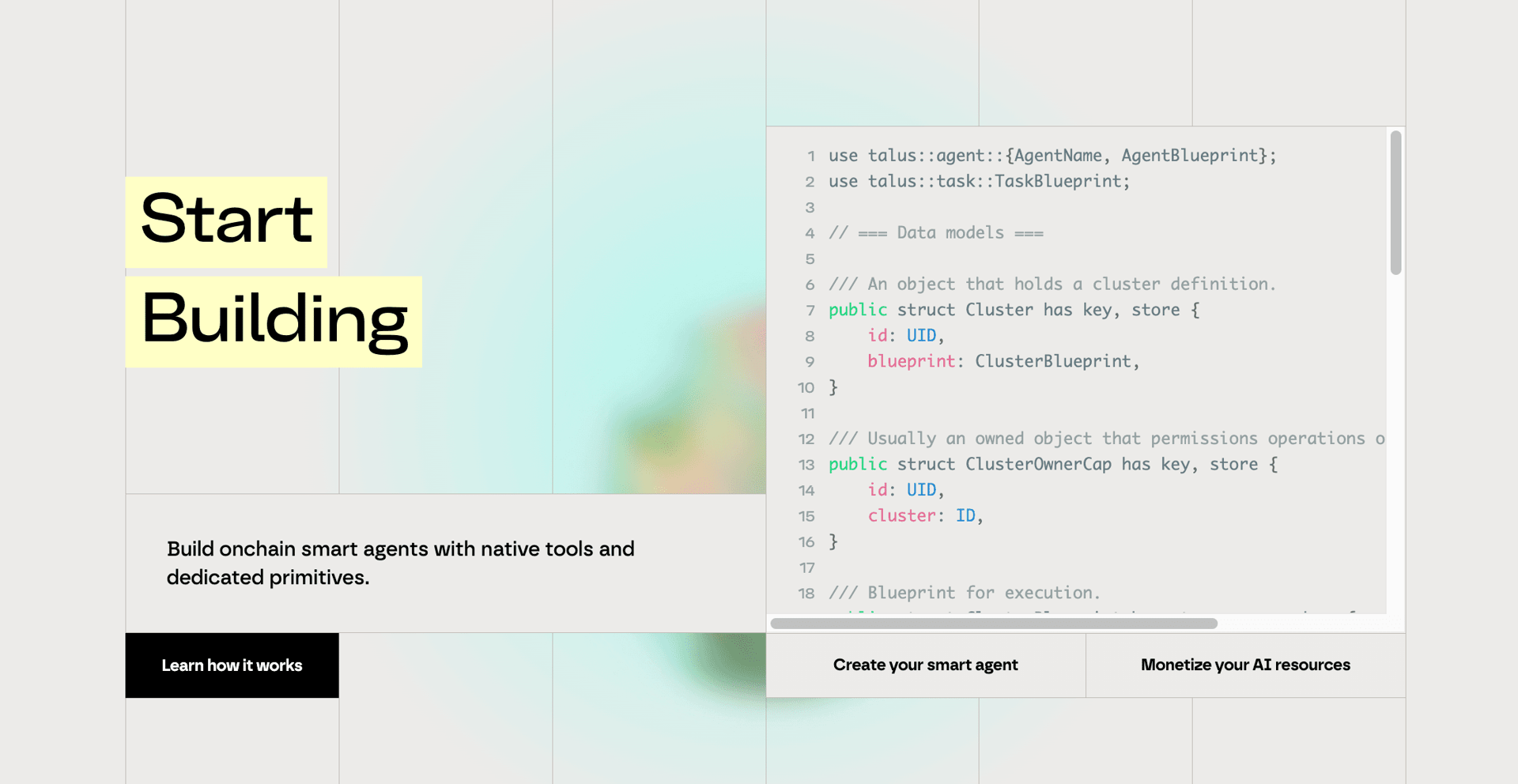
Talus Start Building Today
Implications for the Web3 Ecosystem
The Talus-Sui partnership marks a real shift in how AI fits into web3. By combining Sui's infrastructure with Walrus' storage, Talus is building a platform where AI agents can run autonomously, securely, and at scale. That opens doors for apps that need to react dynamically — liquidity shifts in DeFi pools, player behavior in gaming, or engagement patterns in social platforms.
Rebecca Simmonds, managing executive at Walrus Foundation, pointed to the technical fit: Sui's execution layer plus Walrus' storage creates an environment where AI-driven apps can store, retrieve, and act on data without bottlenecks. The combination makes Talus' agents more effective at automating tasks and engaging users in decentralized settings.
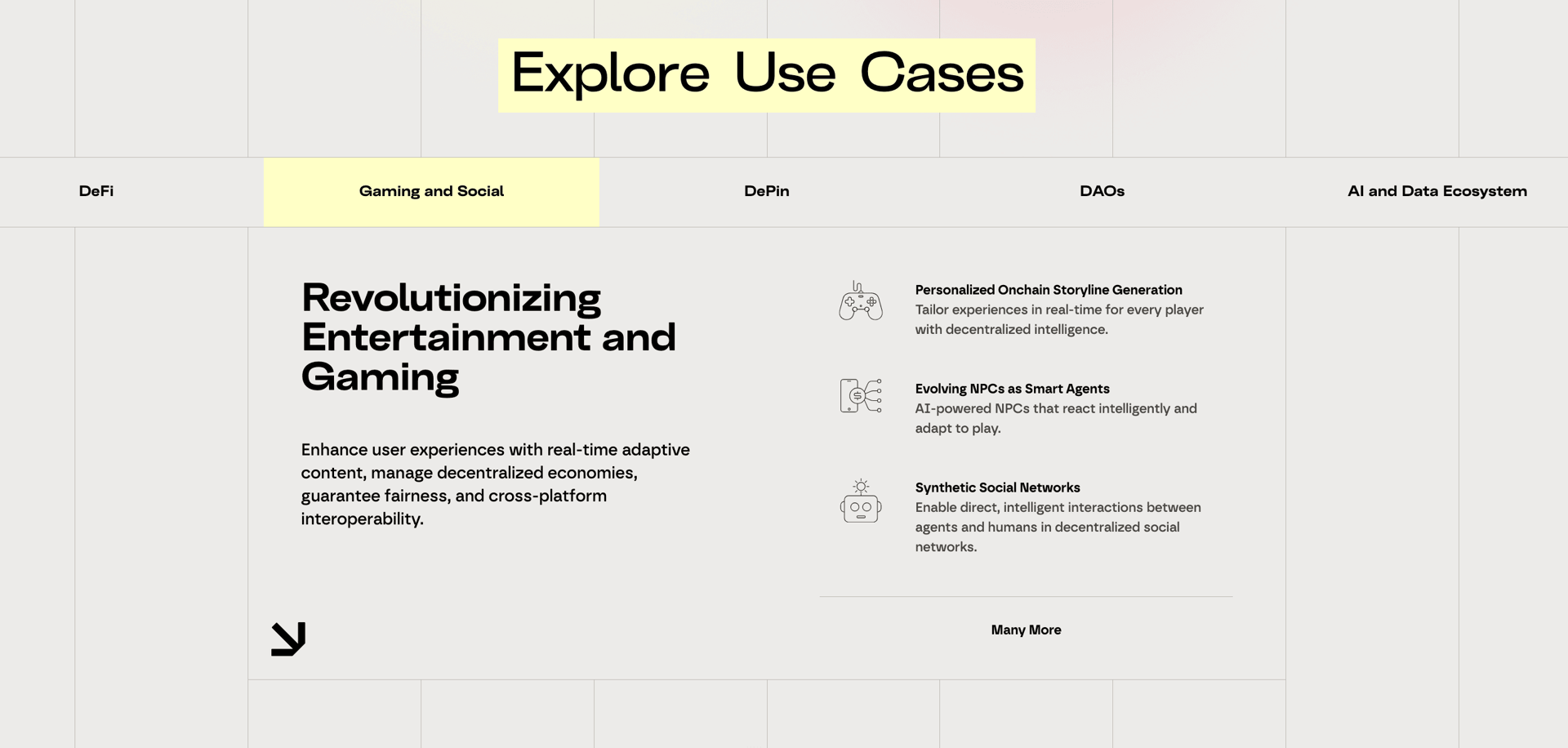
Talus Use Cases in Gaming
The Future of AI Agents in Web3
Mike Hanono, CEO of Talus, sees the partnership as a launchpad for AI-driven consumer apps in DeFi, gaming, and beyond. Projects like AI Bae and Idol.fun are early tests of how speculation, entertainment, and automation can blend in decentralized platforms. Sui Move, a programming language tailored for AI-driven apps, is expected to be a key piece of the technical stack going forward.
Nexus sits at the center of the strategy. The framework gives developers the tools to create, deploy, and scale AI agents without reinventing the wheel. By tying together Sui's execution layer, Walrus' storage, and Talus' on-chain framework, the companies are aiming to redefine what AI can do in web3.