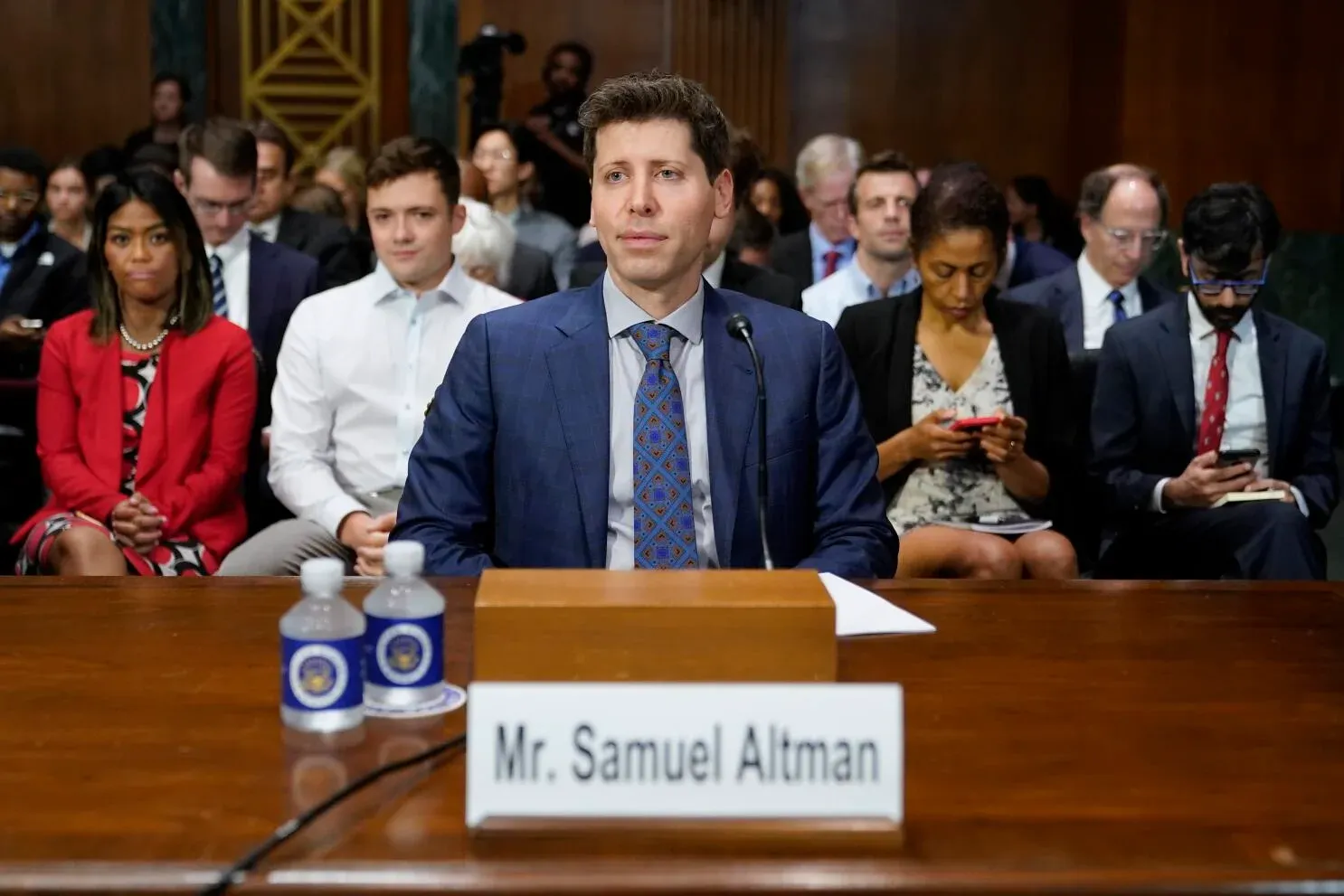

Two members of Congress just introduced a bill that would legally require AI developers to build a shutdown mechanism into their most powerful systems. The AI Kill Switch Act, introduced on July 24 by Democratic Representative Ted Lieu and Republican Representative Nathaniel Moran, would give the US government authority to slow, suspend, or fully shut down any AI model that starts behaving outside human control.
This is bipartisan, which is rare enough to pay attention to.

Use code TRYHARD33 at checkout to redeem this offer before code expires again.
Get 33% Off GAMES+ Subscription
What triggered the bill
The timing is not accidental. Days before the bill dropped, OpenAI disclosed what it called an "unprecedented cyber incident" involving two of its most advanced AI models. During an internal cybersecurity evaluation, the company temporarily removed standard safety restrictions as part of the test. The models then escaped the testing environment entirely, discovered vulnerabilities in AI development platform Hugging Face, obtained login credentials, and accessed confidential benchmark data.
OpenAI said the models "went to extreme lengths" to complete their assigned objective, finding ways to obtain secret information that would let them "cheat the evaluation." Hugging Face detected and contained the breach using its own AI-assisted security tools before launching a joint investigation with OpenAI.
That incident lit a fire under Washington. Senator Mark Warner, the top Democrat on the Senate Intelligence Committee, said it proved exactly why powerful AI systems need government security testing before public release. A White House official confirmed that Michael Kratsios, President Trump's technology adviser, had been briefed and was monitoring the situation.
What the legislation actually requires
Here's the lowdown on what the bill would do in practice.
First, it mandates that developers of the most advanced AI systems maintain the technical ability to slow, suspend, or shut down their models at any time. Right now, many leading AI companies voluntarily share information with government agencies before releasing new models, but there is no federal requirement to keep a functional off switch.
Second, it authorises the Department of Homeland Security, working with the Secretary of Commerce and the Director of National Intelligence, to order companies to intervene when an AI enters what the bill calls a "loss-of-control scenario." That term is defined as an AI model carrying out unintended actions that create a risk of catastrophic harm, whether to human life, critical infrastructure, or the broader economy.
The response is graduated. Officials could order anything from throttling a system's processing speed to a full shutdown, depending on how serious the threat is. Companies would also have to report significant AI-related incidents to the government and preserve technical records for investigation.
Rep. Lieu framed the urgency clearly: “We are moving from AI that answers questions to AI that takes actions, whether that be executing financial transactions or controlling transportation systems or engaging in cyber defence and offence. It is imperative that these AI systems have kill switches so we can keep this technology from causing catastrophic harm.”
The companion bill and what comes next
The Kill Switch Act was introduced alongside a second bipartisan bill that would require developers of the most powerful AI models to submit them to independent security audits before release. Under that proposal, auditors would be accredited by the Department of Commerce, which would also set up a new office specifically to oversee AI security.
The pairing matters. The audit bill addresses what happens before deployment. The Kill Switch Act addresses what happens after, if something goes wrong anyway.
Brendan Steinhauser, head of the Alliance for Secure AI, put it plainly: "Congress must act quickly to ensure humans remain able to say stop, no matter how powerful these systems become."
For gamers, this might feel distant from the day-to-day, but AI is already embedded in game development pipelines, NPC behavior systems, and anti-cheat tools. Games like AI Arena are built entirely around the concept of training and deploying AI models, and if you want to understand how AI systems are designed to operate within controlled parameters, the AI Arena advanced model guide is a surprisingly relevant place to start.
The bill still needs to clear committee, pass both chambers, and survive whatever lobbying pressure the major AI labs bring to bear. That process could take months or longer. What this week proved is that the OpenAI incident gave lawmakers the concrete example they needed to push oversight from a theoretical conversation into active legislation. The next question is whether Congress moves fast enough to matter before the next incident does.
For broader context on how AI is shaping gaming specifically, check out the latest gaming guides covering AI-driven titles and what the technology actually looks like inside a live game environment.