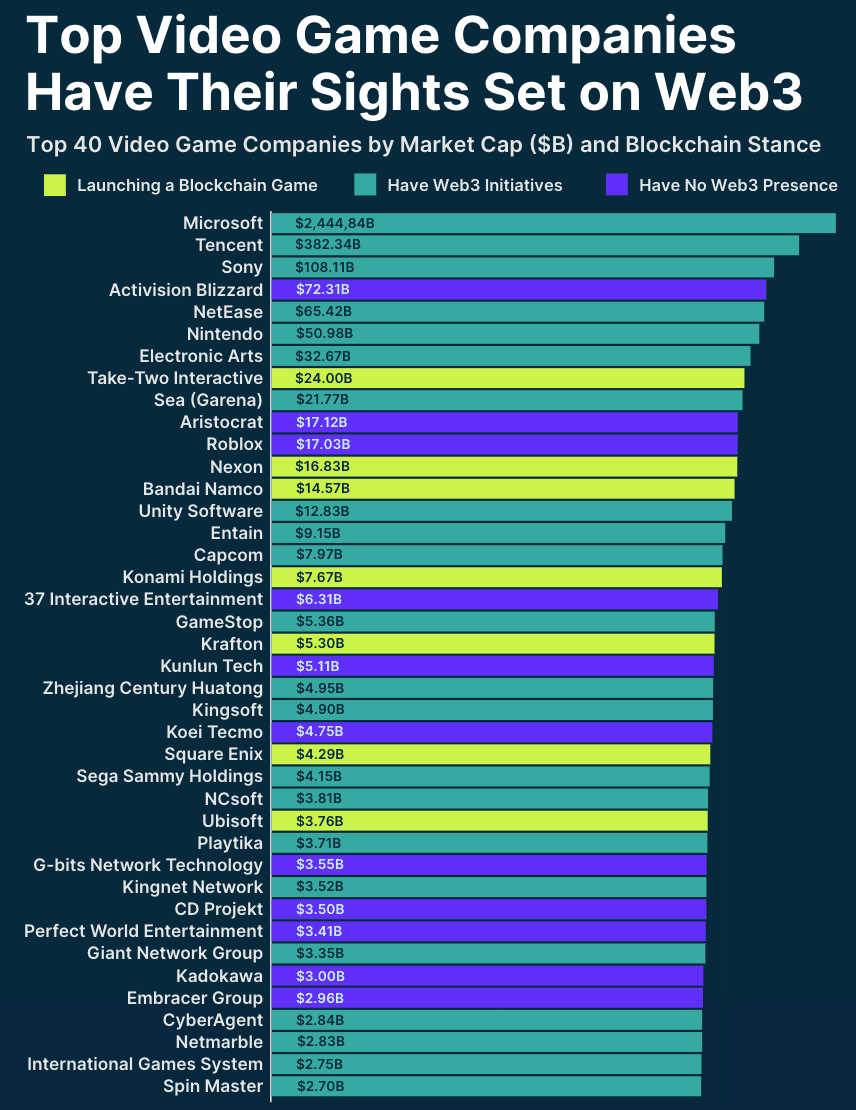
Recent data from CoinGecko shows that 72.5% of the top video game companies by market cap have started building in web3. The shift is real: blockchain technology is becoming part of how major studios think about games. Here's what the biggest traditional gaming companies are actually building.
Who's actually building web3 games?
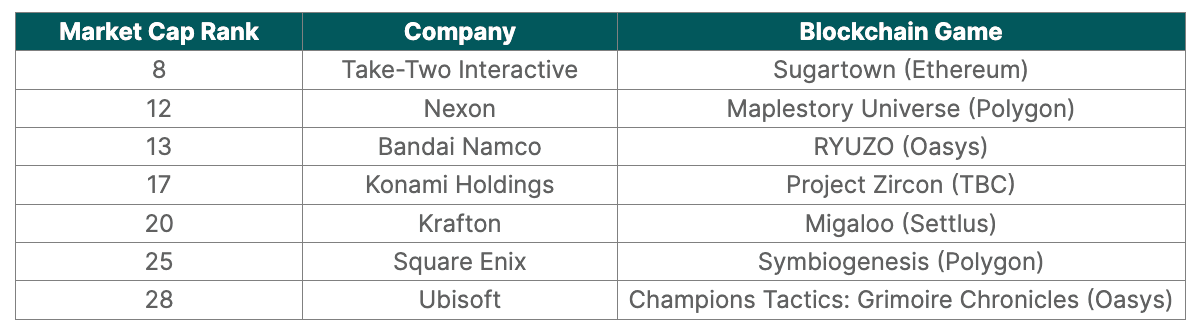
Out of the 40 largest video game companies by market cap, 29 have dipped into web3 in some form. That includes direct investment in blockchain gaming projects, hiring for blockchain roles, or developing games with on-chain components. But only 7 of those 29 (24.1%) are actually shipping web3 games: Take-Two Interactive, Nexon, Bandai Namco, Konami Holdings, Krafton, Square Enix, and Ubisoft.
Take-Two Interactive & Zynga: Sugartown (Ethereum)
Zynga, the mobile game studio owned by Take-Two Interactive, launched Sugartown on Ethereum. The game centers on three farm animals and uses ERC-721 Ora tokens as entry tickets. Players stake Oras to generate energy, which they spend playing mini-games and earning Sugar, the in-game currency for unlocking rewards. Sugartown is straightforward: stake, play, earn.

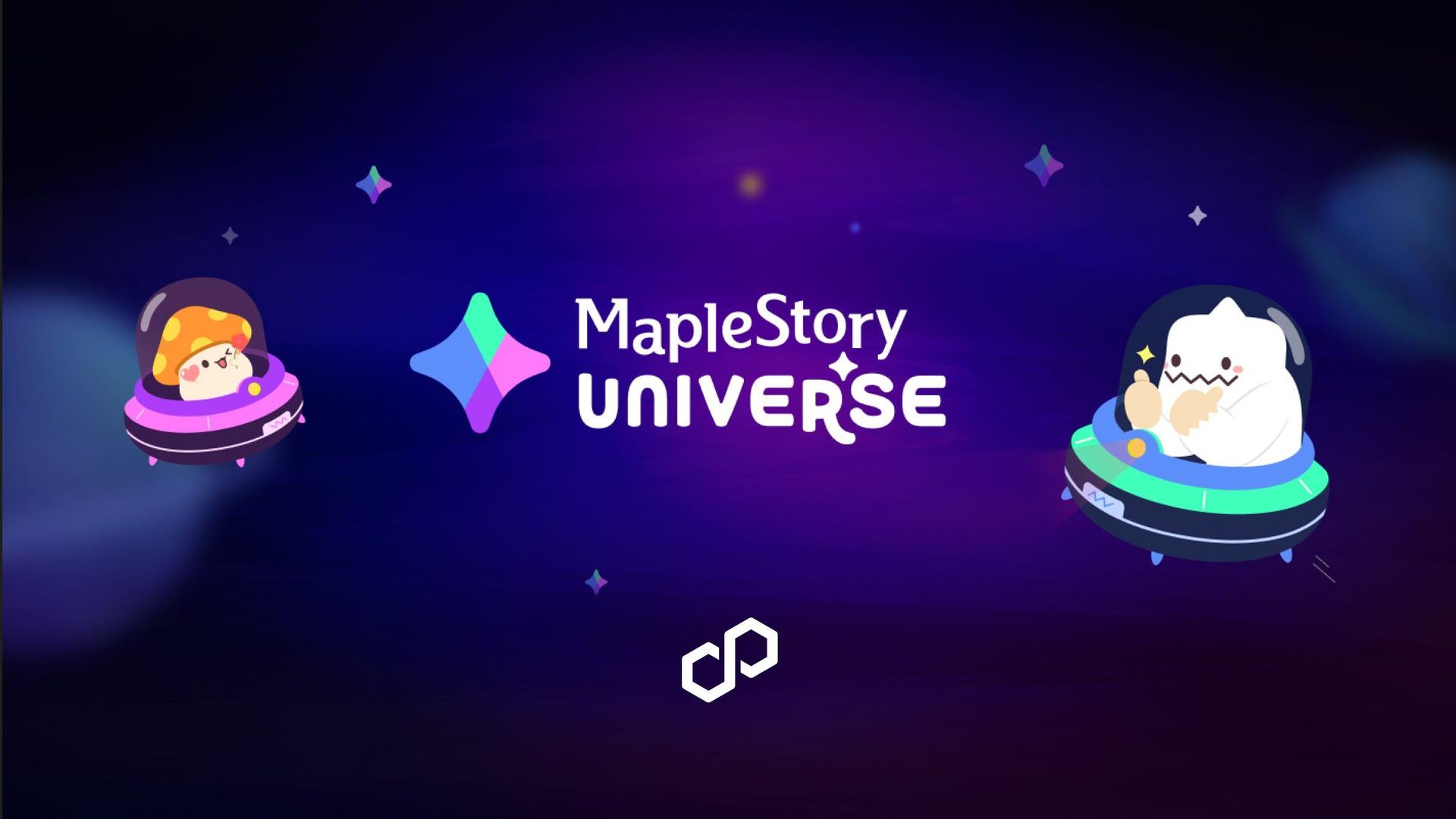
Nexon: Maplestory Universe (Avalanche)
Nexon'sMapleStory is building what it calls RX 2.0, combining its Reward Experience system with blockchain. The plan includes an NFT ecosystem where players earn limited-quantity NFTs through gameplay and trade them peer-to-peer. The limited supply is meant to control inflation compared to unlimited token systems.
MapleStory N, the PC MMORPG version, will extend MapleStory Universe NFTs to mobile. It's also introducing MapleStory N World, a sandbox for creators to build new games, and MapleStory N SDK for third-party developers. The franchise is betting on user-generated content and cross-platform NFTs to scale.
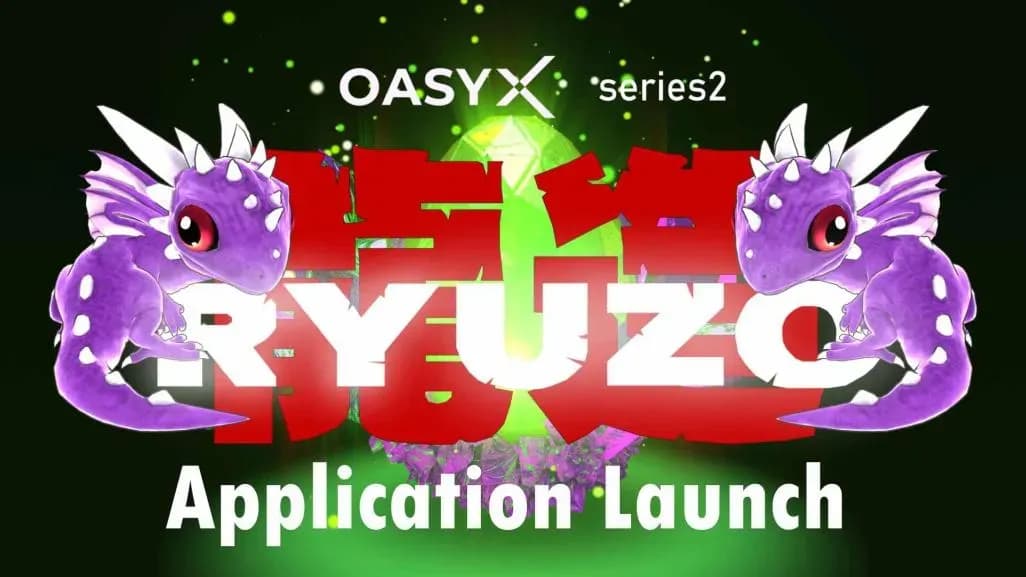
Bandai Namco: RYUZO (Oasys)
Bandai Namco partnered with Oasys to create RYUZO, an AI-powered virtual pet game built around NFT creatures. Developed by Bandai Namco Research and Japanese startup Attructure, and published by Double Jump Tokyo, RYUZO features digital creatures called RYU. An initial airdrop of 10,000 NFT eggs (MARYU) went to Oasys NFT holders. These eggs hatch into soulbound NFTs, giving holders potential ownership stakes in the project based on community contributions.
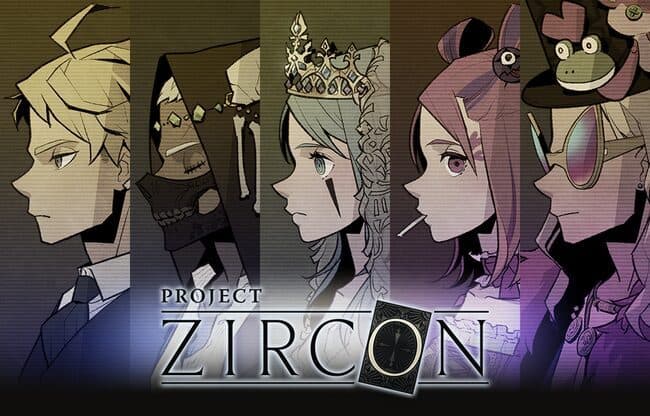
Konami: Project Zircon (TBD)
Konami, known for Yu-Gi-Oh! and Castlevania, announced Project Zircon, a web3 game offering "a new co-creation experience by utilizing blockchain technology." The game is set in the Castlevania universe (known as Akumajō Dracula in Japan). Zircon is a gemstone within Castlevania lore, and the concept involves community contributions adding unique "gem shades" to the game world. Castlevania is one of Konami's biggest franchises, so this is a significant IP to build on blockchain.
Krafton: Overdare (Settlus)
Krafton'sOverdare (formerly Project Migaloo) soft-launched in December, with a full release scheduled from January to July 2024. Overdare is a Roblox-style platform running on Unreal Engine 5 by Epic Games. The platform gives creators AI tools to build games ranging from shooters to RPGs. Early previews show an open-world platform where users can create games, attend virtual concerts, customize avatars, and interact with other players.
Square Enix: Symbiogenesis (Polygon)
Square Enix partnered with Polygon in February to build Symbiogenesis, a web3 experience where digital collectible art (NFTs) evolves based on player decisions. The game is set on a floating continent with branching storylines unlocked by holding or trading character NFTs. Players complete missions to earn collectibles and uncover more of the world's story.
Ubisoft: Champions Tactics Grimoire Chronicles (Oasys)
Ubisoft revealed Champions Tactics Grimoria Chronicles, a PVP tactical RPG and the company's first web3-native game. Players assemble teams of mythical Champions and battle other players in the dark fantasy world of Grimoria. Ubisoft has hinted at NFT integration but hasn't provided specifics yet. The game is a browser game, continuing Ubisoft's experimental approach to blockchain.
Final thoughts
Web3 gaming is still early. The biggest challenge is that no project has delivered both a great game and meaningful blockchain integration at scale. For web3 gaming to matter, players need real rewards (unique in-game assets, NFTs, or working tokenomics) and the games need to be good enough to attract mainstream players, not just crypto enthusiasts.
The top video game companies are committed. Whether they can build games that justify the blockchain layer remains to be seen.