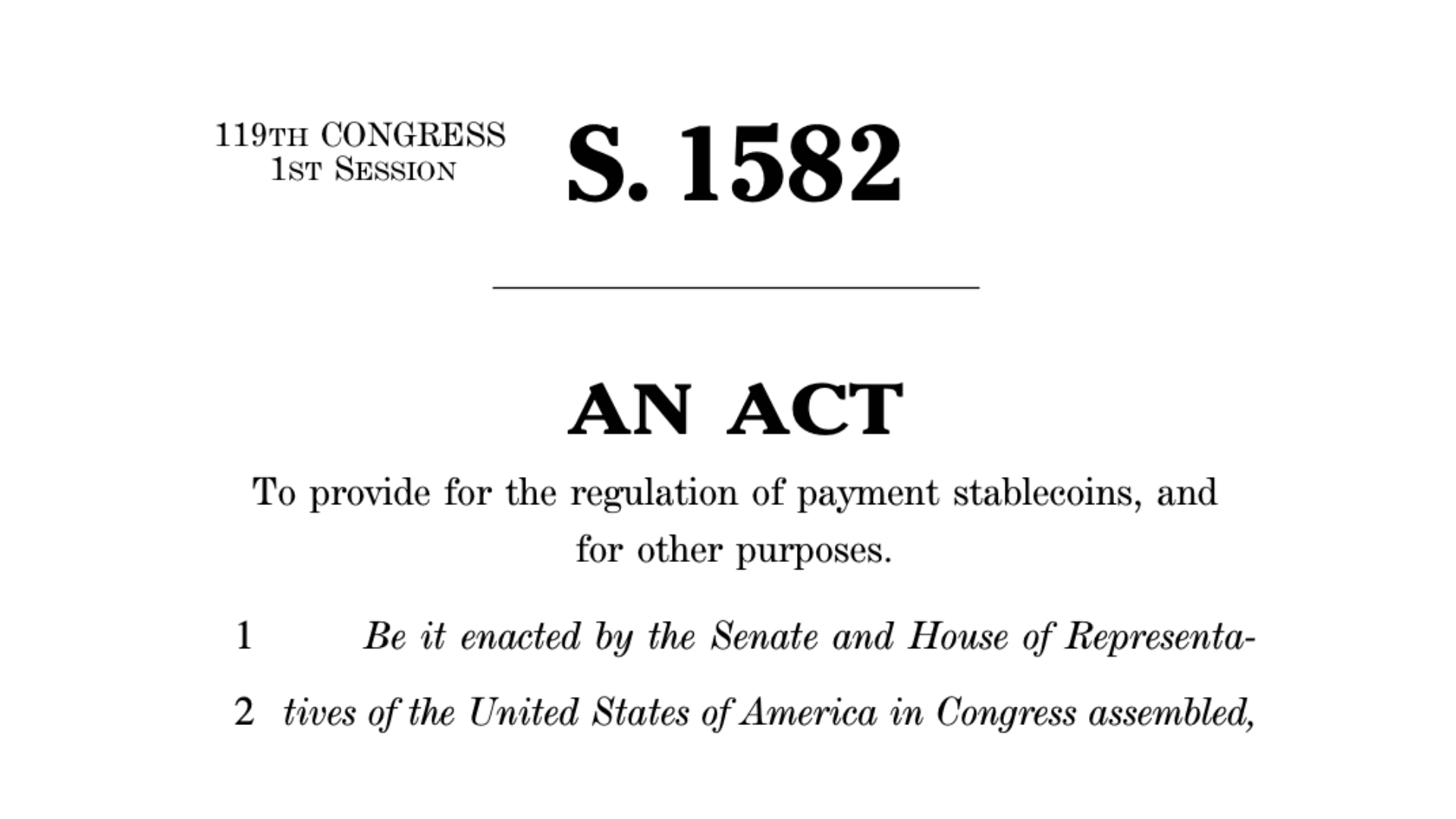
On July 18, 2025, the United States passed its first comprehensive crypto legislation. The Guiding and Establishing National Innovation for U.S. Stablecoins Act (GENIUS Act) received bipartisan backing in both chambers of Congress before being signed at the White House. The law establishes federal guidelines for stablecoins and represents a major policy shift in how Washington handles digital assets.
What is Next for US Crypto Regulation?
What is Next for US Crypto Regulation?
Stablecoins are digital currencies pegged to the U.S. dollar, designed to enable faster and cheaper transactions than legacy payment rails. Their use cases range from online commerce to cross-border remittances, and they serve as the foundation for apps that treat money as programmable infrastructure.
Before this law, stablecoin projects operated in regulatory limbo. The GENIUS Act fixes that by defining legal requirements for issuance, custody, and auditing. The intent is to let businesses build without constant legal uncertainty while keeping consumers and the financial system protected from systemic risks.
The law is expected to accelerate stablecoin adoption across multiple sectors. That includes basic payments, but also more experimental territory like micropayments, AI-powered commerce, and global financial tooling. The U.S. also sees this as a chance to shape international standards for digital currency before other jurisdictions fill the void.
What is Next for US Crypto Regulation?
The GENIUS and CLARITY Act
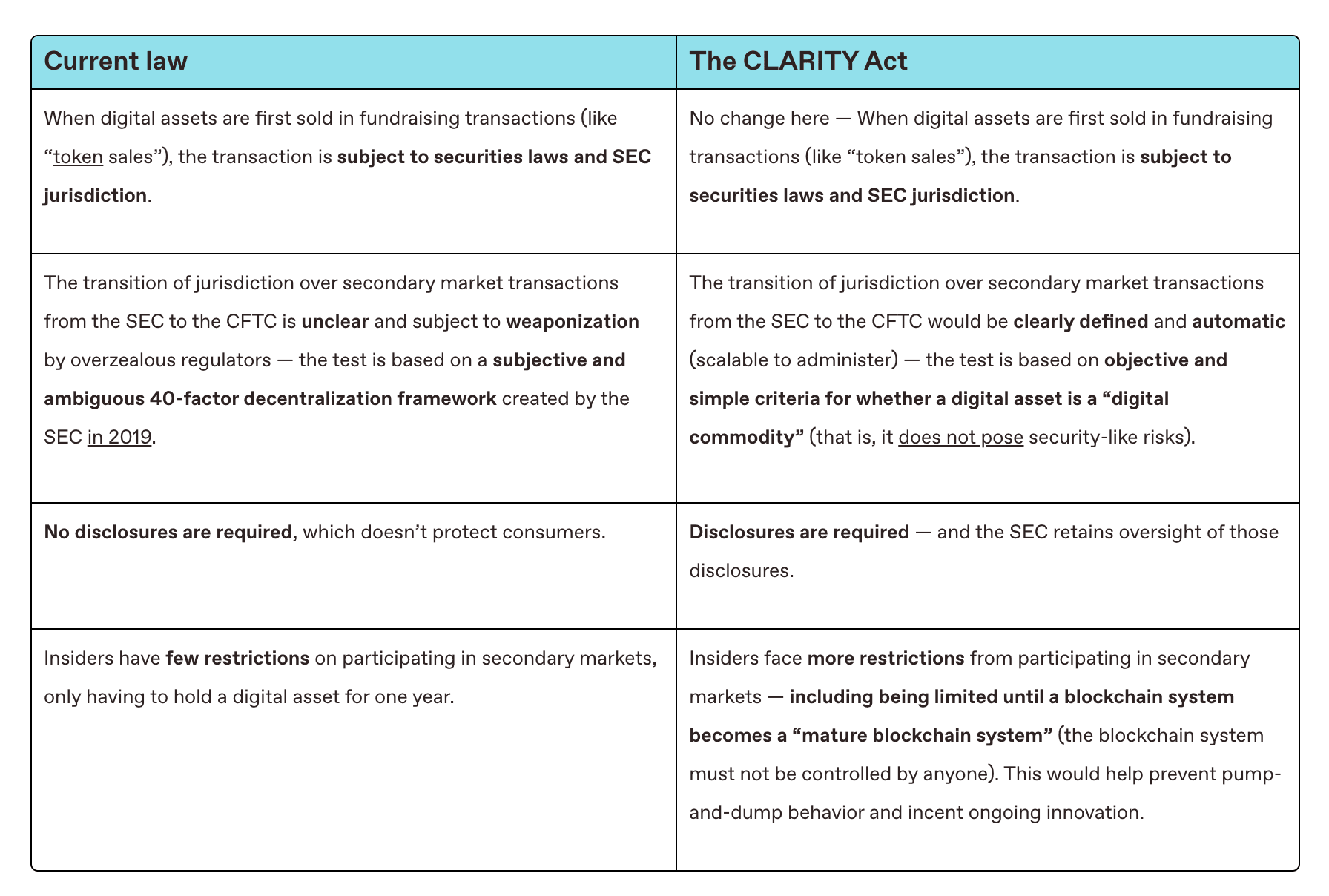
With the GENIUS Act signed, lawmakers are already moving on to the next piece: market structure. The CLARITY Act (Digital Asset Market Clarity Act, HR 3633) is the bill that would fill in the gaps left by stablecoin-only regulation.
The CLARITY Act cleared the House with strong bipartisan numbers and is now headed to the Senate. It picks up where earlier proposals left off and addresses the parts of the crypto ecosystem that still lack clear rules.
The bill targets blockchain networks, exchanges, brokers, and other intermediaries. It aims to give developers and businesses legal clarity while imposing transparency and oversight requirements that mirror traditional finance standards.

What is Next for US Crypto Regulation?
Addressing a Regulatory Gap
The GENIUS Act covers stablecoins but not the blockchains they run on. That's a problem. As stablecoins scale, the underlying networks become critical financial infrastructure. Without rules for how those systems operate, you risk creating new vulnerabilities that affect users and the broader economy.
The CLARITY Act would close that gap by setting operational standards for blockchain systems. It would require intermediaries to register and comply with rules similar to those already enforced in traditional finance. The goal is to reduce risk without killing innovation.
The bill would also clarify which digital assets count as securities and which fall under commodities regulation. That distinction matters because it determines what developers can and can't do without triggering enforcement actions.

What is Next for US Crypto Regulation?
What This Means for Web3 and the US
The GENIUS and CLARITY Acts together signal a shift in how the U.S. government thinks about digital assets. Instead of piecemeal enforcement, there's now an effort to build a coherent regulatory framework. For developers, that means fewer legal ambiguities and more room to ship new products, especially in gaming. For users, it means better protections and more transparency in crypto products.
These laws also reflect Washington's interest in staying relevant as web3 matures. Setting clear rules early is seen as essential to ensuring that decentralized systems can grow without fragmenting into regulatory chaos or ceding ground to other countries.
The GENIUS Act is just the beginning. The real test is whether the CLARITY Act can deliver a workable market structure framework. If it passes, it could define how blockchain regulation works in the U.S. for years and set the template for how web3 evolves globally.