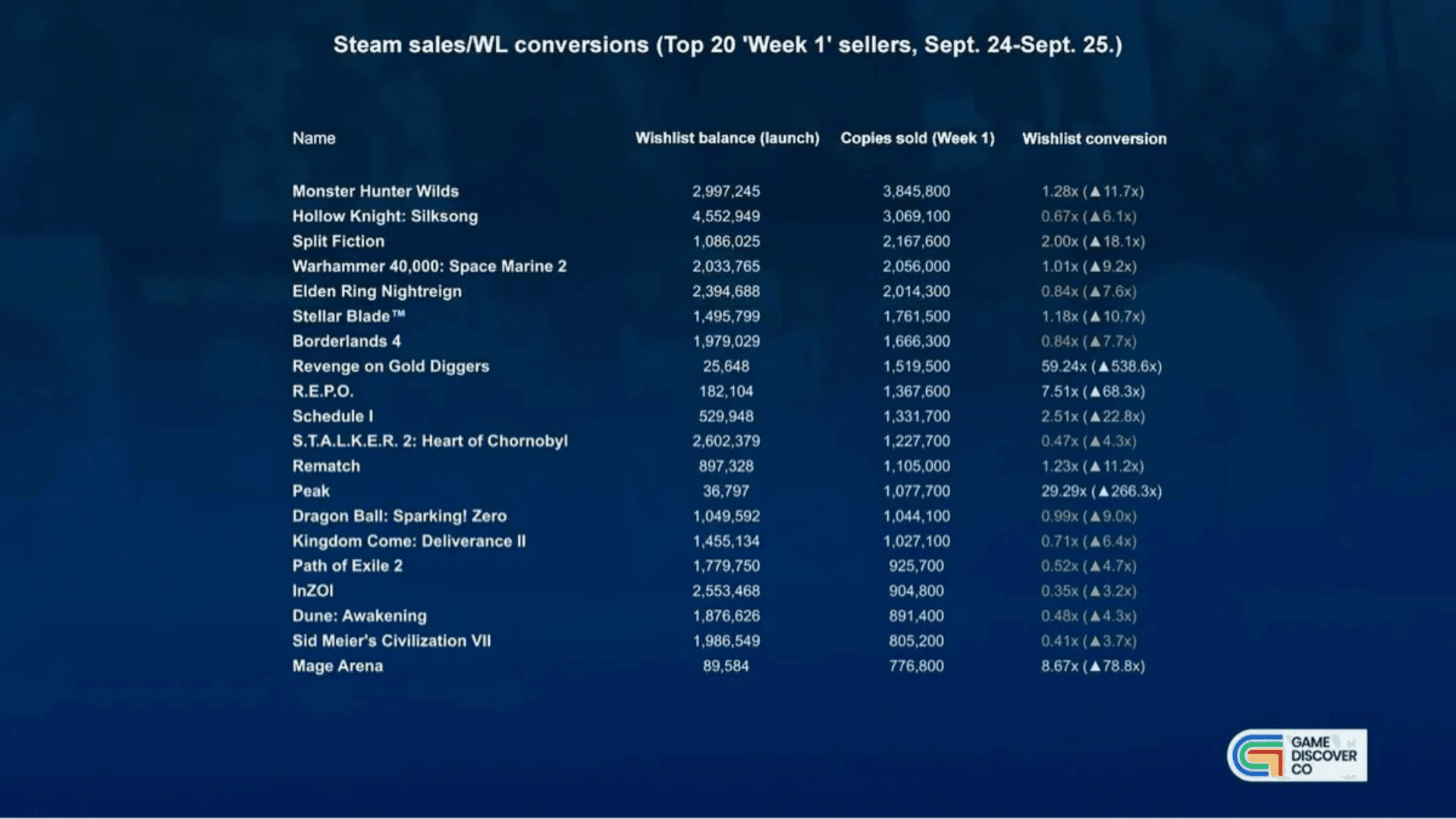

Recent analysis of Steam launch data tracks how wishlist counts translate into first-week sales. The dataset spans releases from September 2024 through September 2025, examining conversion patterns across price tiers, genres, and player reception. This research measures total first-week purchases, not just buyers who previously wishlisted the title, offering a fuller view of launch dynamics.
Conversion rates and pricing patterns
The median conversion rate sits at 0.15× for games that launched with more than 25,000 wishlists. A title entering the market with 100,000 wishlists can expect roughly 15,000 sales in its first week. Individual results vary dramatically—sometimes by tenfold or more—depending on genre, timing, and how effectively the game captures attention.
Pricing plays a clear role. Titles debuting above $10 see a median conversion of 0.10×. Excluding NSFW content from the sample adjusts the median to 0.14×, since adult games tend to convert more aggressively than the broader catalog.
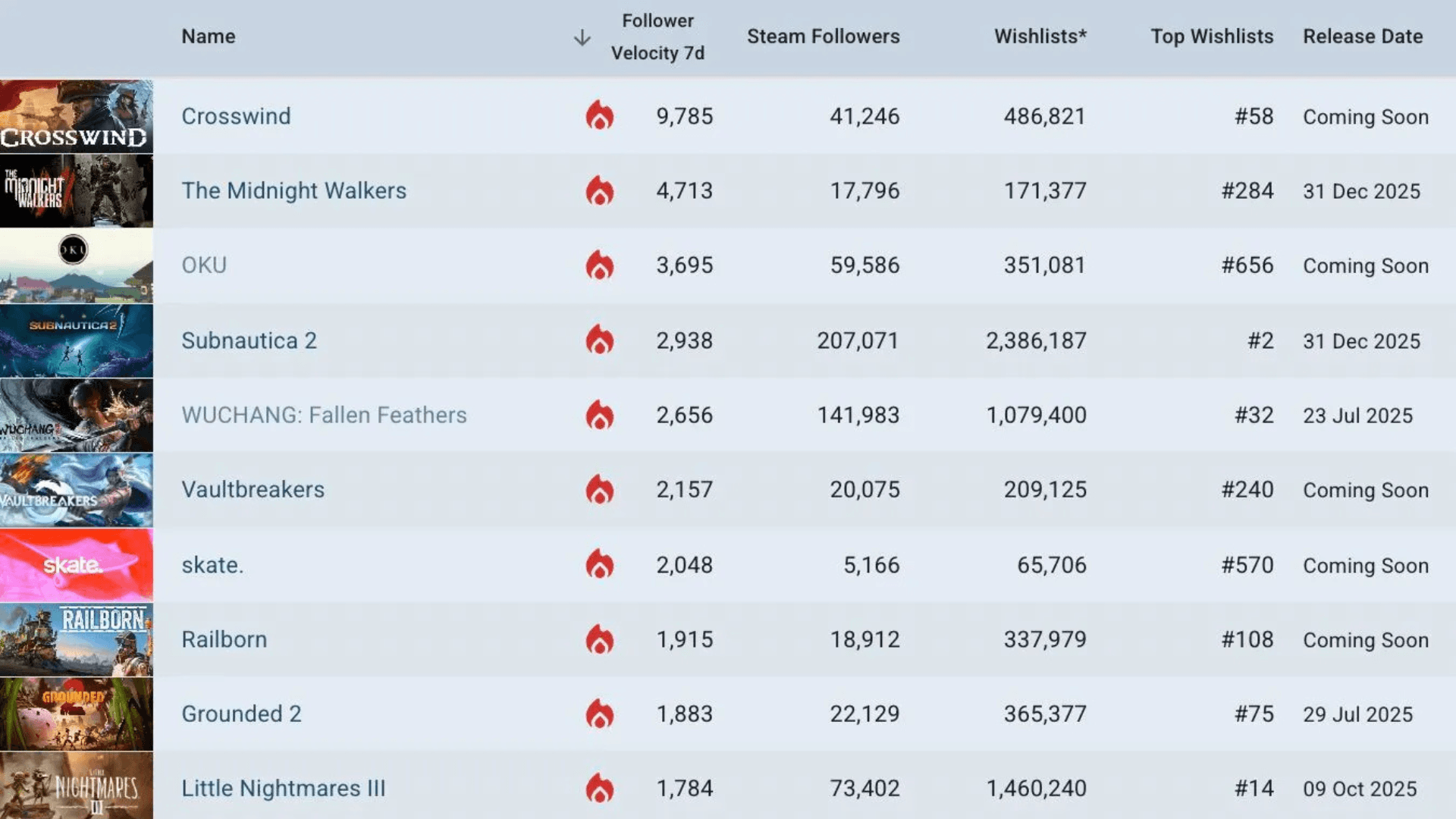
Conversion rates haven't weakened over time. The real obstacle is building wishlists at all. Steam's expanding release schedule intensifies the fight for visibility and user attention.
Exceptional performers and outlier behavior
Some launches blow past typical benchmarks. Peak hit 29.29×, Mage Arena reached 8.67×, and R.E.P.O. landed at 7.51×. These outliers show that strong community energy or viral moments can push sales far beyond wishlist totals, especially when players buy immediately instead of adding to their lists.
Wishlist patterns shift by game type. AAA releases often gather fewer wishlists because players preorder directly. Some indie titles catch fire through streams or social media and skip the wishlist phase entirely as interested players purchase on sight.
Reception quality and pre-launch timing
Player reception directly impacts conversion. Games that fell short of expectations launched to first-week user scores around 67 percent on Steam. Titles that outperformed expectations averaged 91 percent. Early sentiment drives momentum—visibility alone can't rescue a poorly received launch.
Pre-release duration matters too. Underperforming games spent an average of 411 days in pre-release visibility on Steam, compared to 214 days for stronger performers. Prolonged pre-launch windows can bleed momentum, eroding the interest that built those wishlists in the first place.
Frequently Asked Questions (FAQs)
How many sales can 100,000 Steam wishlists generate?
Current data points to a conversion rate around 0.15×, translating 100,000 wishlists into approximately 15,000 first-week sales.
Do higher game prices reduce conversion rates?
Yes. Titles priced above $10 at launch show a median conversion of 0.10×.
Are wishlist conversions declining over time?
No long-term decline appears in the data. The challenge is accumulating wishlists amid growing competition on Steam.
What impacts conversion the most - wishlist count or user reviews?
Both factor in, but early reception correlates strongly with performance. Games exceeding expectations posted significantly higher first-week user ratings.
Do long pre-release periods help?
Not reliably. Extended pre-release visibility often correlates with weaker conversion as momentum fades.
Does this data apply to indie and AAA games?
Yes. The dataset covers both. AAA titles lean more on preorders, while indie games depend more heavily on wishlist-driven awareness.