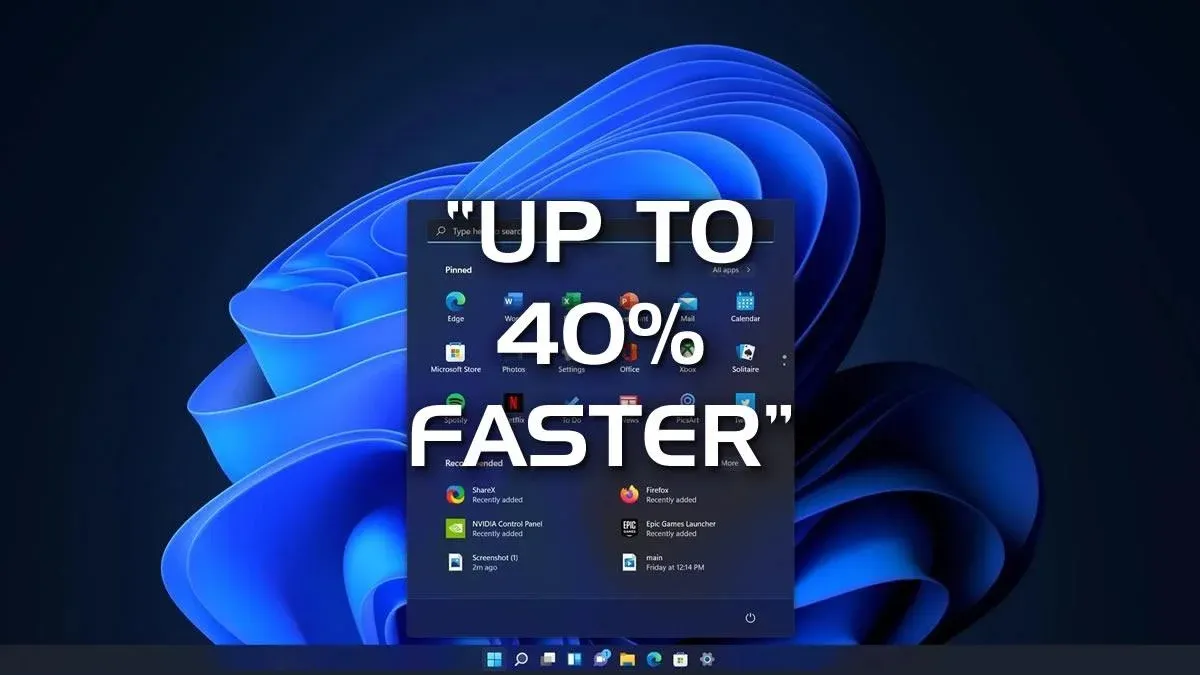


Microsoft is reportedly working on a new Low Latency Profile for Windows 11 that could make your PC feel noticeably snappier, at least for brief moments. The feature would automatically max out your CPU frequency in short bursts of 1 to 3 seconds to speed up app launches, context menus, and other interface interactions.
The numbers being reported are hard to ignore: up to 40% faster launch times for Microsoft apps like Outlook and Edge, and up to 70% faster load times for interface elements like the Start menu and context menus. The feature is also expected to extend those gains to most common third-party apps, not just Microsoft's own software.

Use code TRYHARD33 at checkout to redeem this offer before code expires again.
Get 33% Off GAMES+ Subscription
What the Low Latency Profile actually does
Here's the thing: this isn't Microsoft optimizing its code or trimming the fat from Windows. The Low Latency Profile works by briefly overclocking your CPU whenever the system detects you're launching something or waiting on a UI response. Think of it as Windows hitting a turbo button on your behalf, then backing off a second or two later.
For most desktop PCs, that's probably fine. The power spikes are short, and the thermal impact should be minimal under normal conditions. The catch comes if you're already running a manually overclocked CPU, where these automated frequency bursts could interact unpredictably with your existing settings.
Laptops and handhelds get a more complicated story
Microsoft claims the feature won't significantly affect battery life or thermals on laptops and handheld PCs, because the bursts are so short. That claim deserves some skepticism. Any automatic CPU frequency ramp-up will consume more power than doing nothing, even if only marginally. For handheld gaming PCs already fighting for every watt of battery life, even small increases add up over a long session.
This matters especially given Windows 11's ongoing struggle against SteamOS on handhelds. Valve's operating system has consistently delivered better battery efficiency on devices like the Steam Deck, and that gap has been a real talking point in the PC handheld community. A feature that nudges power consumption upward, however slightly, isn't exactly the answer handheld users were hoping for.
Part of the bigger Windows K2 push
The Low Latency Profile is being developed under Windows K2, Microsoft's internal initiative aimed at addressing the most common complaints about Windows 11. That effort has been picking up speed recently, with multiple reported changes in the pipeline targeting performance, responsiveness, and user control.
What's unclear right now is whether users will be able to toggle the feature on or off. In its current testing state, the Low Latency Profile runs silently in the background with no user-facing switch. Whether that changes before any public release is an open question.
The feature is still in early testing, so nothing here is confirmed shipping behavior. If you want to keep up with what's changing in Windows 11 for gaming and check our gaming guides covering PC performance setups, there's plenty of reading to do while this one develops.
For context on how the software and hardware side of PC gaming is shaping up right now, our game reviews section has current coverage worth checking out.
The Low Latency Profile is the kind of feature that sounds great in a headline and gets more complicated the closer you look. A 70% faster Start menu is genuinely useful. Automated CPU bursting that sidesteps proper optimization is a workaround, not a fix. Keep an eye on the Windows K2 rollout for when this moves from rumor to something you can actually test on your own rig.