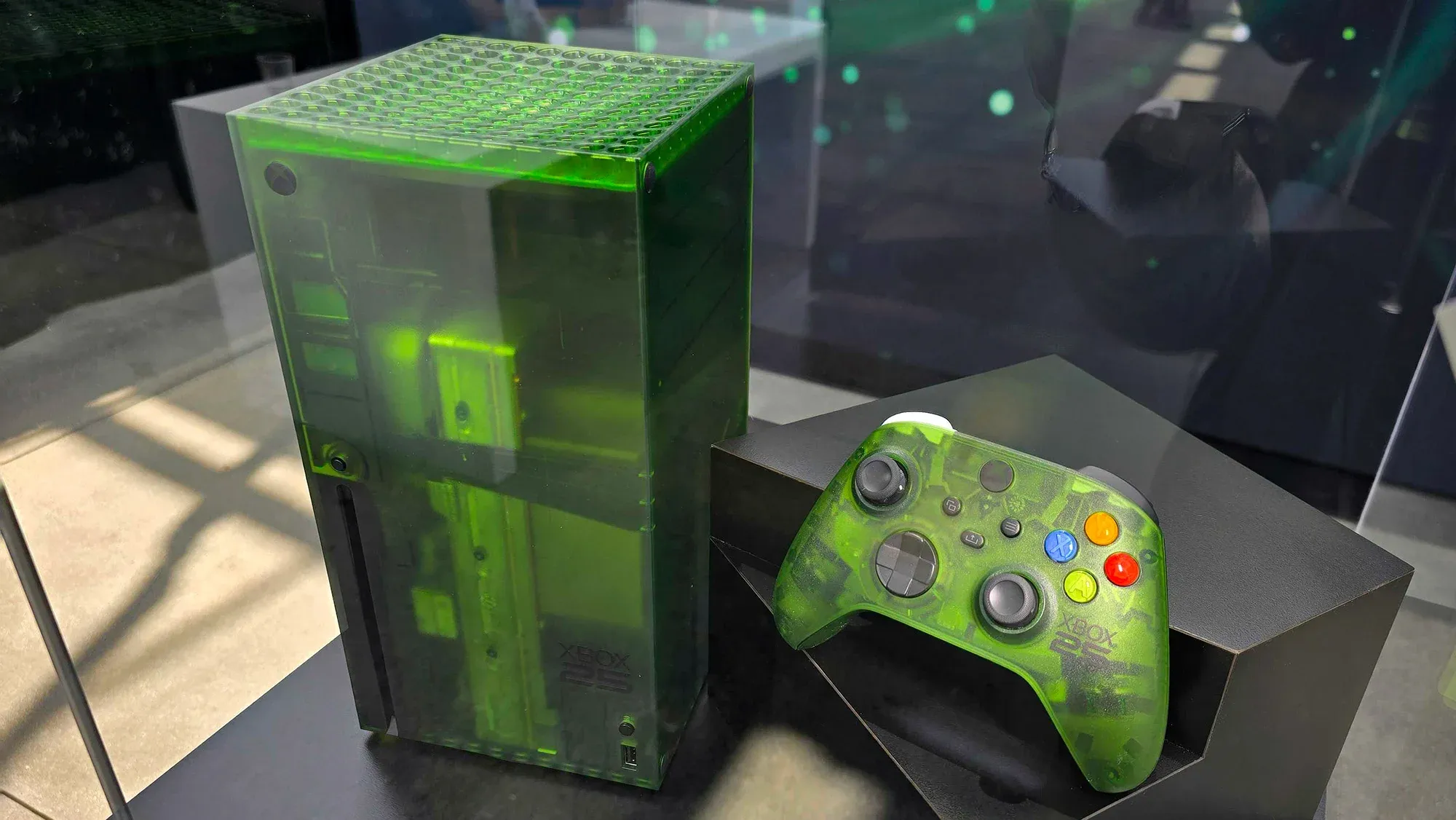


If you bought an Xbox Series X at launch and watched Starfield, Forza Horizon, and even the original Gears of War eventually land on PlayStation, you already knew something was wrong. Now the person Microsoft hired to fix the problem is saying it out loud.
Matthew Ball, the analyst-turned-chief strategist recently brought on board by Xbox head Asha Bhatt, took the stage at Summer Game Fest 2026 this week and delivered one of the most candid admissions you will hear from anyone in a senior platform role. "For the last while, it has become difficult to articulate why you should pick an Xbox console," Ball said during a live interview at the event. “Players have told us that.”
Use code TRYHARD33 at checkout to redeem this offer before code expires again.
Get 33% Off GAMES+ Subscription
How Microsoft talked itself into this corner
The shift started when Microsoft began releasing its first-party titles on PlayStation and PC, betting that expanding reach would offset the loss of platform exclusivity. The logic made sense on paper. More players, more Game Pass subscribers, more revenue. Here's the thing: it also quietly dismantled the only real argument for owning the hardware.
Consoles have never competed on specs alone. Performance gaps between Xbox and PlayStation have been marginal for years, and prices sit in roughly the same range. What historically moved units was software you could not get anywhere else. Sony understood this. Microsoft, for a stretch, did not.
Sea of Thieves on PS5 was the first major signal. Then came Forza. Then Gears. Then Starfield, the Bethesda RPG that was supposed to be the flagship reason to own a Series X this generation, quietly arrived on Sony's platform earlier this year. Every port chipped away at the foundation.
Ball's pitch: exclusives are back, and the obligation runs both ways
Ball did not just diagnose the problem at Summer Game Fest. He spelled out the fix. Xbox is committing to exclusives again, and he was specific about why two titles matter more than one right now. "We need to ask people to spend a lot of money today to become an Xbox player," he said. "That is a real ask. It's expensive."
What stood out in his comments was the acknowledgment of existing owners. Microsoft asked millions of people to spend $500 on a console. Ball said the company still has an obligation to those players, whether or not they also own a PlayStation. That is a notable shift in tone from the "everything is an Xbox" messaging that dominated the past few years.
The messaging pivot toward "the return of Xbox" is an admission that the platform lost its way. Whether a handful of exclusives per year is enough to rebuild that identity is a genuinely open question, and Ball was careful not to oversell the timeline.
Optimism with an asterisk
Ball described himself as a "strategic optimist" when Bhatt asked him directly whether Xbox is fixable. His answer was yes, with the caveat that how hard, how long, and what it takes are all separate questions worth taking seriously.
That framing is honest, but the backdrop makes it harder to read as straightforwardly encouraging. Microsoft is reportedly preparing another significant round of layoffs to address shrinking profit margins, following a pattern of cost-cutting that has already reshaped several of its acquired studios. Declaring a turnaround while simultaneously reducing headcount is a tension that Ball's optimism does not fully resolve.
The gaming community has heard variations of this story before. New leadership, new strategy, renewed focus on players. The difference this time is that someone in a senior role is starting from an unusually transparent baseline: the platform's value proposition broke, and they know it.
For players keeping an eye on where Xbox goes from here, the ROG Xbox Ally X settings guide is worth bookmarking if you are playing on handheld hardware while the console side figures itself out. For everything else, the full range of gaming guides covers what is actually worth your time right now.
Ball's Summer Game Fest appearance was a rare moment of institutional honesty. The real test is whether the exclusive titles Microsoft is building can back it up, and players will not need anyone to articulate the answer once those games either ship or do not.