Overview
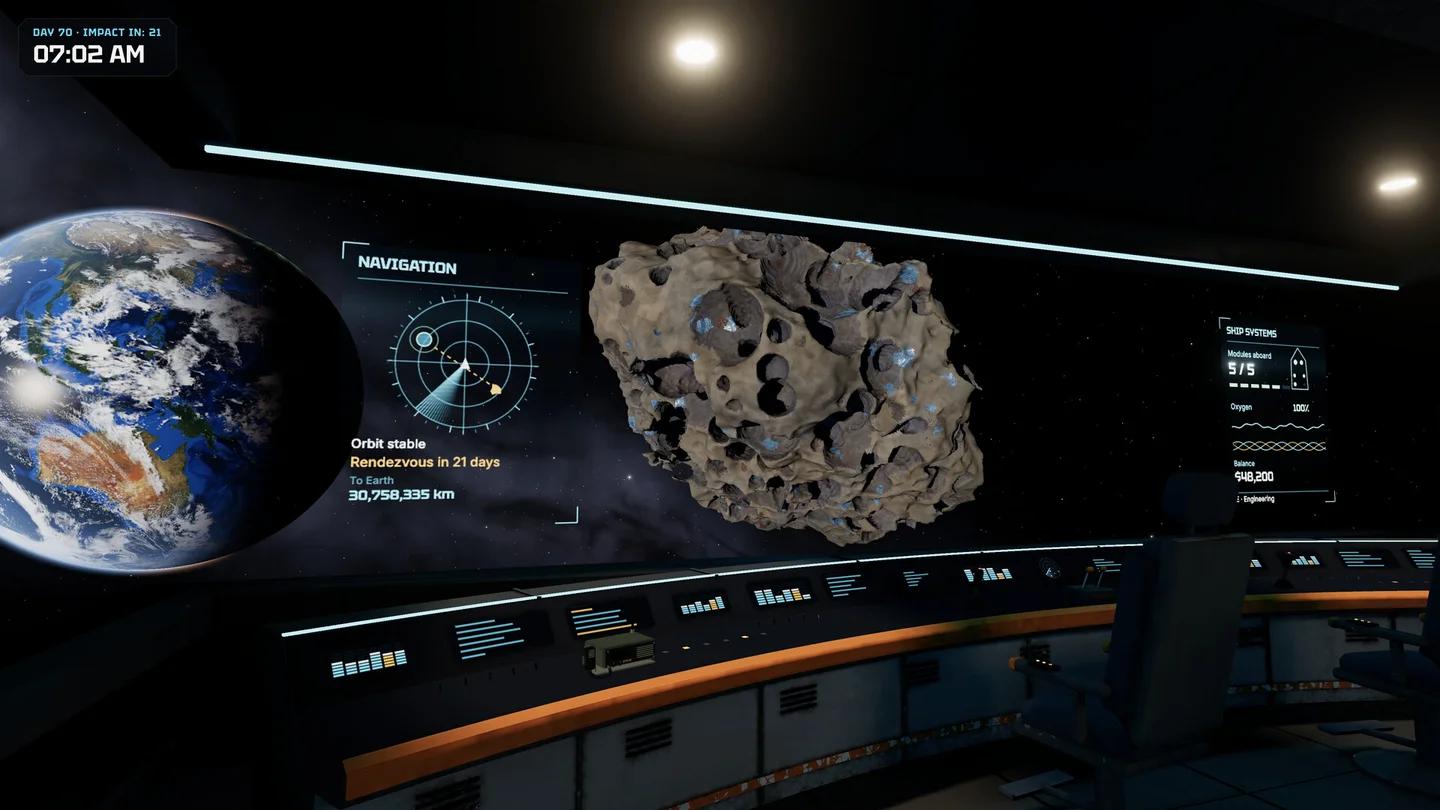
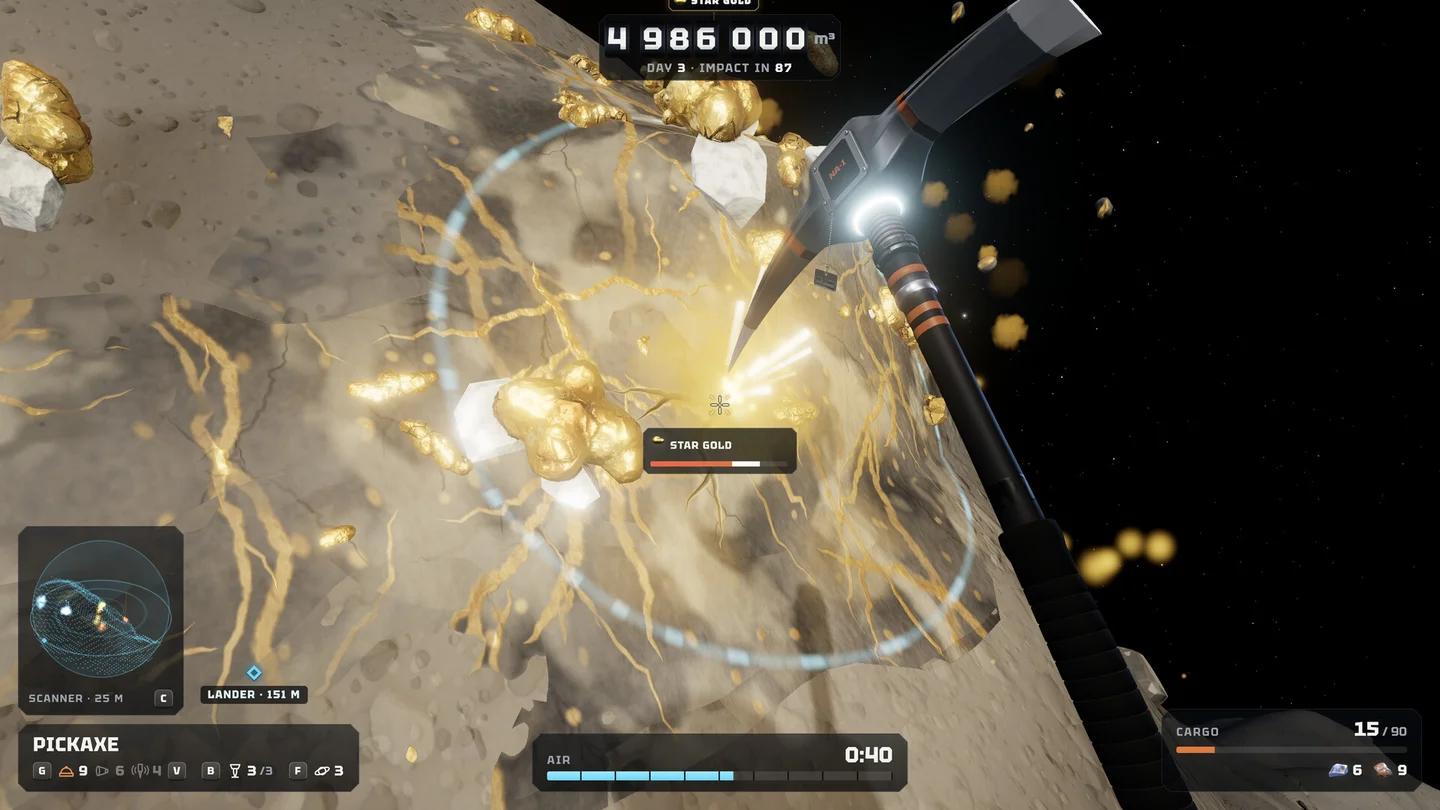
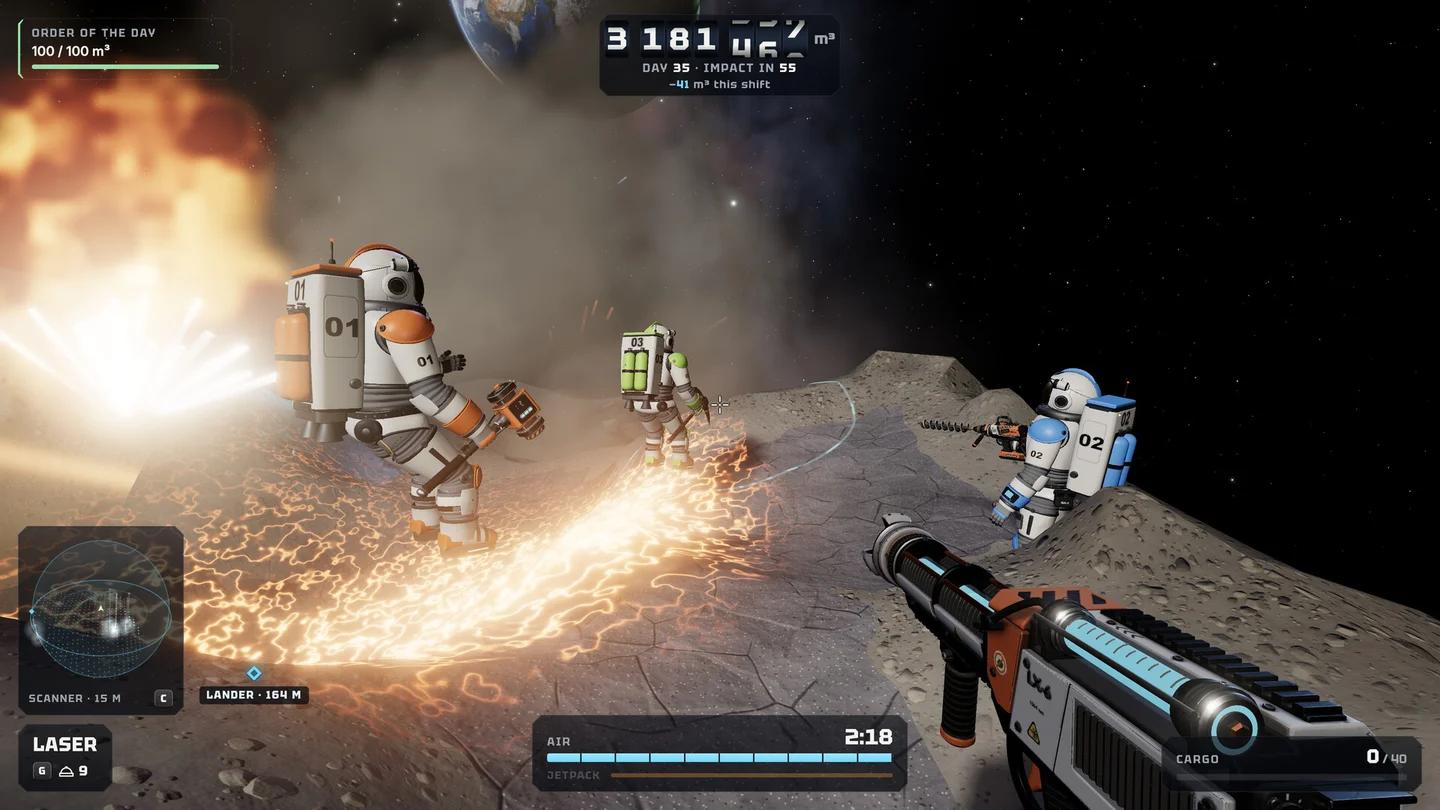
No Asteroids is a first-person incremental mining game from developer and publisher Unruled Games, available on Steam for Windows and macOS. Players face a specific assignment: dismantle a 5,000,000 m³ asteroid before it hits Earth in 90 days. Government officials accept a miner's offer to handle the job without wages after spending months arguing about funding.
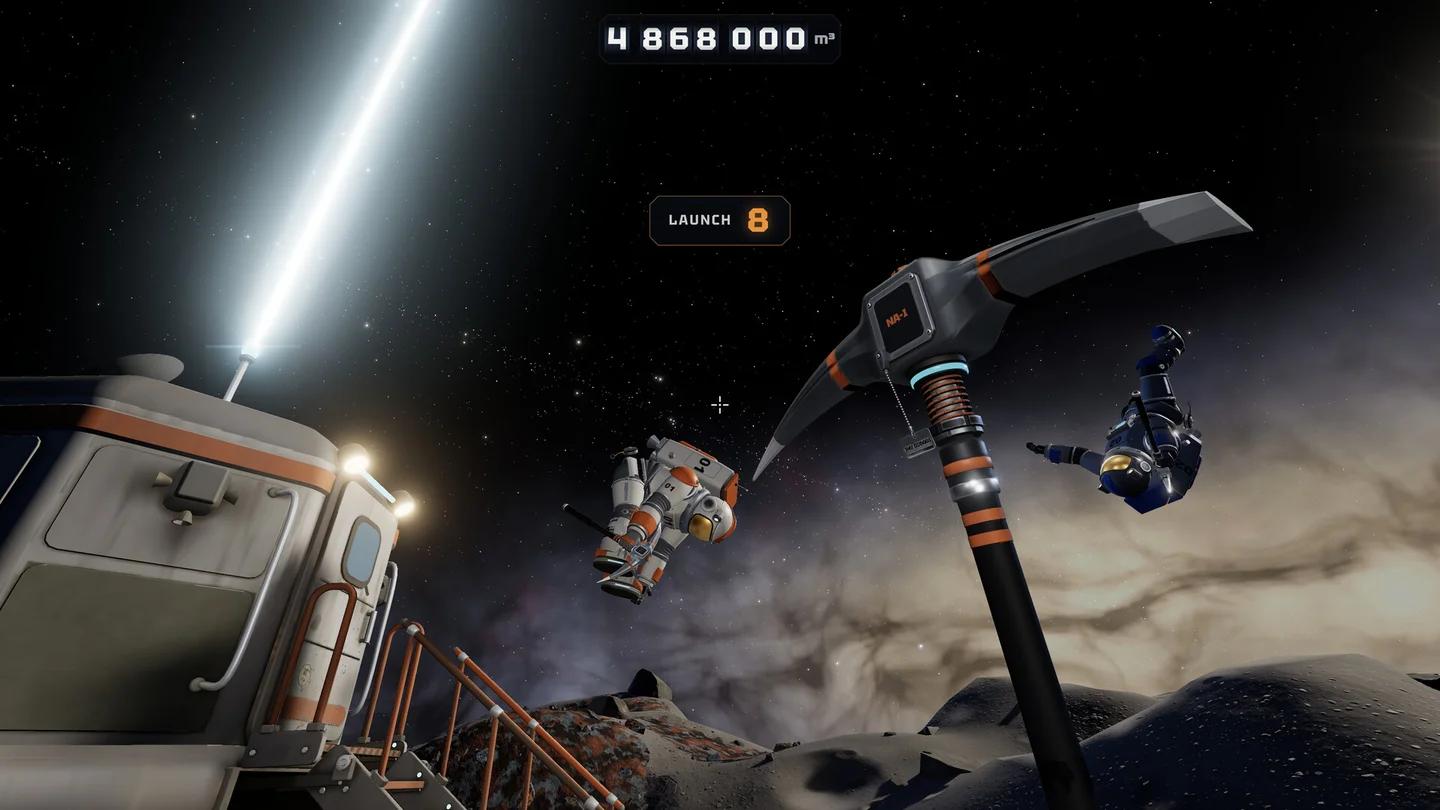
A visible counter measures the asteroid's remaining volume. Early excavation barely shifts that enormous total, establishing a clear starting point for the game's escalating destruction. Progress means watching a seemingly impossible quantity of rock become a manageable demolition project.
How does mining progression work?
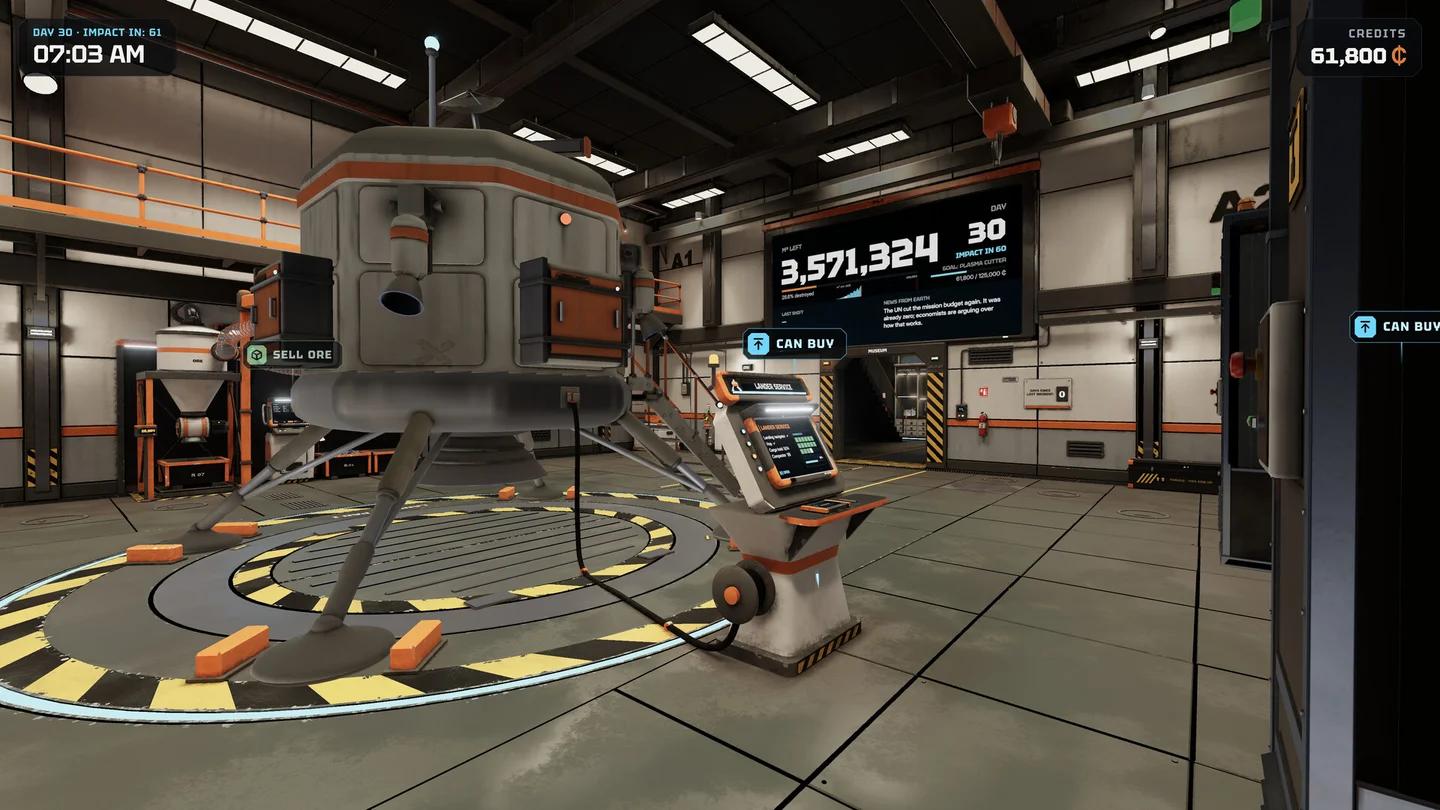
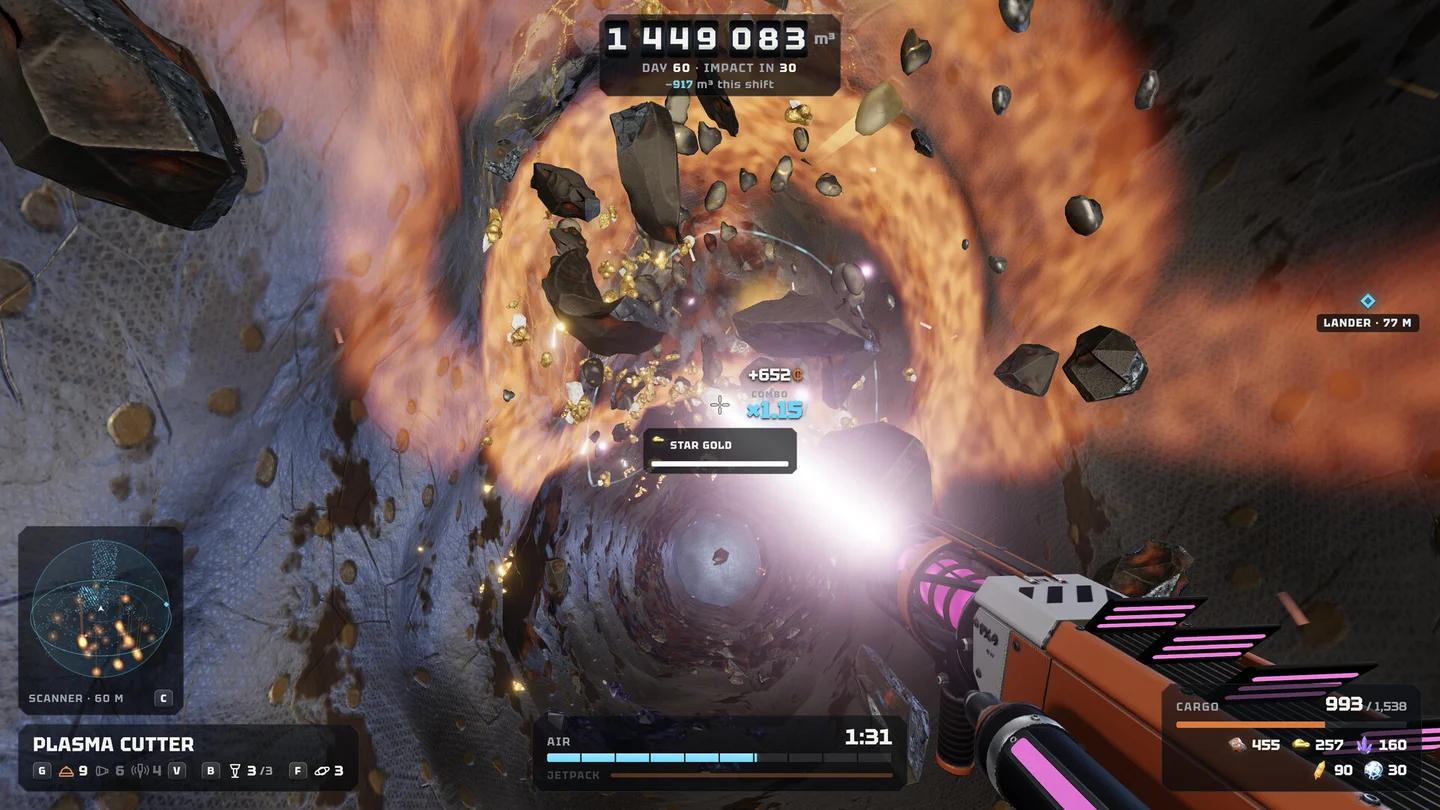
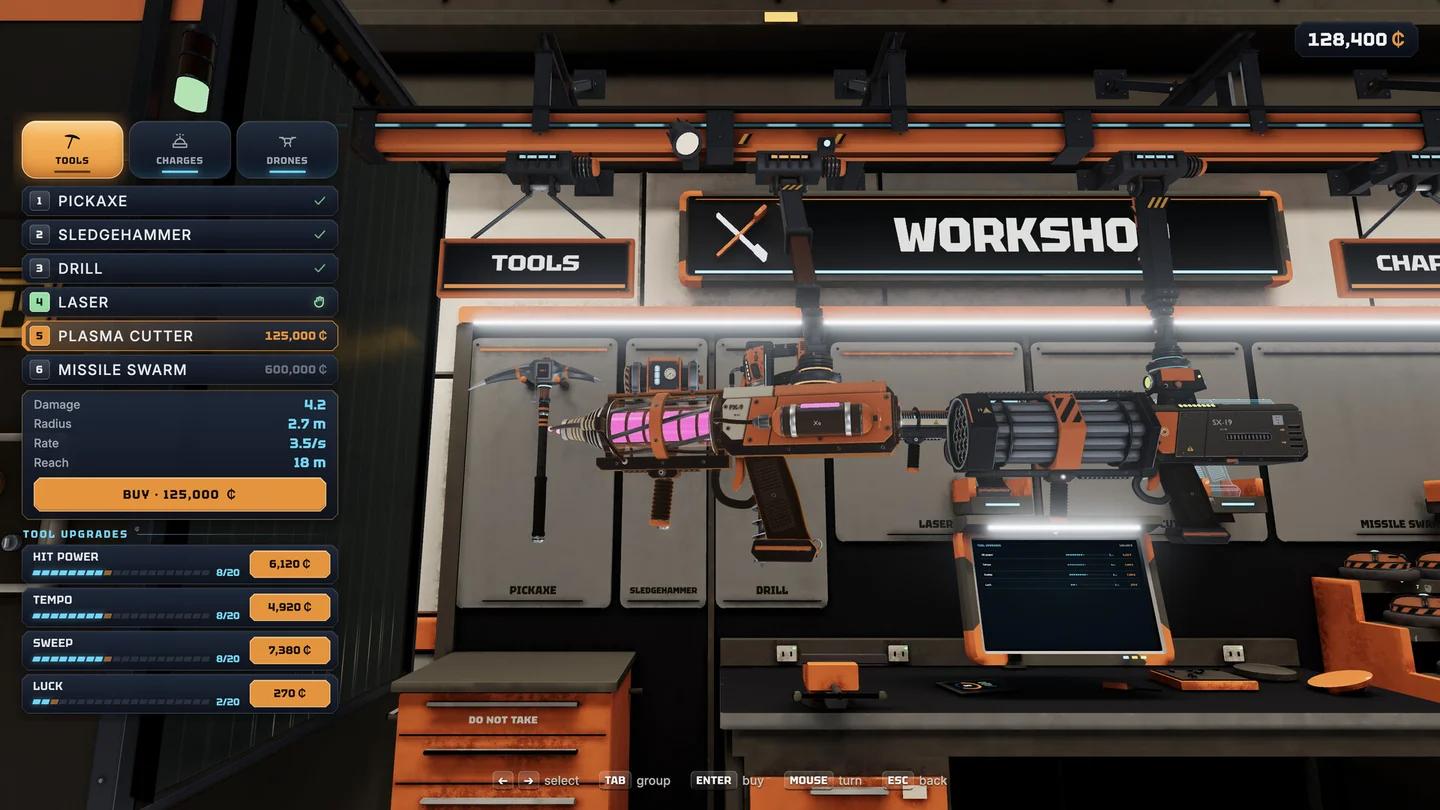
Mining progression follows a daily loop: travel to the asteroid, extract ore while the air supply lasts, and return to the ship to sell the haul. Those earnings pay for equipment that increases the scale of each operation.
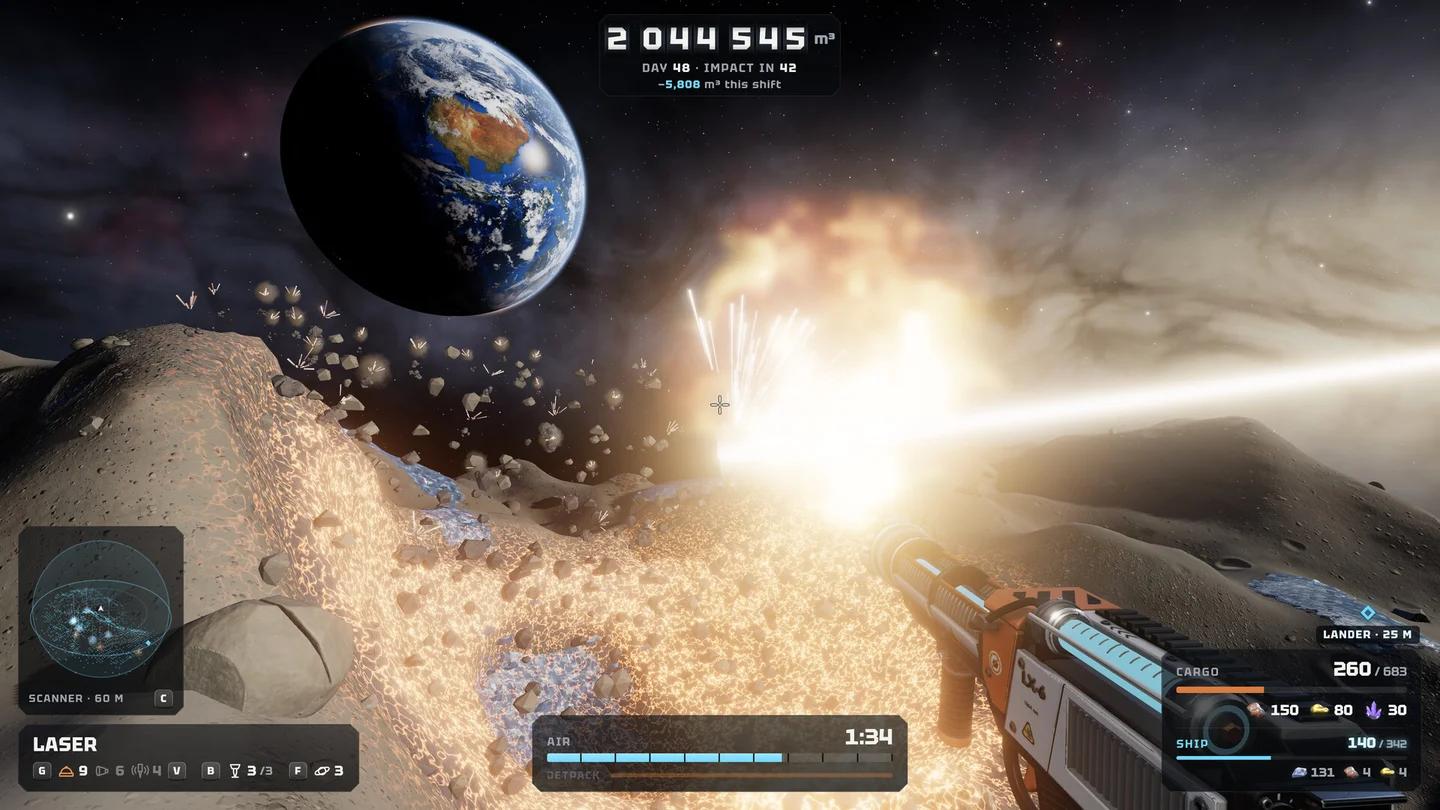
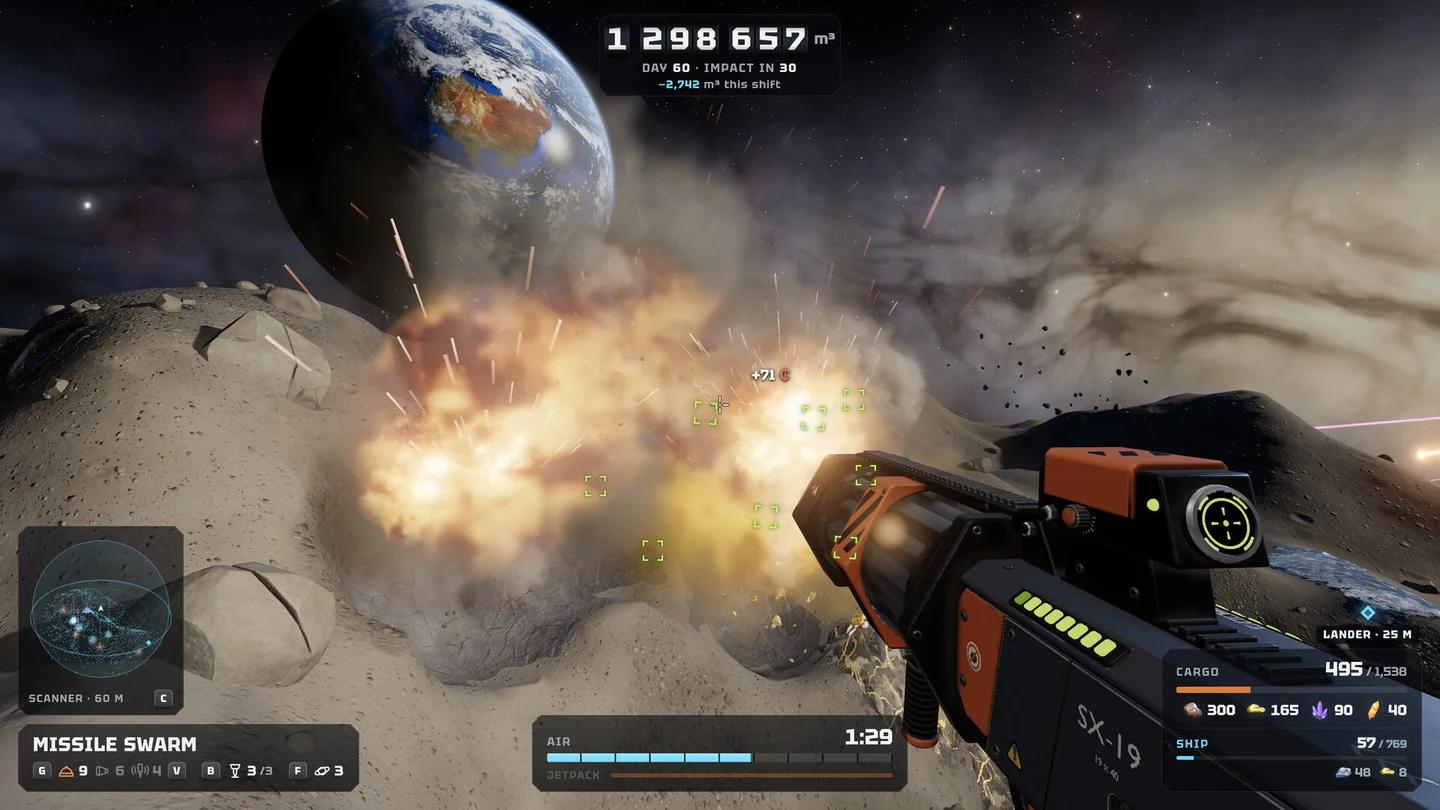
- Tools advance to homing-missile swarms
- Ship weapons fire automatically
- The costliest gun launches black holes
The miner begins with a pickaxe, while the ship starts without weapons. Spending therefore develops two sides of the operation: the equipment used directly and the firepower working overhead. Once armed, the ship attacks the asteroid while excavation continues below.
Large sections can break free and drift into space. Miners can ride these detached chunks, making the asteroid's destruction something they can physically move through, alongside the falling volume count.
Shared money and co-op departures
Online co-op supports up to 8 players working on the same asteroid. Ore revenue enters one shared wallet, and the host controls which players have permission to spend it. Equipment purchases draw from a common budget, even when several miners contribute to the haul.
The lander introduces a sharper coordination problem. Any seated player can start its 10-second departure countdown or kick a teammate out through the hatch. A miner left outside when it launches blacks out and loses their cargo, putting a concrete cost on a badly timed departure.
Campaign progress belongs to the host's save. Guests retain their separate games, so joining another crew does not turn that session into their own campaign.
A rescue mission with an audience
The ship's museum collects objects recovered from the asteroid, including an empty safe bearing the label Asteroid defense budget. These discoveries give excavation a second purpose beyond extracting saleable material and expose the same institutional absurdity that sets the mission in motion.
An observation dome and telescope let miners look back at Earth. Crowds demand more work, bookmakers accept bets on the operation, and government officials conduct business on a beach. Even the projected impact site attracts property owners pleased with its view.
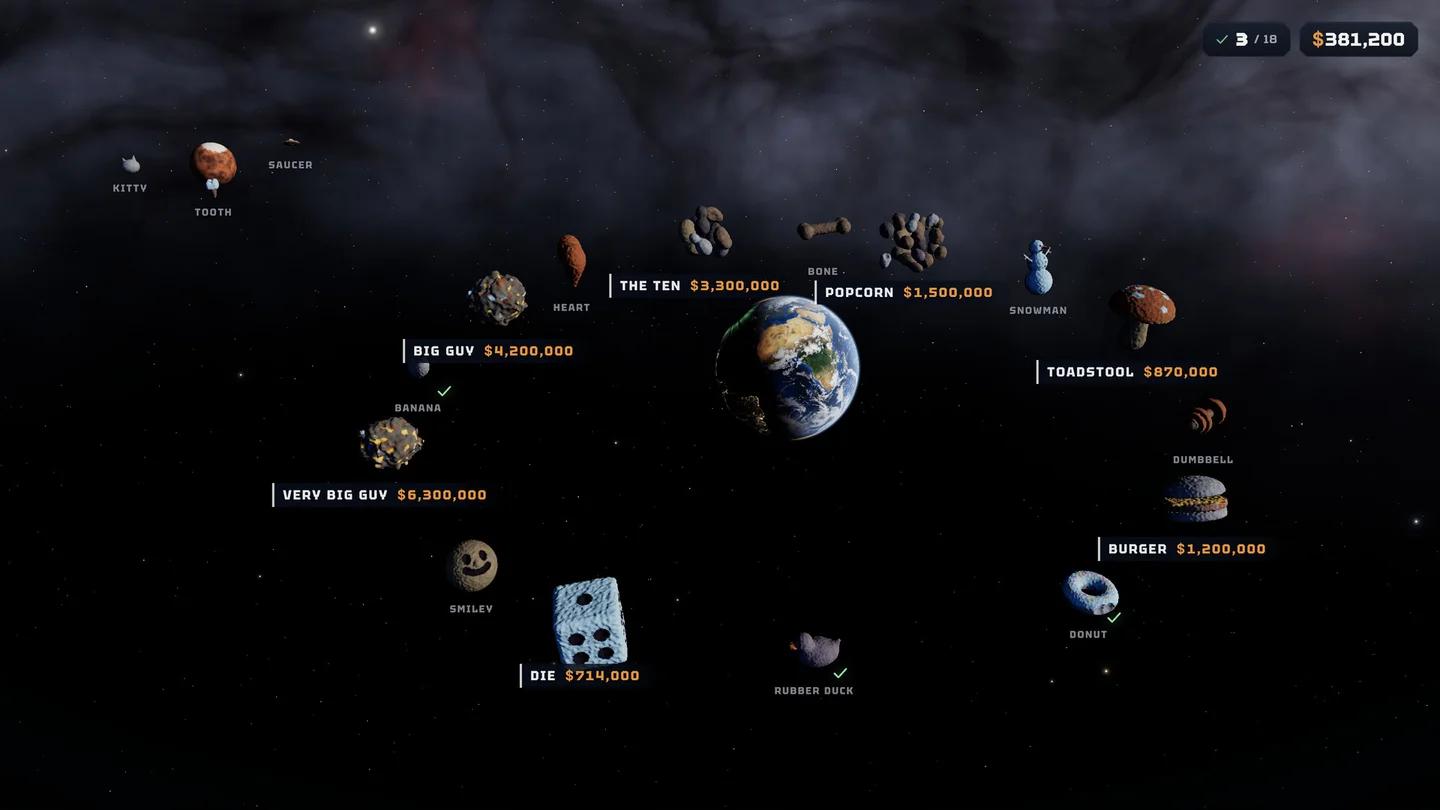
The main contract takes about six to nine hours in single-player. Completing it opens further mining contracts, including a space hotel's request to remove a duck-shaped asteroid because guests find its gaze unsettling. The incremental mining campaign continues with new clients whose problems are considerably less urgent than planetary survival.