

Biggest discounts, free games, and limited-time offers across every major gaming store.
Never pay full price again.
Overview
Persona 4 drops players into Inaba, a quiet rural town that starts unraveling the moment a string of unexplained murders surfaces alongside a bizarre rumor: stare at a blank TV screen at midnight on a rainy night and you might see your soulmate. The premise sounds like urban legend fodder, but Atlus builds an entire murder mystery RPG around it, blending high school social life with a shadow-filled alternate dimension lurking just behind the screen.
Released in 2008, Persona 4 arrived as the follow-up to the critically lauded Persona 3 and expanded on that game's dual-life structure with sharper writing, a warmer cast, and a mystery that genuinely keeps you guessing. The TV World, called the Midnight Channel, serves as the dungeon-crawling backbone, while the town of Inaba is where the real game lives.
Persona 4 content image
Gameplay and mechanics
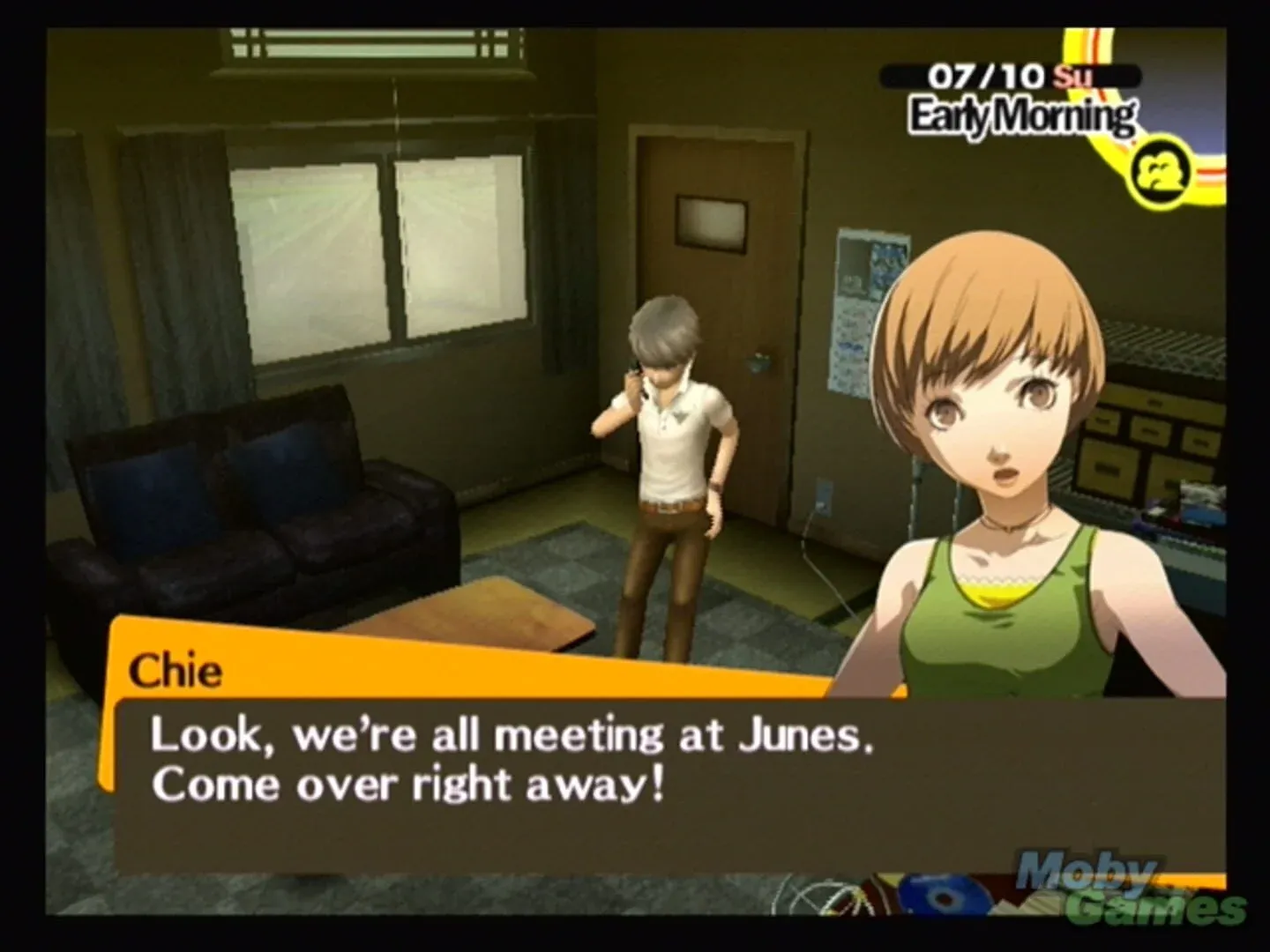
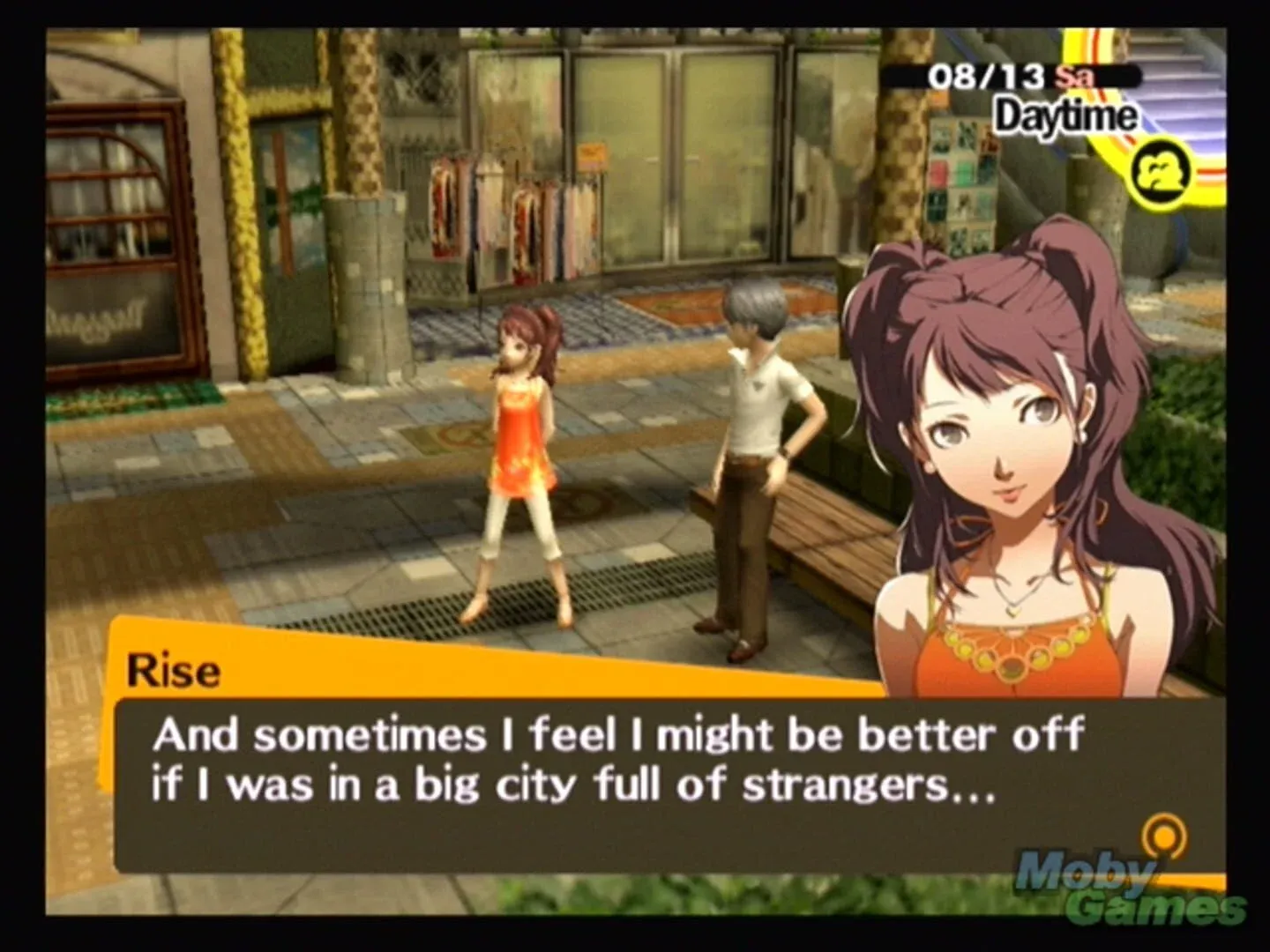
The core loop splits cleanly between two modes. During the day, players attend school, build relationships with townspeople called Social Links, and manage a schedule with limited free time. At night (or on free afternoons), the party dives into the TV World to fight Shadows through turn-based Persona combat. That tension between time management and dungeon progression is what makes Persona 4 tick.
Persona 4 content image
Key mechanics at a glance:
- Social Links that power up Persona fusion
- Turn-based party combat with elemental weaknesses
- Time-limited dungeon floors called Tartarus-style labyrinths
- Persona fusion system for building stronger abilities
- Calendar-driven progression with meaningful daily choices
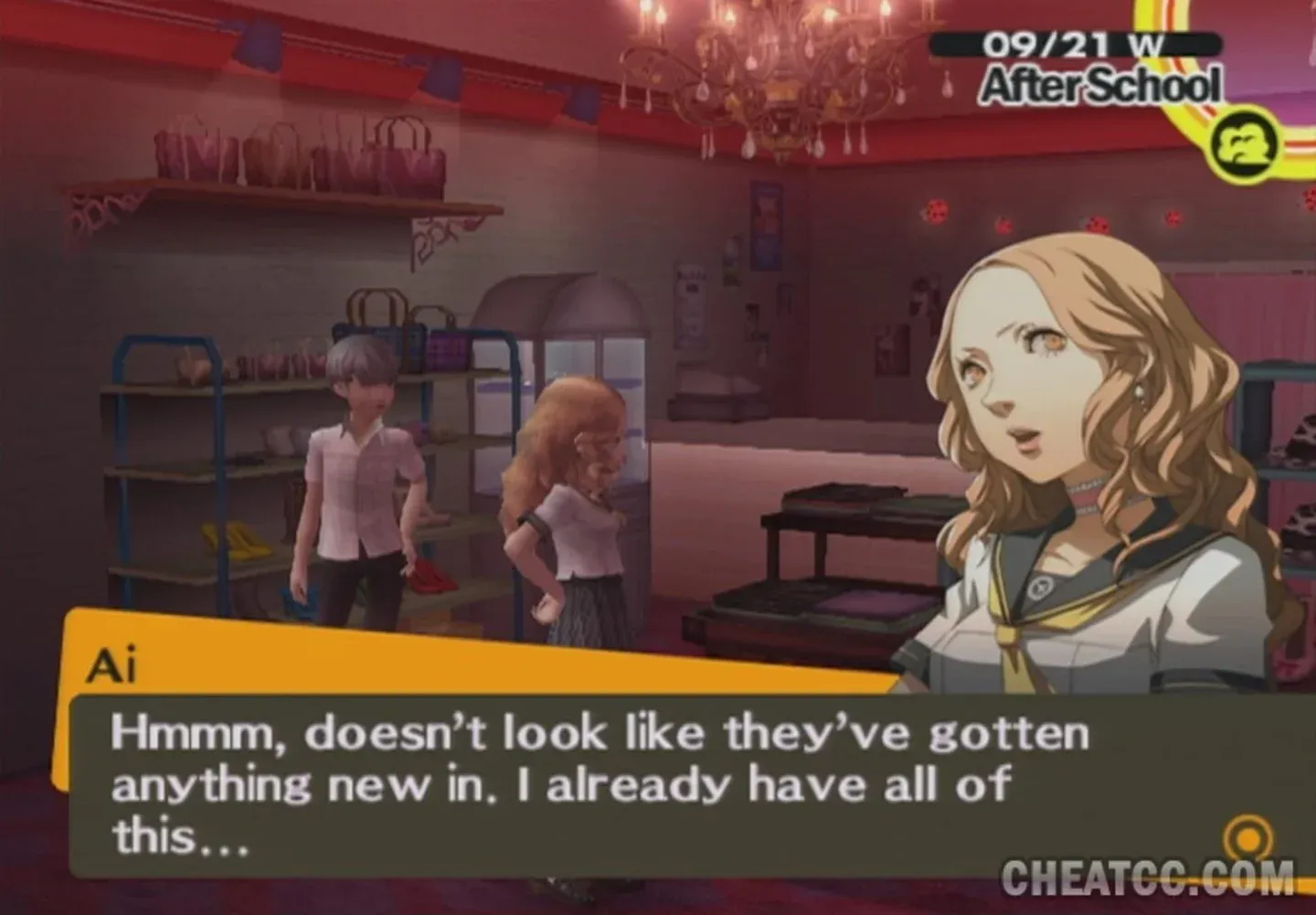
The Social Link system is where Persona 4 separates itself from most JRPGs. Spending time with a character doesn't just develop their story arc; it directly strengthens the Personas you can create for that Arcana. Every conversation has mechanical weight, which makes the social simulation feel purposeful rather than decorative.
Persona 4 content image
World and setting
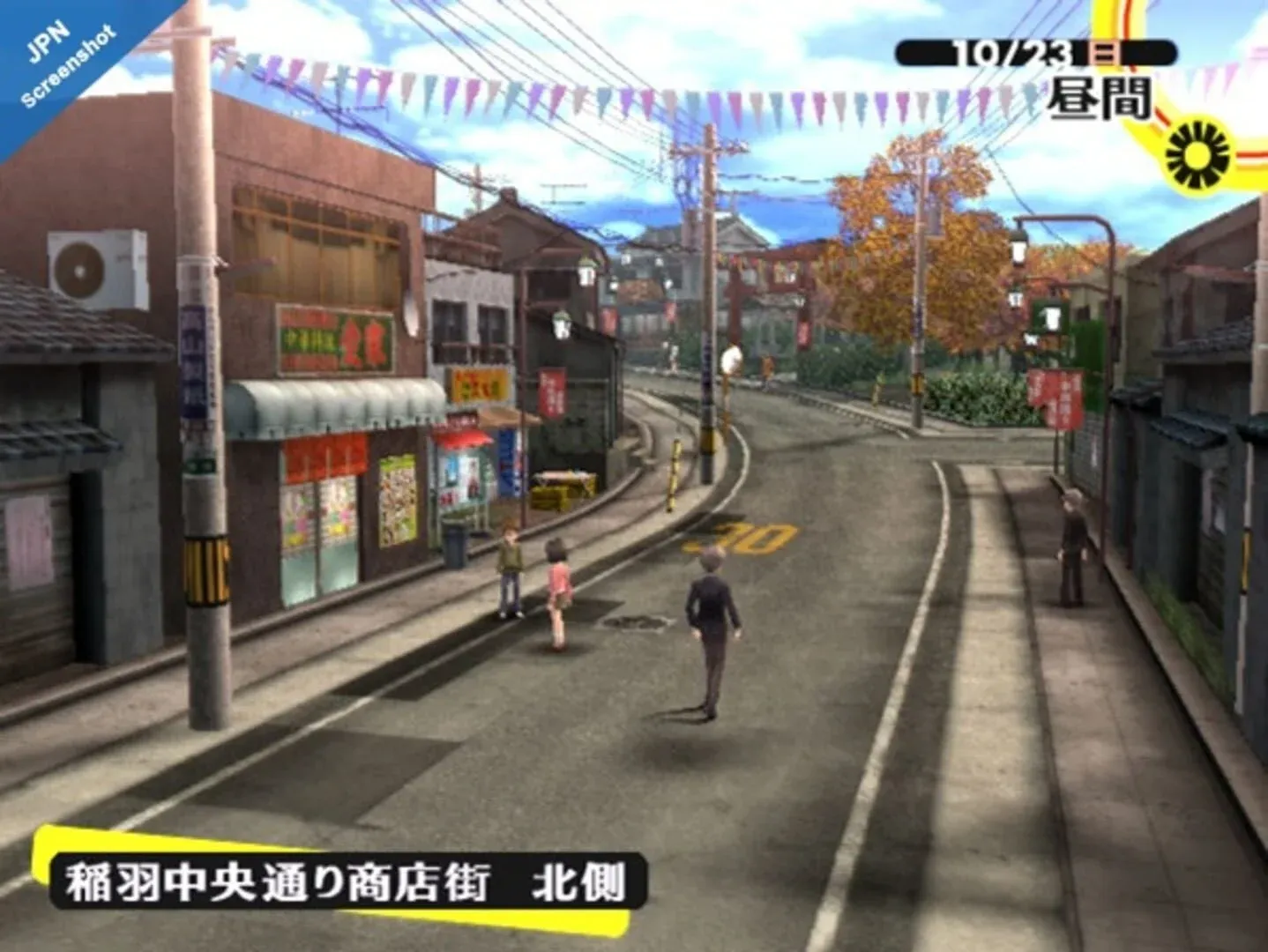
Inaba is small, deliberately so. Atlus designed a town where everyone knows everyone, which makes the murders feel personal rather than abstract. The cast of investigation partners each get pulled into the TV World through their own suppressed selves, and the dungeons they're trapped in reflect their insecurities in ways that range from uncomfortable to genuinely affecting.
The fog that rolls through Inaba isn't just atmospheric detail. It's woven into the mystery's logic, and paying attention to it pays off by the time the story reaches its final revelations. The writing trusts players to connect threads across dozens of hours.
Visual and audio design
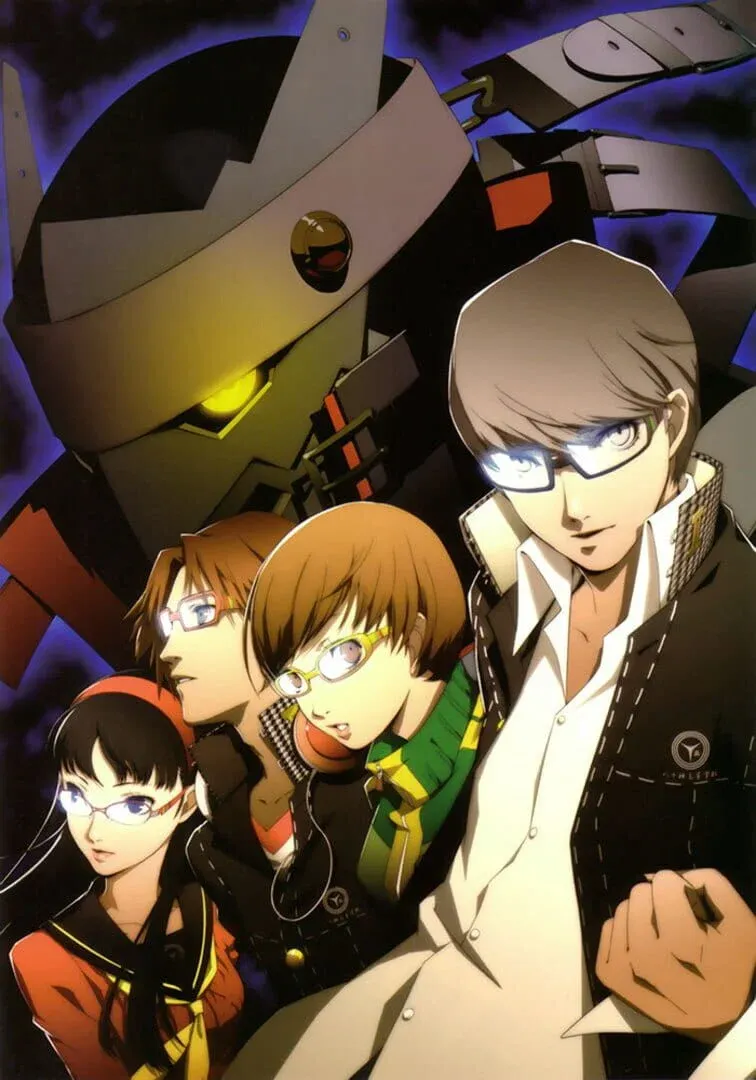
Persona 4's art direction leans into yellow, a warm, slightly unsettling palette choice that feels nothing like the blue melancholy of Persona 3. Character designs by Shigenori Soejima are expressive and memorable, and the dungeon environments shift dramatically between each character's personal shadow realm.
Shoji Meguro's soundtrack is one of the most discussed in JRPG history for good reason. Tracks like "Reach Out to the Truth" and "Your Affection" blend J-pop with jazz fusion in a way that shouldn't work as well as it does. The music doesn't just accompany the game; it defines its mood from the opening seconds.

Persona 4 content image
Impact and legacy
Persona 4 turned a niche JRPG series into a genuine cultural touchstone. It spawned multiple spinoffs including Persona 4 Arena, Persona 4 Golden (the expanded version now available on PC, Nintendo Switch, and Xbox via Persona 4 Golden), and an anime adaptation. The original 2008 release on PlayStation 2 holds up as one of the most complete role-playing experiences of its generation, and the social simulation mechanics it refined became the template for everything Atlus built afterward with Persona 5.