Overview
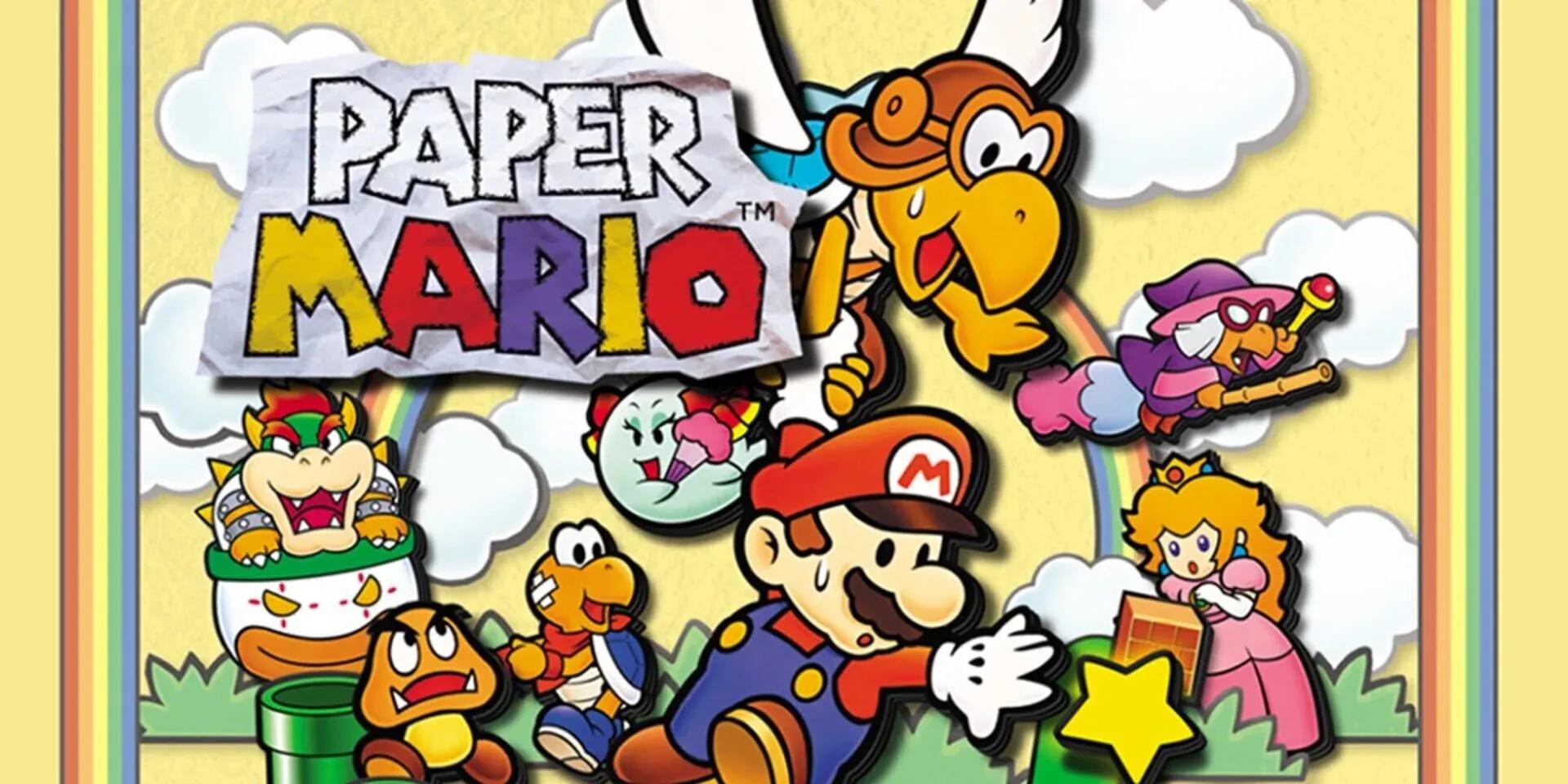
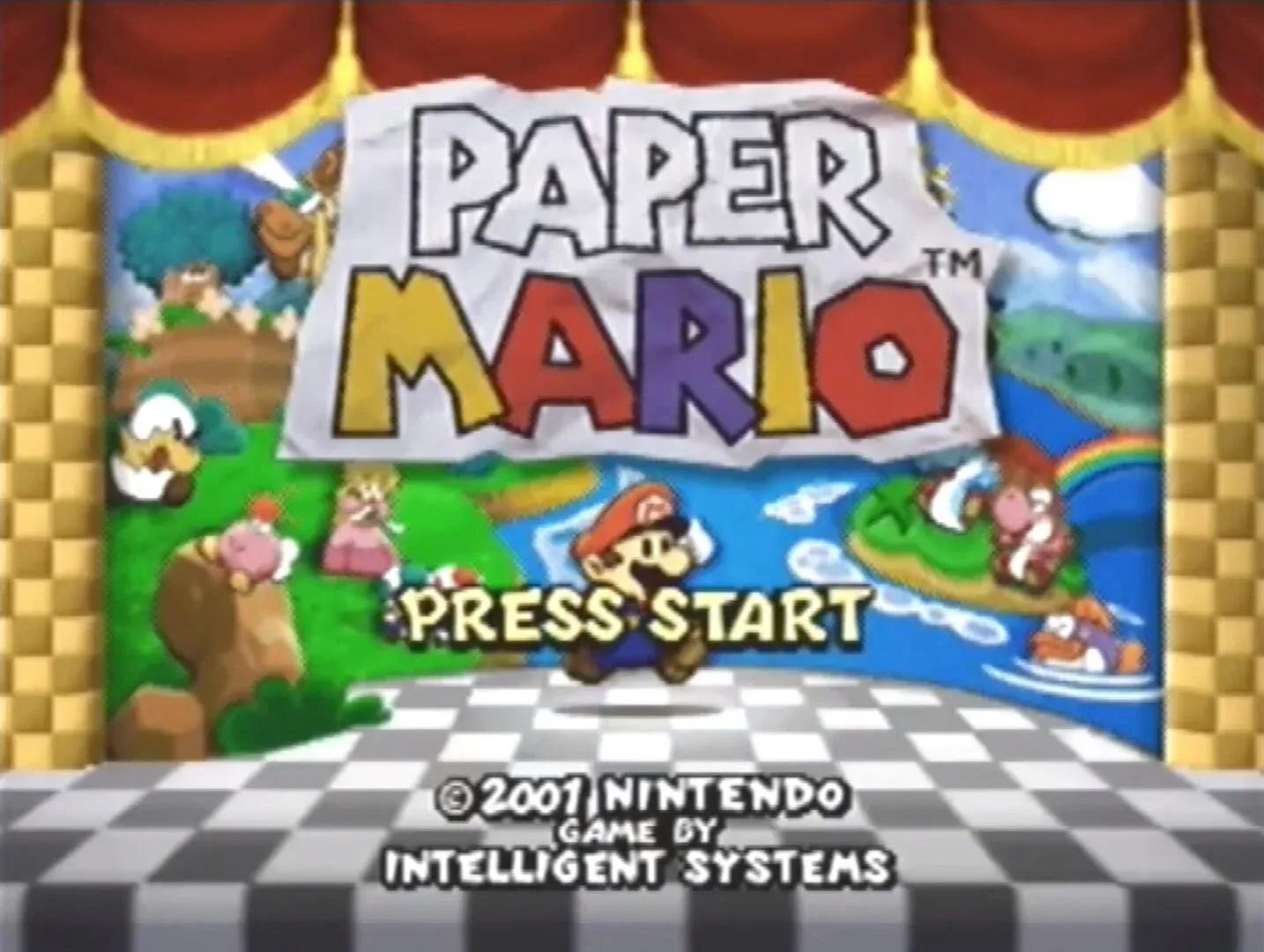
Released in August 2000 by Intelligent Systems and published by Nintendo, Paper Mario takes the familiar Mushroom Kingdom and flattens it, literally, into a world where every character and object exists as a thin paper cutout moving through three-dimensional environments. The result is a JRPG that feels visually distinct from anything else in the genre while staying grounded in mechanics that are immediately accessible. Bowser has stolen the Star Rod and imprisoned the seven Star Spirits, leaving Mario to travel across diverse biomes, recruit companions, and fight his way back to Princess Peach.
The game's structure follows a chapter format, each one set in a different region of the Mushroom Kingdom with its own visual theme, cast of characters, and boss encounter. Dry Dry Desert, Boo's Mansion, Flower Fields, and the volcanic heat of Mt. Lavalava each feel genuinely different from one another. Intelligent Systems built a world that rewards curiosity, with hidden items, optional battles, and side characters that add texture to the main story without padding it unnecessarily.
Gameplay and mechanics
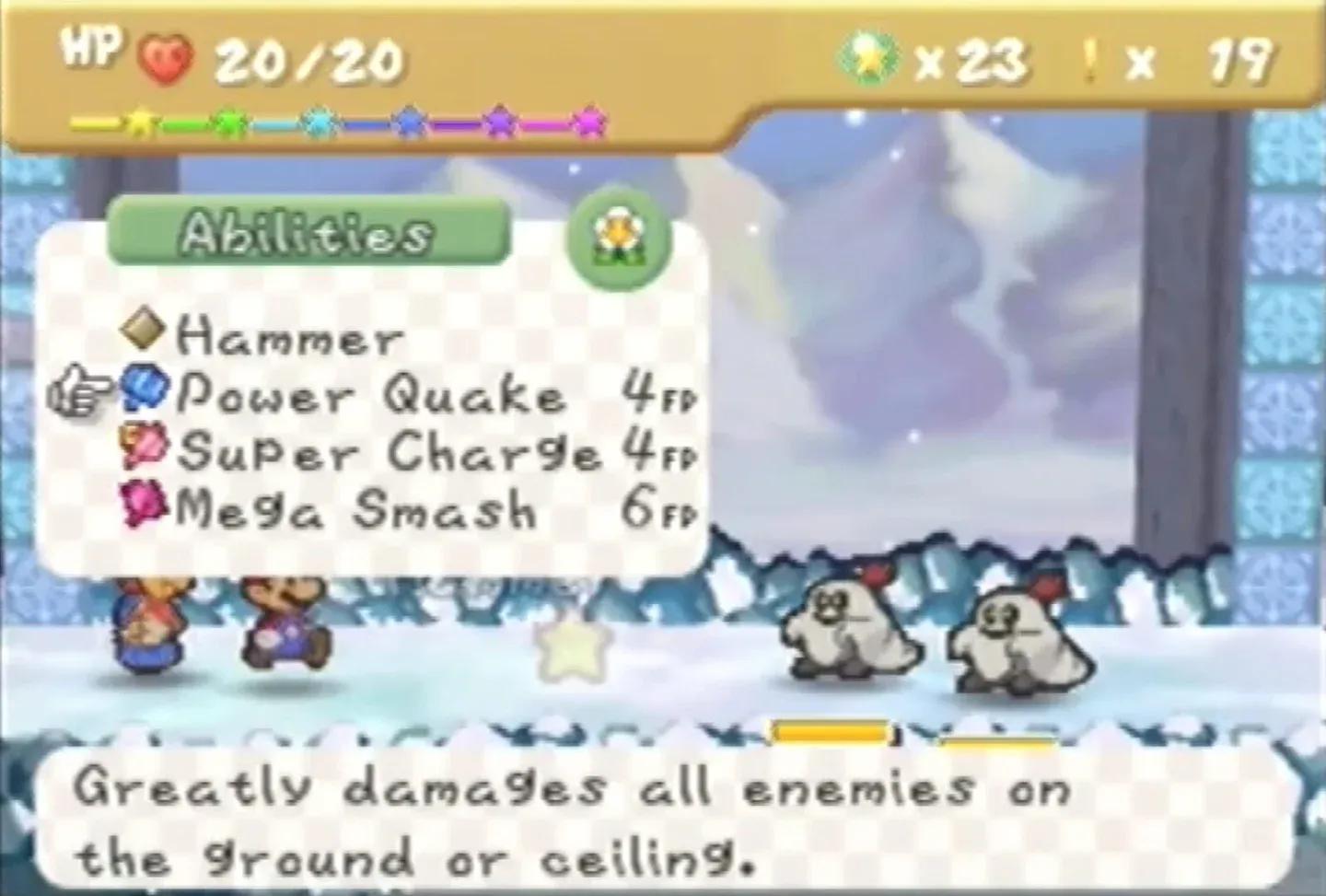
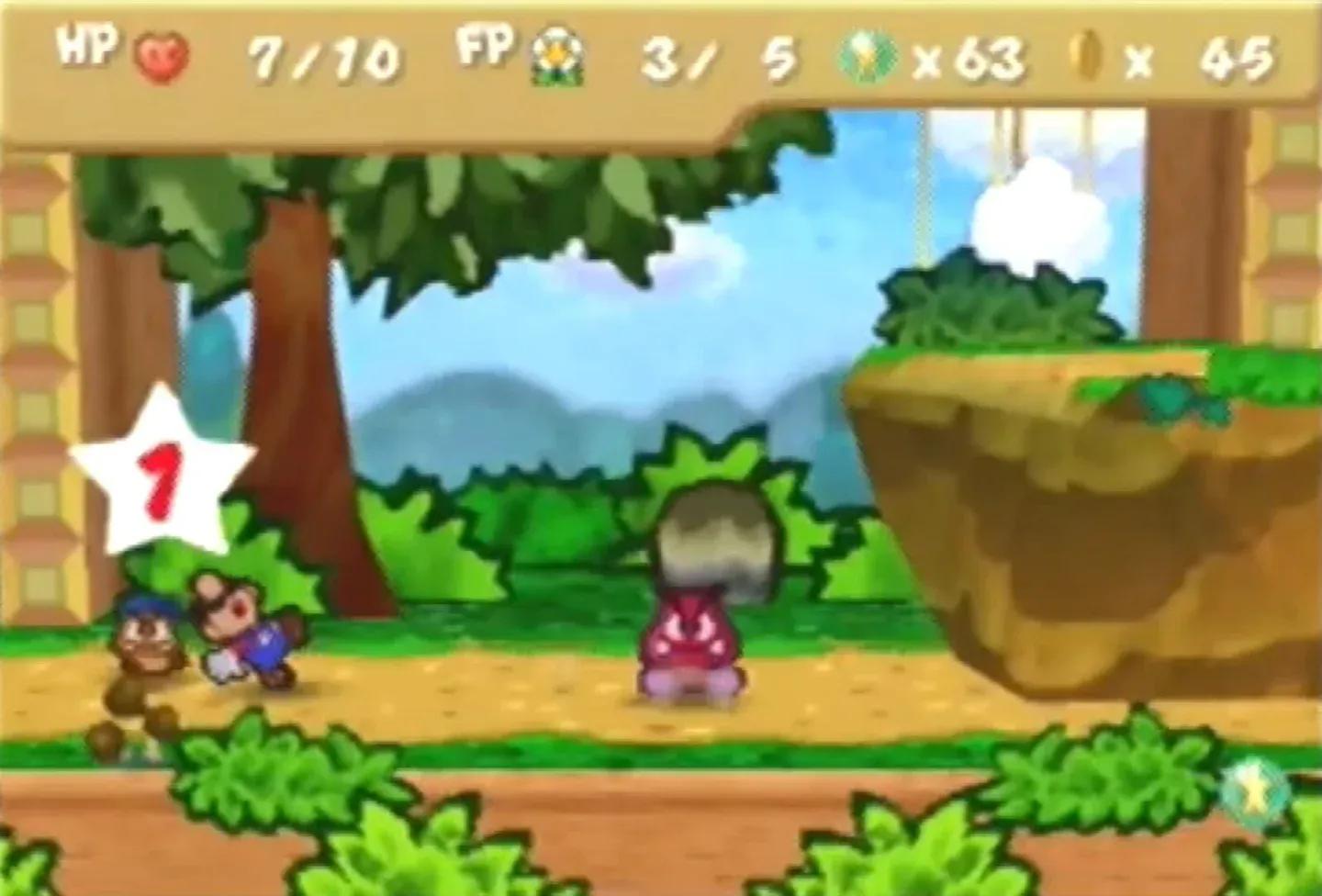
Paper Mario's combat runs on a turn-based system with a twist: timed button presses during attacks and blocks change the outcome of every exchange. Landing a precise input on Mario's hammer swing deals extra damage. Pressing A at the right moment during an enemy's attack reduces the hit. This Action Command system keeps battles active rather than passive, turning what could be routine menu navigation into something that demands attention.
Paper Mario content image
Key mechanics that define the experience:
- Action Commands for attack and defense
- Partner abilities usable in and out of battle
- Star Power for special moves
- Badge system for customizing Mario's stats
- Field abilities tied to each companion
Paper Mario content image
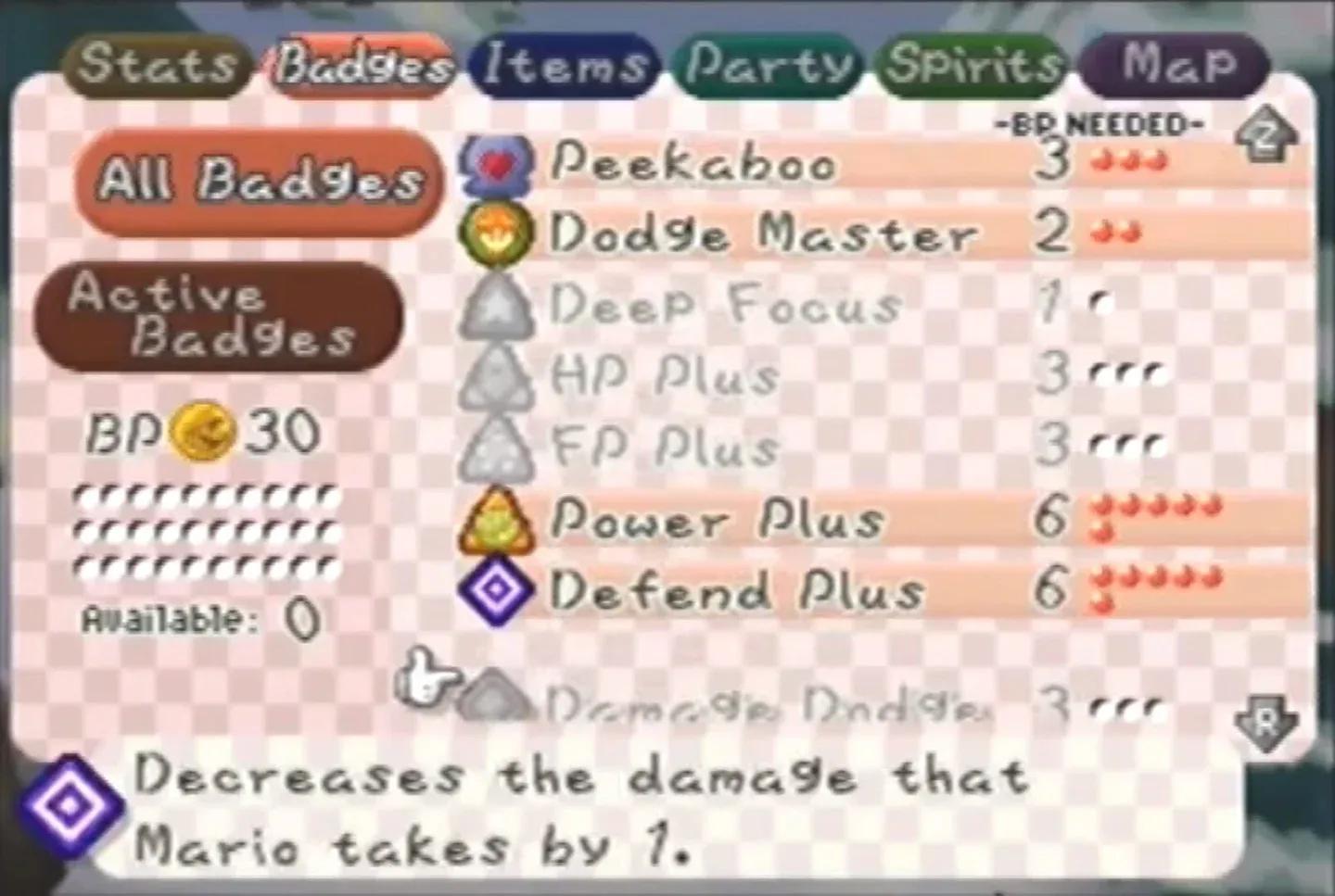
The Badge system adds a layer of build customization. Badges found or purchased throughout the game can be equipped within Mario's available Badge Points, unlocking new attacks, passive bonuses, or quality-of-life improvements. Managing BP alongside Heart Points and Flower Points creates a lightweight but meaningful progression loop that evolves through the game's eight chapters.
World and setting
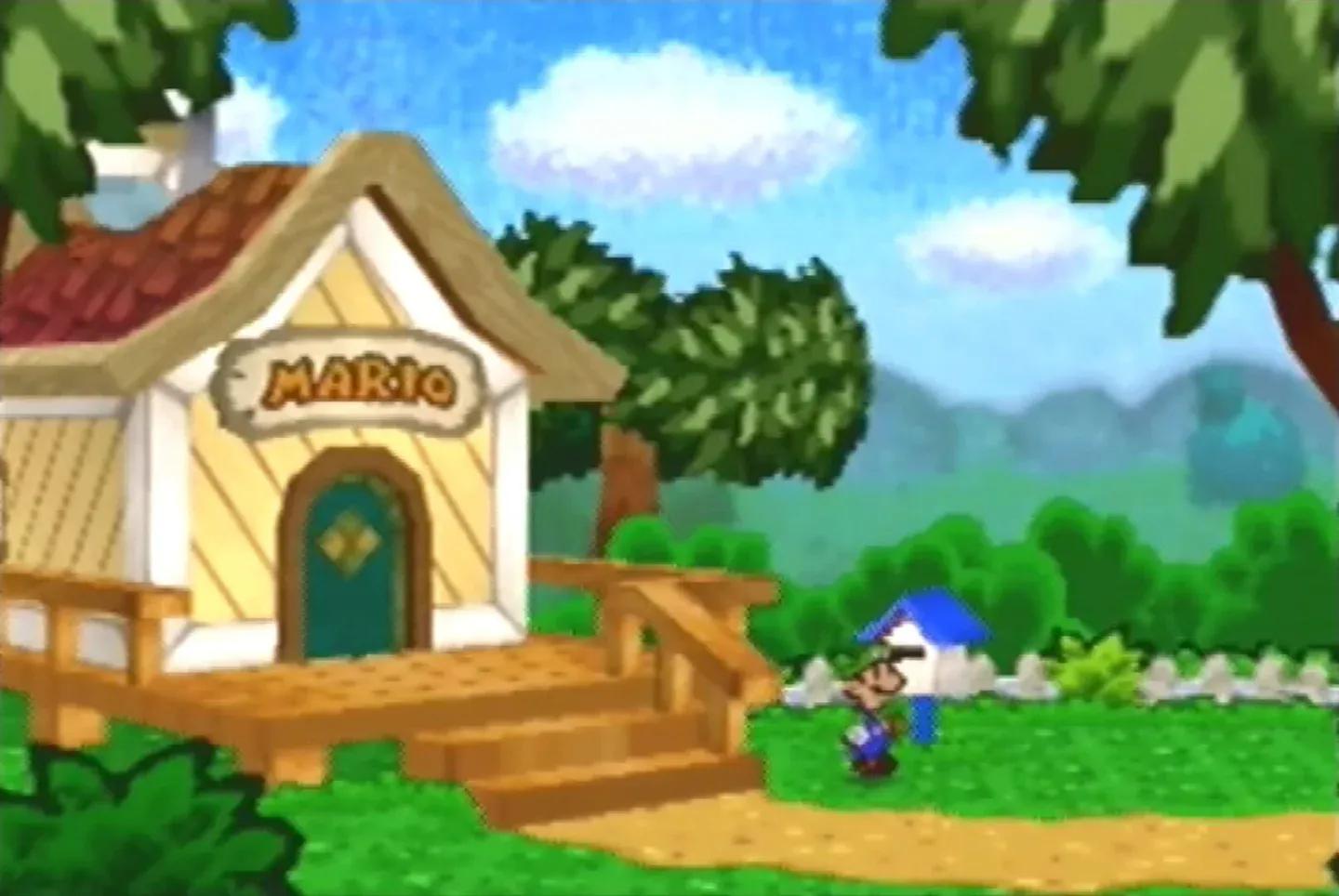
The Mushroom Kingdom in Paper Mario is broader and more lived-in than any version before it. Toad Town serves as a central hub, but the surrounding regions each carry their own personality. Koopa Village has its own politics. Yoshi's Village has its own crisis. Even minor NPCs have names and small storylines that resolve if you check back after completing a chapter.
Paper Mario content image
Companions are the heart of the world-building. Goombario, Kooper, Bombette, Parakarry, Lady Bow, Watt, Sushie, and Lakilester each join at different points and bring field abilities that open new areas or solve environmental puzzles. Each one also has a Tattle ability that provides character-specific commentary on enemies and locations, giving the game a personality that runs deeper than the main plot.
Impact and legacy
Paper Mario established a template that Intelligent Systems would build on across multiple sequels and spin-offs. The paper aesthetic became a franchise identity. The Action Command system influenced how subsequent Mario RPGs approached turn-based combat. The game currently holds a strong critical standing, widely cited as one of the Nintendo 64's best RPGs and a high point for the genre on the platform.
Paper Mario content image
For anyone interested in classic turn-based RPGs with a strong sense of humor and a well-constructed world, Paper Mario delivers a complete experience that doesn't overstay its welcome. The companion system, badge customization, and chapter-based structure give it both variety and focus, making it one of the clearest examples of Intelligent Systems working at the top of their craft.