


Biggest discounts, free games, and limited-time offers across every major gaming store.
Never pay full price again.
Overview
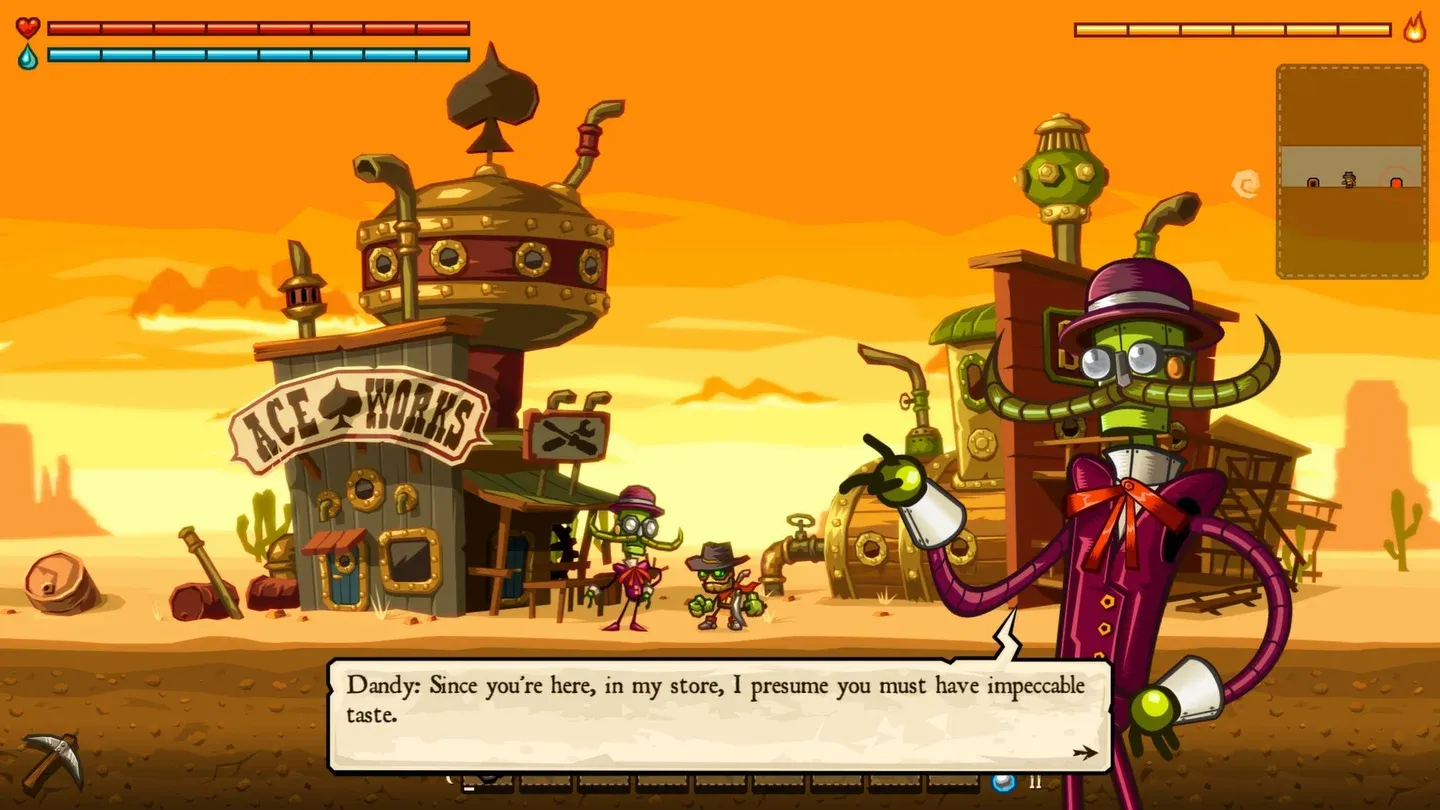
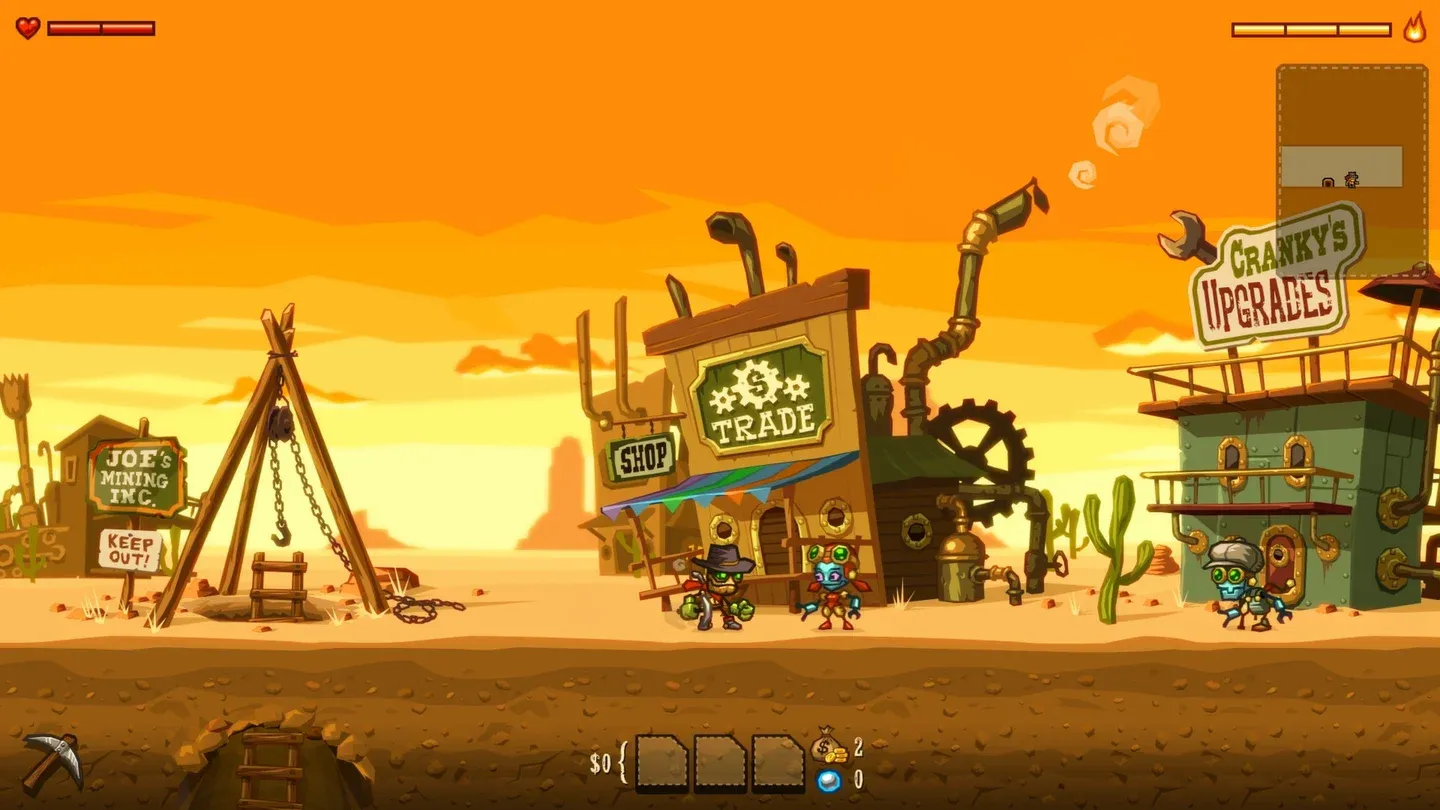
SteamWorld Dig is a 2D mining platformer developed and published by Image & Form Games, released in December 2013. Set in the fictional wild west town of Tumbleton, the game puts players in control of Rusty, a steam-powered robot who arrives to claim his uncle's abandoned mine. What starts as a simple dig turns into something far stranger, as the caves beneath Tumbleton hide secrets that push the narrative forward without ever overpowering the core gameplay loop.
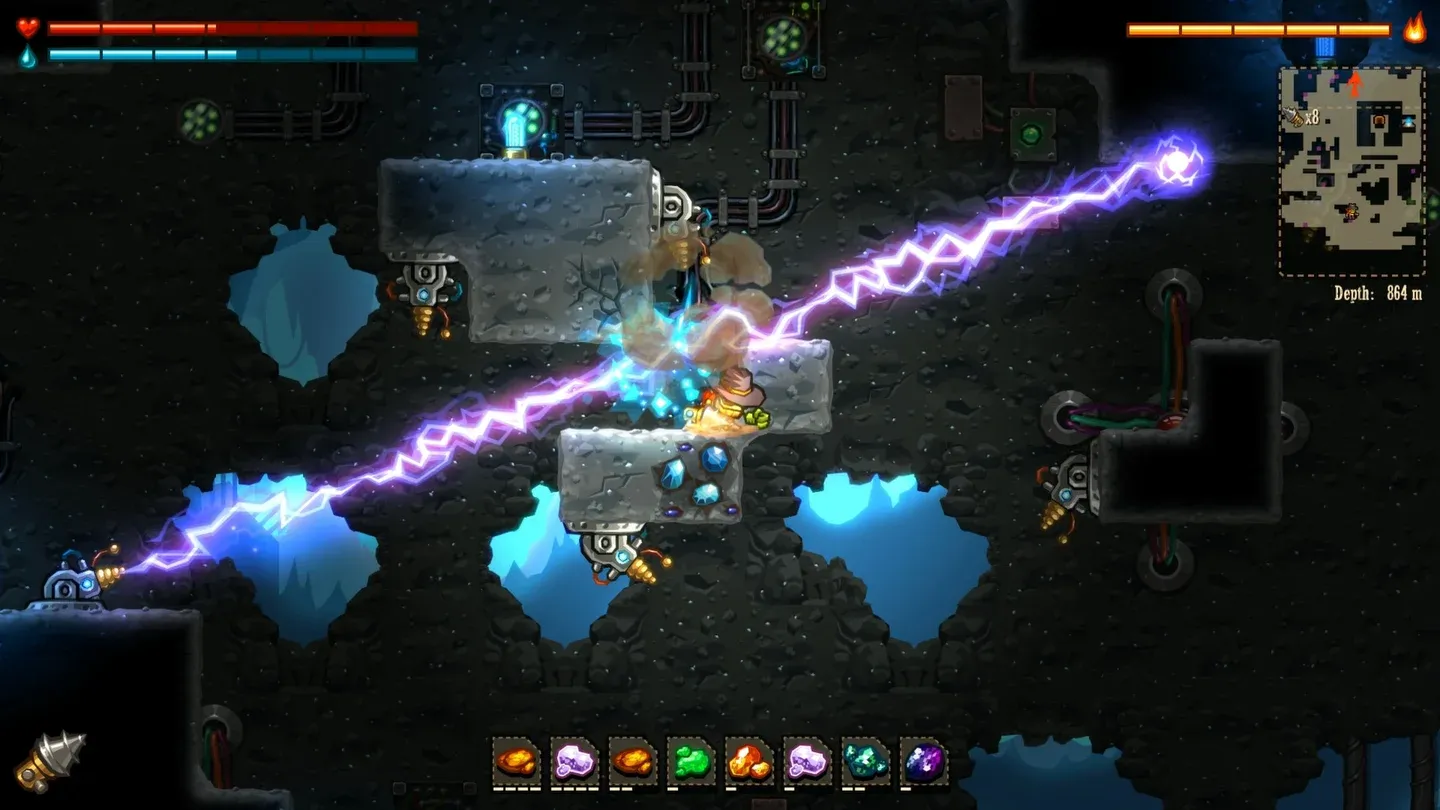
The central loop is tight: dig down, collect ore and gems, haul them back to the surface, sell them, buy upgrades, dig deeper. Every run feels productive because progression is constant. New tools and abilities open up previously unreachable areas, giving the game a Metroidvania quality that keeps exploration rewarding rather than aimless. The randomized mine layout means item and treasure placement shifts between playthroughs, adding replay value without fundamentally changing the structure.
SteamWorld Dig content image
Gameplay and mechanics
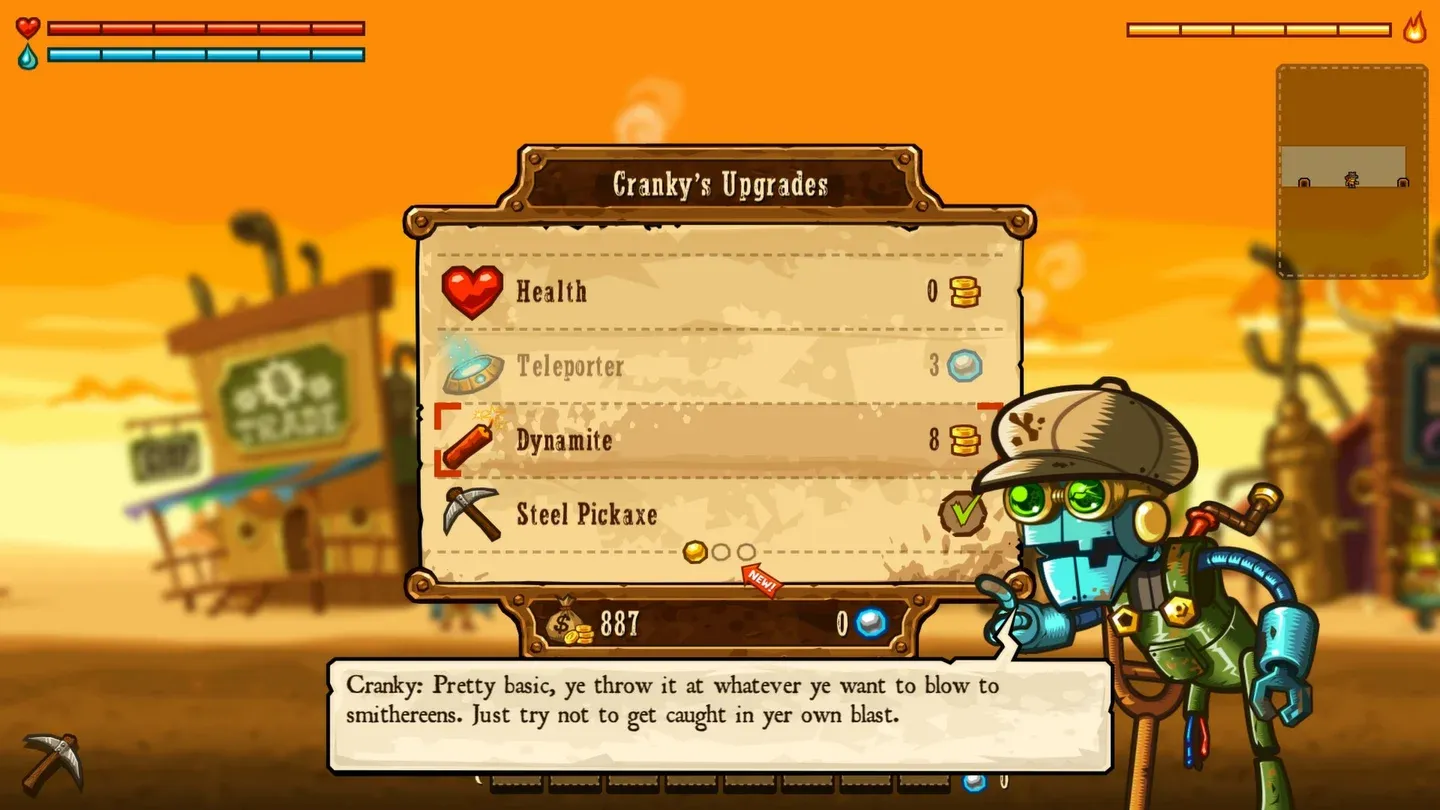
Rusty starts with a basic pickaxe, but the upgrade path opens up quickly. Key mechanics include:
SteamWorld Dig content image
- Pickaxe upgrades for faster, wider digging
- Lantern and coal management for underground visibility
- Water-powered special abilities like a steam jump
- Ladder purchases for escape routes
- A self-destruct option when truly stuck
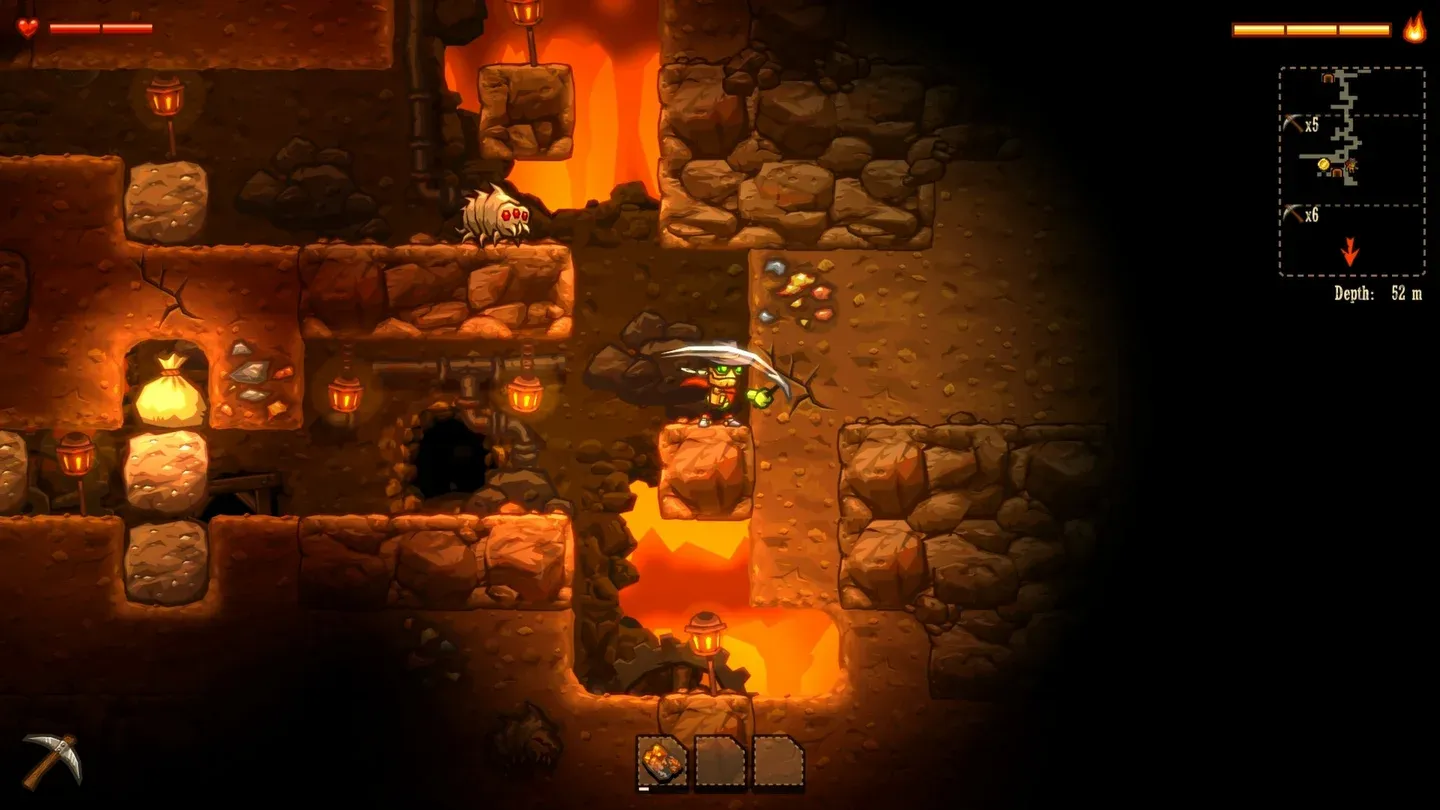
The resource management layer adds real tension. Coal powers your lantern, and running out underground leaves you navigating in near-darkness. Water fuels special abilities that become increasingly necessary as enemy encounters grow tougher. Balancing what to spend on upgrades versus what to stockpile for survival gives the game more strategic depth than its pick-up-and-play presentation suggests.
What happens when you die?
Death in SteamWorld Dig carries a cost but not a catastrophic one. When Rusty dies, he respawns on the surface and pays a repair fee. Any loot accumulated during that run drops at the point of death and can be retrieved on the next descent. The penalty is meaningful enough to make you cautious in combat, but not punishing enough to feel unfair. It's a smart balance that suits the game's tone, which leans more toward adventure than hardcore survival.
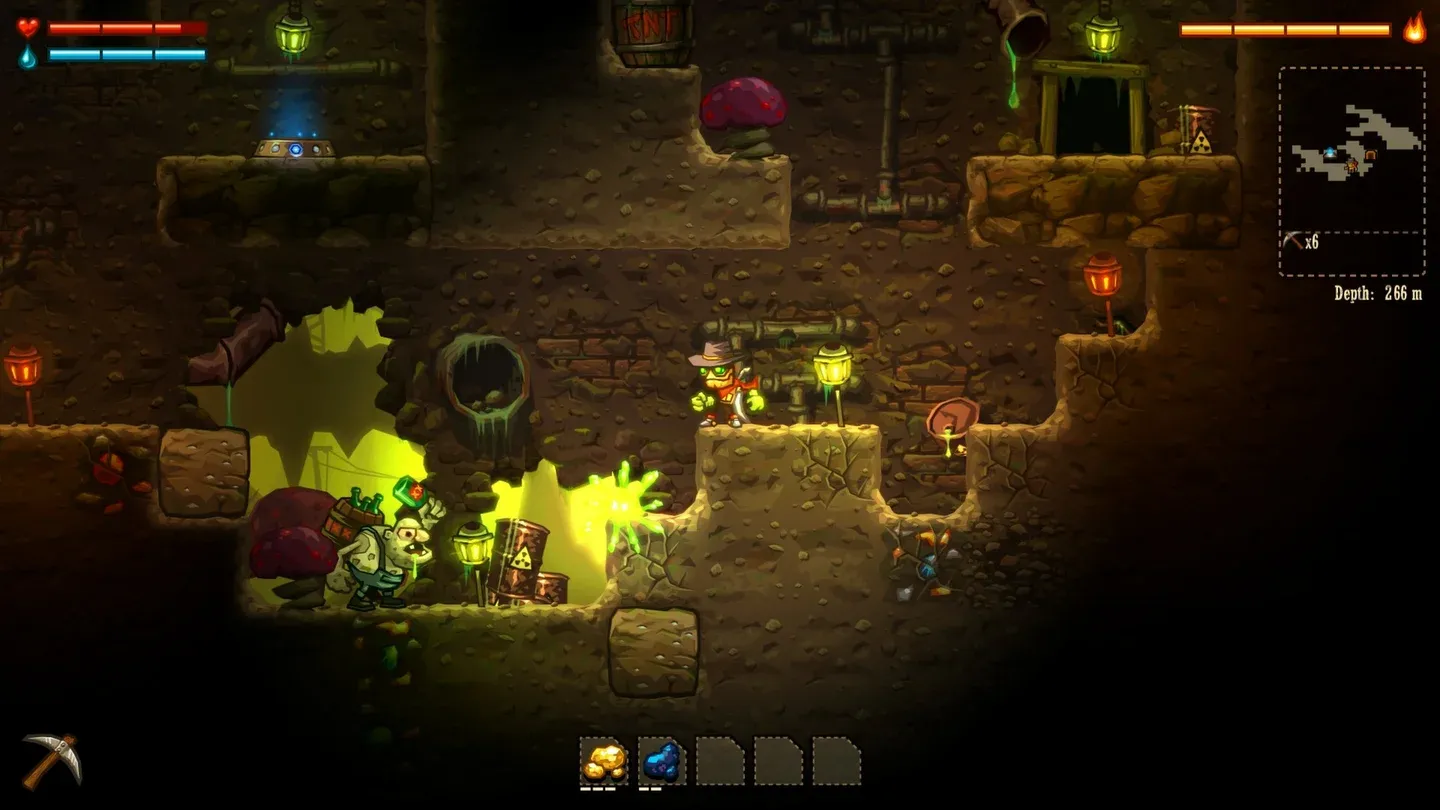
Enemies become more aggressive and varied the deeper you go. Each underground world introduces new attack patterns and weak points, so combat stays fresh rather than relying on the same two or three enemy types for the entire game. Bosses punctuate the world transitions and provide some of the game's most memorable moments.
SteamWorld Dig content image
World and setting
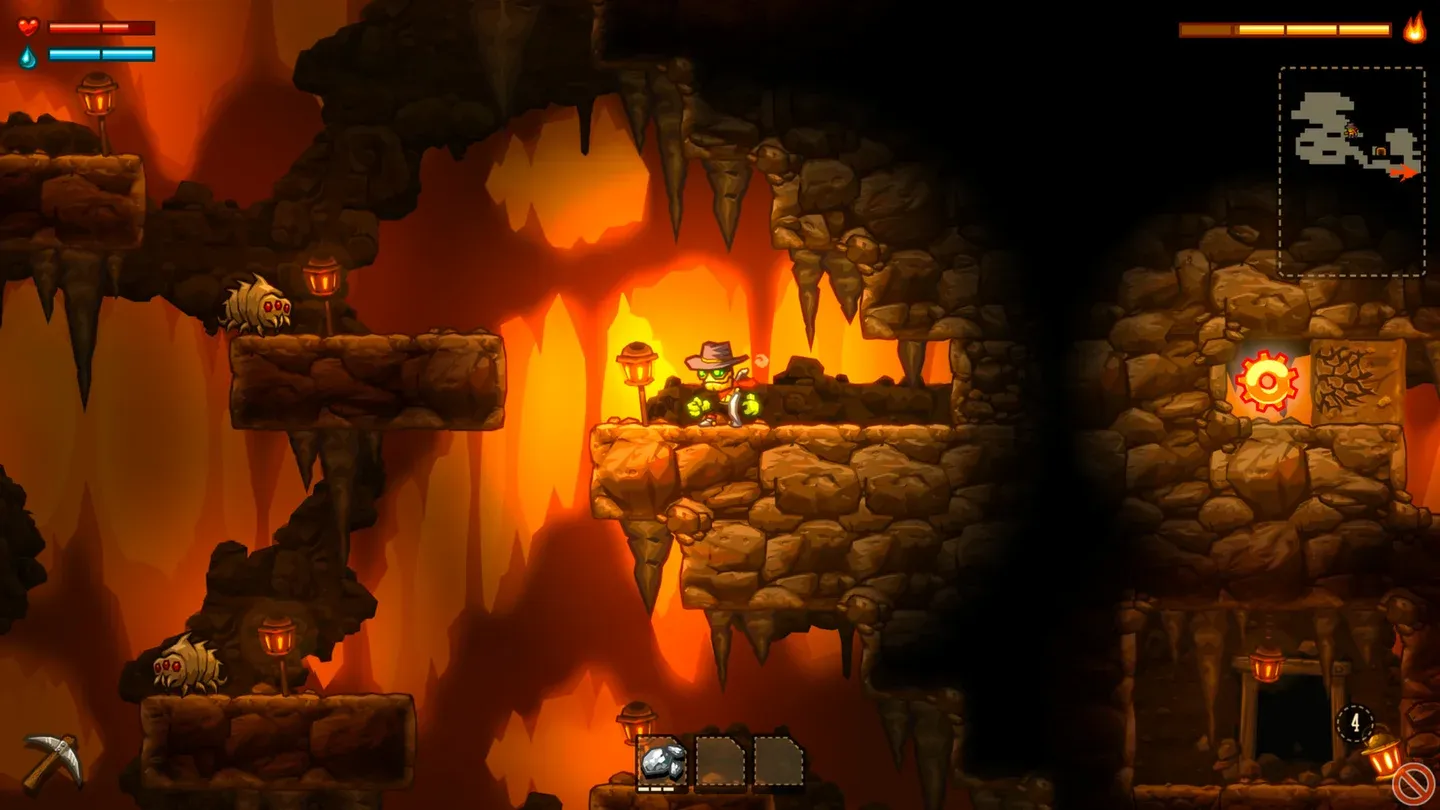
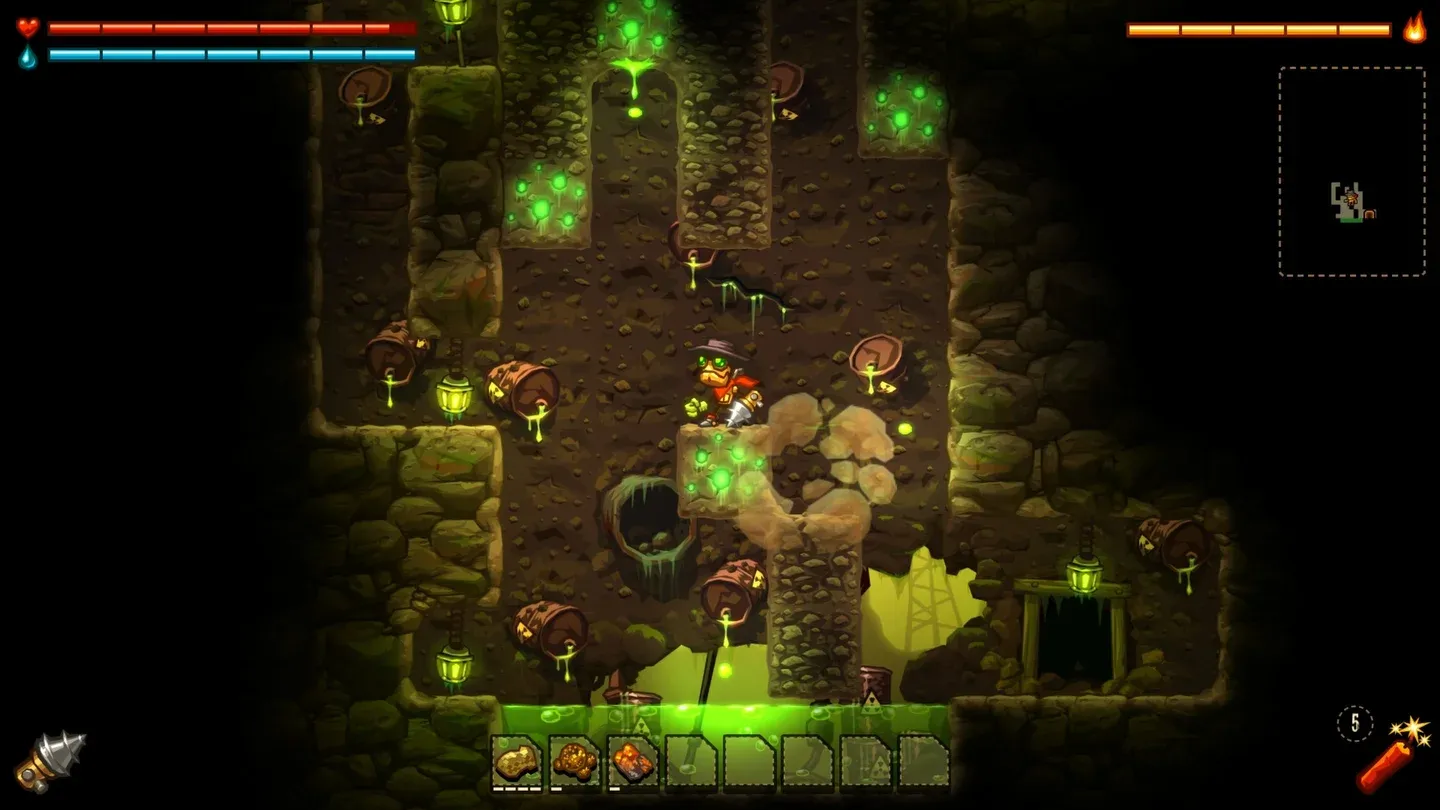
The wild west steam-robot aesthetic gives SteamWorld Dig a distinct identity. Tumbleton sits on the surface as a small hub town where Rusty upgrades gear and sells ore, while the mine below shifts through visually distinct underground worlds, each with its own environment and enemy roster. The pixel art holds up well, with each biome reading clearly and maintaining atmosphere without sacrificing readability during fast-paced digging sections.
The story is light but present. Environmental storytelling and brief character interactions hint at what lies beneath Tumbleton, and the payoff for players who push to the final depths is worth the journey. Image & Form Games built a world with enough personality that the sequel, SteamWorld Dig 2, had a strong foundation to expand on.
Content and replayability
SteamWorld Dig runs around 5 to 7 hours for a standard playthrough, making it a tight, focused experience rather than an open-ended sandbox. Speedrunning communities have found the game particularly appealing because of its randomized layouts and flexible upgrade paths. Its wide platform support makes it an accessible entry point for players new to the mining platformer genre.
SteamWorld Dig content image
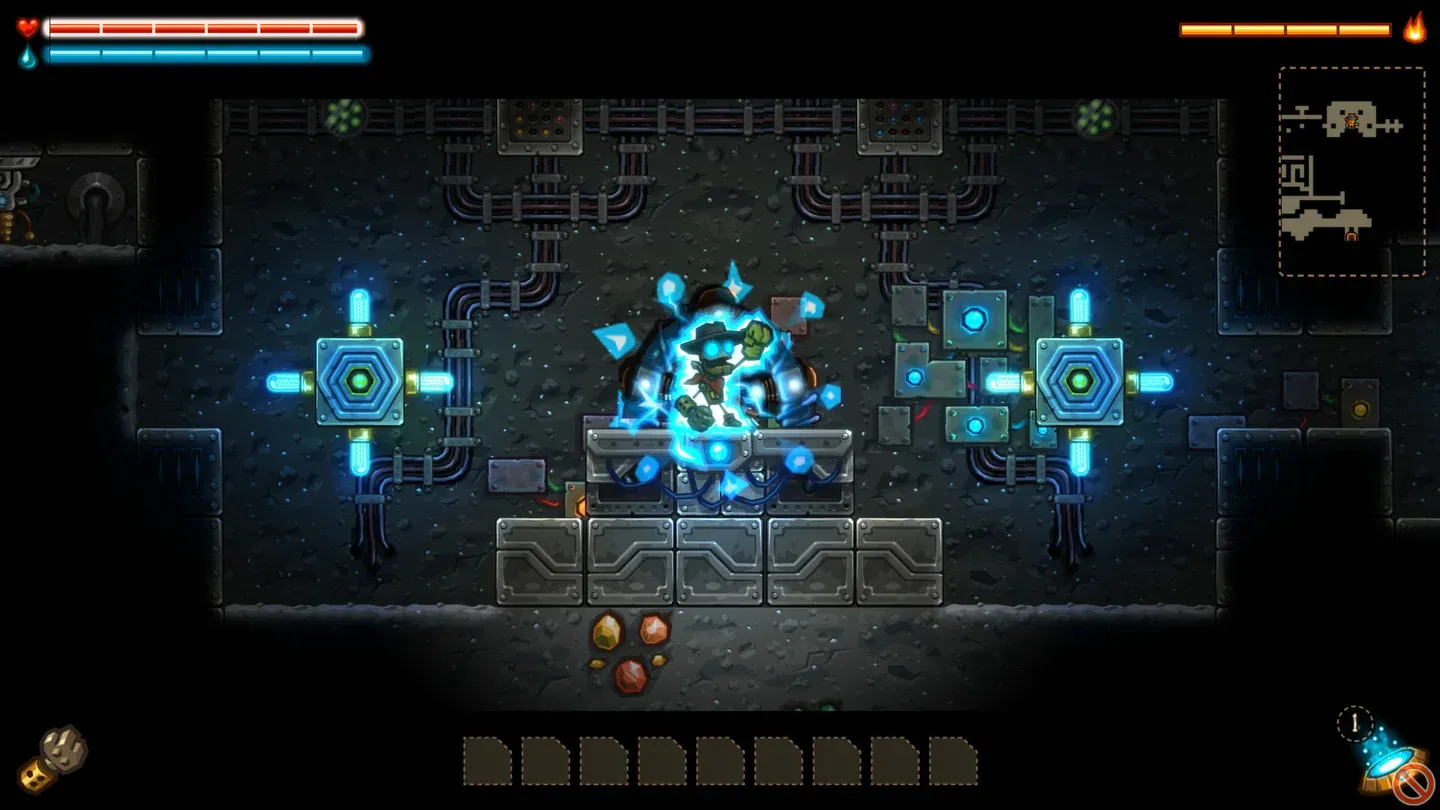
The combination of procedurally generated mine layouts, Metroidvania-style ability unlocks, and a clean progression system makes SteamWorld Dig hold up more than a decade after its original release. It does exactly what it sets out to do, without padding or filler, and that discipline is rarer than it sounds.