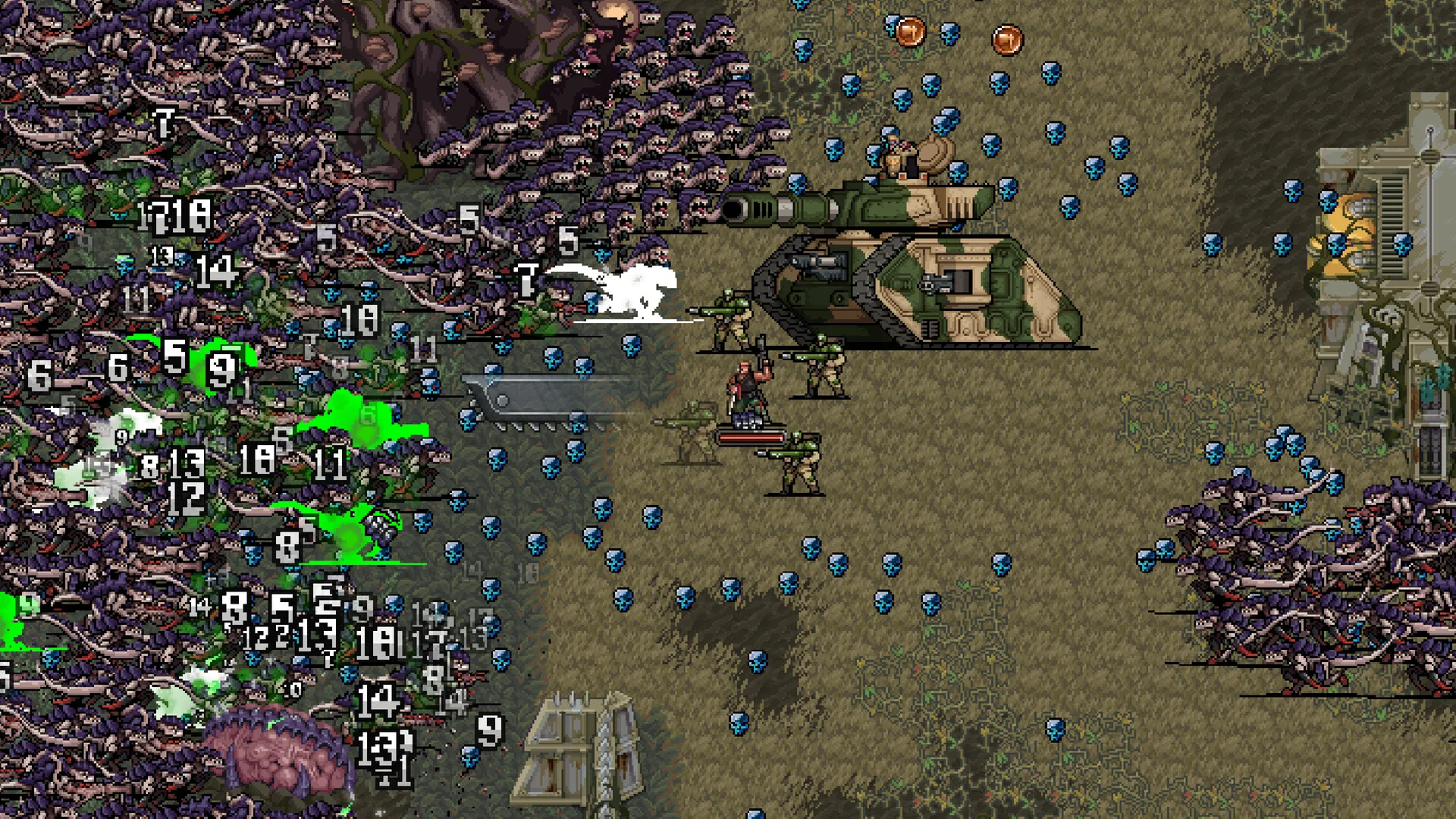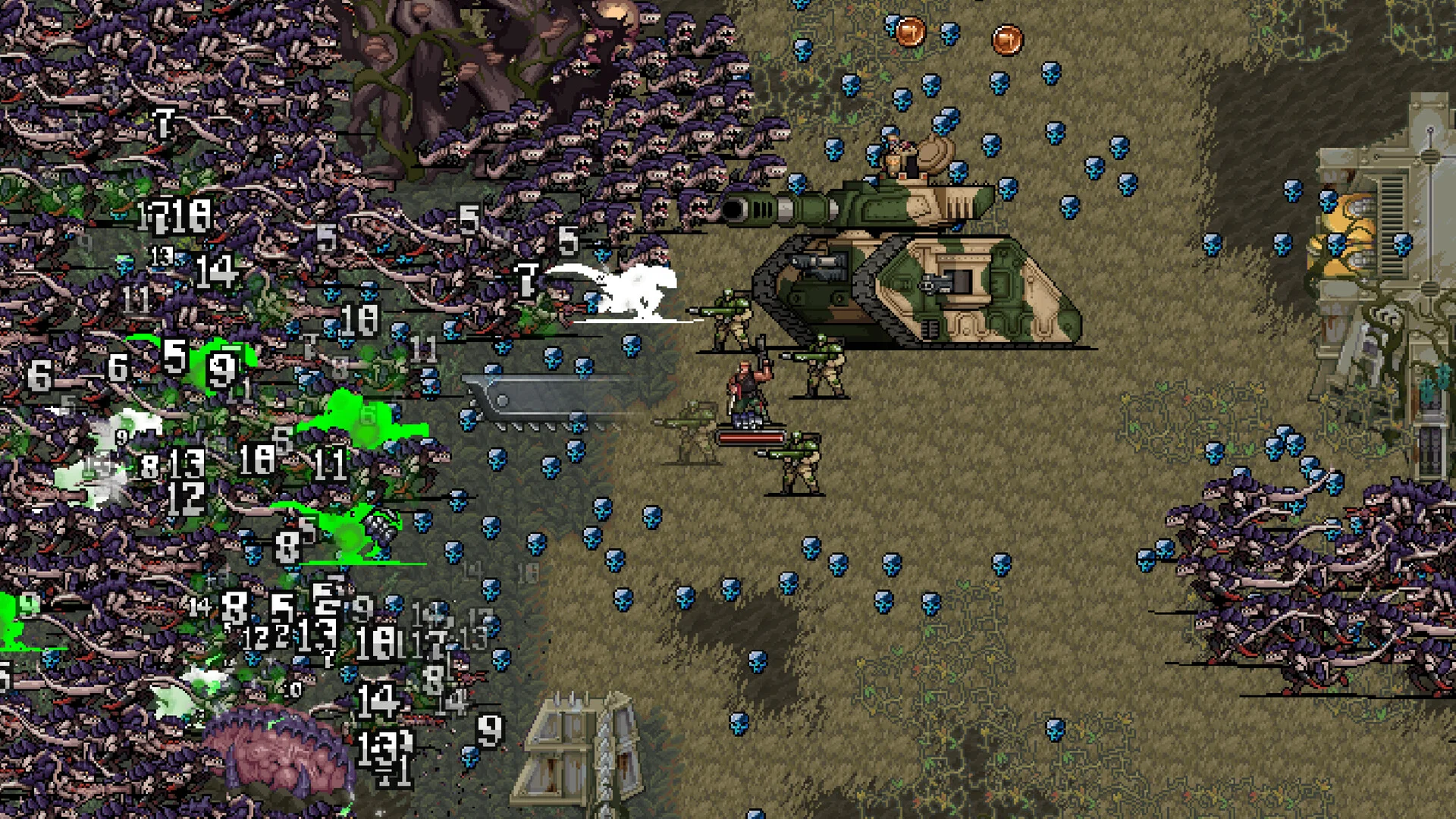

In Warhammer Survivors, leveling up strengthens your build by allowing you to choose between new weapons, passive items, or upgrades for your current gear. Collecting Skull Gems grants the necessary experience to trigger these levels, providing the tools to overcome increasingly difficult enemy waves.
The useful choice is usually the one that fixes your current bottleneck. More damage helps when enemies survive your attacks; pickup range helps when experience sits beyond your safe route. A focused starting weapon, a planned evolution, and complementary upgrades make each level-up work toward the same goal. Coin-funded Enhancements support that plan across later attempts.
How experience and leveling work
Your weapons attack automatically, so movement determines how much dropped experience you can safely collect. Move in broad loops through cleared ground and along the edge of enemy packs. Avoid doubling back through a crowd for a few scattered gems, especially if the detour closes your escape route.
White Dwarf and Magnet solve different leveling problems. White Dwarf increases the experience earned from collected skulls, reaching around a 40% XP bonus at maximum level. The Magnet passive increases collection distance, reducing how often you need to cross dangerous ground for drops.
An XP bonus cannot help with skulls you leave behind, while collection range cannot compensate for enemies your weapons barely damage. Balance both against your ability to keep clearing the wave.
For Ork Stronghold's level 50 objective, prioritize these passives early and aim to finish before 22 minutes. Large numbers of Meganobs make collection much harder from that point. Treat that timing as a reason to build your XP engine early, not a guarantee that every attempt will reach the target.

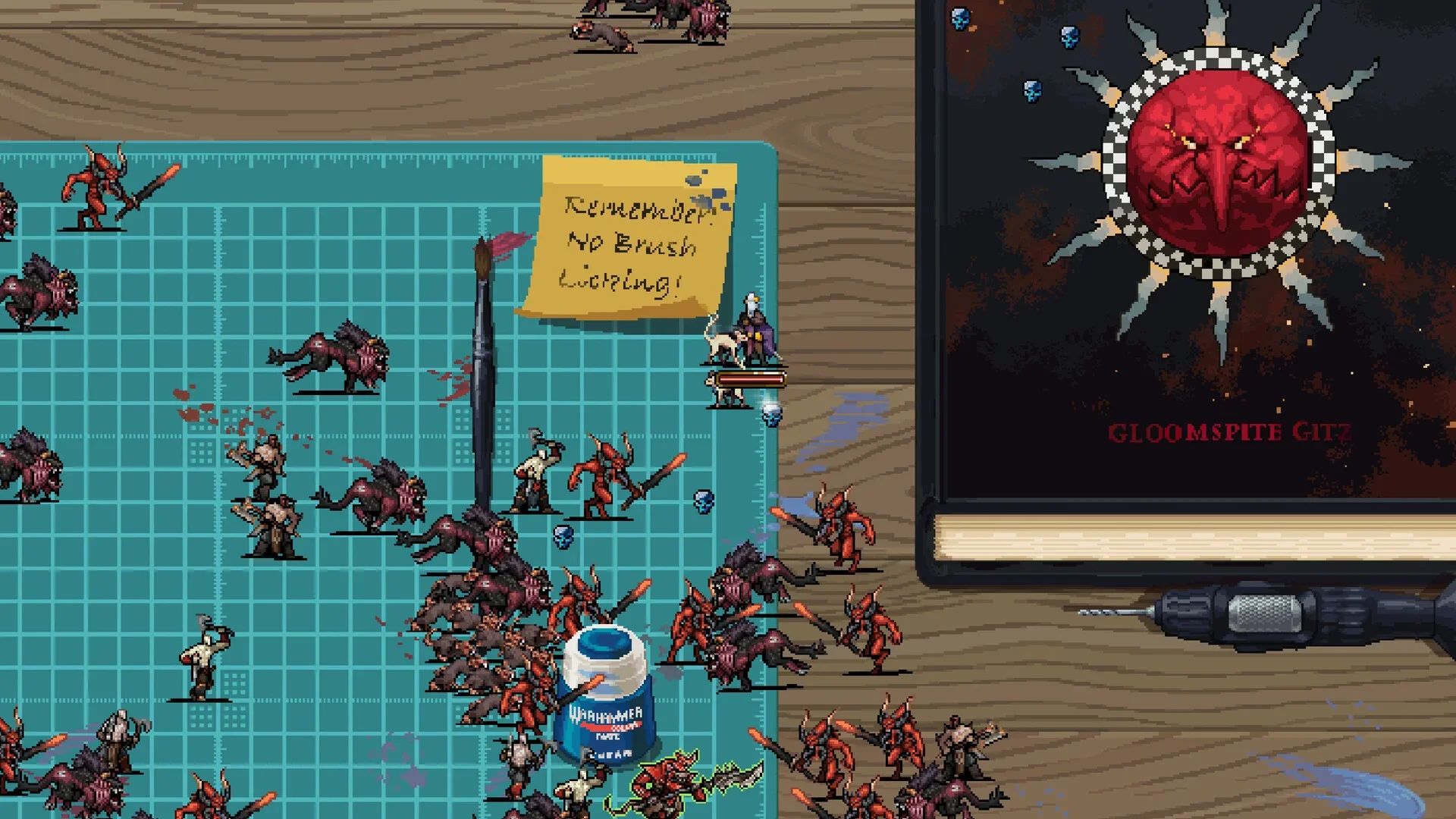
Understanding upgrade choices
Weapons, passives, and chests
A level-up can give you a new weapon or passive, or strengthen something already in your build. The decision is between adding another function and improving the tools you already rely on.
Chests upgrade items you own. Their value therefore depends on what you have selected before opening them. If you are waiting for a core passive or a weapon you intend to evolve, saving an accessible chest can direct its upgrades toward that item once you have it. Do not risk dying simply to preserve a chest for later.
Reroll, Seal, and Banish
These tools help control upgrade offers, but they work at different points and carry different costs.
| Tool | When it works | What it changes |
|---|---|---|
| Reroll | During a level-up | Replaces the current upgrade offers with new ones. |
| Seal | Before a run | Prevents selected weapons or items from appearing during that run. |
| Banish | During a run | Removes an item from future level-up offers, but uses that level-up opportunity without upgrading anything. |
Use Reroll when the current selection misses your immediate needs. Use Seal to remove options you already know you do not want. Banish is a more expensive correction because you give up an upgrade now to improve future choices. Completing more Reroll and Seal objectives increases how many uses you have.
Permanent Enhancements
Coins remain with you after a failed run. Spend them on Enhancements to improve later attempts, separately from the weapons and passives chosen during combat.
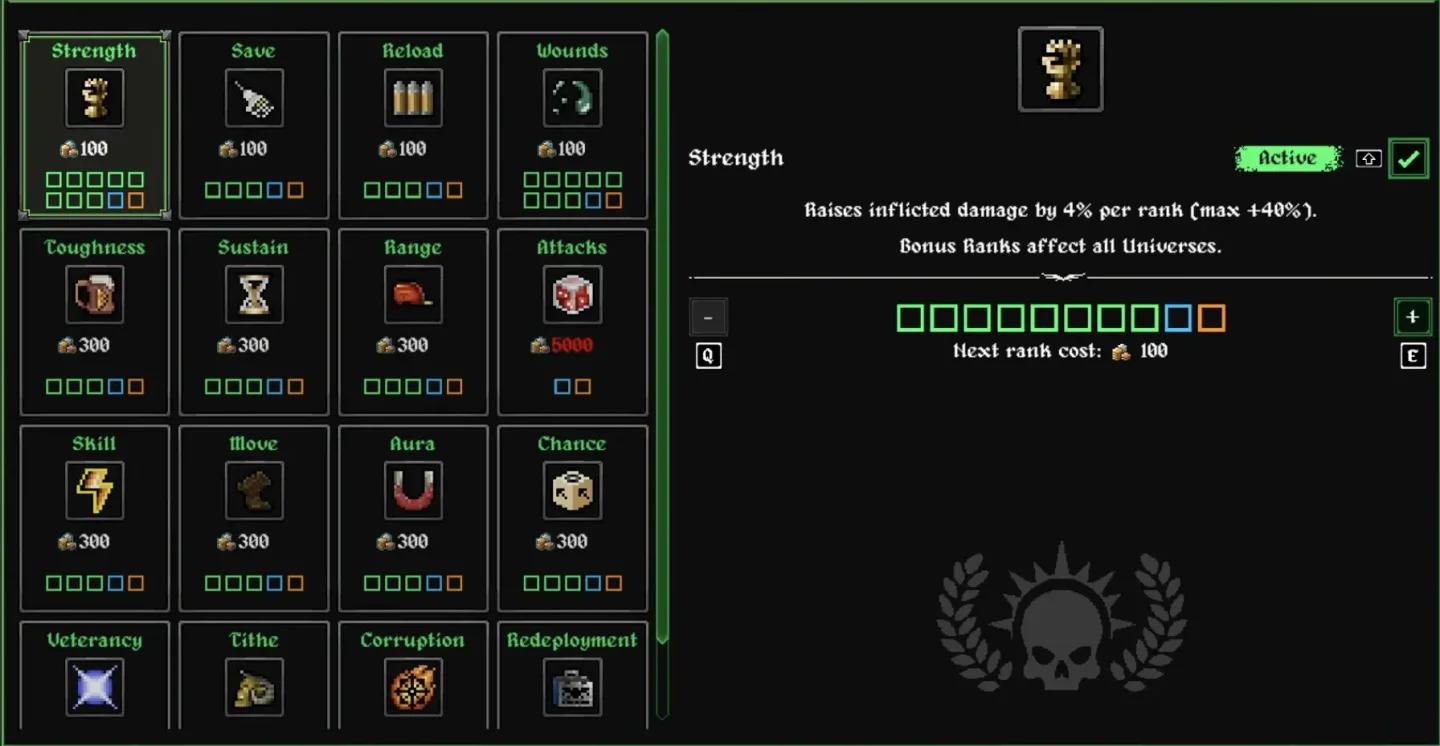
Permanent Enhancement options
The names do not always explain their function. In particular, Range affects attack size, Skill affects projectile speed, and Aura affects pickup distance.
| Enhancement | Effect | Reason to choose it |
|---|---|---|
| Strength | Adds 4% damage per rank, up to 40%. | Enemies survive your attacks for too long. |
| Save | Reduces incoming damage by 0.5 per rank, up to 2.5. | Repeated hits wear you down. |
| Reload | Adds 1% weapon attack speed per rank. | You need more frequent attacks. |
| Wounds | Adds 4% maximum health per rank, up to 40%. | You need a larger health reserve. |
| Toughness | Adds 0.1 Wounds recovery per rank, up to 0.5. | You need recovery between damaging encounters. |
| Sustain | Increases attack and effect duration by 5%. | Your attacks benefit from lasting longer. |
| Range | Increases attack size by 2% per rank. | Your attacks need broader coverage. |
| Attacks | Adds one projectile per rank to weapon attacks. | You need additional attacks and coverage. |
| Skill | Adds 4% projectile speed per rank. | Projectile travel speed is limiting your attacks. |
| Move | Adds 3% movement speed per rank. | You struggle to reach open ground. |
| Aura | Increases pickup range for Skulls and items. | Collecting drops requires unsafe detours. |
| Chance | Adds 5% luck per rank, improving drop and reward chances. | You want better opportunities from drops. |
| Veterancy | Adds 2% experience gained per rank. | Your priority is faster leveling. |
| Tithe | Adds 5% coins earned per rank. | Your priority is funding later purchases. |
| Corruption | Adds 5% enemy speed, quantity, and health per rank. | You deliberately want harder encounters. |
| Redeployment | Adds one revive per rank, restoring 50% Wounds. | You want another chance after a lethal mistake. |
Buy an Enhancement because its effect answers a recurring problem. Its price alone does not make it the right next purchase.
Strengthening weapons versus adding options
Establish a reliable main weapon
Prioritize your starting weapon while early enemies remain difficult to clear. Taking a different weapon at every opportunity spreads upgrades across several low-level attacks. A stronger main weapon gives you a dependable way to remove enemies while you move.
For a Warhammer Survivors crowd-clearing build, the Chainsword and Lasgun cover different jobs. The Chainsword sweeps laterally, while the Lasgun automatically shoots the nearest target.
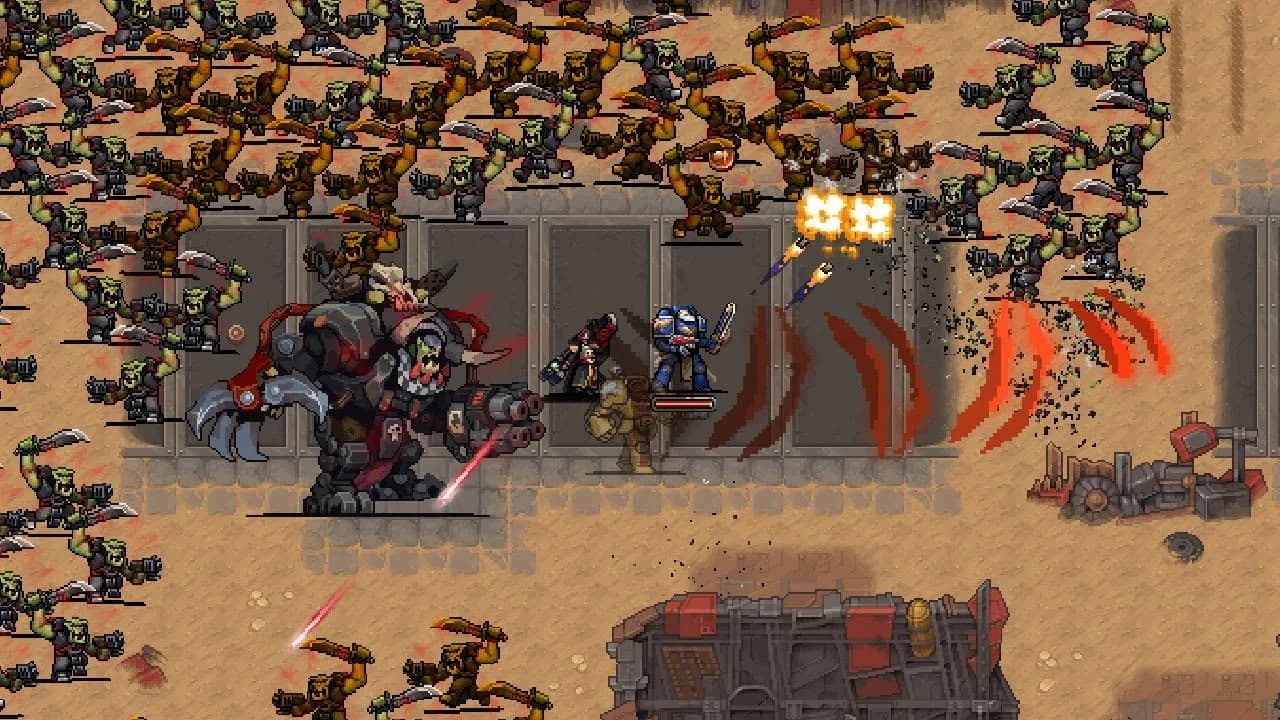
Malum Caedo's Chainsword
Extra attacks can also change a weapon's coverage, not simply its damage output. Additional Chainsword hits extend coverage behind you, helping against enemies approaching outside its usual sweep. Consider what an upgrade changes about your movement before replacing it with another weapon.
Add a weapon to fill a specific gap
Expand once your main attack can handle the opening waves, or when a missing function is putting the run at risk. Choose the next weapon by the threat it needs to answer:
- Dense crowds: Add area damage or broader coverage.
- Elites and bosses: Add focused damage or sustained damage over time.
- Enemies reaching you between attacks: Consider knockback or another attack direction.
- Fast enemies outside your main arc: Consider homing or multidirectional coverage.
A new weapon earns its place when it handles something your current set misses. Another crowd-clearing attack is less urgent if ordinary enemies already die quickly but elites keep blocking your route.
Combining complementary upgrades
Plan an evolution before collecting unrelated passives
Choose a target evolution early. The Warhammer Survivors weapon evolution recipes identify the matching passives and which ones need to be maxed, helping you recognize a required item when it appears.
Many evolution paths involve a developed weapon, a specific passive, and a chest to complete the transformation. Follow the individual recipe instead of assuming every weapon has identical requirements. Avoid spending several upgrades on an unrelated option while a required component remains unfinished.
Chest timing becomes a planning decision here. If you are close to completing a requirement, an unopened chest may be more useful after that final upgrade. Keep enough space to return safely; an evolution plan is not a reason to fight from a bad position.
Pair effects that help each other
Nuln Oil applies Oiled, which makes enemies take extra damage from fire. Pair it with a fire source and apply oil before the flames. Without fire damage in the build, you are leaving that interaction unused.
Poison offers a different combination of benefits: damage over time and a slow. It can help against high-health enemies while also creating more movement space. Choose it for the pressure it relieves, not just the damage attached to its description.
Compare upgrades by the full sequence they enable. Oil needs fire to exploit its damage bonus; poison combines damage with control; a required evolution passive moves your main weapon toward a transformation. These are clearer reasons to select an item than simply filling another space in the build.
Avoiding weak upgrade combinations
A weak combination often consists of individually useful upgrades that answer the wrong problem. More collection range will not remove an elite blocking a narrow route. More weapon coverage will not help you collect experience if you keep walking away from cleared ground. Diagnose the failure before choosing its upgrade.
Burning also requires care because it increases the affected enemies' movement speed while dealing fire damage over time. Create distance before igniting a nearby pack, particularly when your build depends on keeping enemies behind you.
Keep economy and difficulty choices separate from immediate survival needs. Tithe is a long-term earning choice. Corruption is a difficulty increase. Neither is a substitute for fixing the damage, movement, or durability problem that ended your previous attempt.
Planning your next level-up
Before accepting an offer, identify the next task your build must complete. Use this order to make the decision concrete:
- Check your escape route. Decide whether you need better clearing, control, or movement to keep it open.
- Check your main weapon. Strengthen it if ordinary enemies still take too long to remove.
- Check your evolution plan. Prioritize a missing required component when it appears.
- Check the ground. Consider XP and collection upgrades if drops are plentiful but your level is lagging.
- Check your coverage. Add a complementary weapon when a specific threat escapes your current attacks.
If you want a straightforward evolution path to practice, the Warhammer Survivors beginner build uses Neave Blacktalon's Tempest Axes with Sabaton on the path to Whirlwind Axes. Staying with one character for several attempts also makes it easier to learn that starting weapon's reach and attack pattern.
After a failed run, identify one cause you can act on: enemies survived too long, drops stayed out of reach, or your route closed before you could escape. Spend your next coins and early upgrades on that problem, then reassess when the next obstacle appears.