


Aniimo drops you into the open world of Idyll with a lot of moving parts and very little hand-holding. There is catching, real-time combat, the Twining mechanic, a Homeland system, multiplayer tools, and rare creature variants all competing for your attention at once. The good news: most of these systems connect in ways that make sense once you understand the core loop. This guide breaks down everything a new Pathfinder needs to hit the ground running.
What is Twining and why does it matter?
Twining is the mechanic that separates Aniimo from every other creature-collection game. Your Pathfinder physically merges with a collected Aniimo, gaining that creature's abilities directly. This applies to combat, but it extends well beyond fighting.
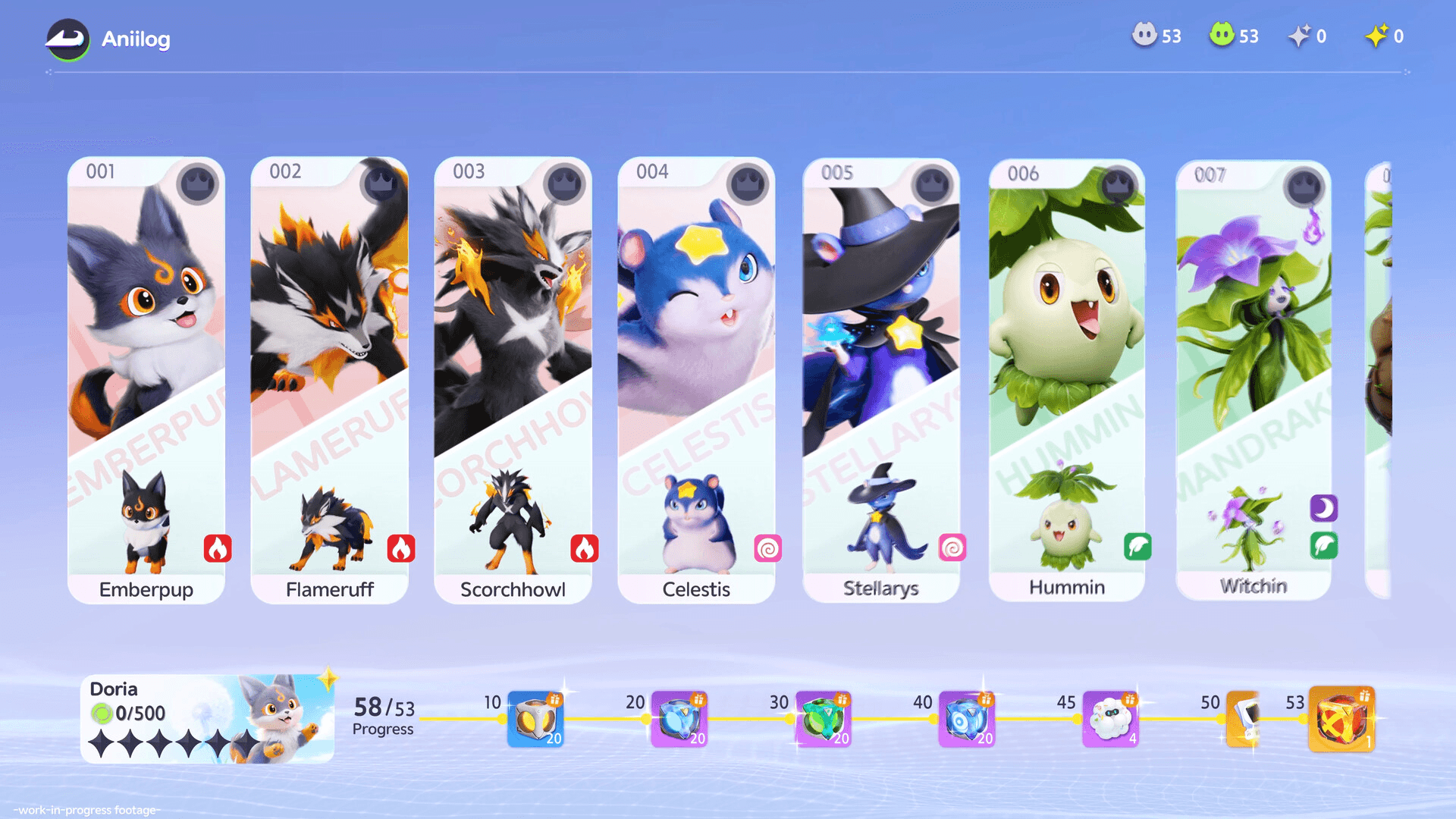
Twining with Flameruff lets you access fire-gated areas. Celestis opens up vertical exploration, letting you scale cliffs and glide between peaks. Skippy handles water traversal. The point is that your collection functions as an exploration toolkit, not just a battle roster. A newly caught Aniimo that looks weak in a fight might unlock a section of the map you have been staring at for an hour.
The early-game loop that pays off most is: explore, catch something new, unlock a new ability, explore further. Lean into it.
How does catching actually work?
Throwing Aniipods is the obvious part. The less obvious part is everything that affects whether the catch lands.
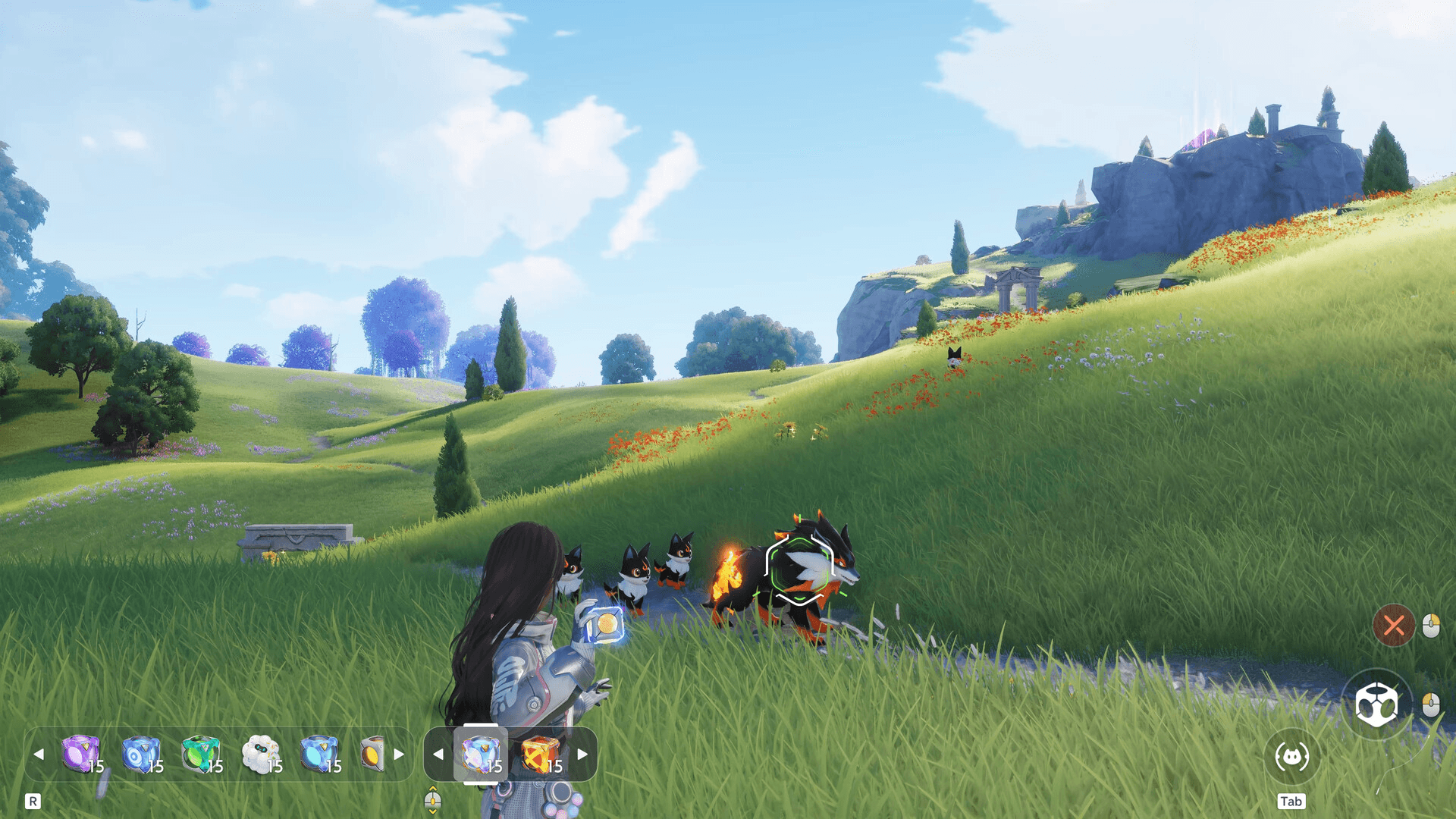
Aniimo react to your presence. Approach carelessly and they either flee or turn aggressive, at which point you cannot attempt a catch until you resolve the encounter. Crouching and using tall white grass for cover lets you close the distance undetected. Getting behind a creature before throwing triggers the Backstab perk, which meaningfully increases your success rate.
Aniimo Ultimate Beginner's Guide
If an Aniimo does spot you and starts fighting, lower its HP as far as you can before throwing. This applies the Weakened state, which stacks with other catch bonuses. Breaking an enemy's toughness bar adds another 1.5x multiplier. Hitting from behind adds a further 1.5x on top of that. Stack those conditions and your odds improve considerably.
The math from the game data gives you a rough baseline: roughly 56% catch rate on common Stage 1 creatures, around 42% at Stage 2, and about 28% at Stage 3. Because of this drop-off, catching an early-stage Aniimo and evolving it is almost always more efficient than hunting the final form directly.
Catching also depends on environment, weather, time of day, and special phenomena. If the creature you want refuses to show up, the answer is usually to return under different conditions rather than to loop the same area.
How should you build your first team?
Aniimo has five distinct combat roles, and ignoring role balance is one of the fastest ways to stall your progression.
- DPS (33 available at launch): your primary damage dealers.
- Break (26 available): strips enemy toughness bars to open damage windows.
- Support (18 available): buffs allies and applies debuffs to enemies.
- Regen (10 available): accelerates EP and skill regeneration for the whole team.
- Heal (7 available): keeps the party alive; the rarest role, so treat those catches as high priority.
Aniimo Ultimate Beginner's Guide
A party of four DPS creatures sounds powerful until you hit an enemy with a thick toughness bar and watch your damage numbers bounce off it. Always carry at least one Break unit. At minimum, pair a Healer with a DPS and fill the remaining two slots based on what the area demands.
Element coverage matters just as much as role balance. Water beats Fire, and the same logic applies across the type chart. Running two or three different elements on your active roster means you are rarely caught flat-footed by a resistance.
For early-game captures specifically, the biome you explore first shapes what you find:
What is the Homeland system and should beginners care?
Yes, and sooner than most players expect. Your RV and Homeland are genuine progression systems, not cosmetic extras.
Your Homeland unlocks in plots as your RV levels up. Farmland grows crops that harvest into raw materials automatically while you play elsewhere. Thirteen crop types are available (Wheat, Potato, Sugarcane, Rice, Cotton, Strawberry, Soybean, Lavender, Agave, Rose, Grapes, Ginseng, Pumpkin), each yielding 8 units per harvest. Keep every plot planted at all times. It is close to free income that requires almost no active time.

Aniimo Ultimate Beginner's Guide
RV dispatches can also produce Aniimo eggs with the Prismana trait, which connects Homeland directly to rare creature hunting. Aniimo living at Home perform work tasks and have new idle behaviors in the launch version.
The launch version also expands Home into a larger multi-area map and improves the RV upgrade process, so the system is more rewarding than it was in earlier test builds.
How do Prismana and Umbral Aniimo work?
These are the rare variants worth understanding before you start seriously hunting.
Prismana Aniimo are tied to Prismana Flow and Prismatic Energy. The launch version changed the trigger rules so that every ecosystem nurturing action has the same base chance of starting Prismana Flow, removing the penalty that hit players with low Prismatic Energy in earlier builds. A Lucky Strike mechanic can now provide item rewards, increase an area's Prismatic Energy, and directly trigger Prismana Flow.
Umbral Aniimo have distinctive coloration and Perfect Potential. They appear through Wild Surges triggered by ecosystem nurturing, but can also spawn randomly in the open world. If something looks noticeably different from the standard version of a creature you recognize, stop before moving on.
Branch activation connects to both systems. Activating a Branch reveals Blooms in the surrounding area and unlocks new map sections. Spending Lumin Amber at an activated Branch can increase catch chance, raise Sparkling rates, and even change local weather, all of which affect what spawns nearby.
What about multiplayer and PvP?
Aniimo supports solo play, co-op, and competitive modes. The open-world co-op tools are built around three in-game items:
- The Horn: broadcasts a call for help to nearby players, ideal when an elite enemy ambushes you.
- The Flute: invites specific players to your location or pulses outward to detect other players in the area.
- The Come to Me ability: instantly teleports pre-established allies to your position, bypassing travel entirely.
The flagship competitive mode is Operation: Egg Heist, a three-player PvEvP activity set in the Lost Isles. Teams search for eggs and fight in real time while the environment and other player groups both pose threats. The launch version added more obtainable egg types and a harder Chaos Mode. Treat it as its own distinct activity rather than a straightforward battle mode.
How does training work in the launch version?
Players who tested earlier builds may remember a more complicated system. The rune system and random rune slots are completely gone in the launch version. If any guide you find still discusses optimizing rune slots, it is outdated.
Capability Awakening for any Aniimo below level 60 can be reset at any time, with training materials returned in full. Capafruit effects also transfer automatically during inheritance. The practical result is that early training decisions are far less permanent than they used to be. Experiment freely instead of waiting for a theoretically perfect team before investing.
Resonance is a shared progression system that rewards focusing on a small core. Every Aniimo you raise past key level thresholds unlocks permanent stat bonuses:
- Level 25: ATK, BREAK, and HP each increase by 2%
- Level 35: REGEN, P.DEF, and M.DEF each increase by 2%
- Level 45: ATK, BREAK, and HP each gain a flat +1
- Level 50: REGEN, P.DEF, and M.DEF each gain a flat +1
- Level 55 and 60: Six Potentials gain +1 and +2 respectively
What should you check for free rewards?
Aniimo is free-to-play, which means reward tabs accumulate faster than most players track them. Check every menu with a notification icon. The ones that consistently pay out include the Events tab (challenges tied to active events with EXP Pods and currencies), the Tutorials tab (new objectives unlock as you progress), the Institute Guide (milestone rewards for system progression), and the Elite Training tab (requests tied to specific Aniimo captures and level milestones).
Also spend Primegy regularly. This resource replenishes over time and powers the exploration gacha system. Letting it sit capped wastes potential charges.
For everything else you need before and after launch, the full Aniimo strategy guides collection covers pre-registration rewards, release timing, trophy lists, and more.