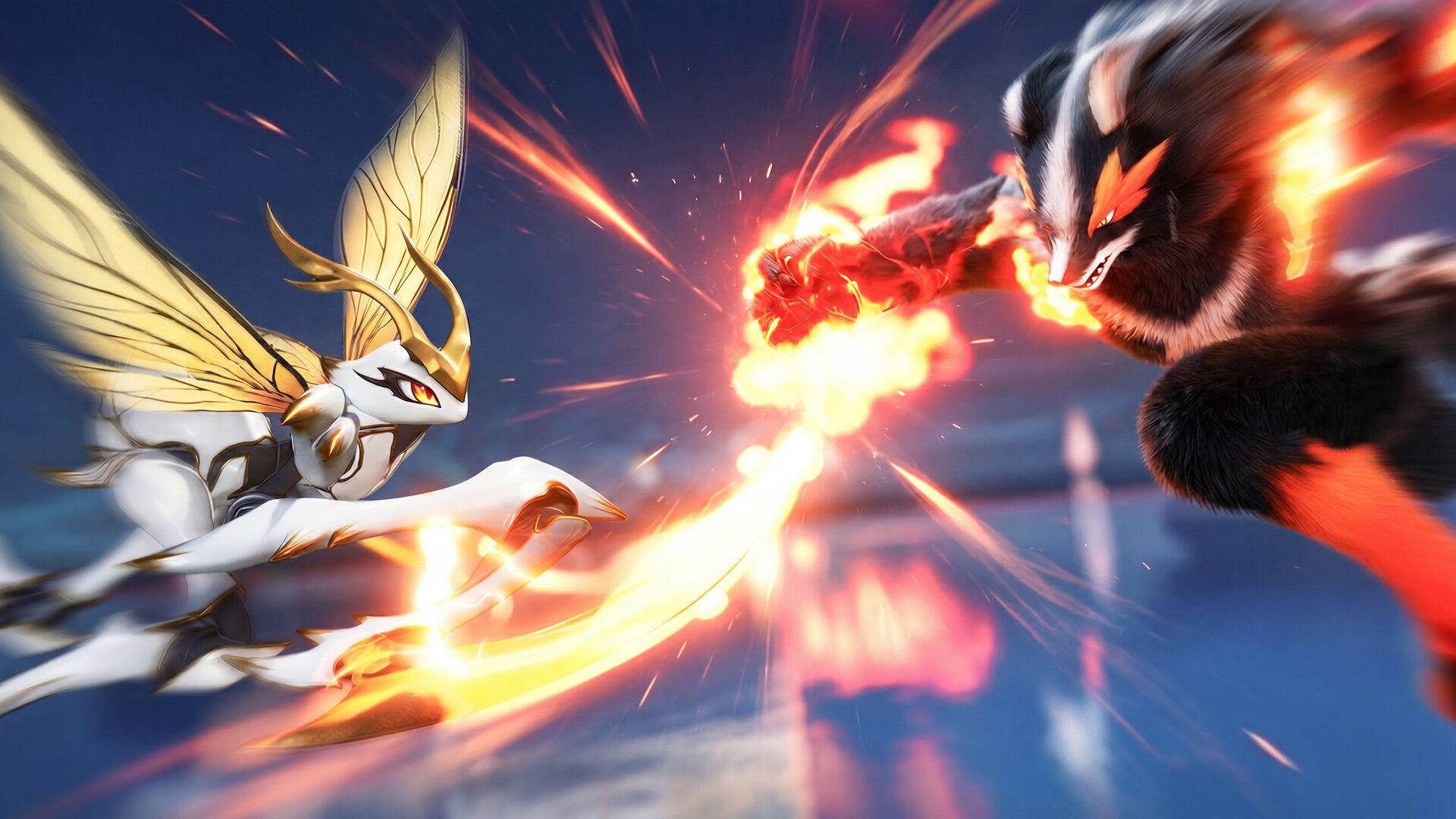


Aniimo runs on a nine-element system where knowing your matchups is the difference between a quick win and a drawn-out grind. The damage multipliers are tight, 1.6x when you have the advantage, 0.625x when you don't, but those gaps compound fast, especially once you're facing creatures with Prismana dual forms that shift their vulnerabilities mid-battle. Before you lock in your team, here's the full breakdown.
How do damage multipliers work in Aniimo?
The combat math in Aniimo uses three fixed bands. A favorable matchup hits at 1.6x damage. A neutral matchup lands at 1x. A resisted matchup drops to 0.625x. There are no immunities in the system, every element deals at least some damage to every other element.
Two rules catch players off guard. First, attacking with the same element as your target almost always deals reduced damage at 0.625x. Most creature-catching games treat mirror matchups as neutral, so this trips people up constantly. Second, Dark is the one exception: Dark attacking Dark resolves at a flat 1x neutral, not the usual self-resistance. Every other element resists itself.
The chart below is community-sourced data cross-referenced across multiple independent databases, including data read from the in-game Counters Info panel during the closed beta. It has not been re-verified in the live game, so treat any matchup that behaves differently in your sessions as the authoritative answer.
The full Aniimo type chart
Rows are the attacking element. Columns are the defending element. Read across a row to see what that attacker does to everything else.
What does each element beat and lose to?
Here's the condensed version for each of the nine elements, covering both their offensive strengths and the types that resist them.
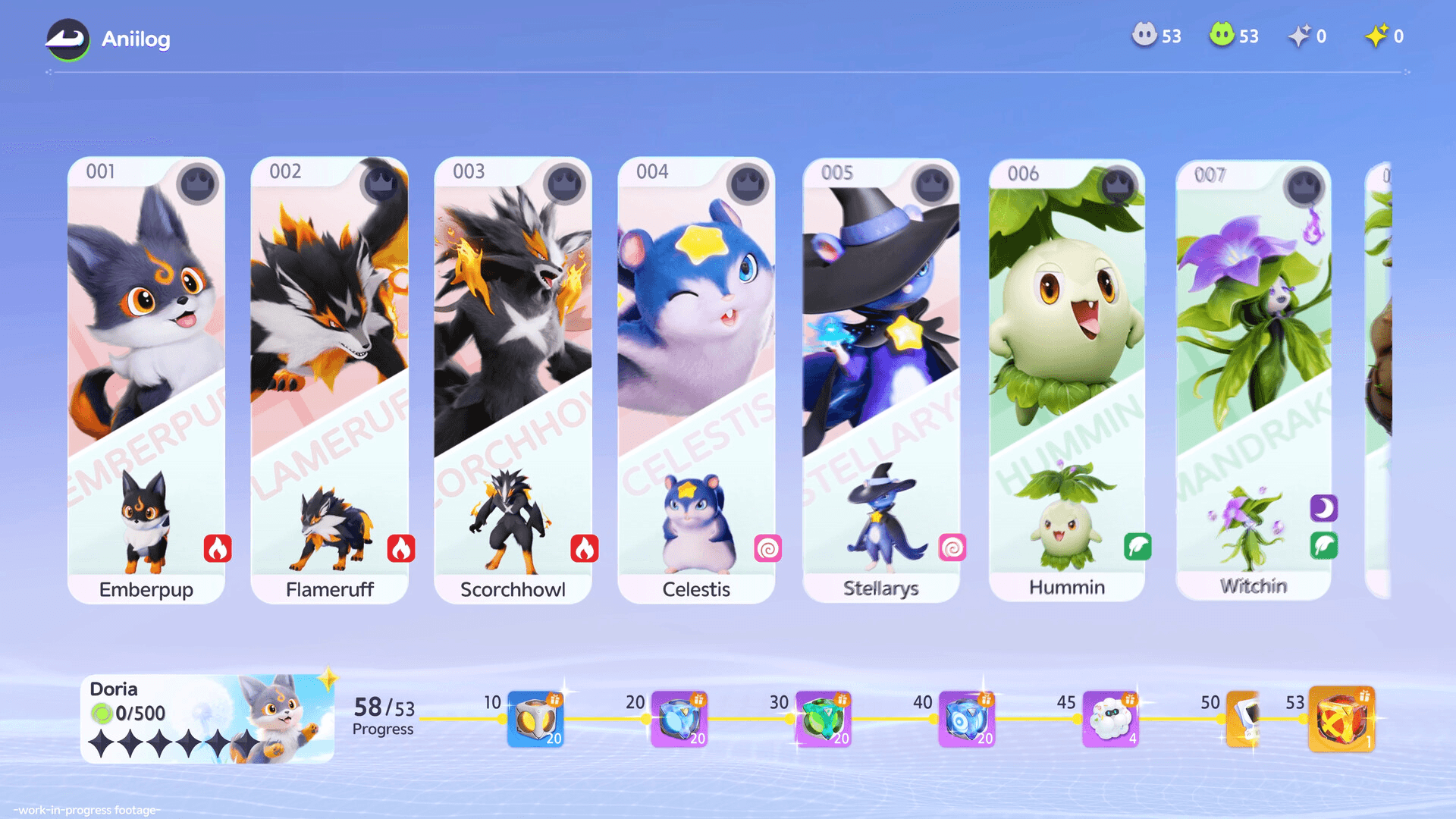
Aniimo Type Chart: All Element Strengths, Weaknesses, and Matchups
Light
- Strong against: Dark, Wind
- Resisted by: Light, Lightning
Fire
- Strong against: Ice, Grass
- Resisted by: Light, Fire, Water, Earth
Ice
- Strong against: Lightning, Water, Wind
- Resisted by: Fire, Ice, Earth
Dark
- Strong against: Light, Fire, Grass
- Resisted by: Water, Wind
- Note: Dark does not resist itself (neutral 1x mirror match)
Lightning
- Strong against: Water, Wind
- Resisted by: Ice, Lightning, Earth
Grass
- Strong against: Water, Earth
- Resisted by: Light, Fire, Grass, Wind
Water
- Strong against: Fire, Earth
- Resisted by: Light, Ice, Grass, Water
Earth
- Strong against: Ice, Lightning
- Resisted by: Dark, Earth, Water, Grass
Wind
- Strong against: Dark, Grass
- Resisted by: Lightning, Wind
How do dual-type Prismana forms change matchups?
Certain creatures unlock a Prismana form that grants them a second element alongside a shift in their base stats. When this happens, their defensive vulnerability profile changes entirely based on the new dual typing.
The honest answer on how dual-type damage stacks is that no official documentation confirms the calculation method. Every available source lists matchups per element individually and none of them states how a pair combines. The safest approach is to read the two multipliers side by side rather than multiplying them together, and adjust your read on the fly when a Prismana form activates mid-battle.
For players who want to track every creature's base elements and plan around potential Prismana shifts, the Aniimo guides collection covers team-building and progression in depth.
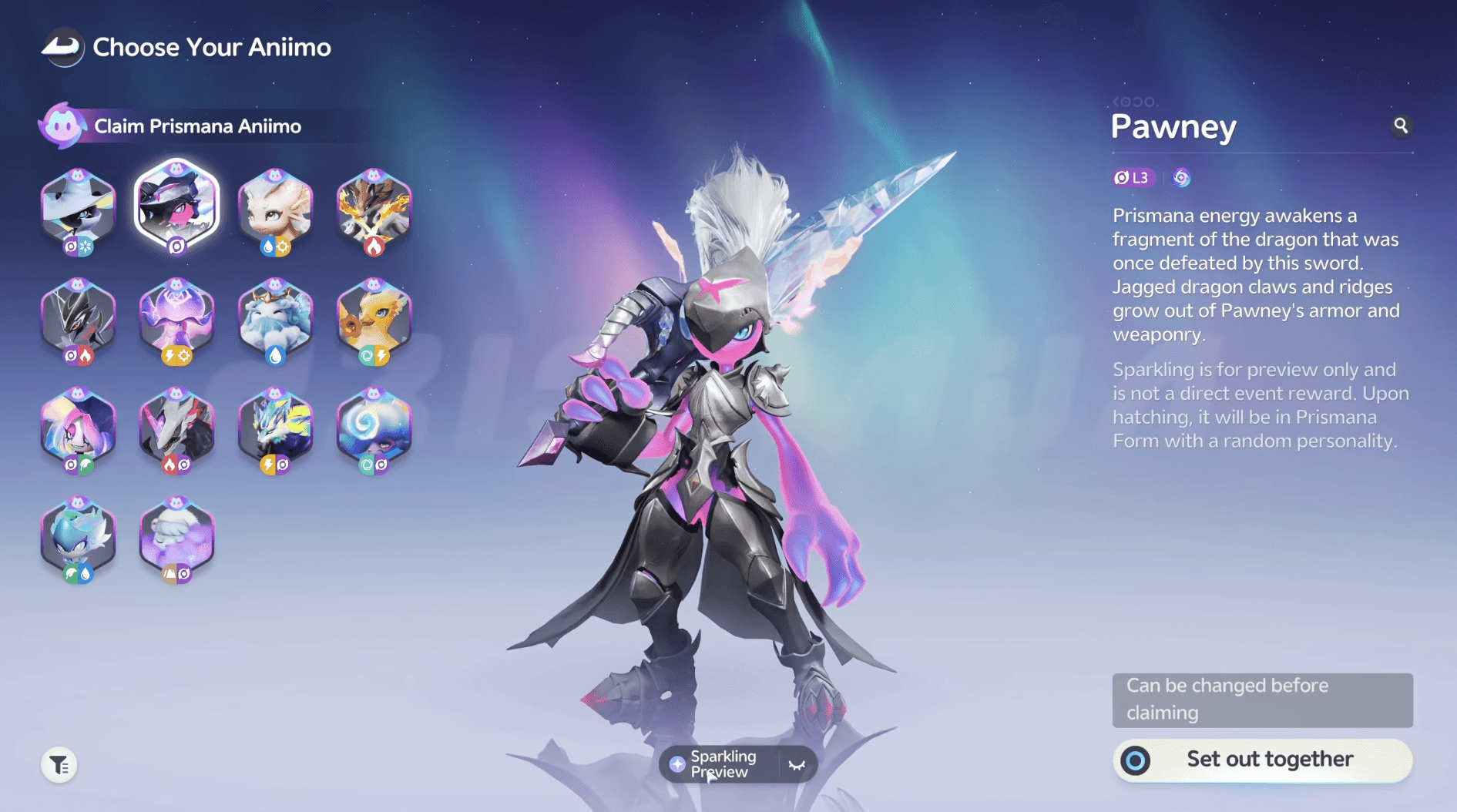
Aniimo Type Chart: All Element Strengths, Weaknesses, and Matchups
Which elements have the most offensive coverage?
After mapping out all 81 cells, a few elements stand out for raw offensive reach.
Dark hits three types for 1.6x (Light, Fire, Grass) while only being resisted by two (Water, Wind), making it one of the more efficient offensive elements in the game. Fire also hits two types for 1.6x but gets walled by four, so it needs more support.
Ice is worth a look for coverage: it threatens Lightning, Water, and Wind for 1.6x, which covers a wide spread of commonly encountered types. The trade-off is that it's resisted by Fire, Ice, and Earth.
Grass has the worst offensive efficiency in the chart. It hits Water and Earth for 1.6x but gets resisted by four different types (Light, Fire, Grass, Wind), so pure Grass attackers will struggle against a varied team.
If you're still figuring out whether to pick up the game, the Aniimo pricing guide covers the free-to-play model and what the optional pre-order packs include.
What are the most important matchups to memorize first?
You don't need to memorize all 81 cells before your first session. Start with the relationships that come up most often.
- Water beats Fire and Earth — two of the most common early-game types
- Dark beats Light, Fire, and Grass — broad coverage that makes Dark creatures strong picks
- Fire beats Ice and Grass — straightforward and shows up in most early encounters
- Lightning beats Water and Wind — good for handling Water types that counter Fire
- Grass beats Water and Earth — the natural counter to Water, but watch out for its four resistances
The self-resistance rule is the one that catches everyone. Going into a Fire-versus-Fire fight expecting neutral damage and getting 0.625x instead is a fast way to lose a battle you thought was even. Keep that in mind any time you're tempted to mirror-match your way through a tough encounter.
For everything else you need heading into launch, the Aniimo release date guide has exact server start times by region so you know when to be ready.