Overview
Released in March 2010, Battlefield: Bad Company 2 remains one of DICE's strongest entries in the long-running Battlefield series. Built on the Frostbite engine, it takes the series' trademark large-scale warfare and sharpens it into something more focused, balancing chaotic multiplayer combat with a single-player campaign that actually has personality. The result is a shooter that rewards teamwork, map awareness, and a willingness to blow things up strategically.
The game spans multiple environments across its campaign and multiplayer modes, from Bolivian jungles to Venezuelan cities to snow-capped mountain ranges. Each setting serves a distinct tactical purpose, and the variety keeps both halves of the game feeling fresh. Squads of up to 32 players compete across ranked servers, with modes built specifically around coordinated 4-man team play.
Destruction 2.0: what sets this game apart
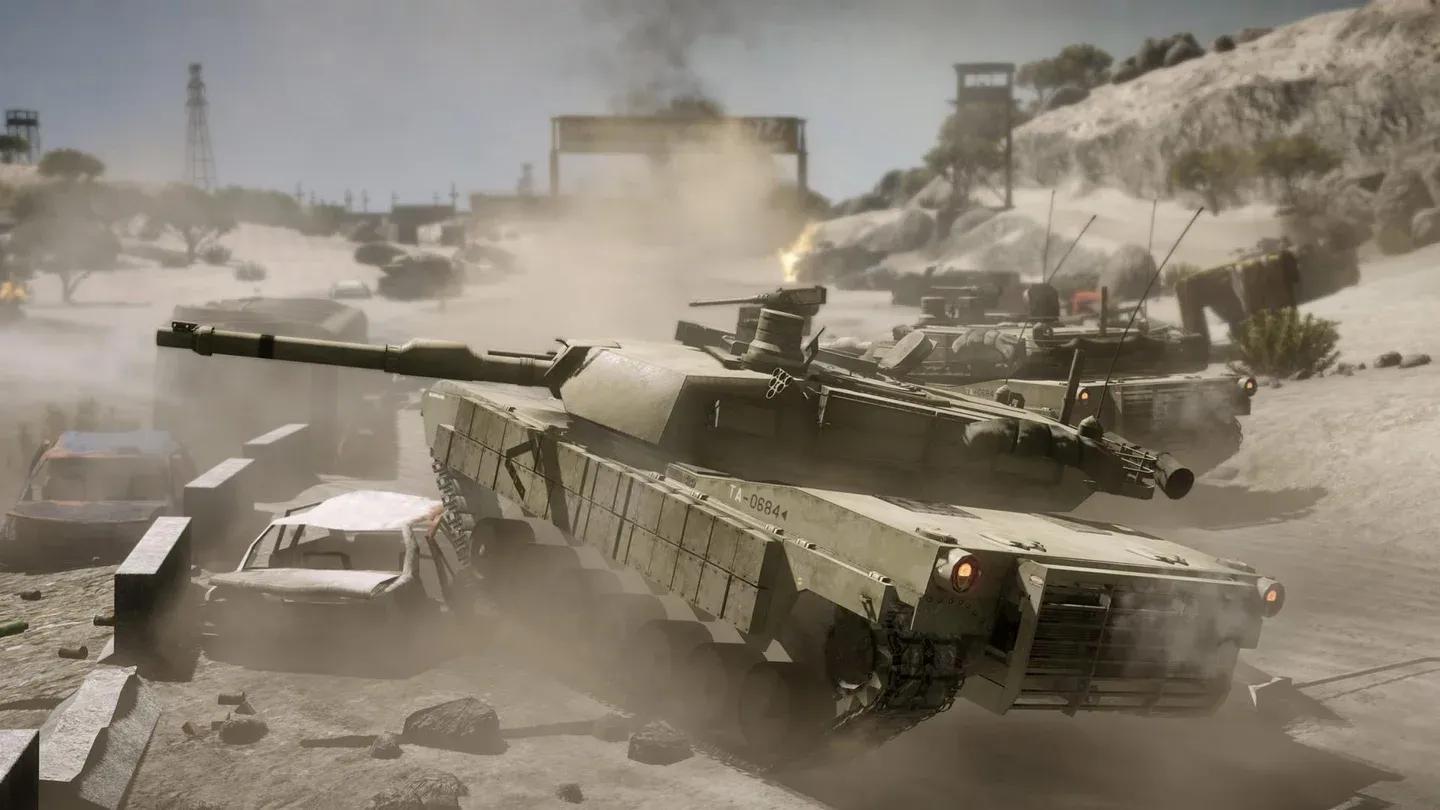
The Destruction 2.0 system is the feature that defined Bad Company 2's identity. Using the Frostbite engine, nearly every structure on the map can be damaged or demolished. Walls collapse, rooftops cave in, and entire buildings can be brought down with enough explosives. This isn't cosmetic, it changes how matches play out at a fundamental level.
Battlefield: Bad Company™ 2 content image
Key mechanics built around destruction:
- Blast holes through walls to create new firing positions
- Collapse buildings sheltering enemy squads
- Chip away cover incrementally to force repositioning
- Use vehicles like the ATV and transport helicopter for flanking routes
- Coordinate with squads to overwhelm fortified positions

Battlefield: Bad Company™ 2 content image
The system punishes static play. Camping behind a concrete wall works until someone fires an RPG at the foundation. That constant threat of structural failure keeps matches moving and forces players to think beyond standard cover mechanics.
Multiplayer and squad combat
Bad Company 2's multiplayer is built around 4-player squads competing on expansive maps designed for wide-open engagement. Modes like Squad Rush push smaller groups into intense, focused firefights, while larger modes open up the full scope of the maps. Players earn squad-exclusive unlocks and achievements, giving coordinated teams a concrete advantage over lone wolves.

Battlefield: Bad Company™ 2 content image
Vehicular combat is a highlight. The game includes tanks, ATVs, boats, and helicopters, each handling differently and requiring genuine skill to use effectively. Air support can shift the momentum of a match, but competent ground teams with the right loadouts can counter it. The balance between infantry and vehicles is one of the more carefully tuned aspects of the game.

Battlefield: Bad Company™ 2 content image
The single-player campaign
The campaign follows Sergeant Marlowe and the B Company squad through a globe-spanning story involving a Russian scalar weapon, a double-crossing CIA contact, and a conspiracy rooted in a 1944 covert operation codenamed Aurora. The tone is noticeably more mature than the first Bad Company, though the squad's banter keeps things from taking itself too seriously.
Levels move through Bolivia, Chile, Colombia, and Venezuela before a final confrontation aboard a cargo plane, with the story ending on a cliffhanger that sets up a Russian invasion of Alaska. It runs roughly 6 to 8 hours and uses the destruction mechanics to stage some genuinely memorable set pieces.
Impact and legacy
Bad Company 2 landed at a moment when the shooter genre was dominated by corridor-focused, cinematic experiences. Its commitment to open maps, real destruction physics, and squad mechanics offered a clear alternative, and players responded. The game's multiplayer community remained active for years after launch, and its influence on subsequent Battlefield entries is visible in nearly every design decision DICE made through the following decade. For anyone interested in team-based shooters with genuine tactical depth, it represents the series at a point where ambition and execution were in near-perfect alignment.