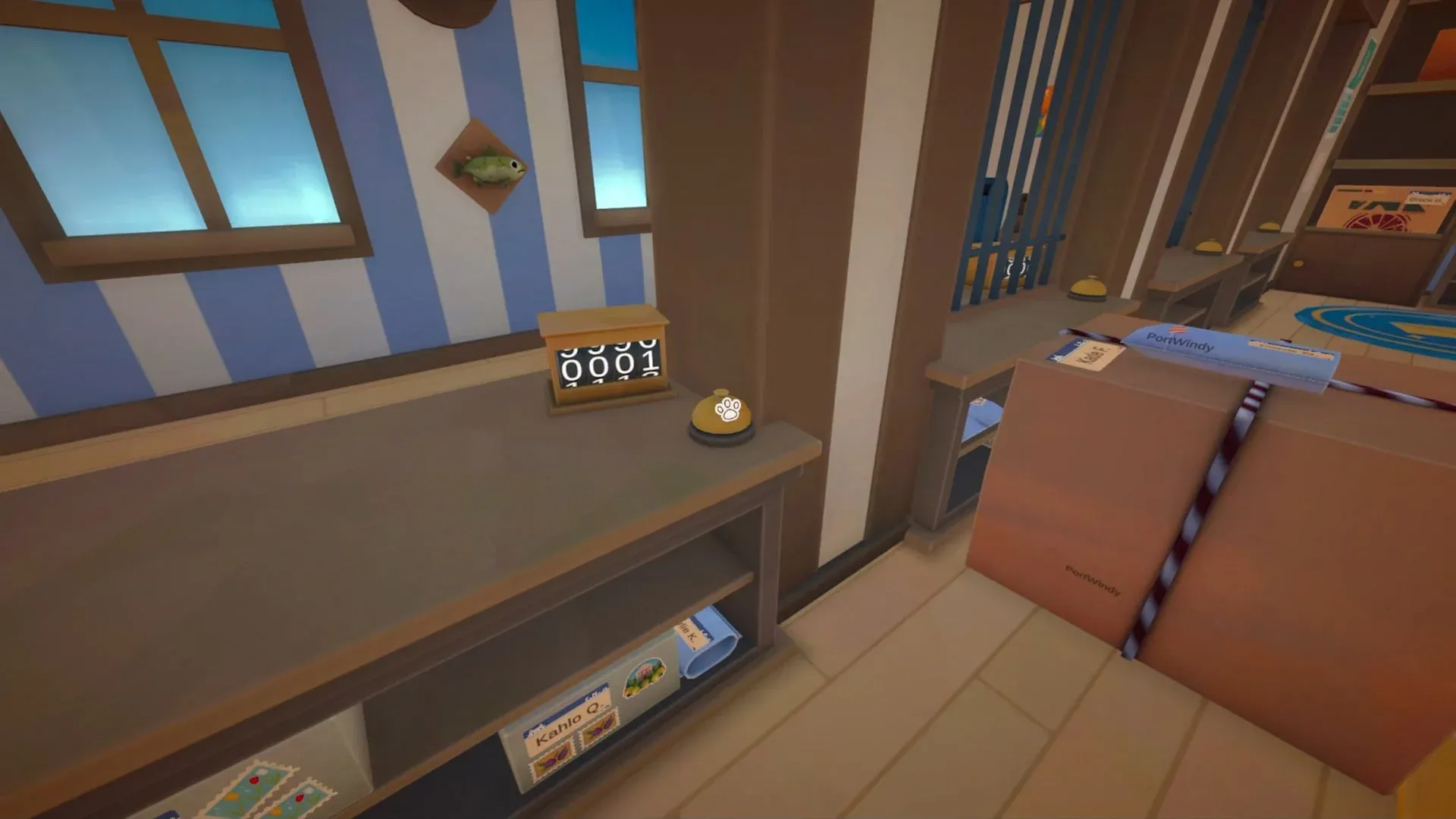

Sorting packages quickly is the difference between a smooth delivery run and a chaotic pile-up in Cat Mail Co. Clients describe their parcels in vague, sometimes cryptic terms, and you have to match those descriptions to the right box before your bike fills up. Get this system down and your delivery rate climbs fast.
How do recipient names help you identify packages?
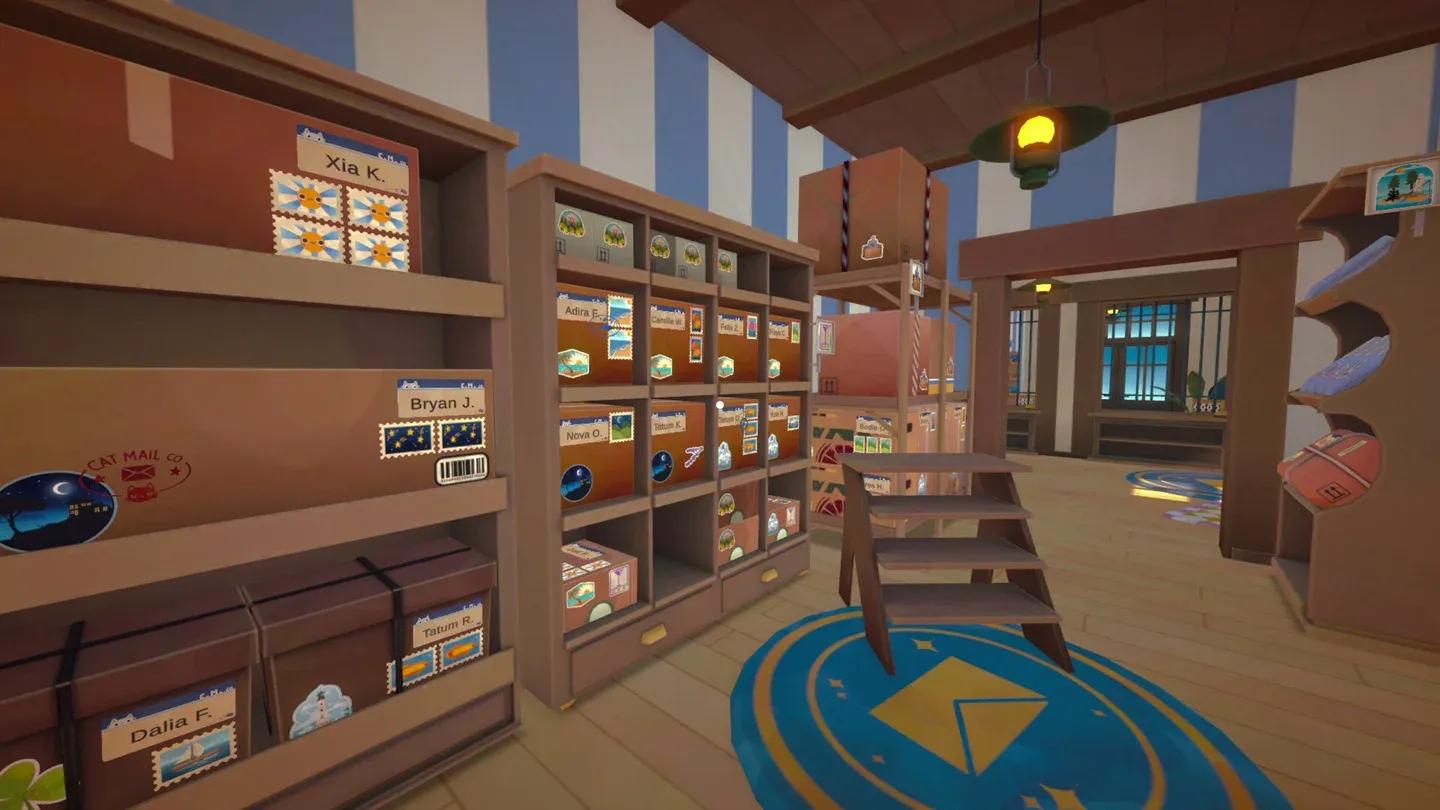
Names are your first clue, and they follow a consistent pattern worth memorizing. Every package label shows the recipient's first name written in full, while the last name appears as just its first letter. Cat Mail Co. leans into the cat theme here: last names tend to be fictional and feline-inspired, so a package addressed to "W" is almost certainly going to Whiskers or someone with a similarly cat-adjacent surname.
Sometimes a client skips the first name entirely and only gives you the last name. In that case, scan the packages for the matching starting letter on the label. The trickiest scenario involves middle names. When a recipient mentions a middle name, the package label shows the full first name plus just the first letter of the middle name, not the last name. Pay attention to how the client phrases the name during conversation, because that phrasing tells you which part of the label to focus on.
Identify all parcels by label
What are all the package sizes in Cat Mail Co.?
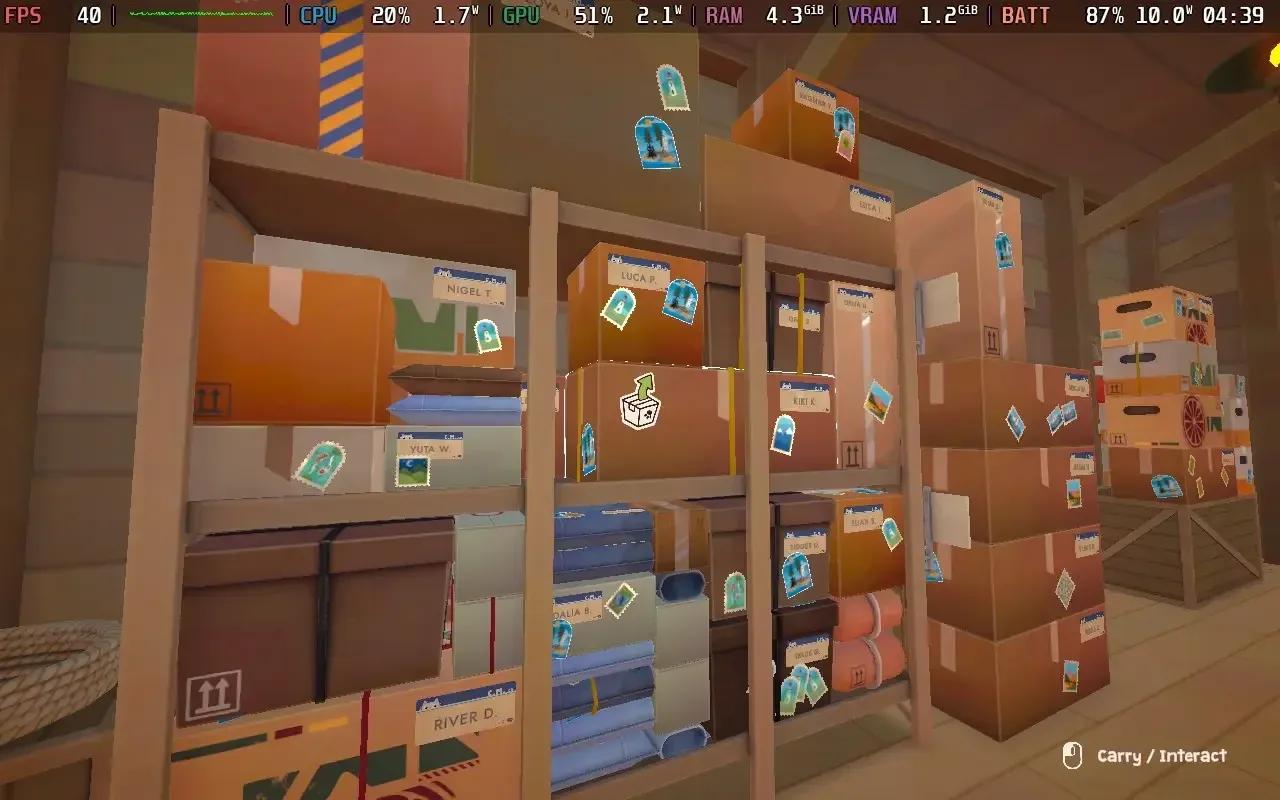
Names only get you so far. Most of the time you will be cross-referencing the verbal description a client gives with the physical shape and grid footprint of the package. After testing every package type across multiple delivery routes, here is the complete breakdown.
| Client Description | What to Look For | Grid Size |
|---|---|---|
| It's a letter. | Small brown or blue envelope | 1x2x0.5 |
| It's a small box, nothing special. | Small rectangular box | 1x2x1 |
| It's cube-shaped. | Perfect cube shape | 2x2x1 |
| It's a small package. | Exactly double the size of the small box | 2x2x2 |
| Mid-sized package with a card or rope around it. | Thicker letter shape or box with string attached; blue or brown | 2x3x2 or 2x4x1 |
| I hope it will fit on my bike. | Wide rectangular package | 2x4x2 or 2x5x2 |
| About the same size as me. | Tall package, roughly the height of a full-grown cat | 2x2x4 |
| The package has handles. | Side openings on the box with a fruit symbol on the front | 2x3x2 |
| It's a big box. I am building a cardboard castle. | Largest and heaviest box, takes maximum shelf space | 3x3x3 |
All package sizes compared
The size descriptions clients use are intentionally loose. "About the same size as me" refers to a full-grown cat's height, which translates to the tall 2x2x4 box. "I hope it will fit on my bike" signals one of the wide rectangular formats. When a client says "it's a small package" without further detail, they almost always mean the 2x2x2 variant, which is exactly double the 1x2x1 small box.
How do special stickers and decorations help?
Beyond names and dimensions, packages can carry visual markers that make identification much faster. Clients will sometimes describe decorations directly, so knowing what each one looks like saves you from scanning every label.
Here are all the special markings currently found on packages:
- Duck sticker
- Clover sticker
- Lavender sticker
- Frog sticker
- Lemon sticker
- Beads (described as resembling the jaw of a crocodile)
- Scratch marks (the client may say the package was attacked by someone with long claws or an eagle)
Stickers and decorations act as a tiebreaker when two packages share the same size and color. Always listen through the client's full description before grabbing anything, because the sticker detail often comes at the end.
Putting it all together
The most efficient approach combines all three layers of information in order: name first, size second, sticker or decoration last.
Start by checking the label for the recipient name or initial. If the name narrows it down to one package, you're done. If multiple packages share the same addressee initial, shift to size. Match the client's verbal description to the grid dimensions in the table above. If you still have two candidates after checking size (especially with the 2x3x2 overlap cases), look for the physical detail: a rope, a fruit symbol, or a specific sticker.
Speed matters in Cat Mail Co. The faster you lock in the correct package, the more deliveries you complete per run. Internalizing the size descriptions so you don't need to check a reference mid-delivery is what separates efficient routes from slow ones.
For more tips on loading, storing, and managing package constraints, check out the full Cat Mail Co. guides collection. Cat Mail Co. sits firmly in the indie games space where small mechanical details like this make or break your efficiency, and mastering the package system is the foundation everything else builds on.