

Biggest discounts, free games, and limited-time offers across every major gaming store.
Never pay full price again.
Overview
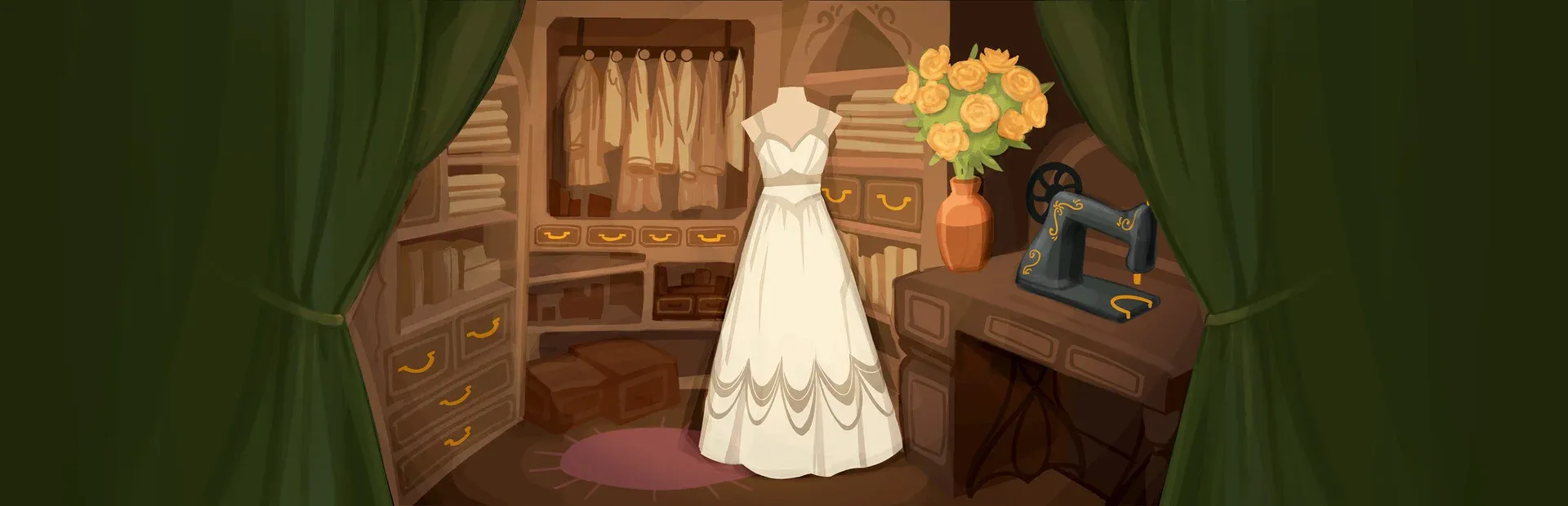
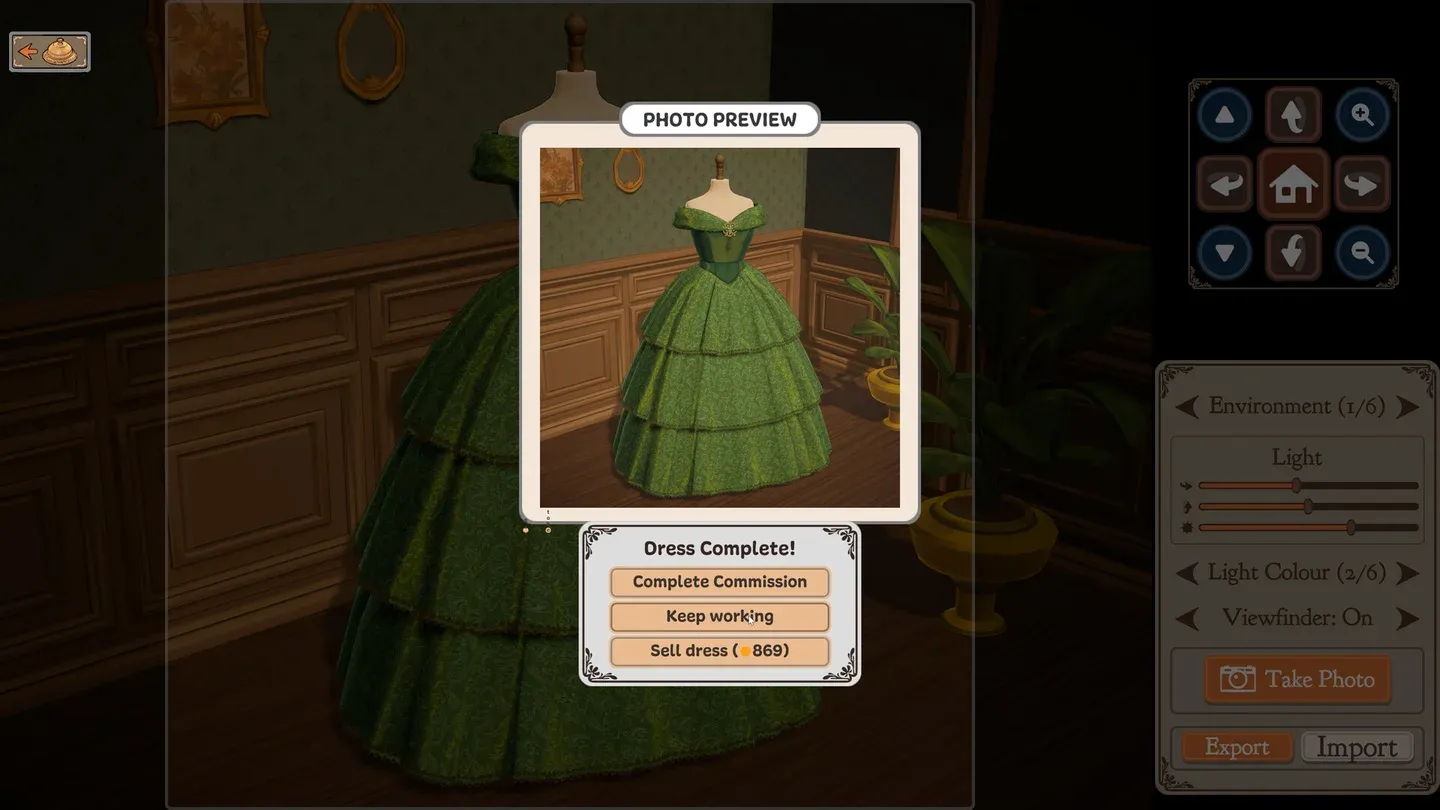
Dressmaker is a cozy simulation game built around the complete process of making a dress from scratch. Every decision, from which fabric to buy to how a pattern piece sits on the grain, feeds directly into the finished garment. There are no shortcuts here: what you cut is what you get.
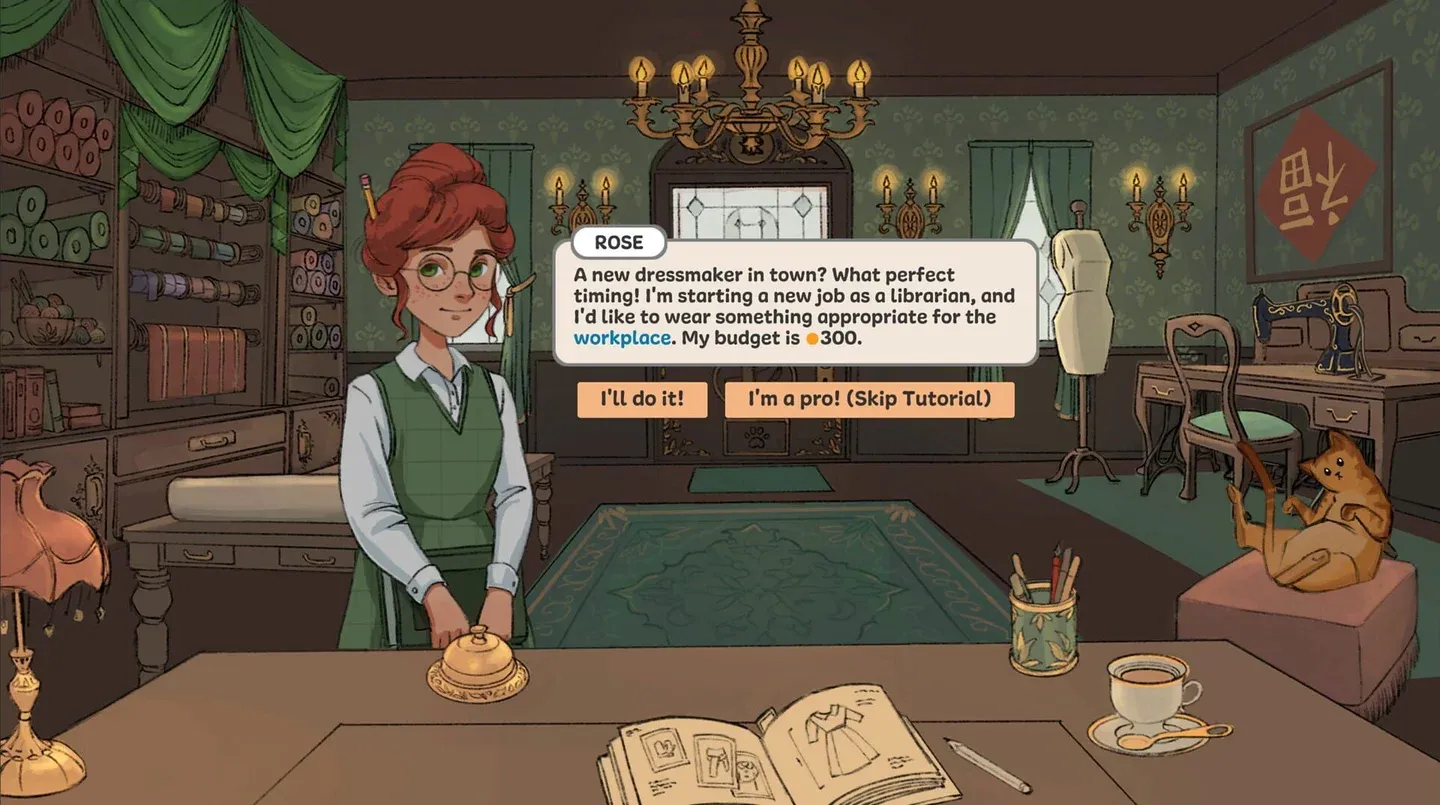
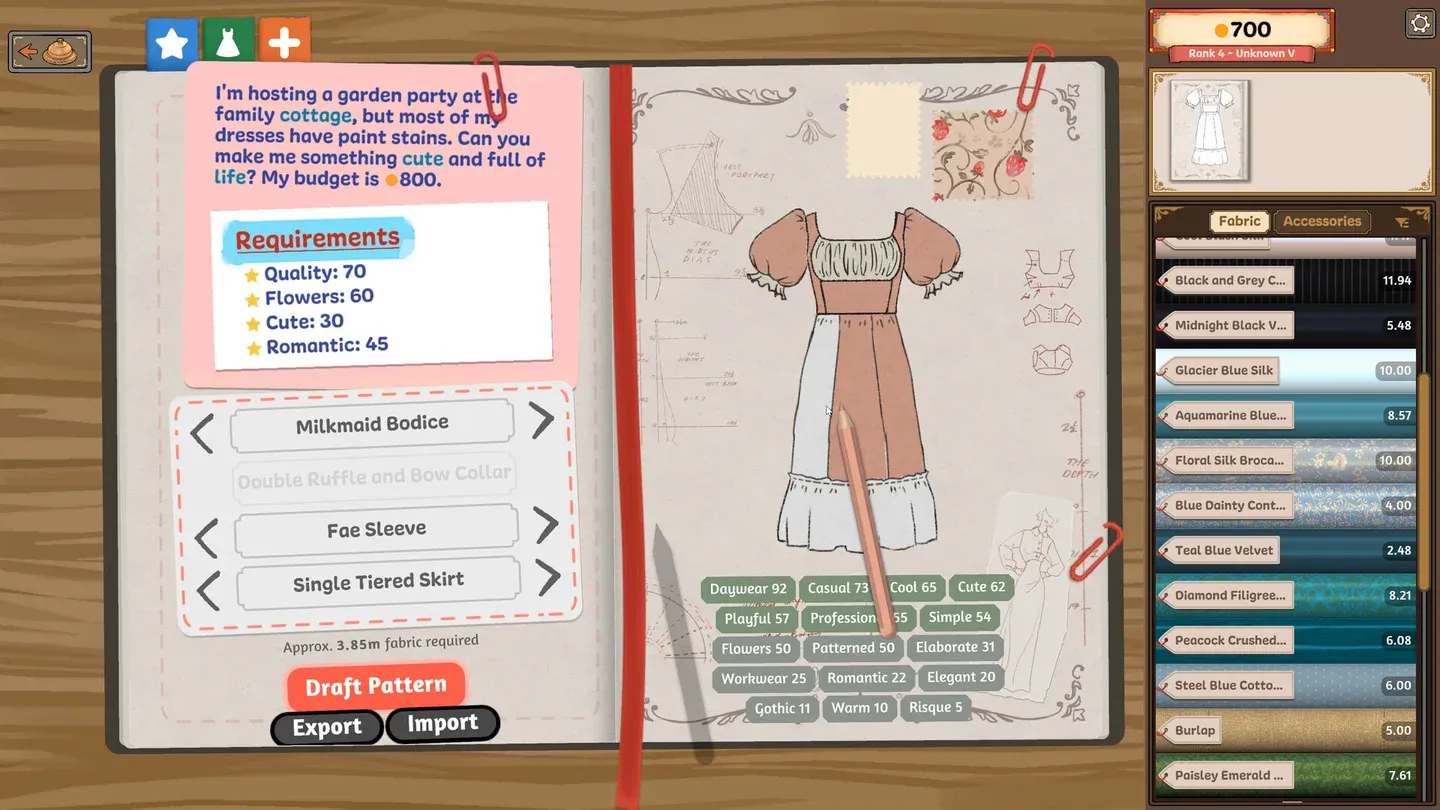
The game puts players in charge of a dressmaking shop where a town full of clients arrives with specific requests. A customer heading to an evening ball at the duke's mansion wants something glamorous and elegant with a budget of 1,000 coin. Another might want something casual and personal. Meeting those briefs earns reputation and income. Ignoring them, or deliberately sabotaging them, is also an option the game leaves open.
Dressmaker content image
Beyond client orders, players can design dresses freely, display them in the shop window, and sell them off the rack. The sketchbook acts as a design tool where fabric samples and appliqué get arranged before a single cut is made.
Gameplay and mechanics
The core loop in Dressmaker mirrors real dressmaking more closely than most crafting games attempt:
Dressmaker content image
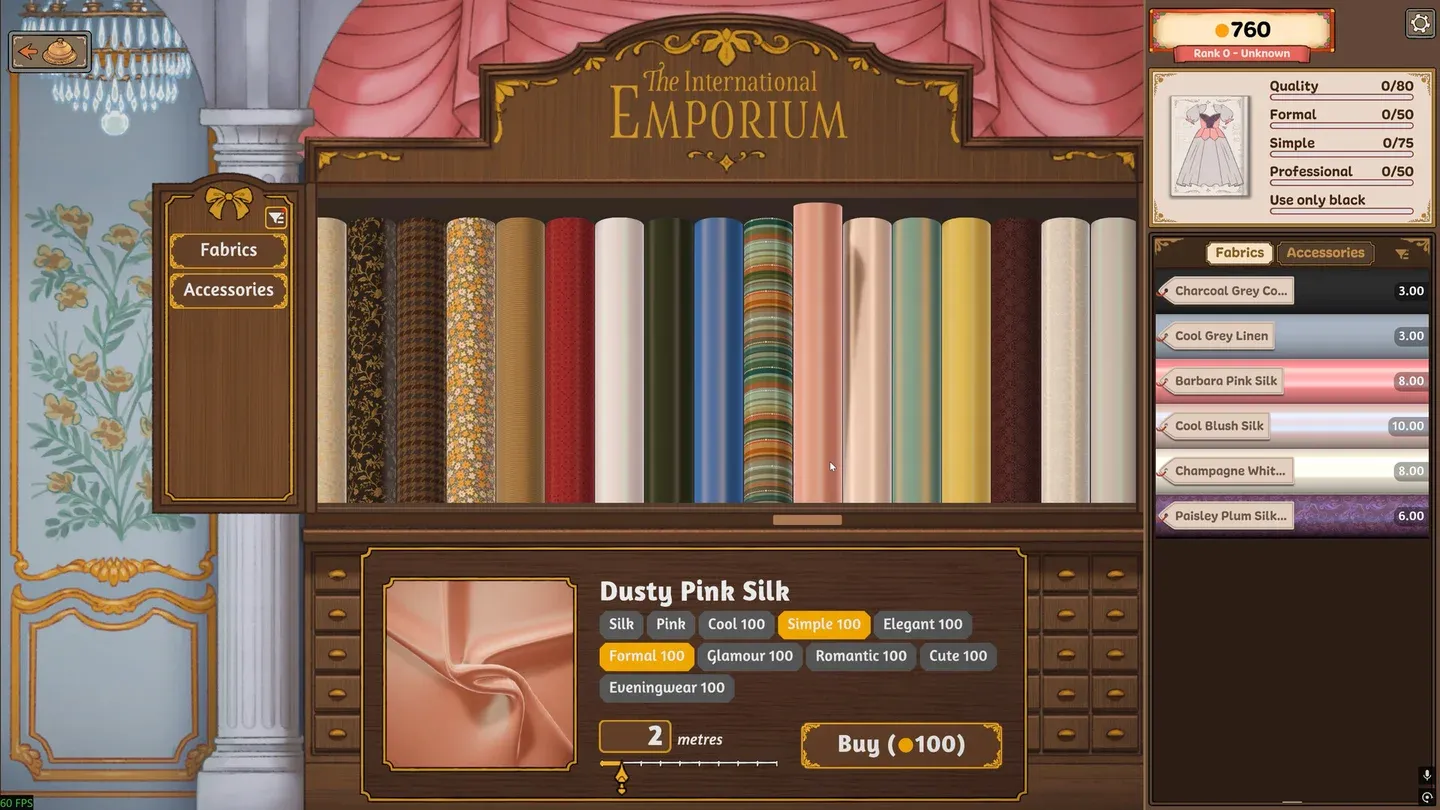
- Select fabric: cotton, linen, wool, silk, or velvet
- Sketch the design in the sketchbook with samples and appliqué
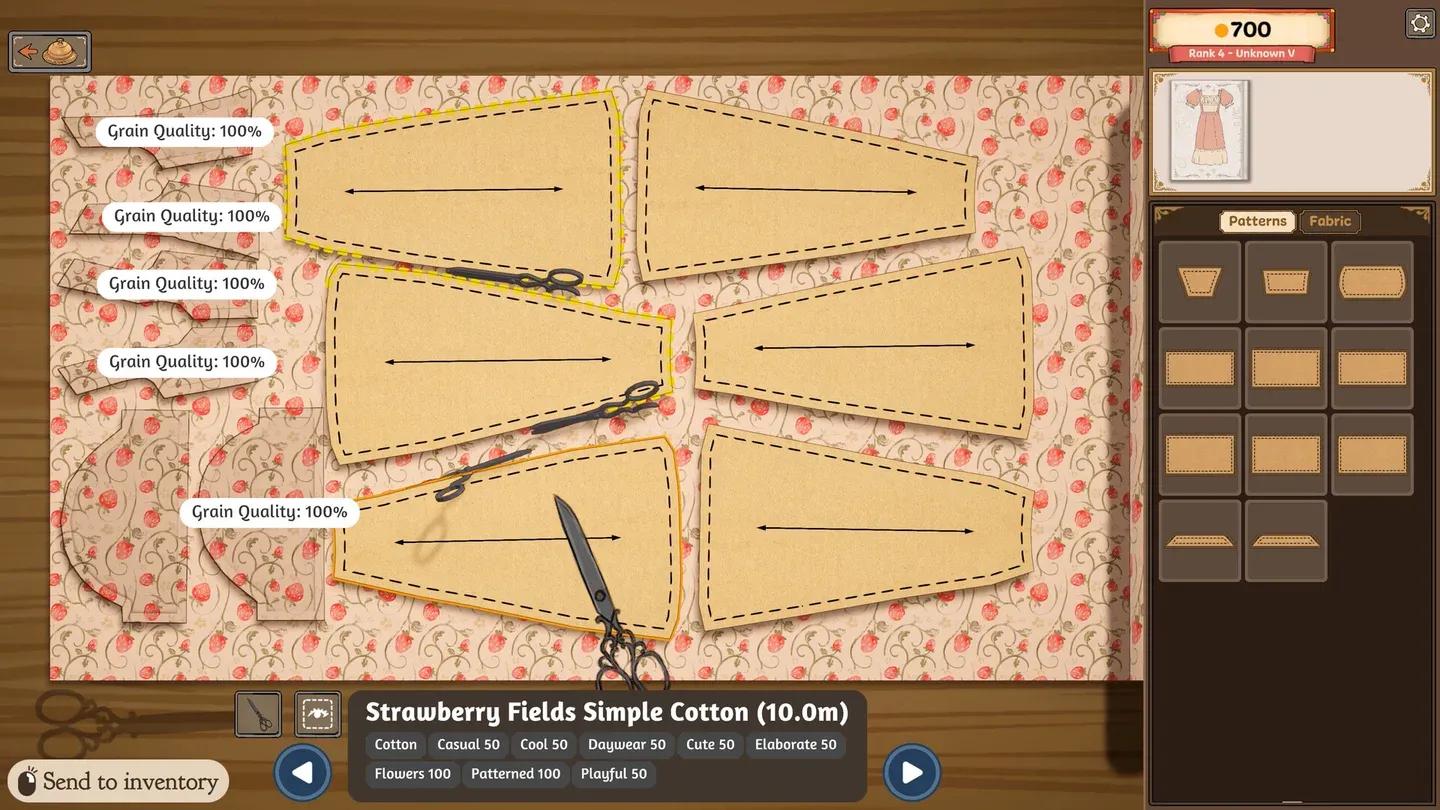
- Arrange and cut pattern pieces on the cutting table
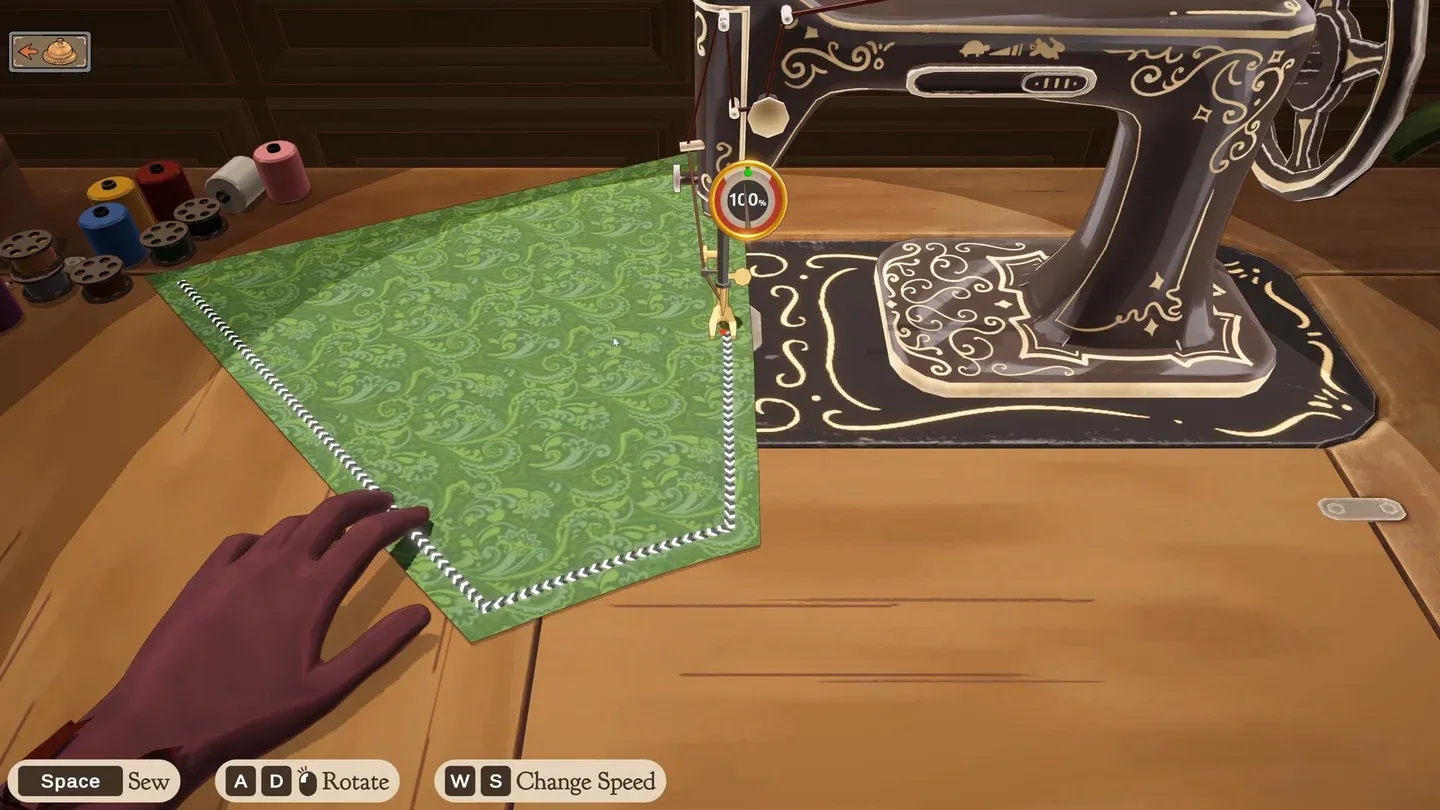
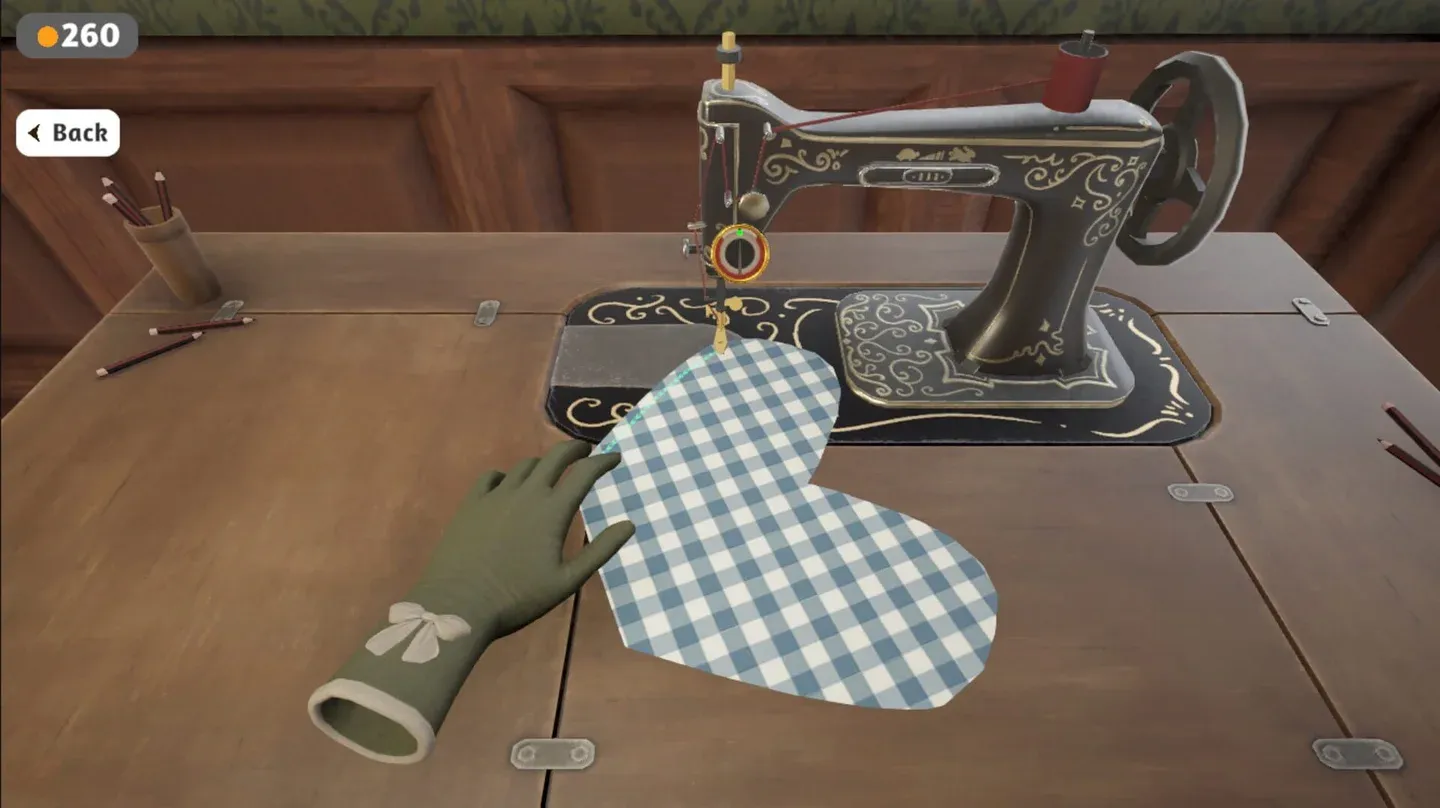
- Feed fabric through the sewing machine to stitch panels together
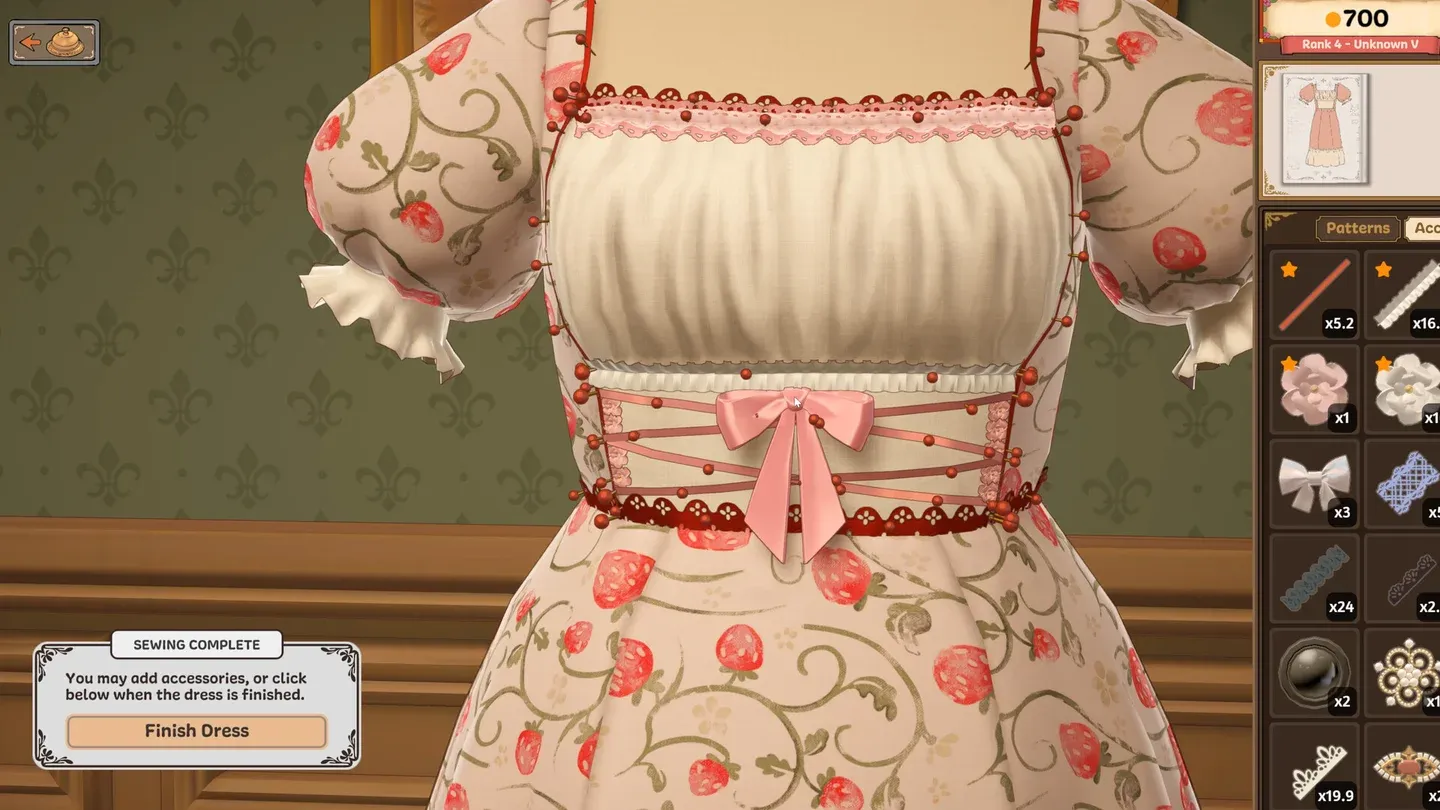
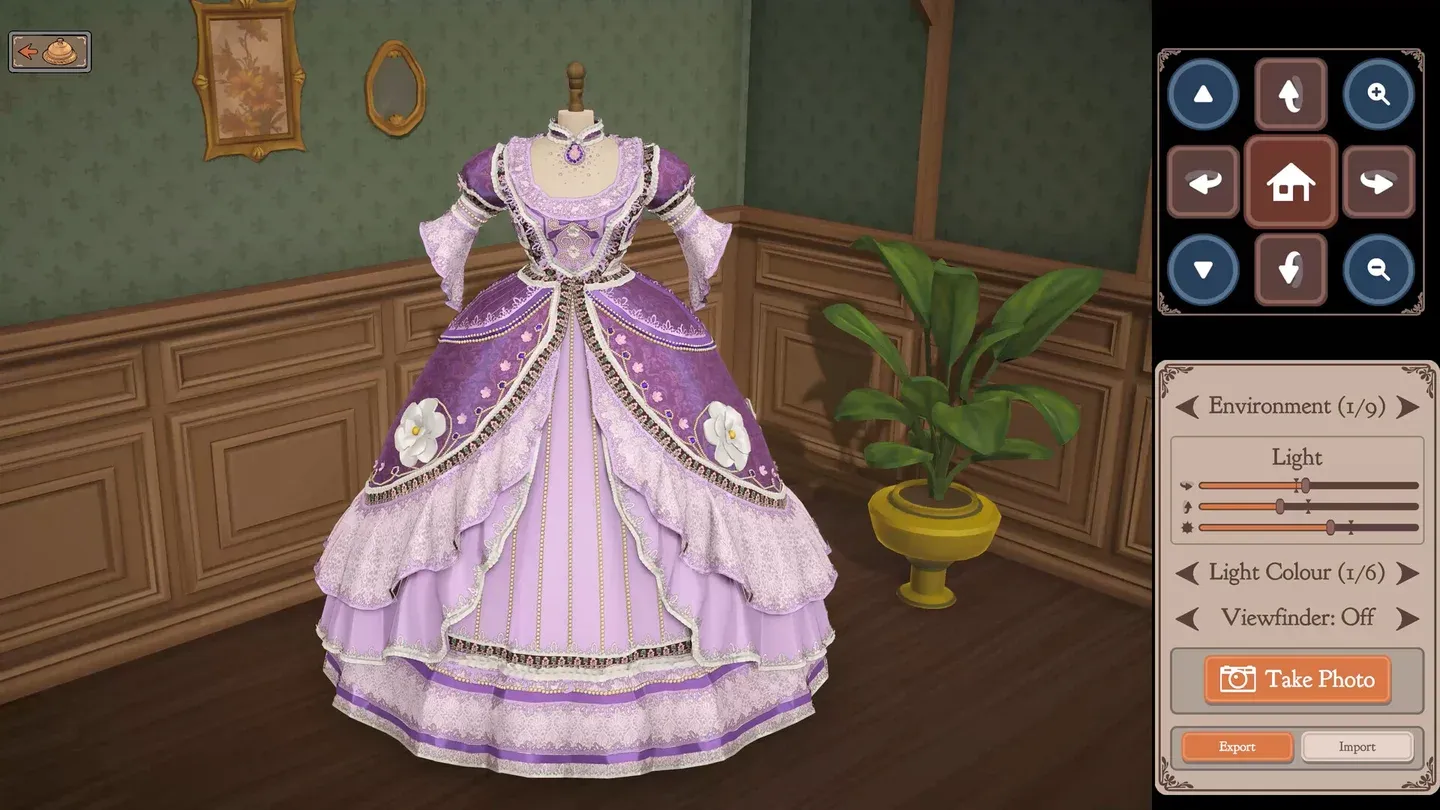
- Decorate with buttons, bows, lace trims, and other accessories
Cutting on the bias versus aligning to the grain produces visibly different results on the final dress. That level of cause-and-effect in a casual simulation game is genuinely unusual. Most cozy crafting games reduce production to a timer or a progress bar. Dressmaker makes the process itself the point.
Dressmaker content image
What makes the dressmaking feel tactile?
The sewing machine sequence is the clearest answer. Fabric feeds through a vintage-style machine at the player's direction, and the stitching happens in real time rather than as an animation that plays out automatically. The decoration phase follows the same logic: buttons, bows, and appliqué go exactly where you place them, with no grid snapping or forced symmetry. That freedom extends to lace trims and accessories, giving each finished garment a distinct look even when two players start from the same pattern.
World and setting
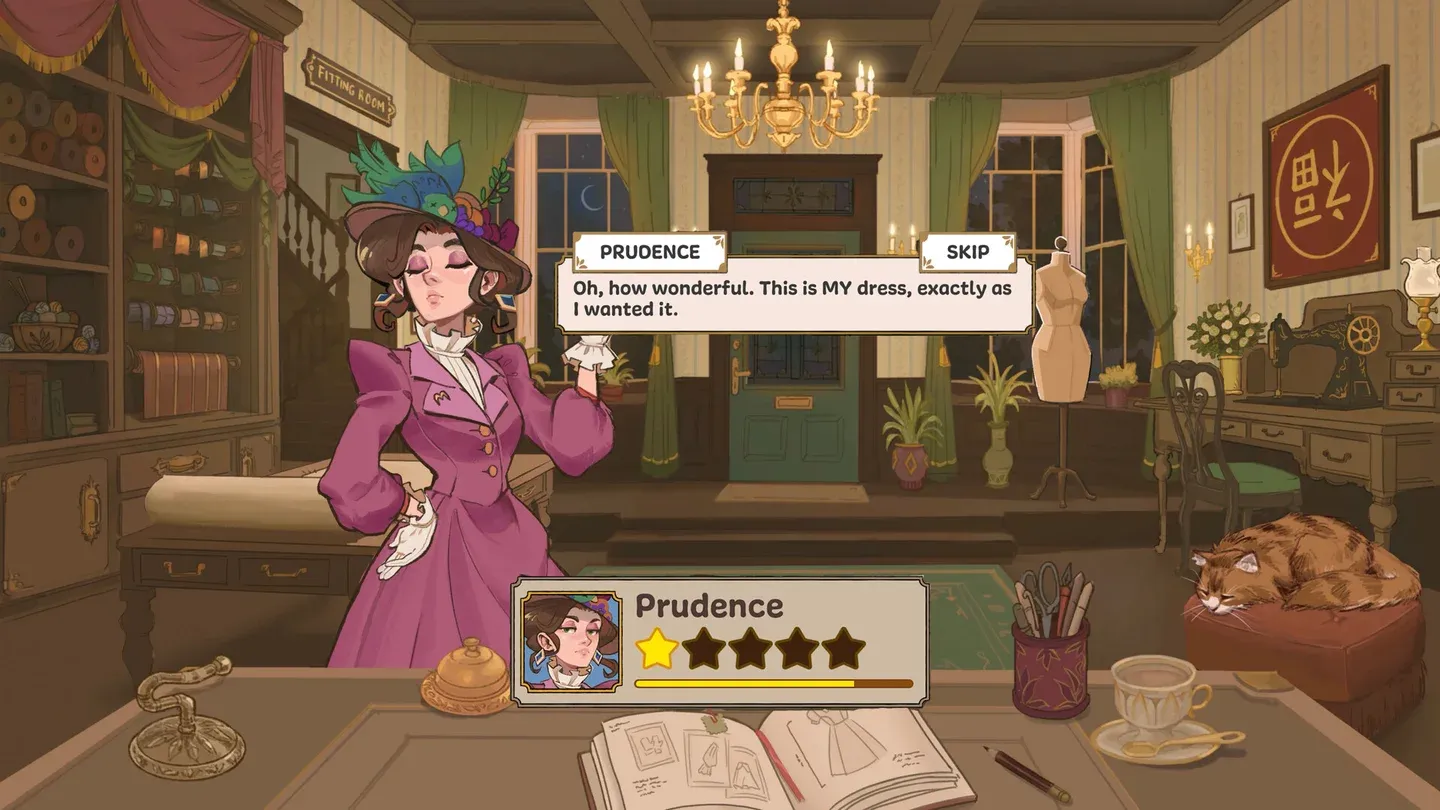
The town of clients gives Dressmaker its social dimension. Each character has individual tastes and specific occasions driving their requests, from formal events to personal milestones. Satisfying them builds reputation, which presumably unlocks new clients and opportunities. The shop itself doubles as a gallery, with the window display serving as a way to attract walk-in customers who buy ready-made pieces rather than commissioning custom work.
There is also a cat. The game explicitly lists petting the kitty as a feature, which says something about the tone Cozy Lives is going for.
Dressmaker content image
Content and creative freedom
The sketchbook design system separates Dressmaker from other cozy simulation games by front-loading the creative decision-making. Before any fabric is cut, the design exists on paper with colour choices and decorative elements already mapped out. That planning phase makes the production steps feel purposeful rather than procedural. Players who want to run a tight shop and serve every client can do that. Players who want to fill the window with increasingly elaborate personal designs and ignore the brief entirely can do that too. The game supports both approaches without forcing a single path through its content.