Overview
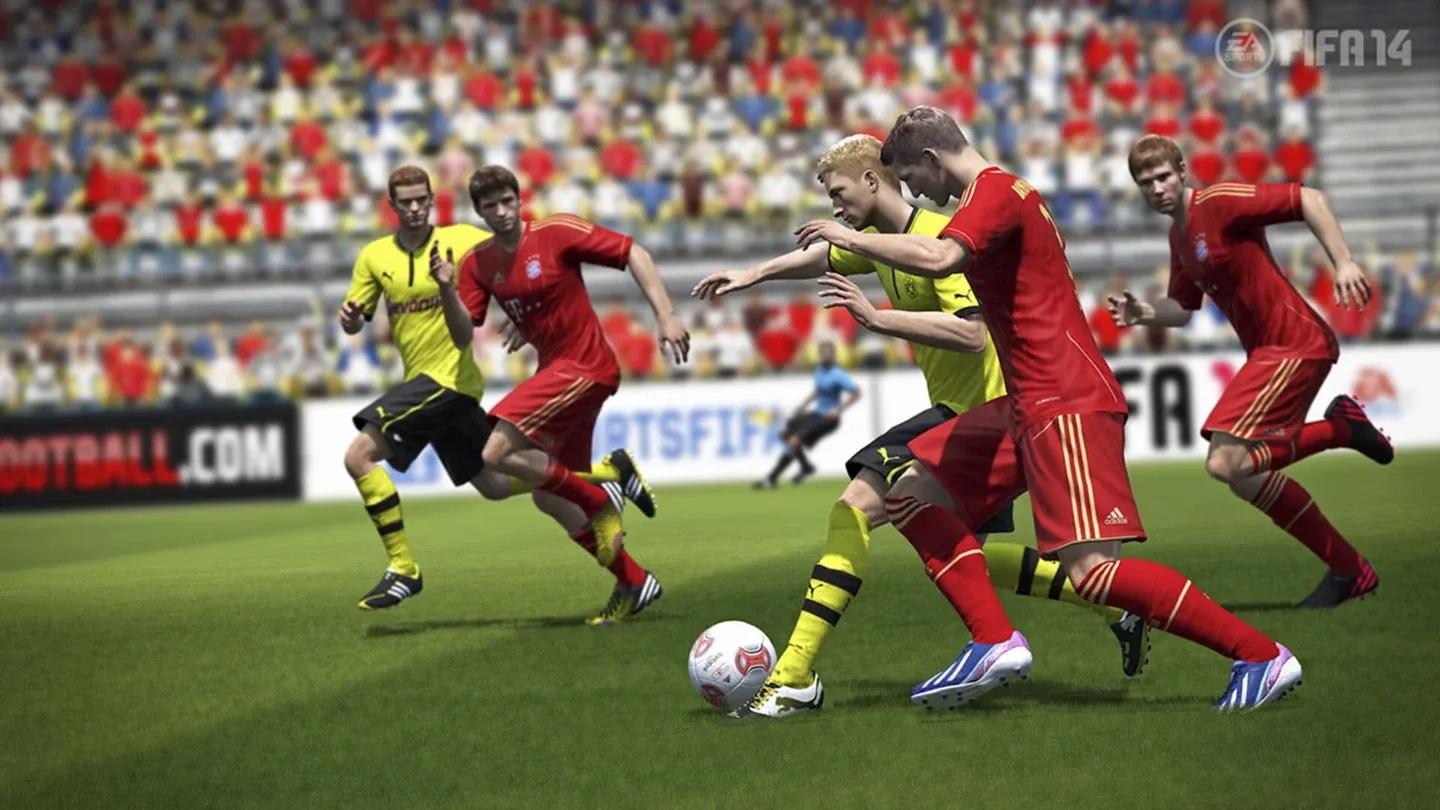
FIFA 14 is a football simulation game developed by EA Canada and published by EA Sports, released on September 24, 2013 for PlayStation, Xbox, and Windows. It builds on the series' long-running foundation of licensed club football, realistic match physics, and career-driven progression, delivering one of the most mechanically refined entries in the franchise's history.
The game's core identity sits at the intersection of accessibility and simulation depth. Casual players can pick up a controller and feel the flow of a match within minutes, while dedicated players spend hundreds of hours mastering player ratings, formation tactics, and transfer strategies. That balance is exactly what kept FIFA 14 in rotation long after its release window closed.
FIFA 14 content image
Gameplay and mechanics
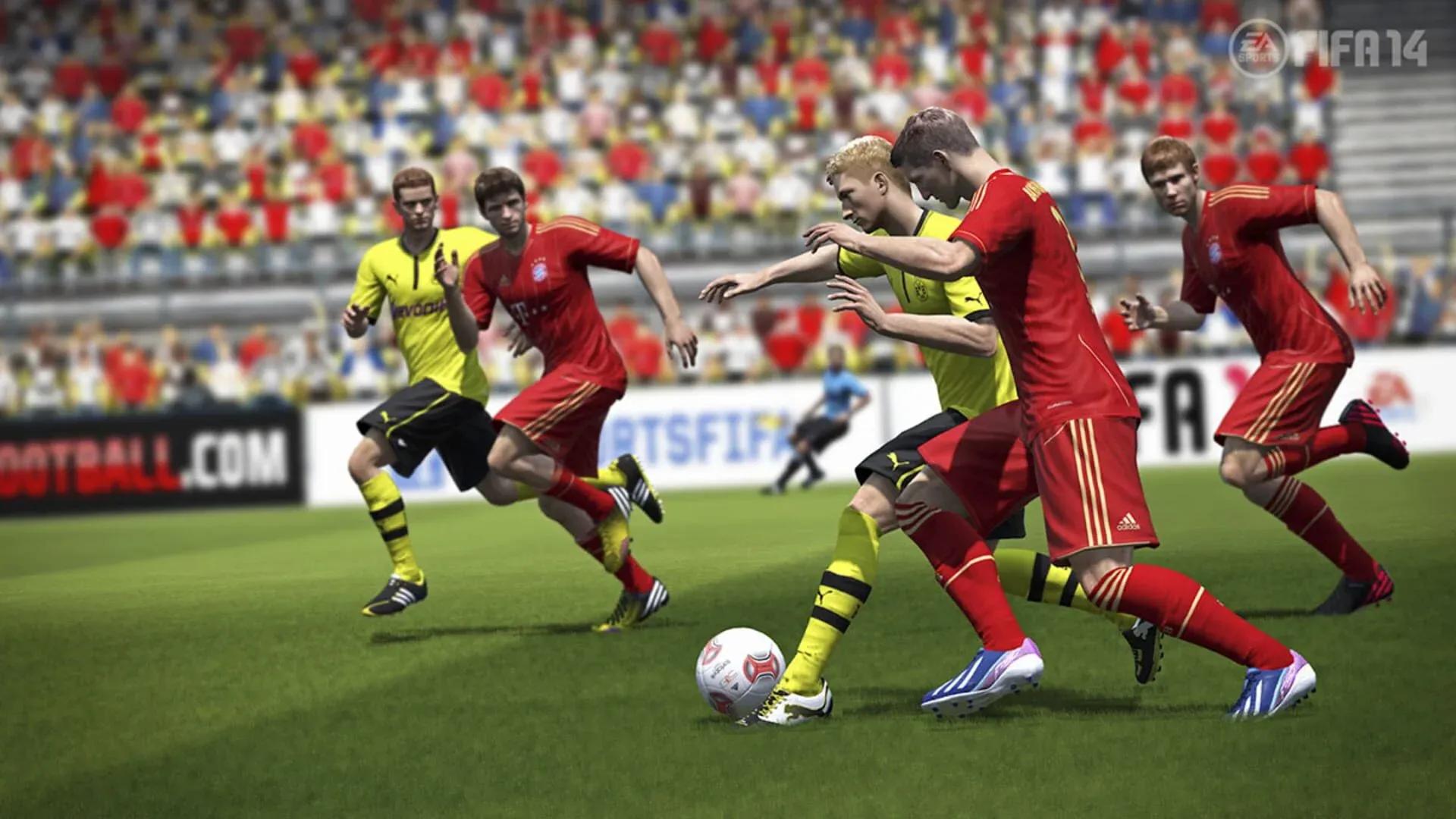
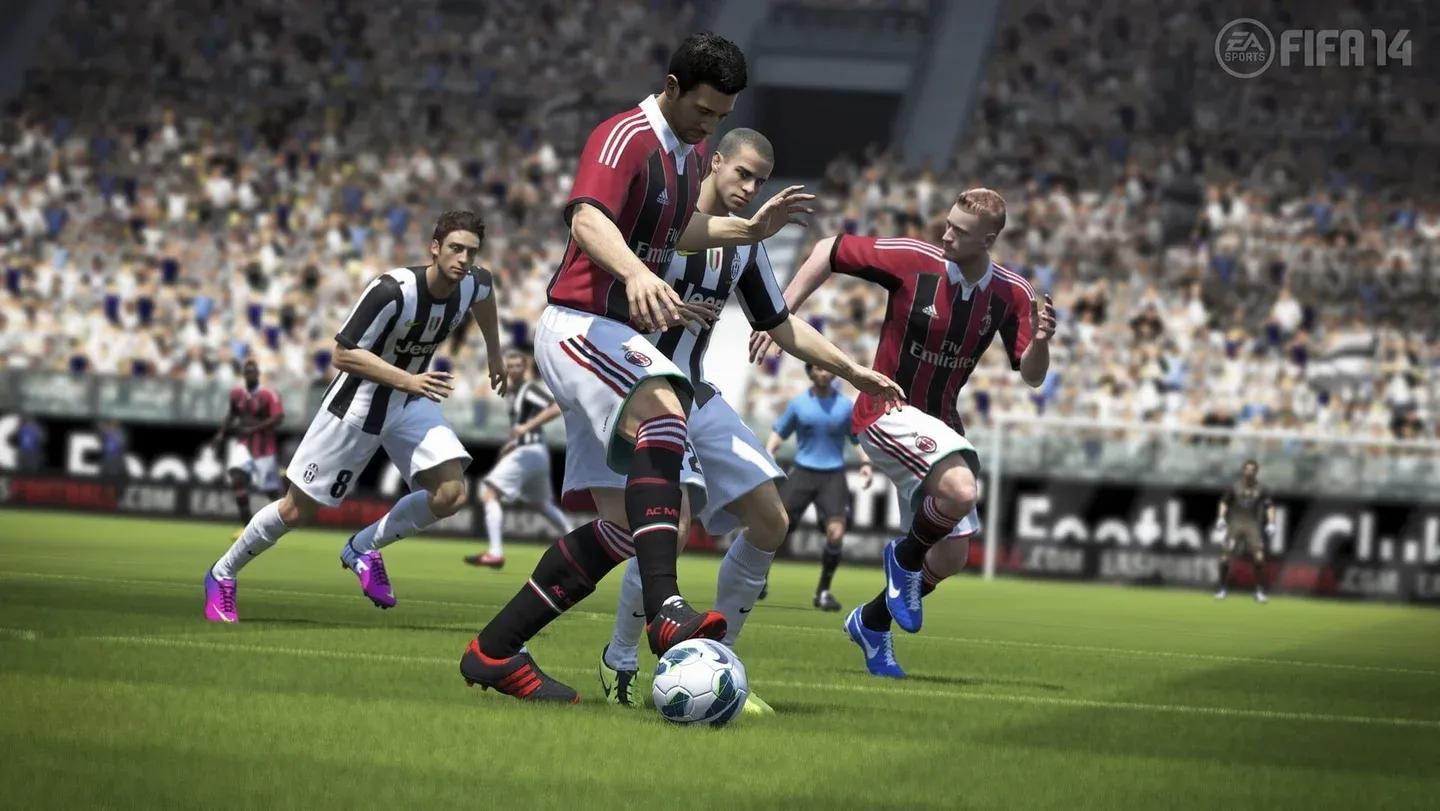
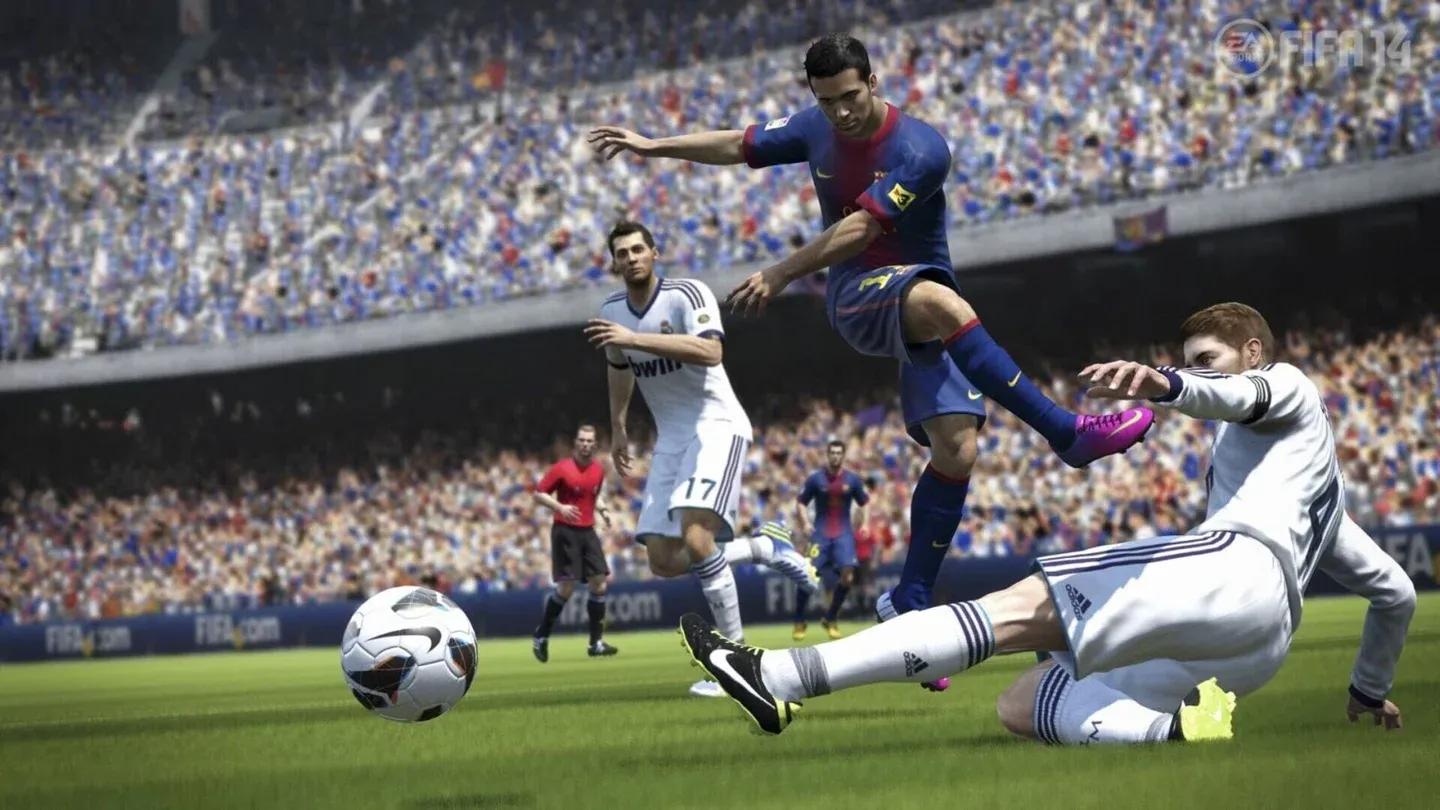
FIFA 14 introduces a physics-based ball control system called Pure Shot and Real Ball Physics, which changes how shooting and ball movement feel at a fundamental level. Shots curve and dip based on player positioning and foot placement rather than pre-scripted animations. The result is that no two strikes feel identical, which adds genuine unpredictability to attacking play.
FIFA 14 content image
Key gameplay features include:
- Pure Shot shooting mechanics
- Protect the Ball shielding system
- Teammate Intelligence positioning
- Sprint Dribble Turns for tight control
- Precision Movement for off-ball runs
Defensively, the game rewards patience. Sprint-holding into tackles gets punished more often than in earlier entries, pushing players toward positional defending and interception timing. It's a small shift, but it changes how matches flow at higher difficulty levels.
FIFA 14 content image
What game modes does FIFA 14 offer?
FIFA 14 covers the full range of modes that defined the series during this era. Career Mode lets players take control of a club or step into the boots of a single player, managing transfers, training schedules, and match lineups across multiple seasons. The depth here is substantial, with loan deals, youth academy management, and manager reputation all factoring into long-term club building.
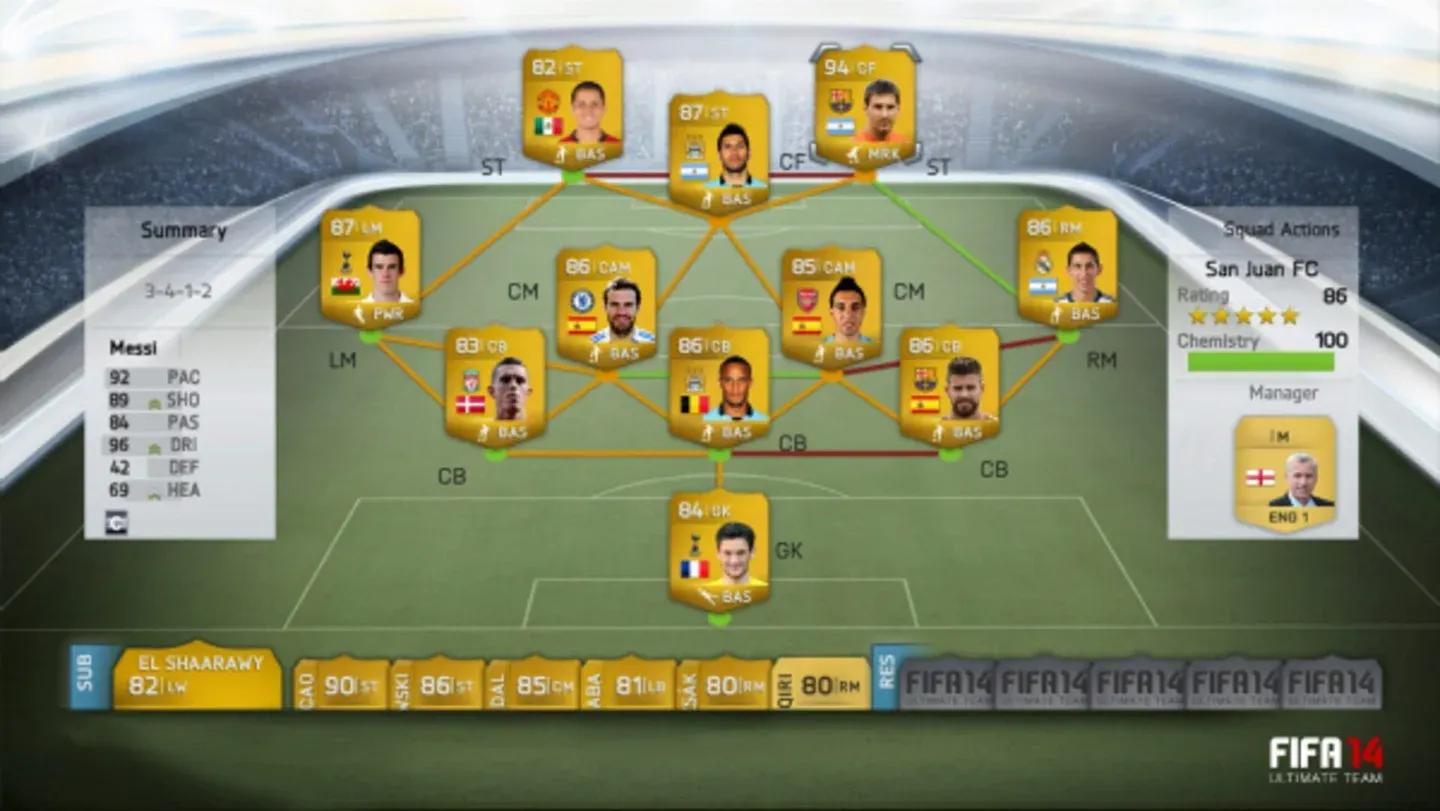
Ultimate Team returns with the card-collecting squad-building format that had already become one of football gaming's most-played modes by 2013. Players earn or purchase card packs containing footballers, consumables, and staff, then assemble squads based on chemistry links between nationalities, leagues, and clubs. The mode's addictive loop of upgrading your squad while grinding match coins remains intact.
Kick-Off and Tournament modes round out the offline offering, covering international cups and domestic league structures from over 30 licensed competitions.
Multiplayer and social features
Online Seasons gives competitive players a ranked ladder structure, pairing opponents at similar skill levels across 10-match divisions. Promotion and relegation between divisions gives each match real stakes without requiring tournament brackets or scheduled play sessions.
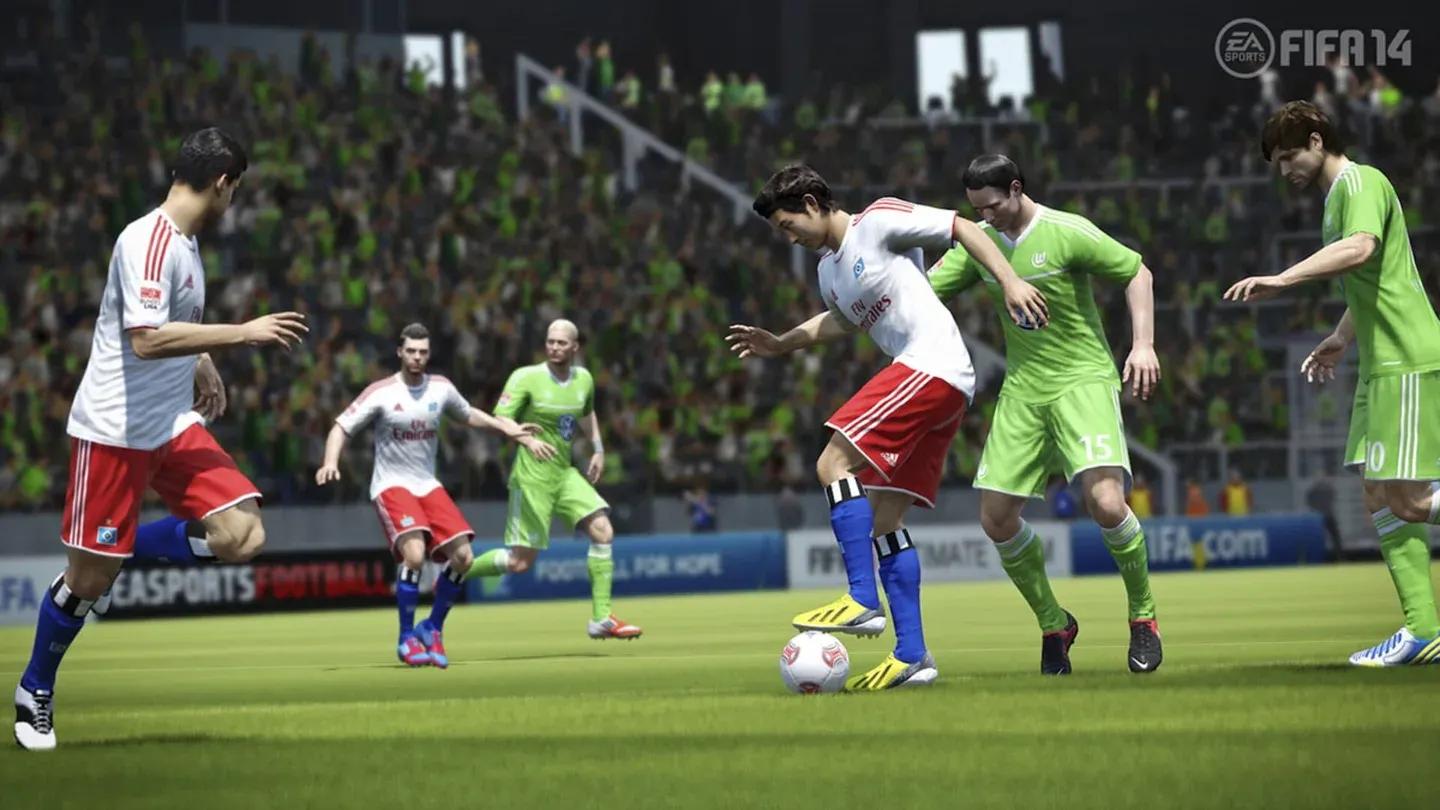
Pro Clubs mode supports 11-versus-11 matches where each player controls a single custom footballer, functioning as a full team simulation. Coordinating with a full squad of human players produces a very different experience from standard AI-assisted matches, and it remains one of the more underrated multiplayer formats in football gaming.
FIFA 14 content image
Impact and legacy
FIFA 14 sits in an interesting position in the series timeline. It arrived at the transition between PlayStation 3 and PlayStation 4 hardware generations, meaning two distinct versions of the game exist with different visual fidelity and feature sets. The current-generation build introduced the Ignite Engine, which brought improved player animation blending and crowd behavior to the newer hardware.
For football simulation fans, FIFA 14 represents a high point in the series' pre-microtransaction era, where the core football gameplay received the most development attention. The physics improvements introduced here influenced how the series handled ball movement for several subsequent entries.