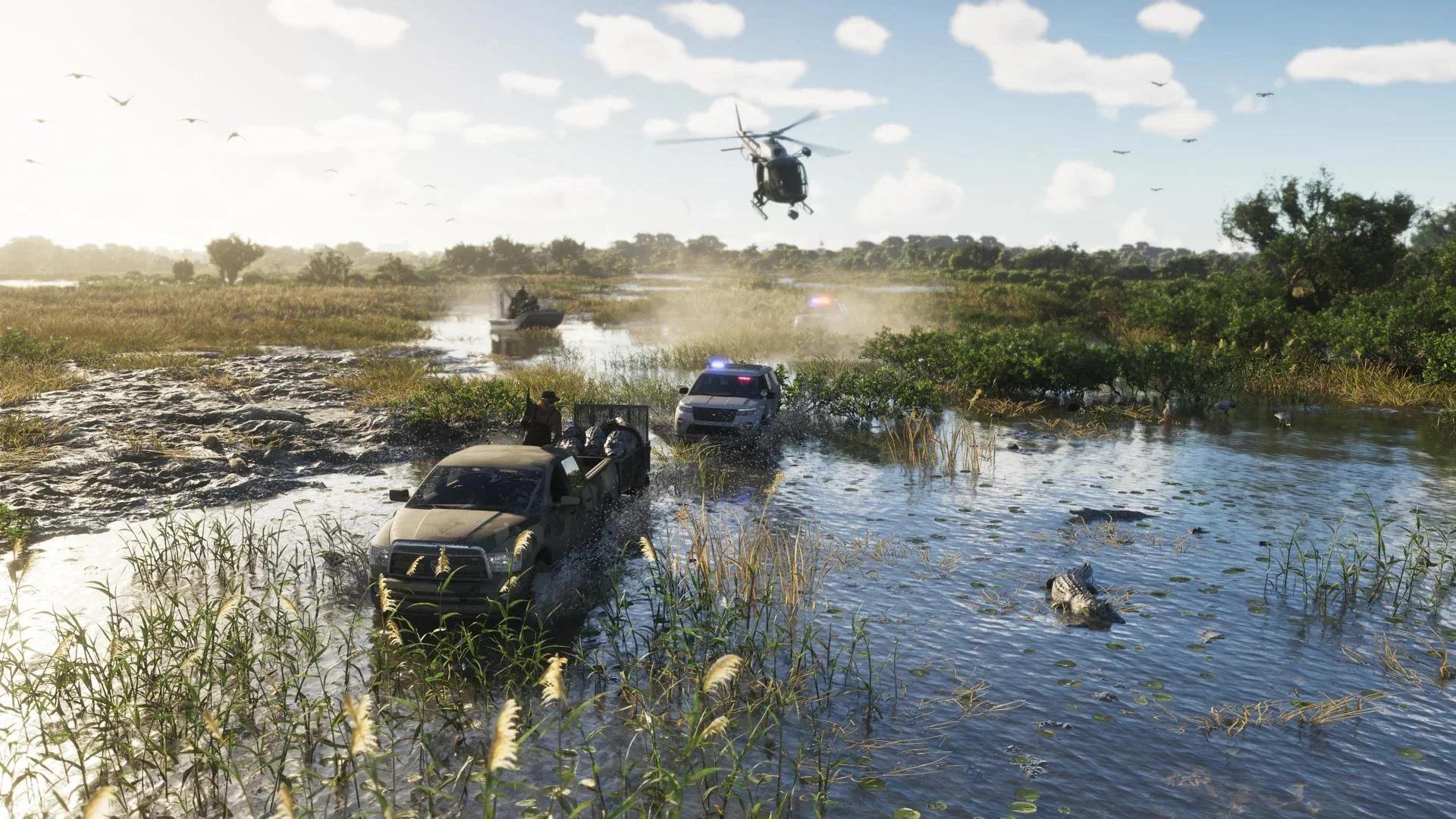

Grand Theft Auto 6 has 255 animal database entries, with habitat leads including coastal crocodiles and mackerel, nighttime raccoons, and deer around Mount Kalaga.
Start with those search areas, then use the checklist below to track named discoveries. The checklist covers a starter selection, not every database entry or a guaranteed spawn route. Most wildlife can be studied through binoculars, while fish need to be caught to reveal their details. Different cat and dog breeds also have separate entries, so domestic animals are worth checking during your travels.
Animal checklist and database totals
The animal database contains eight categories. Its 255 entries include hunting targets, fish, domestic breeds, and other wildlife, so the total should not be treated as a count of distinct wild species.
| Category | Entries |
|---|---|
| Hunting | 61 |
| Fishing | 35 |
| Mammals | 18 |
| Cats & Dogs | 34 |
| Reptiles & Amphibians | 6 |
| Birds | 60 |
| Aquatic | 18 |
| Other | 23 |
| Total | 255 |


Starter animal checklist
These 12 named entries give you specific animals to check against your discoveries. Mark one complete after its database entry unlocks, not simply after seeing it in the distance.
| Done | Animal | Type |
|---|---|---|
| [ ] | American crocodile | Reptile |
| [ ] | Eastern cottontail rabbit | Mammal |
| [ ] | Green iguana | Reptile |
| [ ] | Northern raccoon | Mammal |
| [ ] | Atlantic Spanish mackerel | Fish |
| [ ] | Bengal | Cat breed |
| [ ] | American pit bull terrier | Dog breed |
| [ ] | American foxhound | Dog breed |
| [ ] | Labrador retriever | Dog breed |
| [ ] | American crow | Bird |
| [ ] | Caspian tern | Bird |
| [ ] | Laughing gull | Bird |
More animals to watch for
The following animals and animal types also appear across Leonida. These groups help you recognize wildlife while exploring; they do not represent individual database categories or a complete list of species variants.
| Group | Additional animals |
|---|---|
| Land mammals | Armadillo, beaver, black bear, boar, bobcat, cow, deer, Florida panther, fox, horse, otter, rhesus macaque, skunk, and squirrel |
| Dogs | Australian shepherd, Chihuahua, Doberman, German shepherd, and Rottweiler |
| Reptiles and amphibians | American alligator, cane toad, frog, land turtle, and rattlesnake |
| Birds | Cormorant, duck, eagle, flamingo, heron, pelican, pigeon, spoonbill, stork, whooping crane, and woodpecker |
| Aquatic animals | Crayfish, dolphin, eel, hammerhead shark, jellyfish, manatee, manta ray, sea turtle, and whale |
Land animal locations
Known habitats and regional leads
Choose your next search area around the animal you need. The following leads range from broad habitats to a fixed pet location; none should be treated as an exact wild-animal spawn point.
| Animal | Where to search | What to look for |
|---|---|---|
| American crocodile | Tropical coastal areas of Leonida | Its database entry identifies coastal habitat and a preference for salt water |
| Northern raccoon | Urban areas, forests, and wetlands | Settlements provide opportunities to scavenge around people |
| Deer | Around Mount Kalaga | Deer appear in regional wildlife imagery alongside a stalking panther |
| Florida panther | Around Mount Kalaga | Watch for the predator near deer |
| Dolores, Jason's pet snake | Jason's house in the Leonida Keys | A named pet encounter instead of a wild-animal search |
Northern raccoons offer several environments to check. You can include them in a search through developed areas or look for them during a forest or wetland trip.
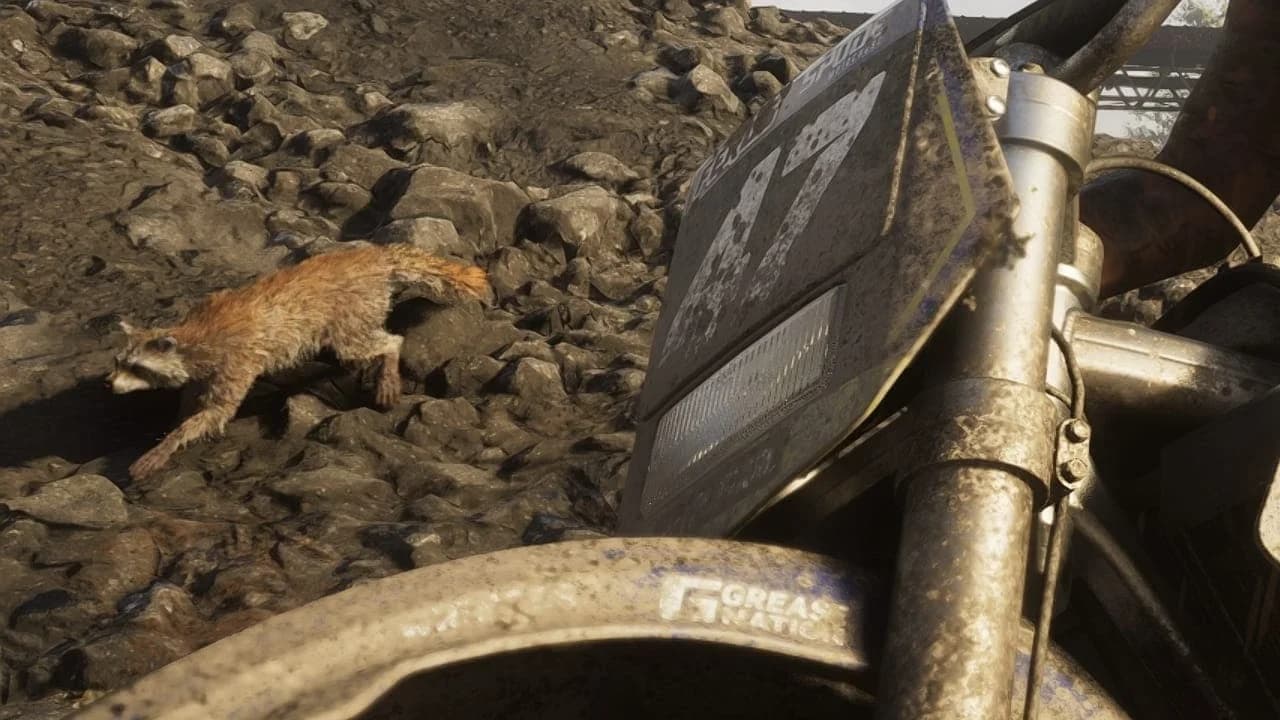
Northern raccoon in Leonida
Use the Grand Theft Auto 6 locations guide to orient yourself before traveling between Mount Kalaga and the Leonida Keys. Build your outing around the relevant region instead of crossing the map for every individual target.
Domestic animal searches
American pit bull terriers appear around Leonida as household pets and guard dogs. Check the situation before approaching one, because the breed's presence alone does not mean a friendly encounter.
Keep looking after discovering your first dog. A Labrador retriever and an American foxhound can contribute different entries. For Bengals, the distinctive leopard-patterned coat gives you a visual feature to recognize before studying the animal.
Bird and aquatic animal locations
Birdwatching and moving targets
Birds use the study system, which requires a clear enough view for the Study prompt to activate. A small bird can be visible on screen but still need more zoom before you can record it.
The Caspian tern is one bird you can add this way. Center it through your binoculars and keep the view on the target until the study action finishes.
Dolphins present a different viewing problem: they move in and out of the water. Follow their movement and wait for a usable view instead of expecting a brief glimpse to complete the entry.
Coastal fishing and underwater wildlife
Atlantic Spanish mackerel live throughout Leonida's coastal waters. Their database description identifies a slim, silvery body with yellow spots, giving you a specific fish to recognize after a coastal catch.
Press both analog sticks while fishing to display the fish-population view. Aim toward its white areas, which indicate higher fish populations. Use this to choose a casting area, not as a guarantee of a particular species or an immediate bite.
Fishing is catch-and-release, including during challenges. Recording a fish does not mean keeping it in your inventory.
The Leonida Keys also offer underwater exploration with bioluminescent marine life. Keep diving discoveries separate from fish catches when checking your progress: Fishing and Aquatic are distinct database categories.
Conditions that affect animal searches
Time of day and habitat
Northern raccoons are nocturnal, so schedule that search at night. Repeated daytime visits to suitable habitat are a poor use of time when this is your target.
Read habitat descriptions as you unlock them. Use those details to narrow your next search, then change environments when you need different animals. A long coastal outing will not cover the same targets as a trip through woodland.
How to study an animal
You do not need to kill wildlife to record it. Use this sequence for animals that support the study action:
- Open the weapon wheel and select your binoculars.
- Center the animal in your view.
- Zoom until the Study prompt becomes active.
- Hold R1 on PlayStation or RB on Xbox until the action completes.
- Open Progress, then Animals, to check the unlocked entry.
The animal database displays categories, discovered animals, and entry details. Some progress subcategories appear after your first discovery belonging to them, so recheck it after finding a new kind of animal.
A scope also works for distant study targets. Binoculars are a sensible default when your goal is observation and you do not intend to hunt.
Studying any 100 entries satisfies the animal-study requirement for 100% completion. If completion is your aim, prioritize unfamiliar animals and breeds instead of spending an entire outing on one difficult target.
How to approach dangerous wildlife
Decide between studying and hunting
A database search needs a usable view. A hunt also needs an appropriate weapon, particularly when you want to preserve a carcass for sale. Decide which task you are doing before approaching the animal.
Study a living target before attacking it. This avoids depending on a study prompt appearing on a carcass, which is not a reliable approach to logging wildlife.
Recommended hunting weapons
Animal entries can identify a recommended weapon. These recommendations concern hunting, not the equipment required to study an animal.
| Animal | Recommended weapon | Reason to check the entry |
|---|---|---|
| American crocodile | Shrewsbury SH-69 | The weapon is listed in its database entry |
| Northern raccoon | Wortham W-22 | A low-power rifle helps preserve the carcass |
Carcasses can be sold. For raccoons, the entry explicitly connects a low-power rifle with preserving the animal, so avoid choosing a weapon solely for its damage.
Bret Vogel teaches Jason to track deer before sending him after other animals. Hunting objectives also involve boars, rattlesnakes, and panthers, so follow the animal named by the objective instead of treating nearby wildlife as interchangeable.
The Legendary Hunter challenge requires hunting eight unique animals. Keep that objective separate from general study progress, and check the Grand Theft Auto 6 challenges guide when planning challenge completion.
Pet interactions and unexpected encounters
Cats, dogs, and Dolores
You can pet cats and dogs, and both support praise and scold interactions. Petting a cat gives Jason a small focus boost.
Dogs can receive treats when their owner gives permission. Some gas stations sell pet treats, so check their stock before looking for domestic animals to interact with.
Feeding Dolores a mouse also gives Jason a small focus boost. She provides an animal interaction you can return to at his house.

Dolores, Jason's pet snake
Cats inside stolen cars
Wildlife encounters can interrupt car theft in Grand Theft Auto 6. A cat inside a stolen vehicle can lunge at Jason and trigger a timed button prompt.
Complete the prompt to fend it off. You can then pull over and let the cat out, or continue driving.