Advertisement

Overview
LEGO Harry Potter: Years 1-4 covers the Philosopher's Stone through the Goblet of Fire in a single package, translating four films worth of story into Traveller's Tales' signature brick-built platformer format. Released in June 2010, the game packs over 100 playable characters into a Hogwarts hub world that connects every chapter, letting players revisit lessons, secret areas, and collectibles between story missions.
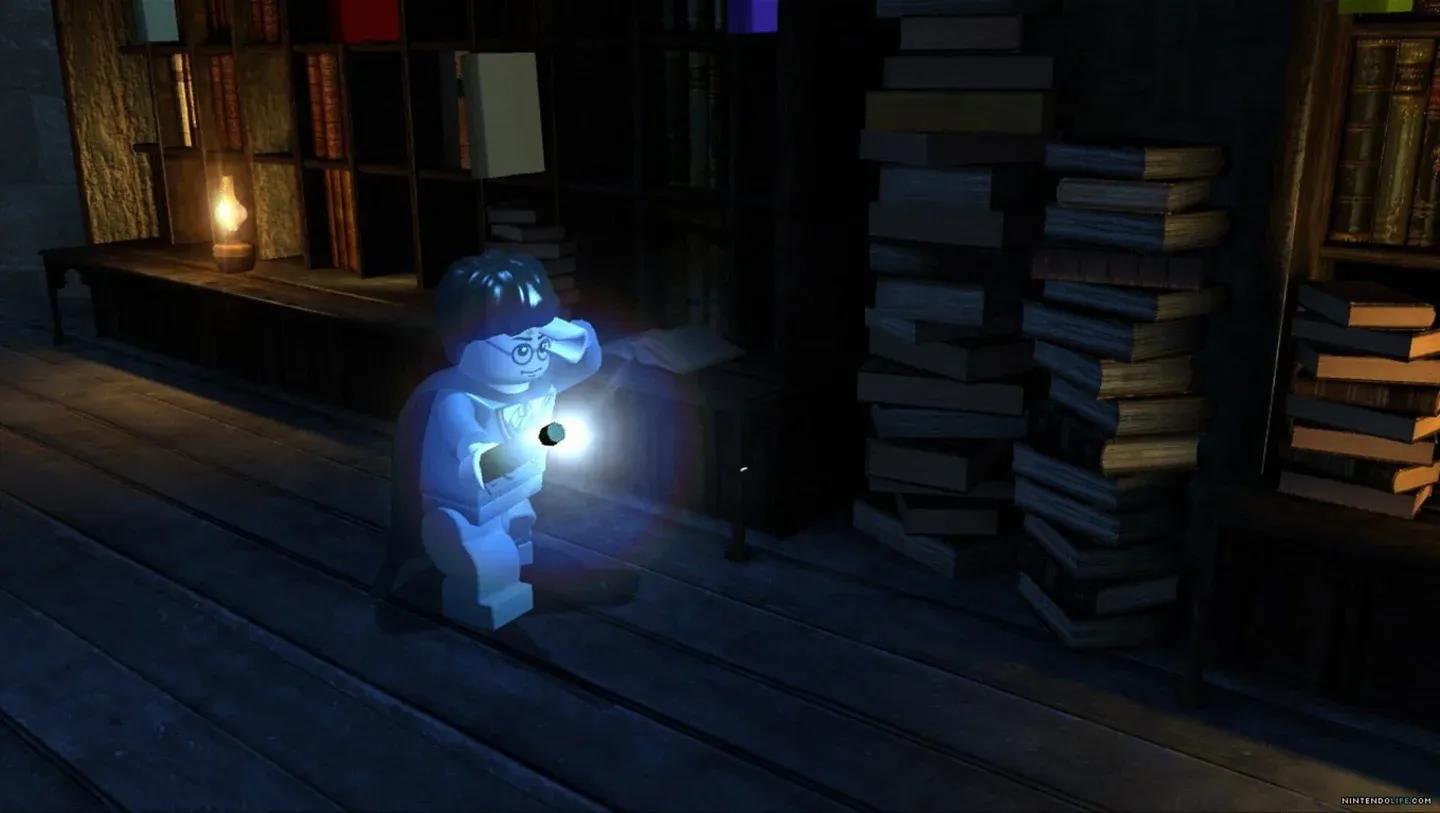
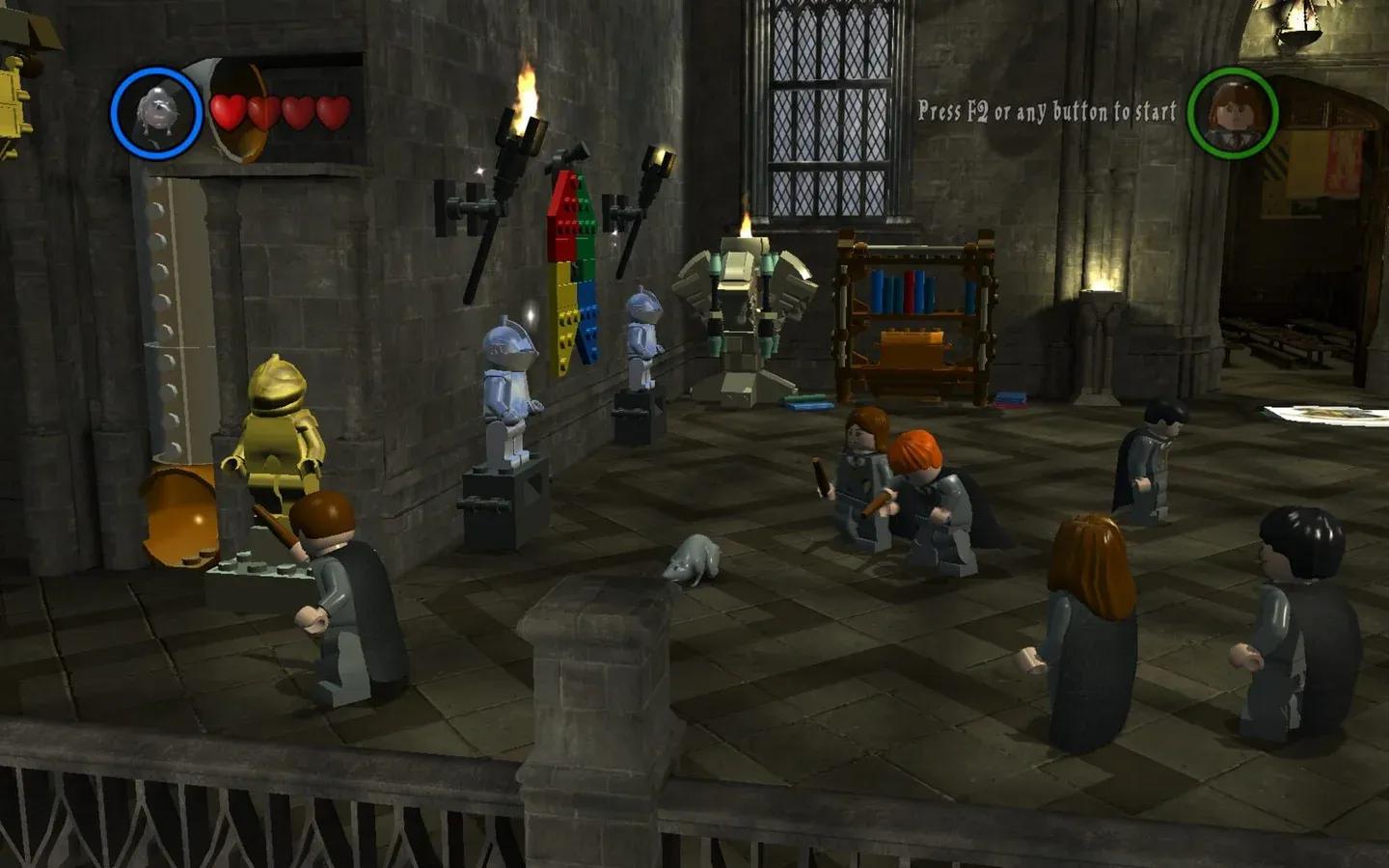
The game's biggest structural achievement is how it treats Hogwarts itself. Rather than a series of disconnected levels, the castle functions as a living hub. You navigate corridors, discover shortcuts, and unlock new areas as your spell repertoire grows. That design choice gives the whole game a sense of place that most licensed platformers skip entirely.
LEGO Harry Potter: Years 1-4 content image
Gameplay and mechanics
The core loop mixes platforming, environmental puzzle-solving, and spell-casting in a way that stays consistent across all four years. Progress depends on learning the right spells at the right time, and Hogwarts lessons serve as the game's tutorial system, each one unlocking a new ability like Wingardium Leviosa or Lumos.
LEGO Harry Potter: Years 1-4 content image
Key mechanics include:
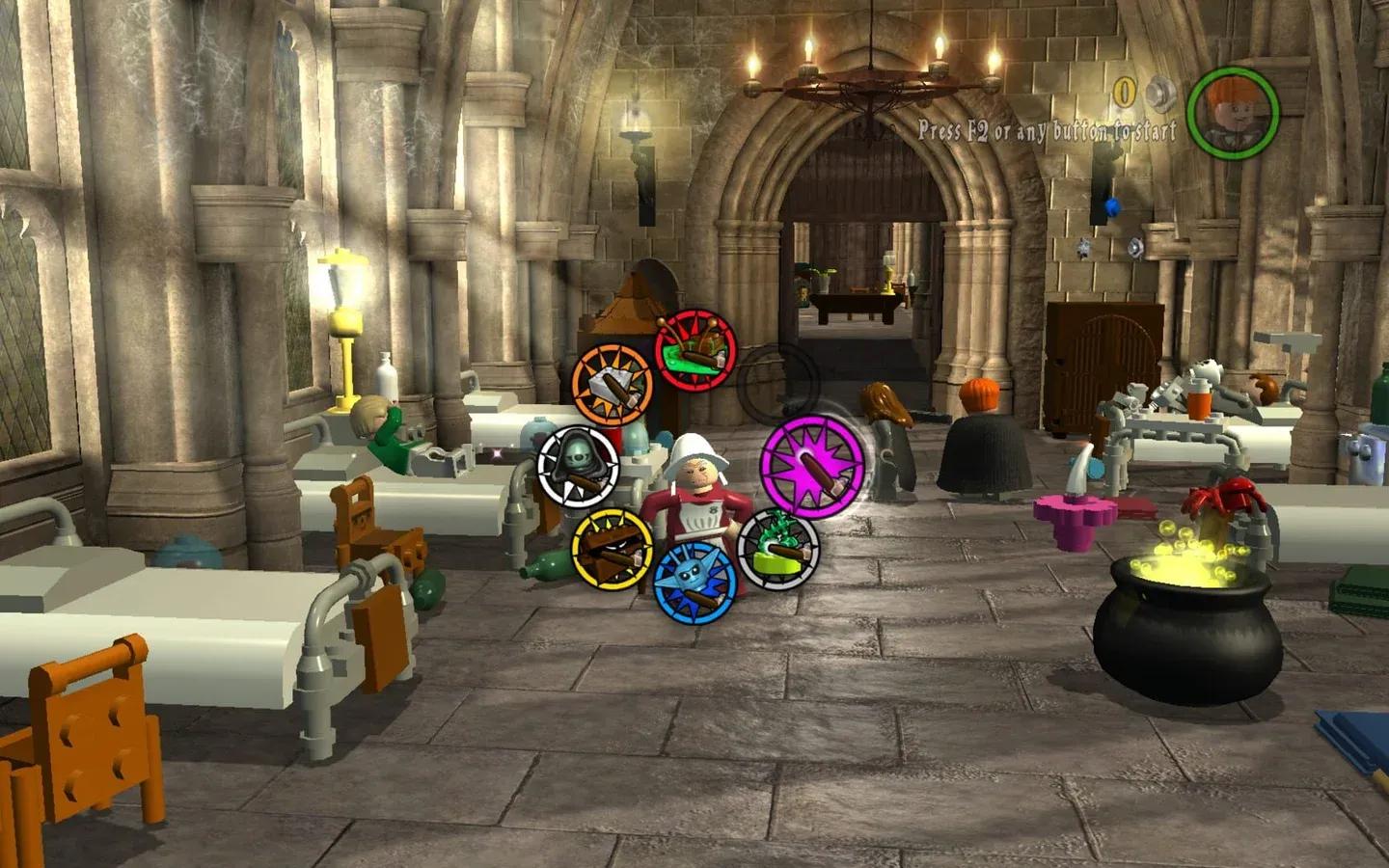
- Spell-casting with context-sensitive targeting
- Potion-brewing with ingredient collection
- Broomstick flying sections
- LEGO build sequences using collected pieces
- Character-specific ability puzzles
The puzzle design leans on character switching. Hermione's spell kit differs from Ron's, and some areas require specific characters to progress, which is the main reason the game rewards replaying levels in Free Play mode after the story credits roll.
Co-op and replayability
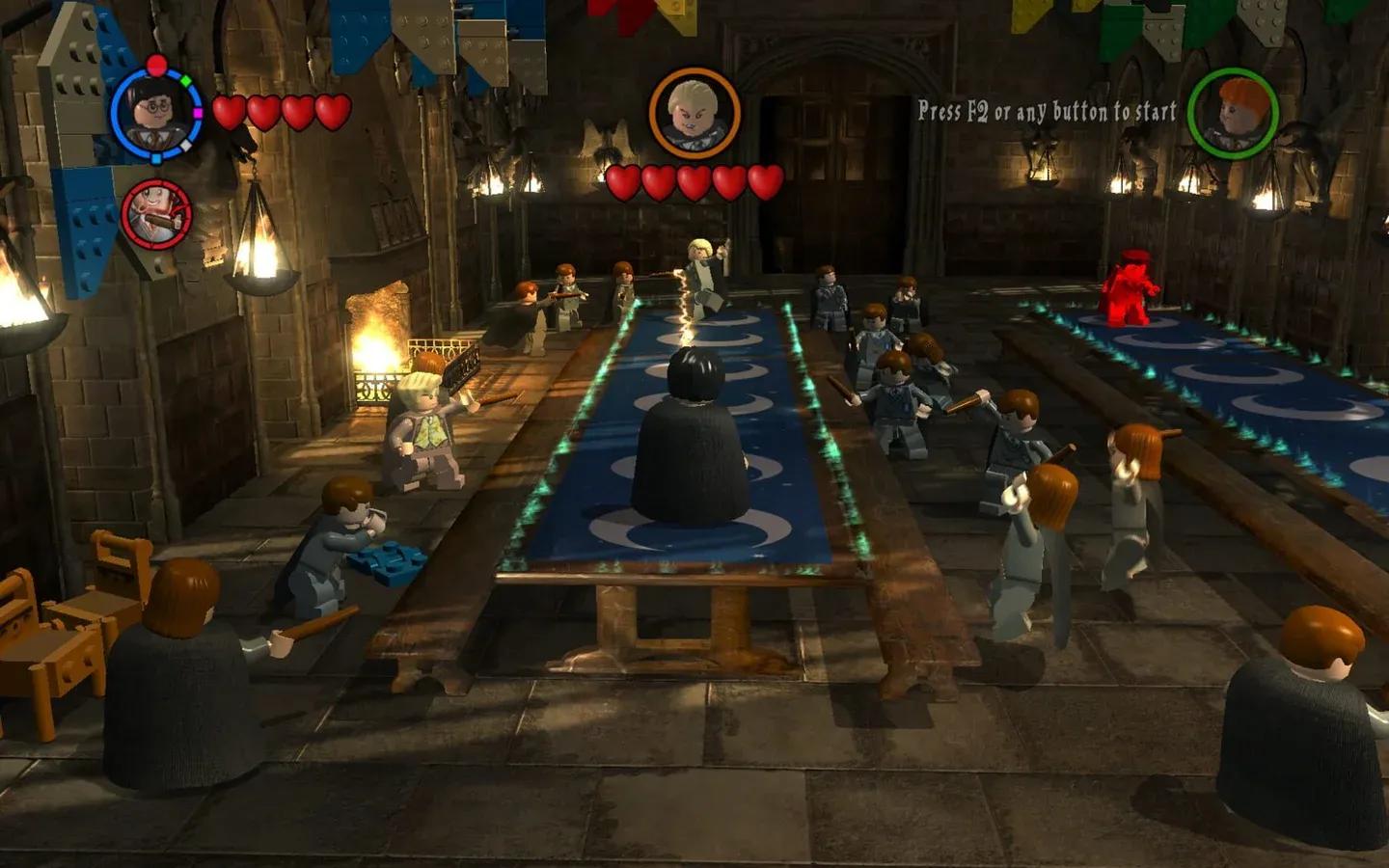
Drop-in, drop-out local co-op is baked into every level, and the game handles split-screen dynamically, stretching or splitting the view depending on how far apart players drift. Two-player runs through the story are genuinely more entertaining than solo playthroughs because the slapstick humor lands harder when someone else is watching Harry accidentally levitate Ron into a ceiling.
LEGO Harry Potter: Years 1-4 content image
Replayability comes from the collectible structure. Each level hides LEGO studs, red bricks that unlock cheats, and character tokens locked behind spells you won't have on your first run. The game tracks completion percentages per level, so completionists have a clear target to chase. Getting to True Wizard status on every chapter takes considerably longer than just finishing the story.
World and setting
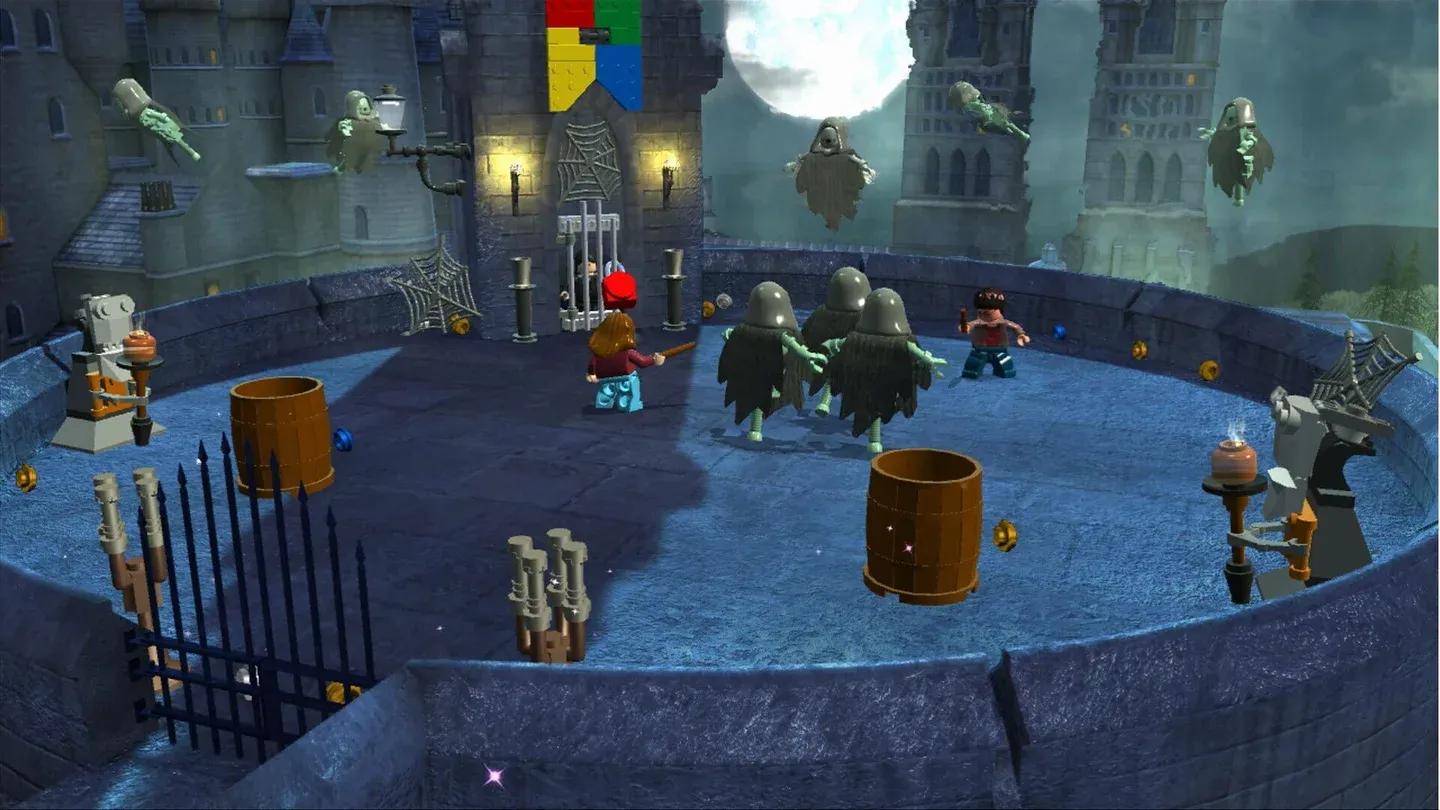
The wizarding world translates surprisingly well into LEGO form. Diagon Alley, the Forbidden Forest, and the Hogwarts grounds all feel recognizable despite being assembled from plastic bricks, and Traveller's Tales leans into the absurdity rather than fighting it. Cutscenes retell the major story beats entirely through pantomime, which strips out exposition and keeps the pacing fast.
The character roster spans 167 total unlockable characters by the time you count variants, including different robes, Quidditch uniforms, and Voldemort in multiple forms. That depth matters most in Free Play, where swapping characters becomes part of the puzzle rather than just a cosmetic choice.
LEGO Harry Potter: Years 1-4 content image
Impact and legacy
LEGO Harry Potter: Years 1-4 arrived at a point when the LEGO game formula was already well-established, but it remains one of the series' most fondly remembered entries because the source material and the format fit each other unusually well. Magic as a mechanic maps cleanly onto the LEGO game's tradition of using abilities to unlock new areas, and Hogwarts as a hub world gives the game a spatial coherence that later entries struggled to match. The game runs on Windows, macOS, PlayStation, Xbox, Nintendo Switch, and Android, making it one of the more accessible entries in the LEGO catalog for players returning to it years after release.