Overview
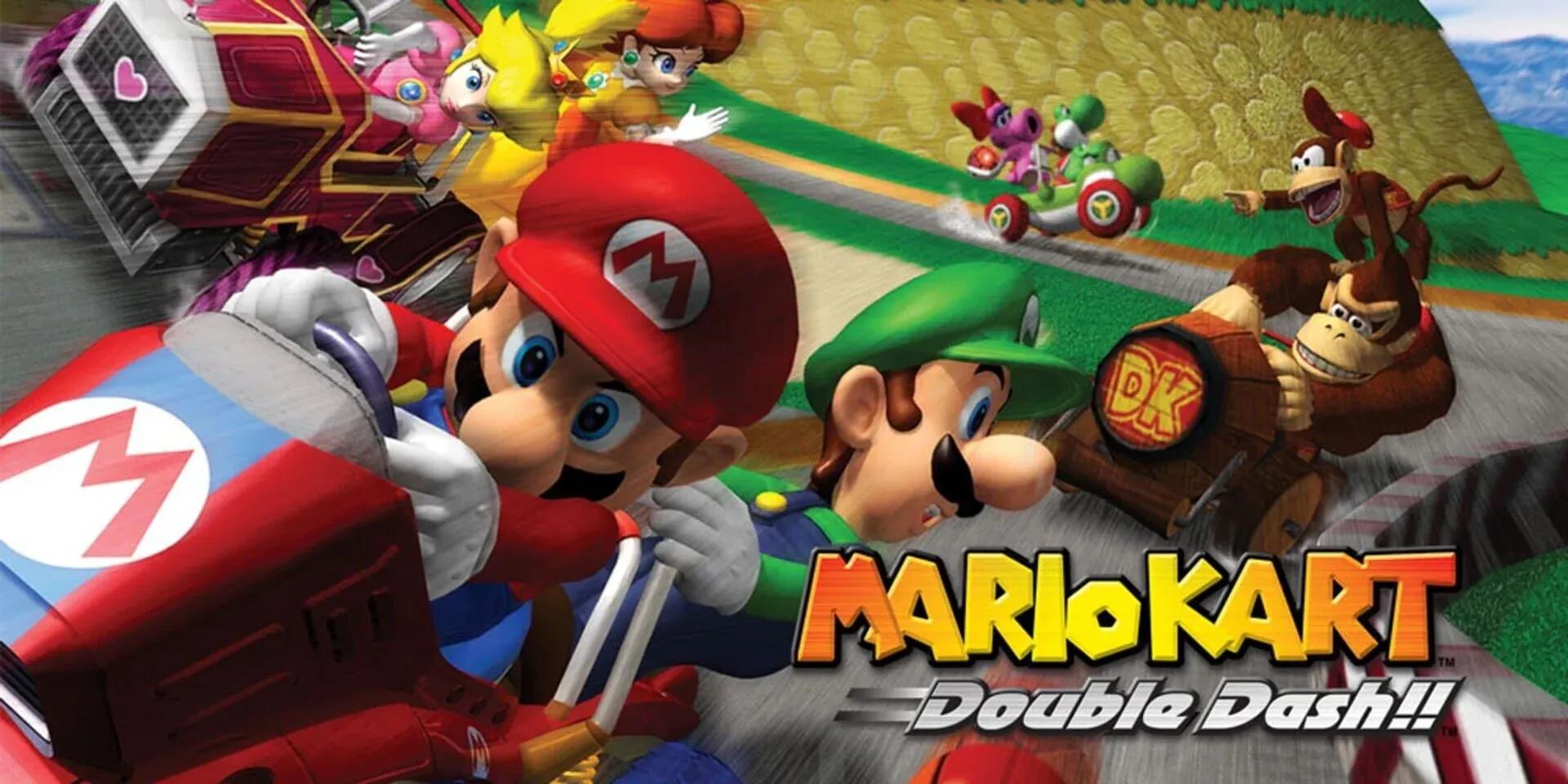
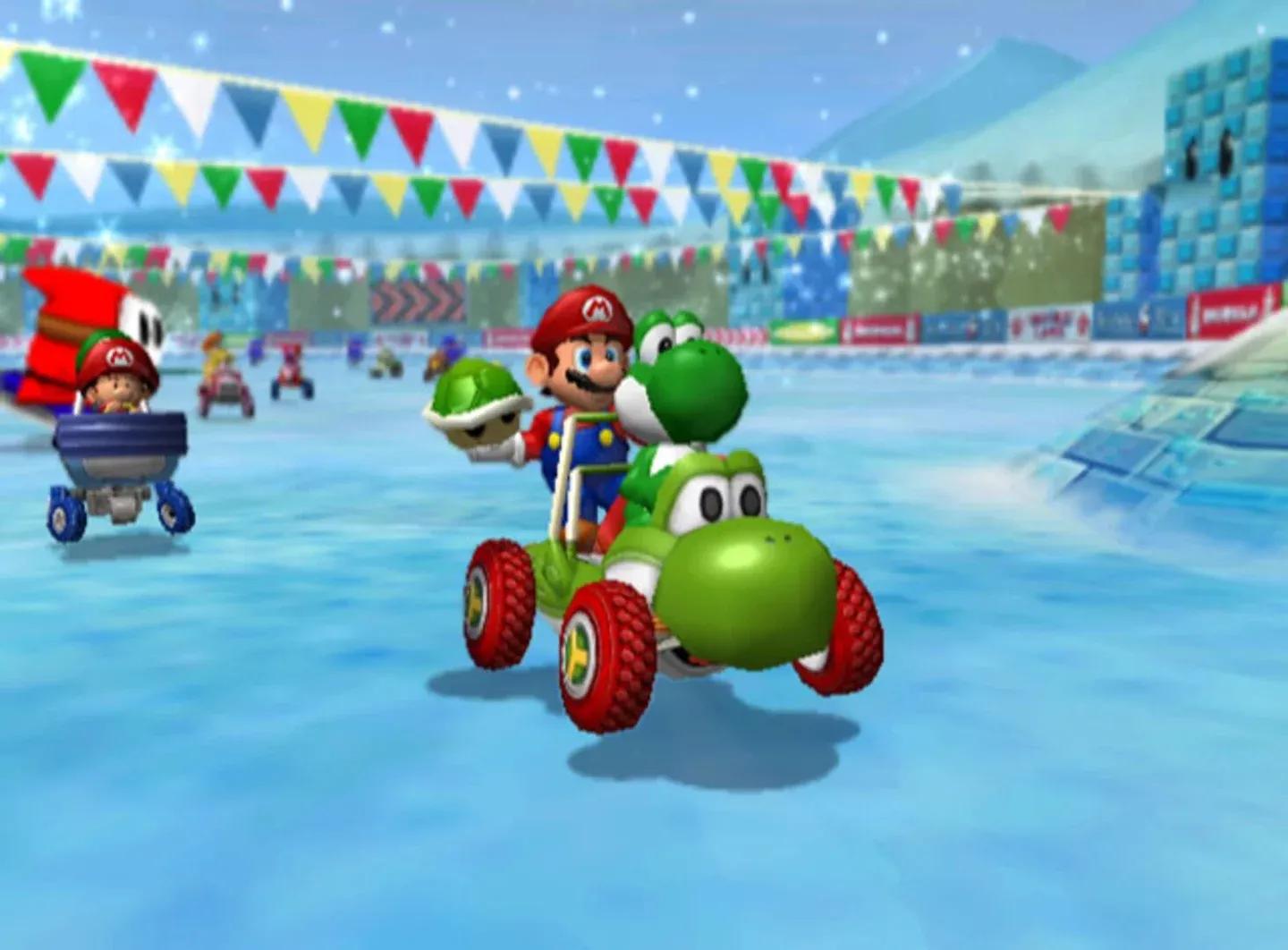
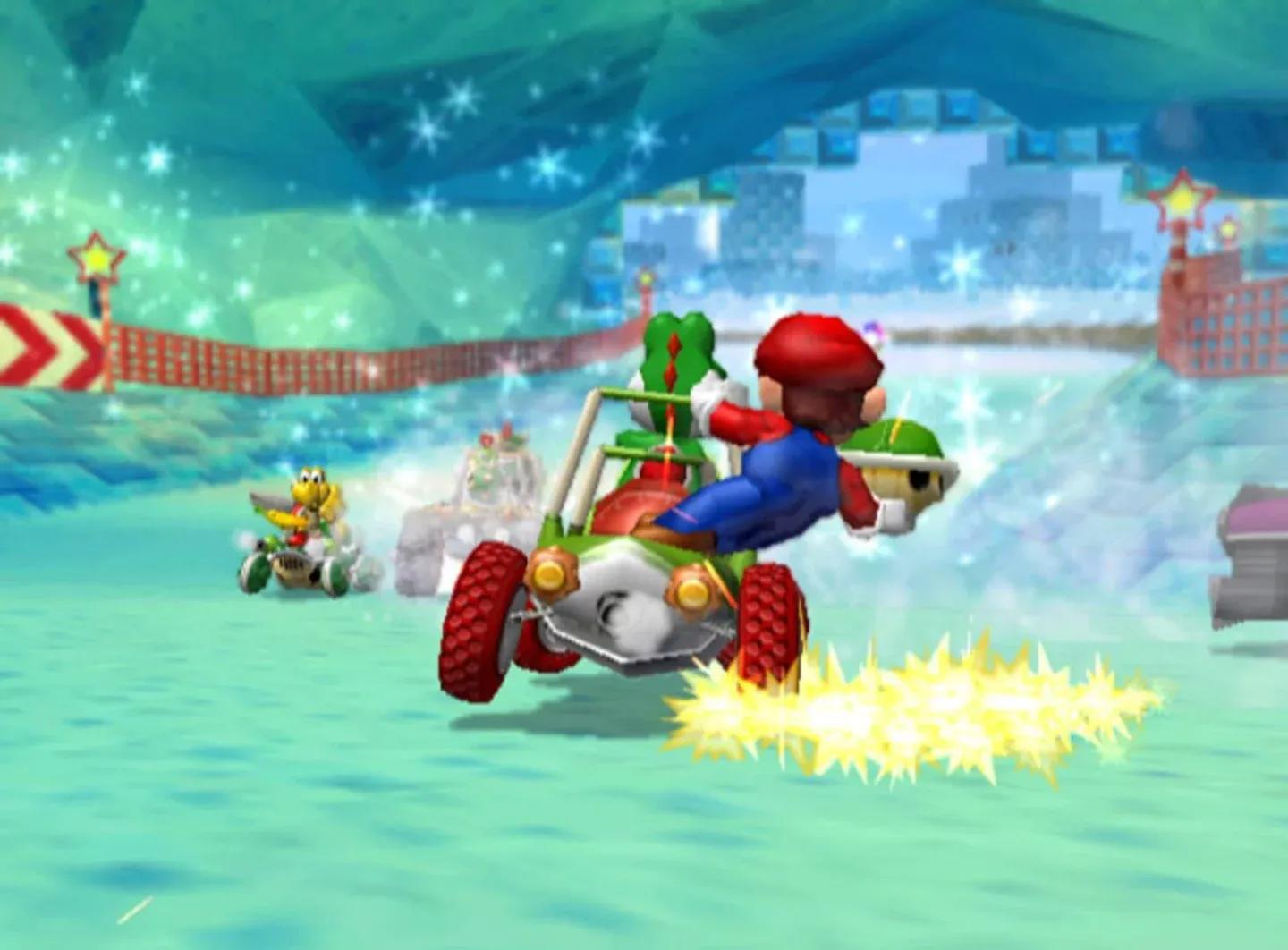
Mario Kart: Double Dash!! launched on the Nintendo GameCube in November 2003 and immediately stood out from every other entry in the series. The core concept is simple: every kart carries two racers instead of one. The driver handles steering and speed, while the rear passenger manages items and can be swapped to the front at any point during a race. That single design decision turns familiar kart racing into something with a genuinely different rhythm.
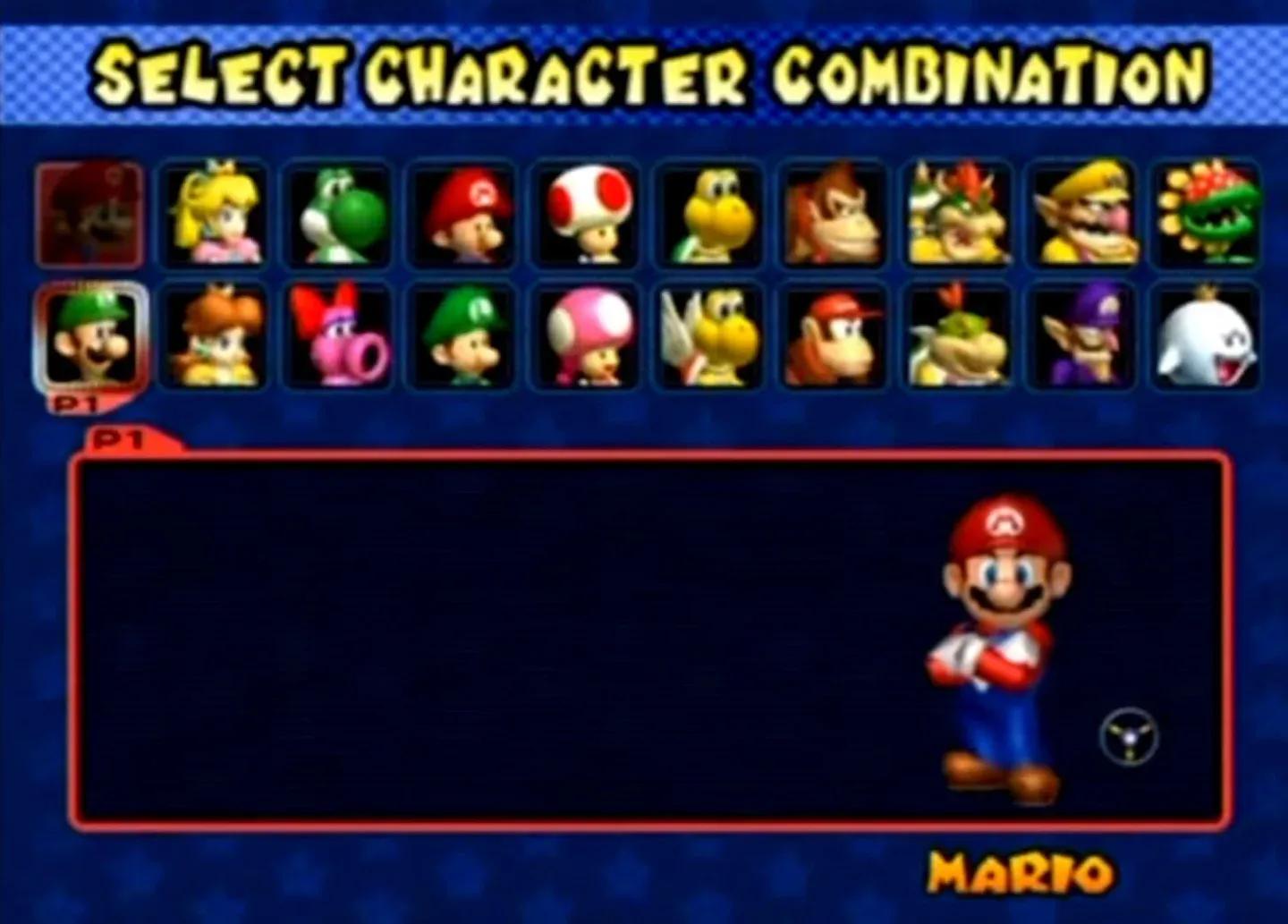
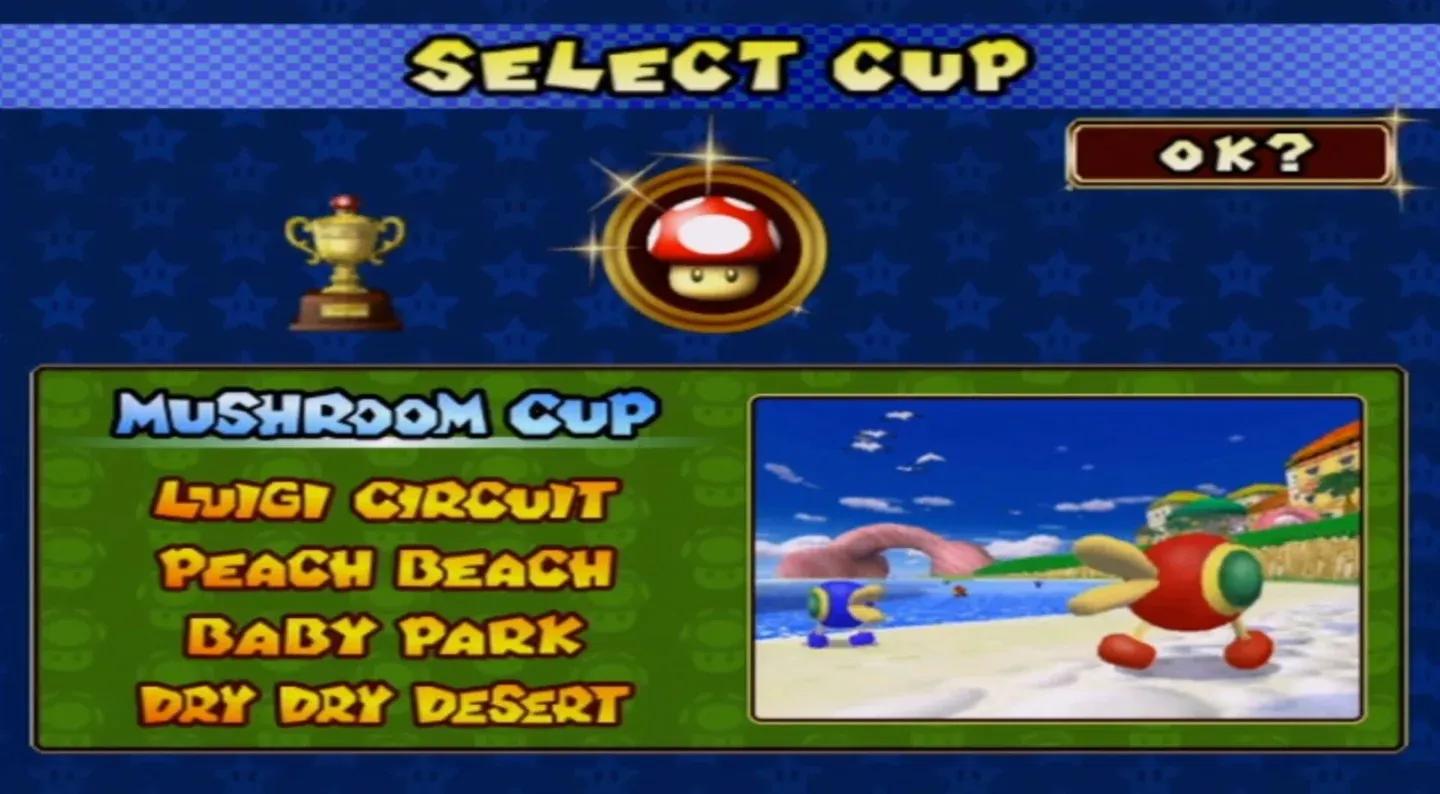
Nintendo Entertainment Analysis & Development built the game around 16 tracks spread across four cups, with additional unlockable content that extends playtime considerably. The roster spans 20 characters, from Mario and Peach to Donkey Kong and Koopa Troopa, each paired with a default partner and a kart of their own. Swapping characters mid-race to grab a better item or absorb a hit adds a layer of real-time decision-making that most kart racers never ask of you.
Gameplay and mechanics
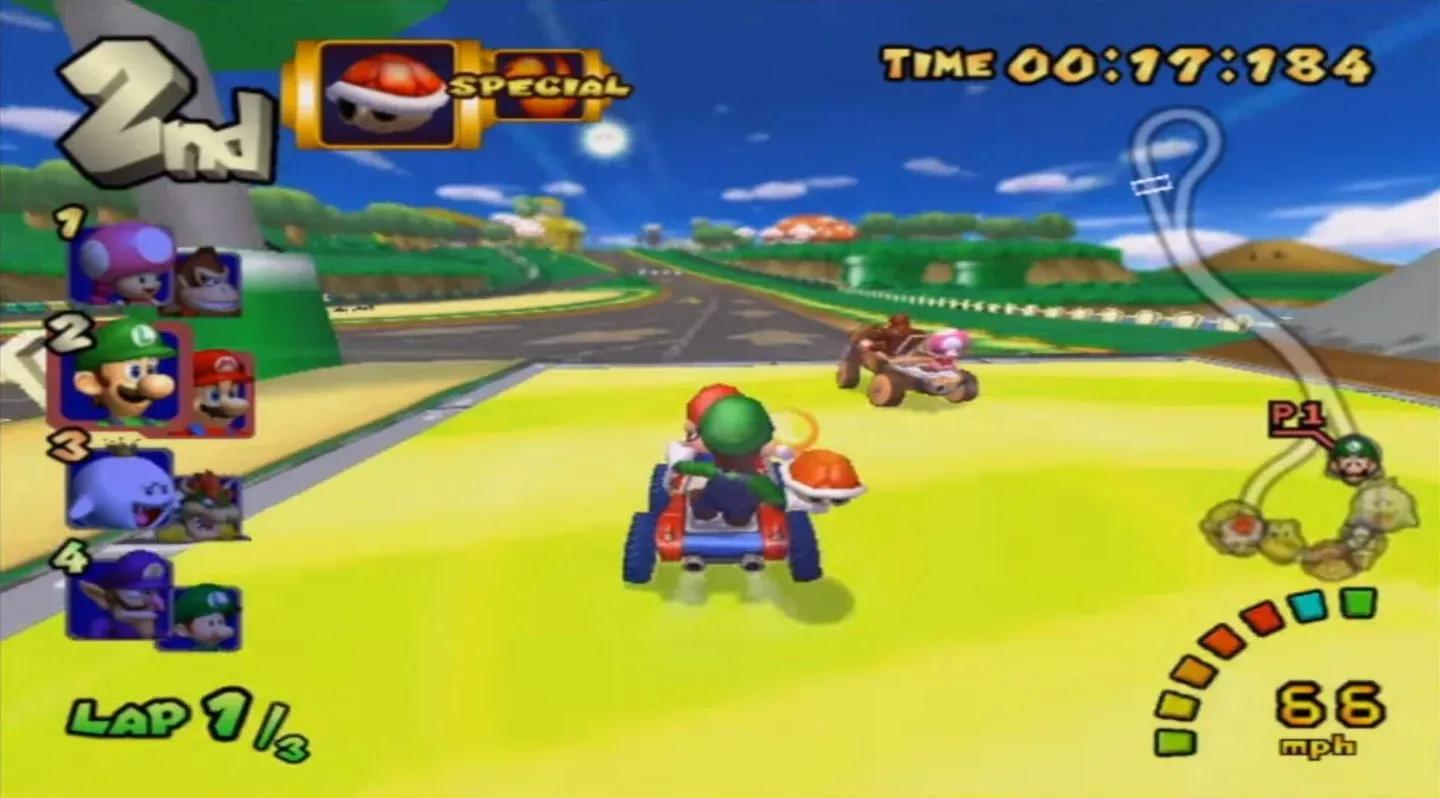
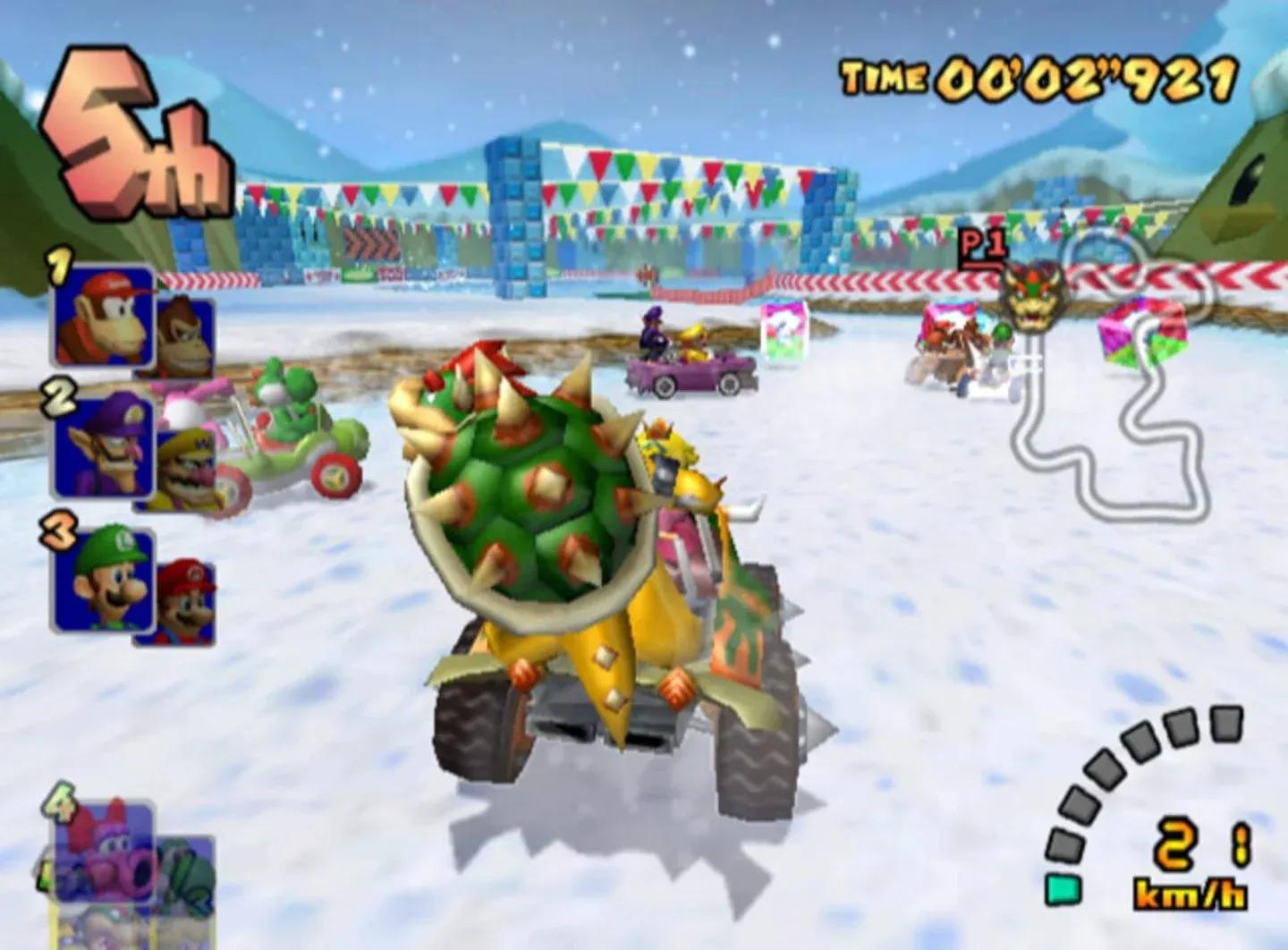
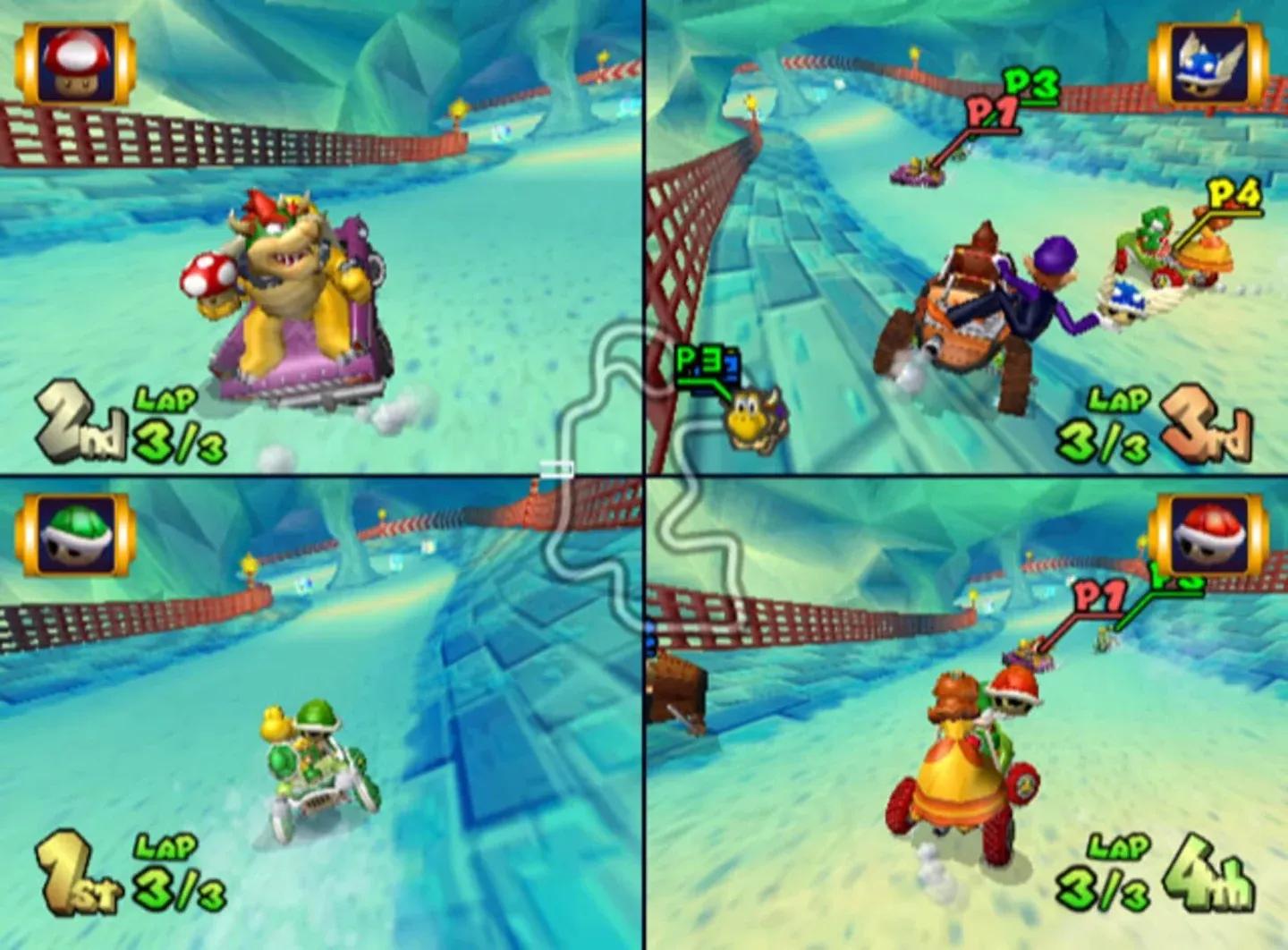
The two-character system is the defining mechanic, and it touches nearly every part of how Double Dash plays. Each character pair starts with access to their exclusive special item, which only that pairing can use. Bowser and Bowser Jr. carry the Giant Shell, Baby Mario and Baby Luigi throw Chain Chomps, and Diddy Kong and Donkey Kong use Giant Bananas. Mixing and matching pairs before a race becomes a genuine strategic choice rather than a cosmetic one.
Mario Kart: Double Dash!! content image
Key mechanics at a glance:
- Switch driver and rear passenger at any time
- Special items locked to specific character pairings
- Rear passenger can grab dropped items from the track
- Kart stats vary by character weight class
- Six standard items plus eight character-specific specials
Mario Kart: Double Dash!! content image
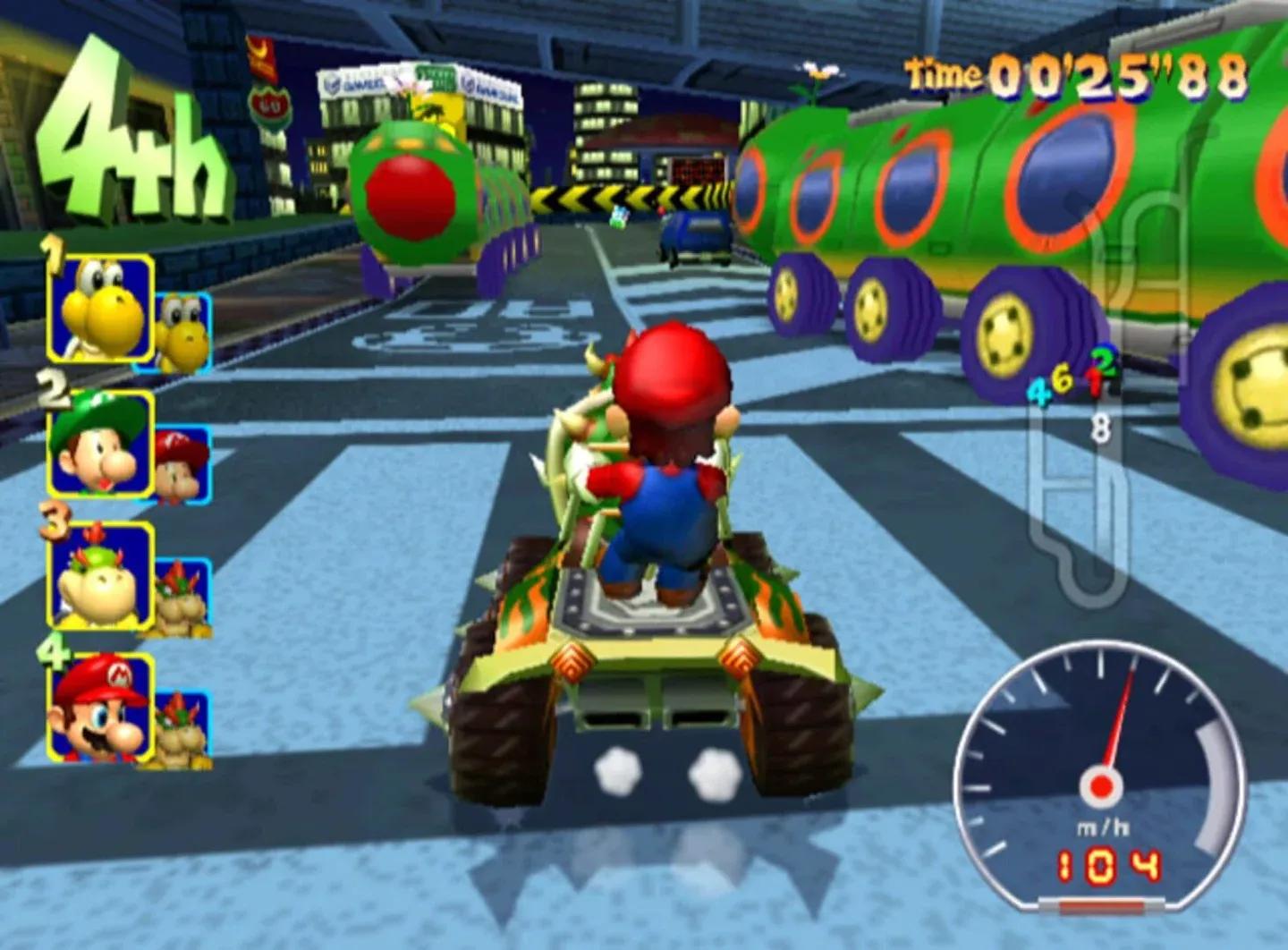
The weight class system also affects how karts interact on the track. Heavier characters can spin out lighter ones on contact, which means picking a pairing isn't just about item preference. A heavy kart running a lighter opponent off the road is a legitimate tactic, especially in the later cups where the AI gets noticeably more aggressive.
Multiplayer and social features
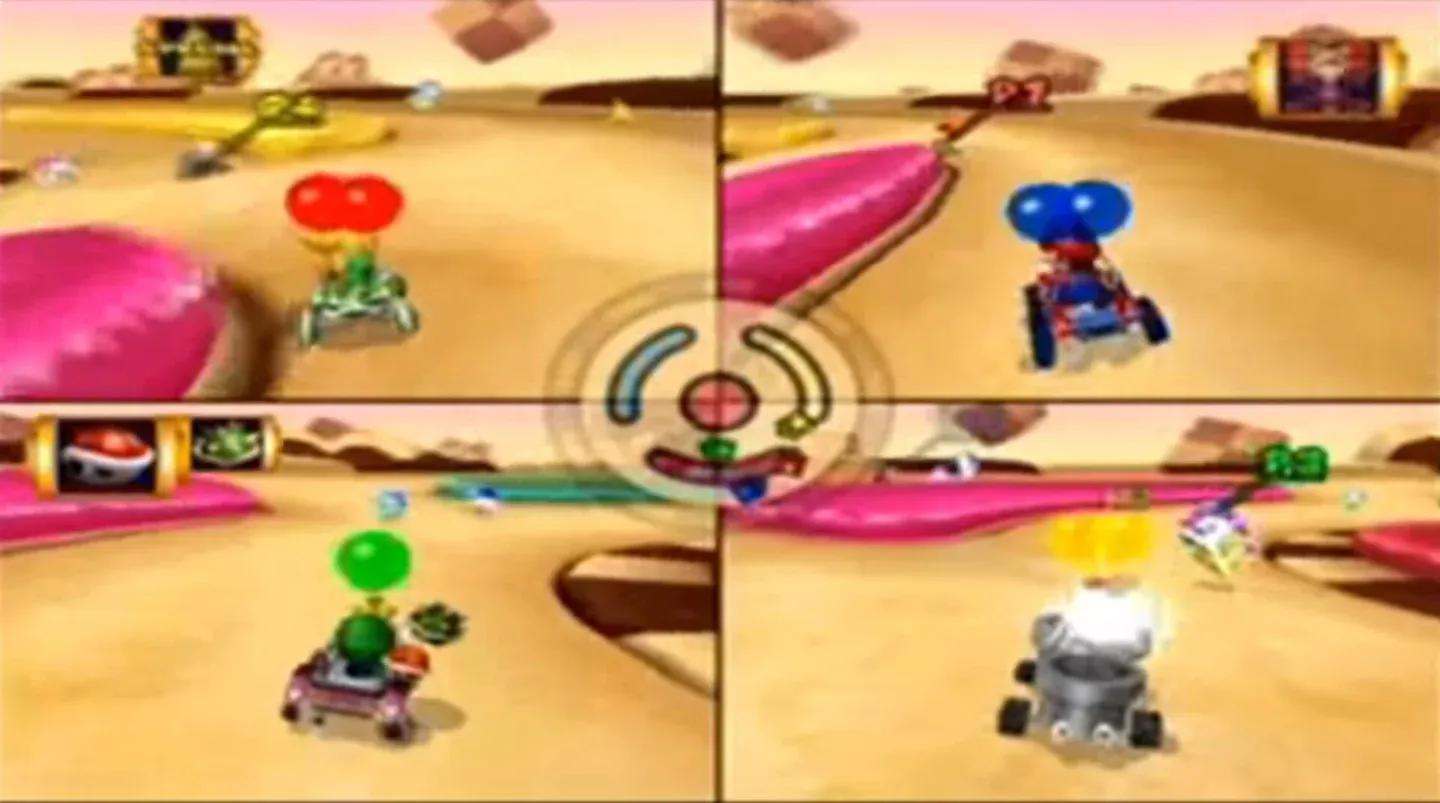
Double Dash is arguably the strongest multiplayer entry in the GameCube library. The game supports up to four players in split-screen, but the real standout is the LAN co-op mode that allows two players to share one kart, one controlling movement and the other managing items. Pulling that off in a living room requires actual communication, which makes victories feel genuinely earned.
Mario Kart: Double Dash!! content image
The Battle Mode returns with two formats: Balloon Battle and Bob-omb Blast. Up to four players compete across six dedicated arenas, and the mayhem scales quickly when everyone has access to Giant Shells and Chain Chomps. These modes hold up as some of the best local multiplayer content Nintendo produced during that generation.
Impact and legacy
Double Dash sits in an interesting spot in the Mario Kart timeline. It remains the only mainline entry to feature the two-character kart system, and that uniqueness has kept it in the conversation long after newer entries arrived. The game reviewed well at launch and sold over 6.9 million copies on the GameCube, making it one of the platform's best-selling titles.
Mario Kart: Double Dash!! content image
For arcade racing fans who want something with more tactical depth than a standard kart racer, Double Dash still delivers. The track designs hold up, the item variety keeps races unpredictable, and no other kart racing game has quite replicated what the two-character mechanic actually feels like in motion.