

Overview
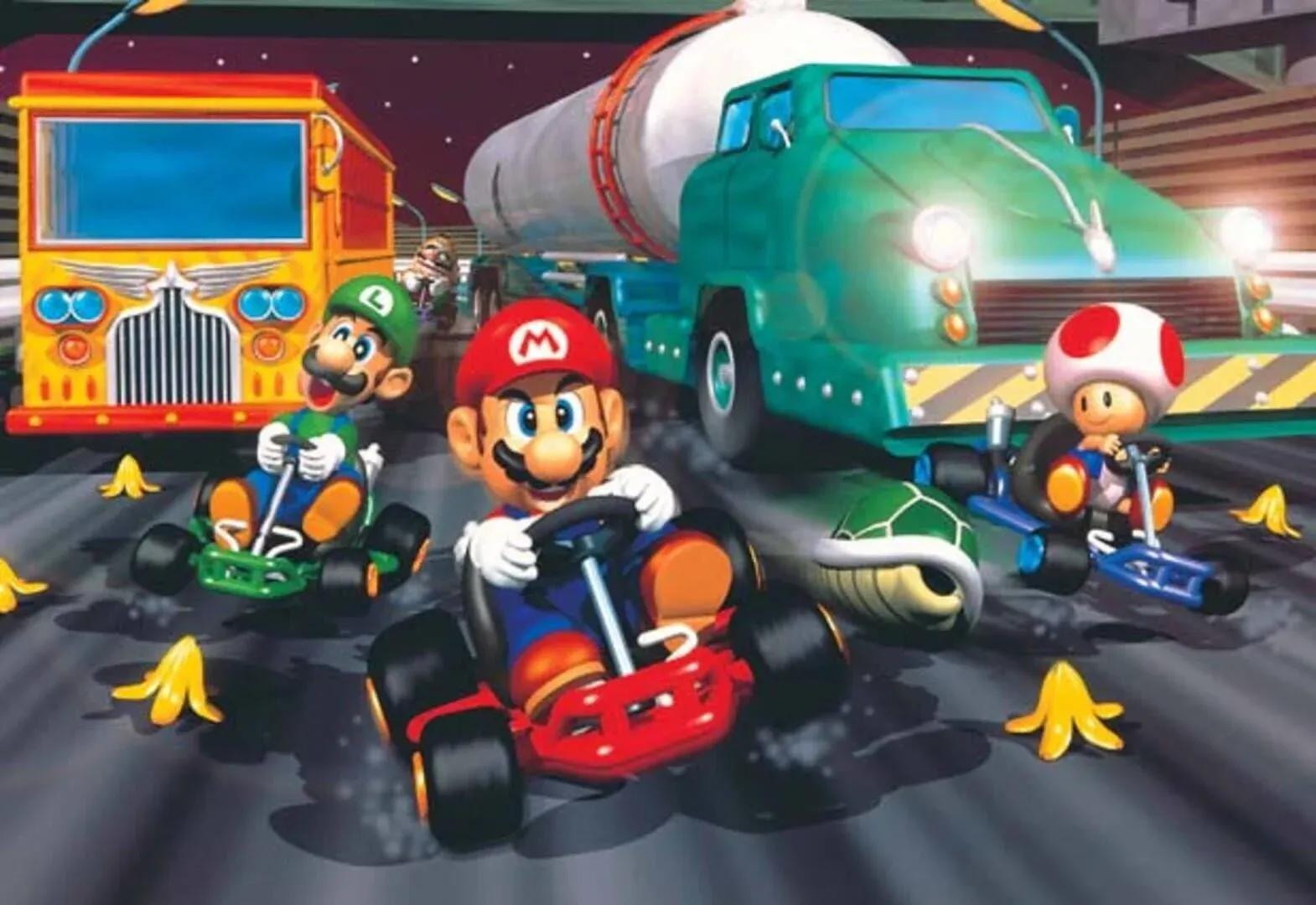
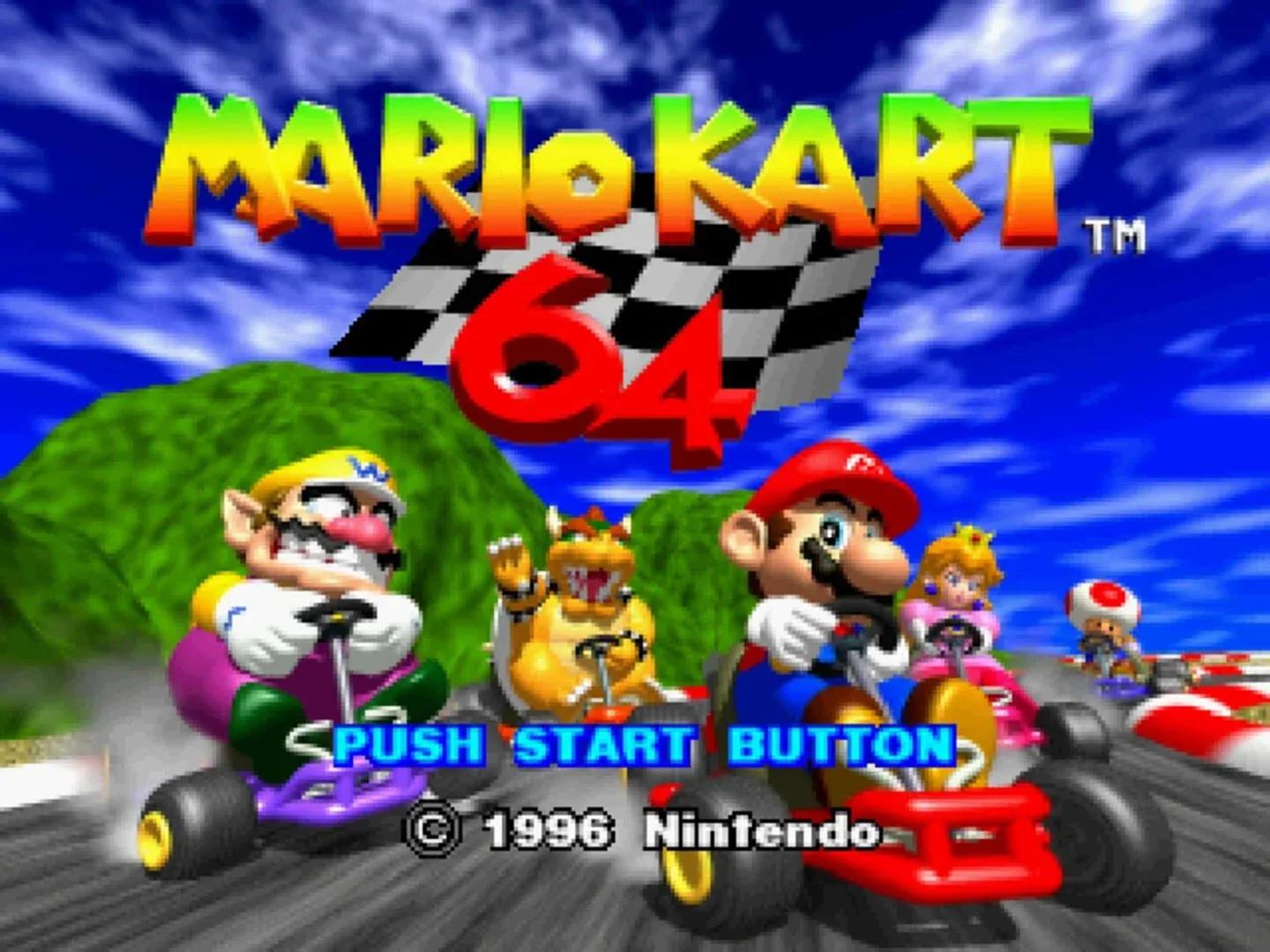
Mario Kart 64 arrived in December 1996 as the second entry in Nintendo's kart racing series and the first to make the jump to three-dimensional track design. While the characters and items remain 2D pre-rendered sprites, the courses themselves are fully 3D environments, giving the game a sense of depth and scale that its Super Nintendo predecessor simply could not achieve. The result was a racing game that felt genuinely new at the time and established a visual and structural formula the series would refine for decades.
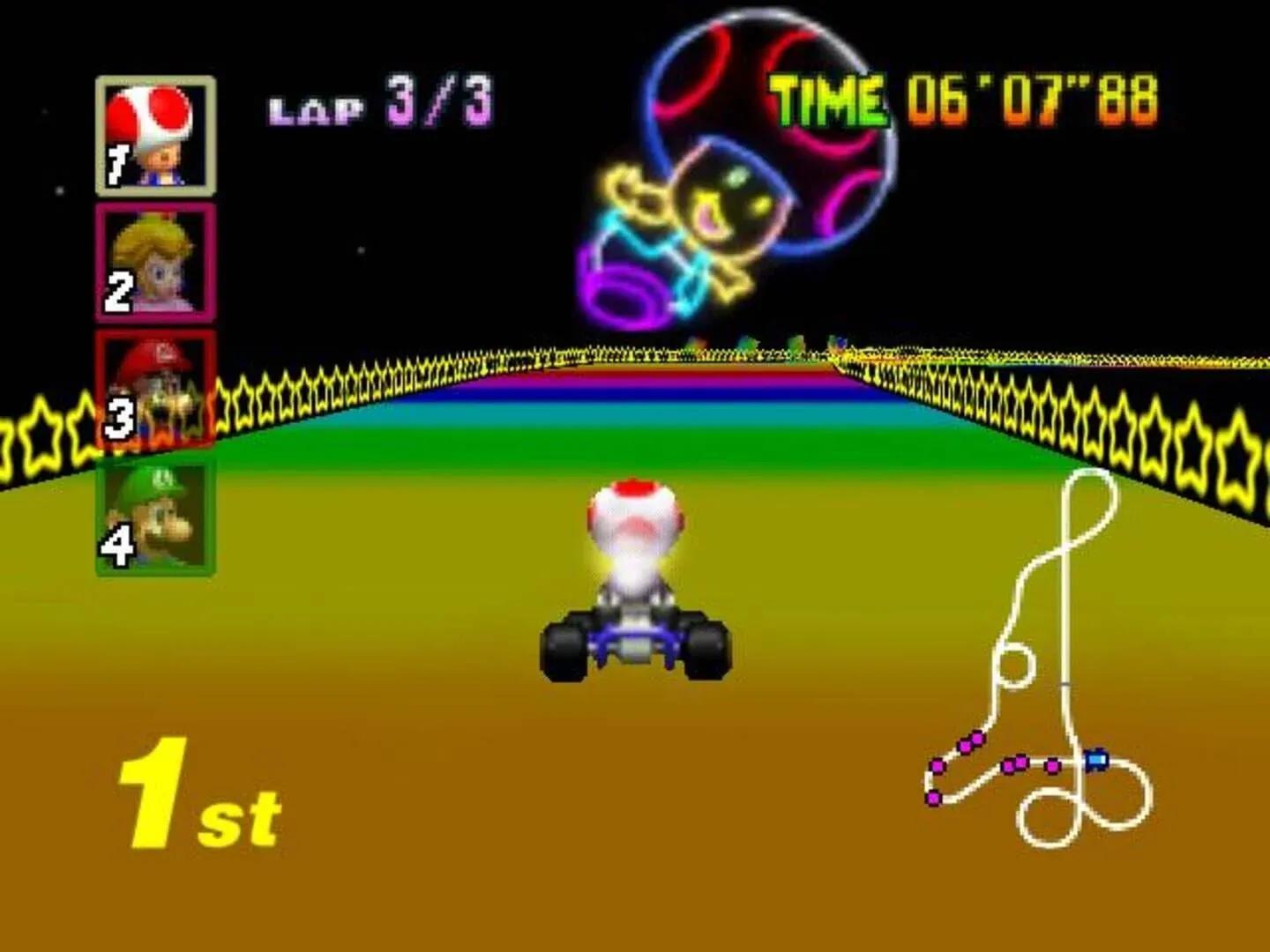
The game ships with 16 tracks split across four cups, Mushroom, Flower, Star, and Special, each with a distinct identity. Koopa Troopa Beach puts players on a shoreline with crabs and waves cutting across the racing line. Rainbow Road stretches through space with no guardrails and a punishing fall penalty. Wario Stadium throws a massive jump early in the lap that sends inexperienced drivers sailing into the wall. These tracks are not interchangeable filler; they each have a specific character that players learn and remember.
Gameplay and mechanics
At its core, Mario Kart 64 is a lap-based arcade racer built around item combat. Eight characters are available, each with different handling, acceleration, and top speed profiles. Heavier characters like Donkey Kong and Wario hold speed better on flat ground but recover slowly from hits. Lighter characters like Toad and Koopa accelerate faster and dodge more easily. These differences are subtle but meaningful at higher difficulties.

Mario Kart 64 content image
The three engine classes shape the experience significantly:
- 50cc: Accessible, slower-paced racing for learning tracks
- 100cc: The middle ground where item timing starts to matter
- 150cc: Full speed, aggressive AI, and little margin for error
Items remain the game's most iconic element. Red and green shells, banana peels, the star power-up, and the lightning bolt that shrinks every other racer on the course give every lap a chaotic edge that pure racing games cannot replicate. Landing a well-timed red shell on the final stretch of Rainbow Road remains one of the most satisfying moments the genre has to offer.

Mario Kart 64 content image
Multiplayer and social
Four-player split-screen is where Mario Kart 64 built its reputation. The game supports up to four players simultaneously, a technical achievement for 1996 hardware that came with a visible performance trade-off, the frame rate drops noticeably in four-player mode. Players accepted that trade-off without hesitation because nothing else at the time offered the same kind of competitive chaos in a single living room.
Mario Kart 64 content image
Battle Mode adds a second competitive layer outside of standard racing. Players collect balloons and try to pop opponents' balloons using items across four dedicated arenas. Block Fort, with its raised platforms and chokepoints, became the most contested arena of the lot and remains the mode's defining map.
Mario Kart 64 content image
Impact and legacy
Mario Kart 64 is available on Nintendo Switch through the Nintendo Switch Online + Expansion Pack service, which means it reaches a new audience without requiring original N64 hardware. The track designs from this game have been remade and remastered across multiple later entries in the series, with Kalimari Desert, Toad's Turnpike, and Royal Raceway all appearing in Mario Kart 8 Deluxe's booster course pass. That kind of track longevity reflects how well the original course designs hold up as racing environments. The 3D-track-with-2D-sprite formula looks dated now, but the underlying structure of those 16 courses remains sound enough that Nintendo keeps returning to them.