Search games, articles, guides...CtrlK
Sign InGet Started
Master Mini Seasons in MLB The Show 26 with the best grind methods for packs, stubs, Team Affinity, and XP rewards.

Written by Abdalla
Content Writer
See more GAMES.GG guides on Google
Add us as a preferred source and our guides show up first in your results.

MLB The Show 26 WBC Program Guide: All 4 Pools, Rewards & Best Cards
Master all four WBC Program pools in MLB The Show 26 Diamond Dynasty and earn top cards like Bryce Harper and Nolan Arenado.
MLB The Show 26 Franchise Mode: Trade Hub & GM Guide
Master the new Trade Hub, smarter AI GMs, and overhauled trade logic in MLB The Show 26 Franchise Mode with this complete guide.
MLB The Show 26 Franchise Mode: Trade Hub, AI Logic & New Features Guide
Master MLB The Show 26 Franchise Mode with the new Trade Hub, smarter AI GMs, overhauled trade logic, and streamlined season controls.
Mini Seasons sits quietly in the MLB The Show 26 menu, but serious Diamond Dynasty grinders know it's one of the most efficient reward engines in the game. Whether you want Ballin' is a Habit packs, Team Affinity points, or a steady flow of stubs, the right approach turns what looks like a simple mode into a full production line. This guide breaks down every method worth using, ranked by what you actually get out of them.
The short answer: the reward-to-time ratio beats most other offline modes when you play it correctly. Every season you complete drops a championship bundle, and those bundles feed directly into pack exchanges. Stack that with active Team Affinity (TA) missions and you're pushing multiple progress bars forward in a single session instead of one at a time.
The longer answer involves understanding that not all Mini Seasons are equal. The World Baseball Classic (WBC) Mini Seasons consistently offer better pack rewards than the standard Classic format. Classic seasons are faster to cycle through, but WBC is where the high-value pulls live.
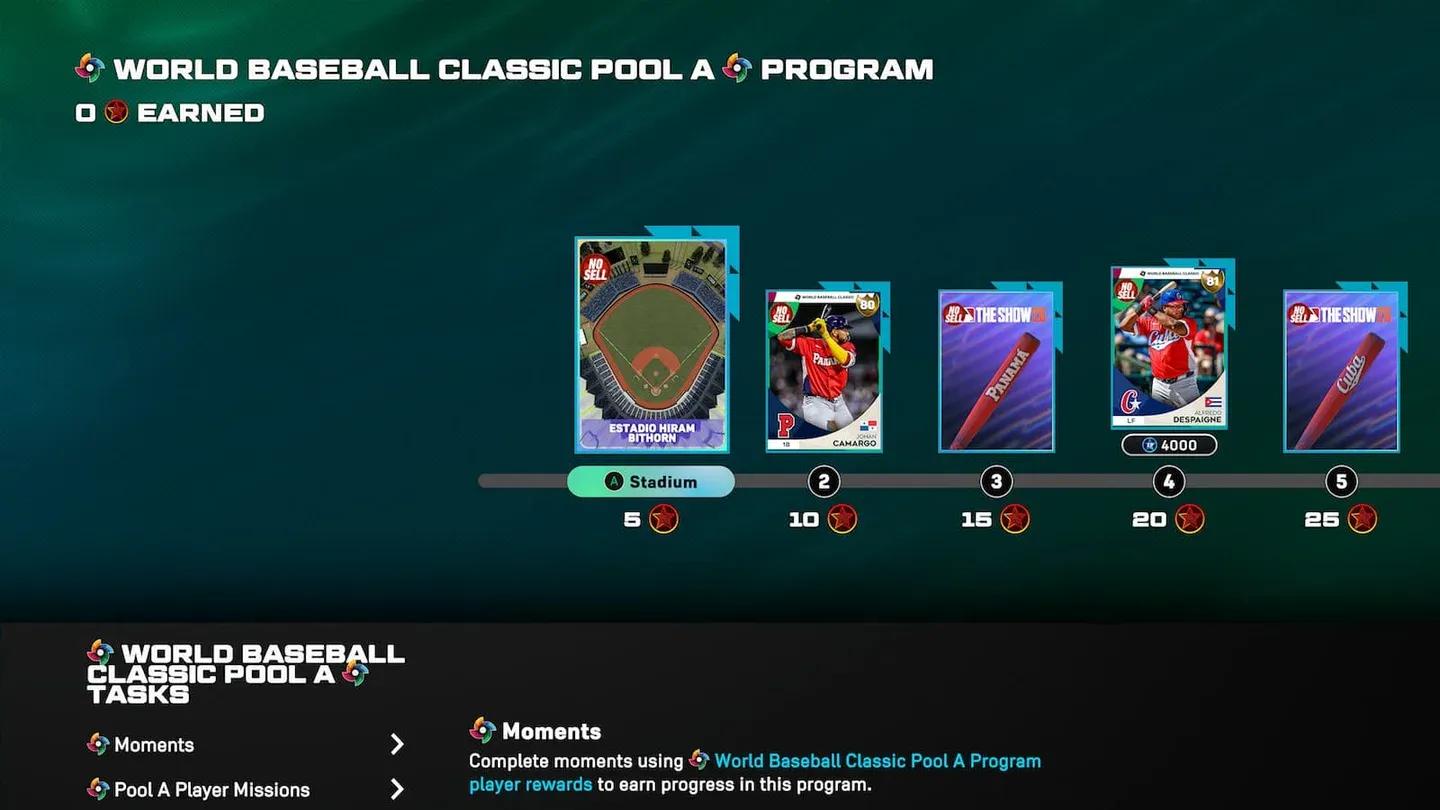
WBC Mini Seasons mode select
Play on Rookie difficulty. Higher difficulties do not add extra pack rewards when your primary goal is grinding stubs and packs, and Rookie lets you hit the stat thresholds for missions, like 56 runs or 40 hits, without fighting the CPU for every at-bat. Save Legend and G.O.A.T. difficulty for sessions where you're specifically chasing Parallel XP (PXP) gains, since those difficulties scale PXP multipliers up to 3.0x to 3.5x per plate appearance.
For stadium choice, download a small custom stadium. Costco and Blank Canvas are the two most-used options because short fences make home runs trivially easy. That matters a lot when your mission list includes extra-base hit targets.
Fill your roster with Team Affinity players from the active season's theme. This lets a single at-bat count toward multiple missions simultaneously: hits, runs, extra-base hits, and TA progress all tick at once. A lineup built around one theme is dramatically more efficient than a mixed squad where only some players contribute to your active missions.
For pitching-focused missions, the New Threads season is worth targeting specifically. Its 100-strikeout mission ties directly to Ballin' is a Habit bundle rewards.
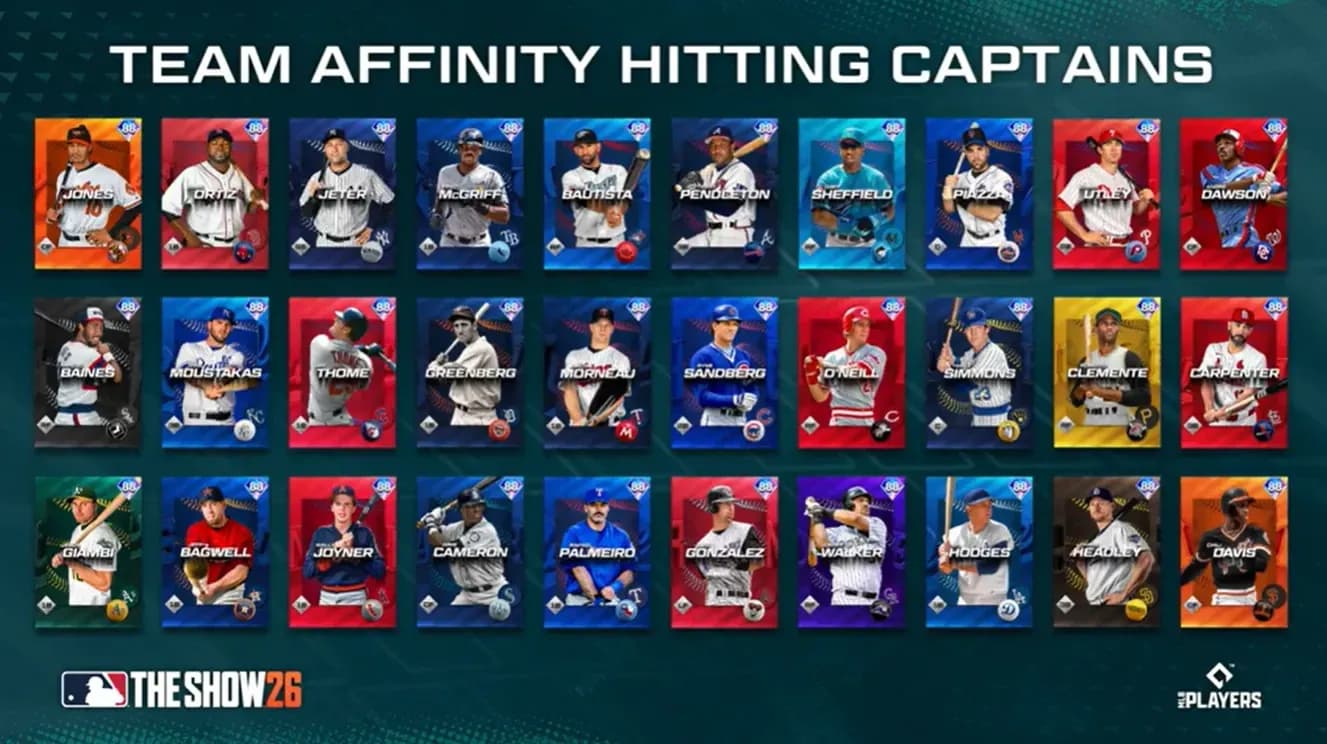
TA lineup stacking setup
There are two main approaches depending on whether you're running the standard format or the 7-game sprint.
You do not need to play all 28 regular-season games. Secure a playoff spot by winning roughly 14 to 16 games, then quit the remaining regular-season matches. The game sends you directly to the playoffs. Sweep through the playoff bracket, win the championship, and collect your bundle. Then restart the cycle.
Some players refine this further: win the first 3 games, quit game 4, and continue from there. The key principle is that time spent on guaranteed-loss games or blowouts you've already secured is time not spent on the next championship bundle.
The 7-game Mini Season format is the fastest cycling option in the game. Win 4 to 6 regular-season games, jump to the playoffs, and close out the championship. The 10-pack bundle and Ballin' packs cycle faster through this format than through a full 28-game season, making it the preferred method for players who want to repeat the reward loop as many times as possible per session.
After winning a championship, you receive championship vouchers. Take those to the exchange menu and trade them for pack bundles, typically 5 banners for a 5-pack Ballin' bundle. Open the packs, then immediately sell any duplicate gold or diamond cards you pull. Keeping duplicates does nothing for your roster and leaves stubs sitting unclaimed in card form.
This is a clean loop: play seasons, earn vouchers, exchange for packs, sell duplicates, repeat. Our stubs farming guide covers the marketplace side of this equation in more detail, including how to flip cards for additional gains between sessions.
Mini Seasons doesn't exist in a vacuum. The players who get the most out of it treat it as one part of a larger Diamond Dynasty workflow.
Conquest is the right starting point if your roster is still underdeveloped. Every Conquest game pushes packs, PXP, XP, and program missions forward simultaneously, and the CPU opposition gives you room to practice timing without ranked pressure. Hidden map rewards also improve your early spending options in ways that aren't immediately obvious.
Events make sense once your core lineup has a few reliable bats and your rotation can hold a lead. Three-inning games move quickly, the format often limits rosters in ways that level the field, and Events carry a 1.5x PXP multiplier that Mini Seasons doesn't match for card leveling. Use Events to push PXP goals on cards that are close to the next parallel tier.
Moments are the cleanup tool. When you're two or three missions away from a program reward and a full game would be overkill, Moments get you there without the time investment.
| Mode | Best reward focus | Best for |
|---|---|---|
| WBC Mini Seasons | Packs, vouchers, TA progress | Offline pack grinding |
| Classic Mini Seasons | Fast championship cycles | Quick stub generation |
| Conquest | Packs, XP, program missions | Building a foundation |
| Events | PXP, online rewards | Card leveling, online prep |
| Moments | Targeted program progress | Finishing reward paths |
Late in the Diamond Dynasty cycle, expensive collection rewards rarely make sense for accounts that are still building. A card with a smooth swing at a lower price point contributes more to actual wins than a flashy name that duplicates a position you've already covered.
Positions worth addressing early: catcher, shortstop, bullpen depth, and left-handed bench bats. These gaps hurt more in actual games than any single expensive card can fix. Sell duplicates from your pack openings, address the weak spots, and build a balanced lineup rather than stacking expensive players at the same position.
For a full breakdown of which cards are worth targeting, the Diamond Dynasty player ratings guide covers the top cards from 99-overall legends down to the best Live Series options.
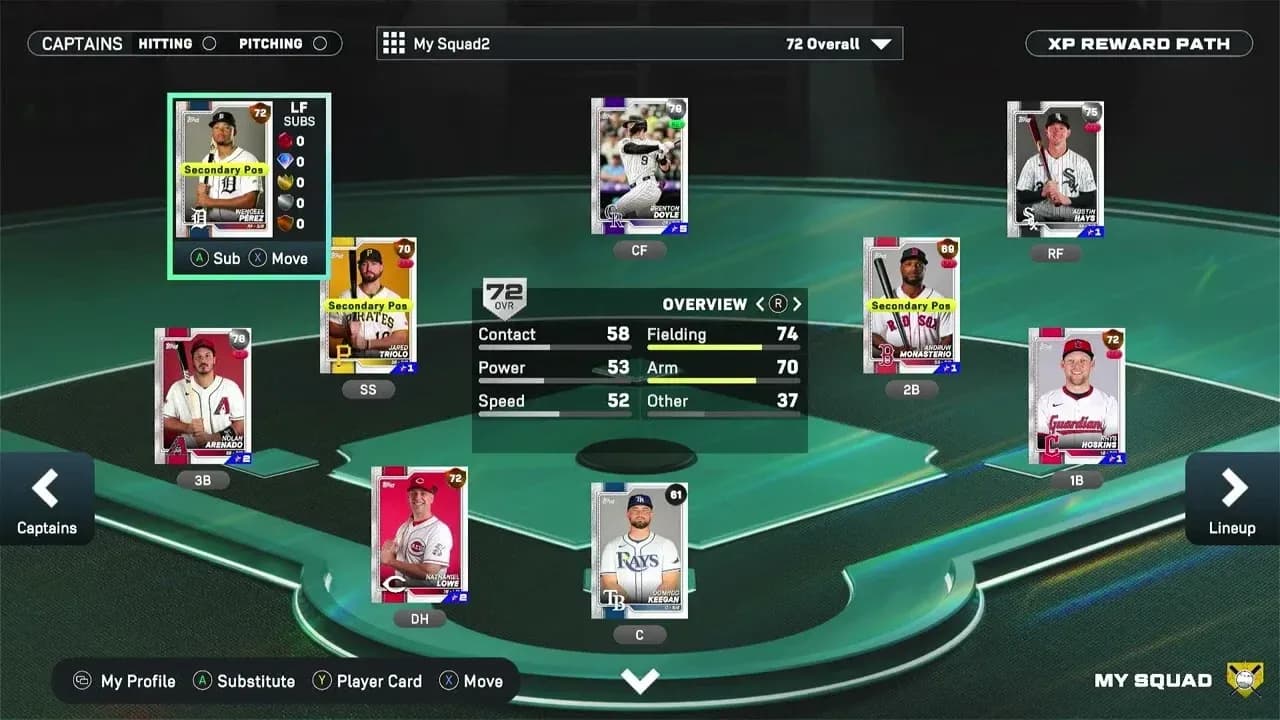
Managing your DD lineup
For more Diamond Dynasty strategy including how to structure your early progression and prioritize which programs to chase, the Diamond Dynasty beginner's guide covers the full roadmap from your first pack to a competitive roster. The rest of our MLB The Show 26 guides have everything else you need to keep building.