

MLB The Show 26 brings the most significant Franchise Mode overhaul in years, and if you're serious about running a dynasty, you need to understand every change San Diego Studio packed in. From a brand-new Trade Hub to smarter opposing GMs who actually factor in market size and rivalries, this year's front office experience feels closer to the real thing than ever before. Whether you're rebuilding a small-market club or chasing a championship with a contender, these changes will reshape how you manage your roster.
What Is the New Trade Hub in MLB The Show 26?
The Trade Hub is the centerpiece of this year's Franchise Mode update. Think of it as a dedicated front office dashboard where everything trade-related lives in one place. Instead of hunting through menus, you can now review incoming offers, monitor league rumors, track specific player targets, and manage your trade block all from a single screen.
What makes this genuinely useful is the context it gives you before committing to a deal. You can see where other teams stand in the standings, gauge how aggressive contenders are being, and spot which rebuilding clubs might be willing to move veterans for prospects.
How Does the Overhauled Trade Logic Work?
San Diego Studio didn't just add a new screen. The underlying trade logic received a full rework, and player value is now calculated using a much broader set of factors than simple overall ratings:
- Star status and franchise cornerstone designation
- Prospect potential and farm system rankings
- Positional value relative to a team's current roster needs
- Market demand across the league
- Contract size and remaining years
- Rivalries and market size between franchises
This means you won't be able to pry a cornerstone player away from a contender with a light return package anymore. Teams in rebuild mode will actively seek prospects and young talent, while playoff-chasing clubs will prioritize filling specific roster holes. Smaller market teams will also shy away from expensive long-term commitments, which mirrors real MLB front office behavior.
For a deeper breakdown of all the new gameplay systems arriving alongside these Franchise changes, the full MLB The Show 26 gameplay and logic details cover everything from hitting mechanics to defensive adjustments.
What Are Trade Delays and Fog of War?
Instant trades are gone. Trade delays and pending offers now replace the old system, giving you time to weigh your options before a deal goes through. This creates a window where you can negotiate counters, evaluate rumors, and watch whether other teams are competing for the same player.
Fog of War adds another layer by introducing uncertainty around league chatter. You won't always know exactly what's happening across the league, which keeps the experience unpredictable and forces you to make decisions with incomplete information, just like a real GM would.
The maximum trade size has also expanded to support deals involving up to eight players, making blockbuster multi-player swaps possible for the first time.
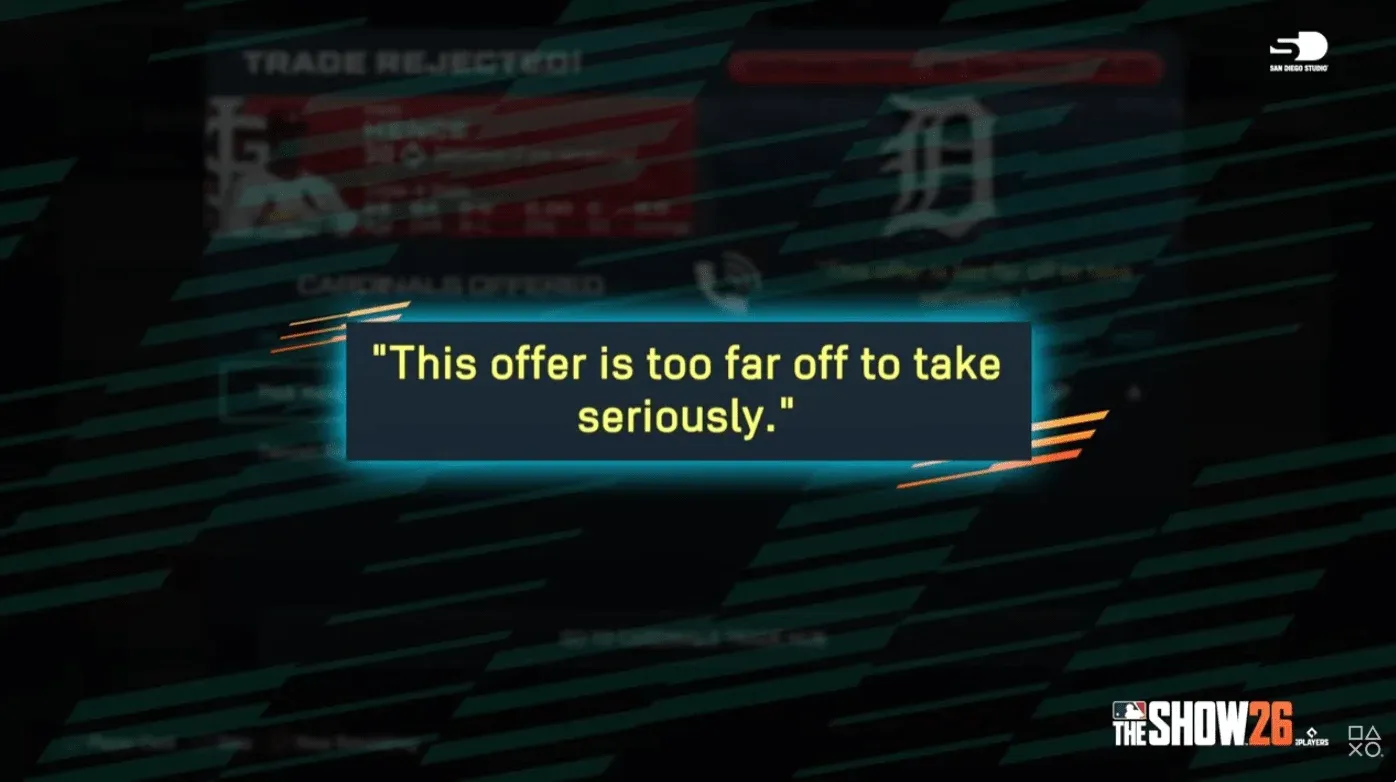
Pending trade offer screen
How Have Lineup and Pitching Logic Improved?
Beyond trades, San Diego Studio updated how the AI manages its rosters day-to-day. Batting orders now reflect modern MLB lineup construction, which means you'll see top-of-order hitters selected based on on-base ability rather than outdated archetypes.
Secondary positions are also factored into roster decisions more intelligently. A player who can cover multiple spots will be valued and deployed accordingly, which makes roster construction more nuanced on both sides of the negotiating table.
On the pitching side, bullpen fatigue is now tracked realistically. Teams won't burn out their relievers in meaningless games, and bullpen games have been added as a legitimate strategy. You can deploy a bulk reliever as your opener and manage the rest of the staff around him, either manually or through simulation, mirroring how many real MLB clubs operate today.
What Is the Streamlined Experience and How Does It Replace March to October?
March to October has been removed from MLB The Show 26. In its place is the new Streamlined experience, which serves a similar purpose but offers more control over your total involvement. Rather than playing every inning of every game, you simulate large portions of the schedule and jump in during key late-inning situations in important matchups.
With the Streamlined setting active, you'll play roughly 94 games across a full season, though this number can be customized further. The mode is designed for players who want the front office depth of Franchise without the time commitment of a full 162-game schedule.
Streamlined season schedule view
For players who want full control, the traditional Franchise experience remains intact. You can still manage every roster decision, play every inning, and handle all contract negotiations manually.
How Do Smarter AI GMs Change Your Strategy?
Opposing general managers now behave with more purpose. They evaluate trades based on their team's actual situation rather than accepting or rejecting deals on simple rating comparisons. A team sitting three games out of a playoff spot will be aggressive at the deadline. A club 15 games back in August will be looking to sell veterans and collect future assets.
This makes the trade deadline a genuinely dynamic moment in your franchise. You'll need to read the league landscape, identify which teams are buyers and sellers, and time your moves accordingly. Waiting too long on a target could mean another contender locks him up first.
AI GM trade proposal view
The development team at San Diego Studio specifically designed these changes to create a deeper and more authentic front office experience. Testing the systems shows they've succeeded in making AI behavior feel less predictable and more grounded in real baseball decision-making. The Franchise Mode feature breakdown walks through every mechanical change in detail.
Tips for Getting the Most Out of Franchise Mode
Here's how to hit the ground running with everything new in this year's mode:
- Check the Trade Hub daily during your simulated games. Rumors and pending offers can shift quickly, and missing a window means losing a target to a rival.
- Identify team archetypes early. Rebuilding clubs are your best trade partners for veterans. Contenders will demand top prospects in return for anything useful.
- Use secondary position flexibility when building your roster. Players who cover multiple spots give you lineup versatility and hold extra trade value.
- Set your bullpen roles before the season starts. With realistic fatigue tracking, burning your closer in non-save situations will cost you down the stretch.
- Customize your Streamlined game count if 94 games feels too light or too heavy. Finding your personal balance makes the mode far more enjoyable long-term.
- Monitor contract sizes before pursuing free agents or trade targets. Small market teams in your league will avoid expensive deals, which can work in your favor when you're willing to absorb salary.
For players who want to stay current on all the latest changes as the season progresses, you can browse more guides and updates covering MLB The Show 26 and other major sports titles.