
The Global Video Games Report 2025 draws on AudienceNet research spanning 22 countries and more than 24,000 active players. Active players are defined as those who game at least one hour per week, with ages ranging from 16 to 65 and older. The findings reveal a broad, aging audience whose gaming habits continue to evolve and influence the modern gaming landscape.
Shifting Demographics in a Mature Market
The research confirms that the average player worldwide is now 41 years old. Nearly half of all players sit in the 25–44 age bracket, making it the largest segment. Players aged 45–54 now outnumber those aged 16–24, reinforcing the idea that gaming is a long-term activity rather than something people abandon after their teens. Gender distribution is nearly even: 51% of players are men, 48% are women, and 1% identify as non-binary or prefer not to say.
How Players Choose to Play
Mobile is the dominant platform choice, with 55% of players using mobile devices as their primary way to game. PCs and consoles each account for 21%, while VR remains niche at just 2%. Platform preferences vary by gender: women favor mobile more heavily, while men are more likely to play on PCs and consoles. Genre preferences follow similar splits. Women lean toward puzzle and casual games, while men report stronger interest in action, fighting, shooter, and sports titles.
Age and Motivation Influence Playstyles
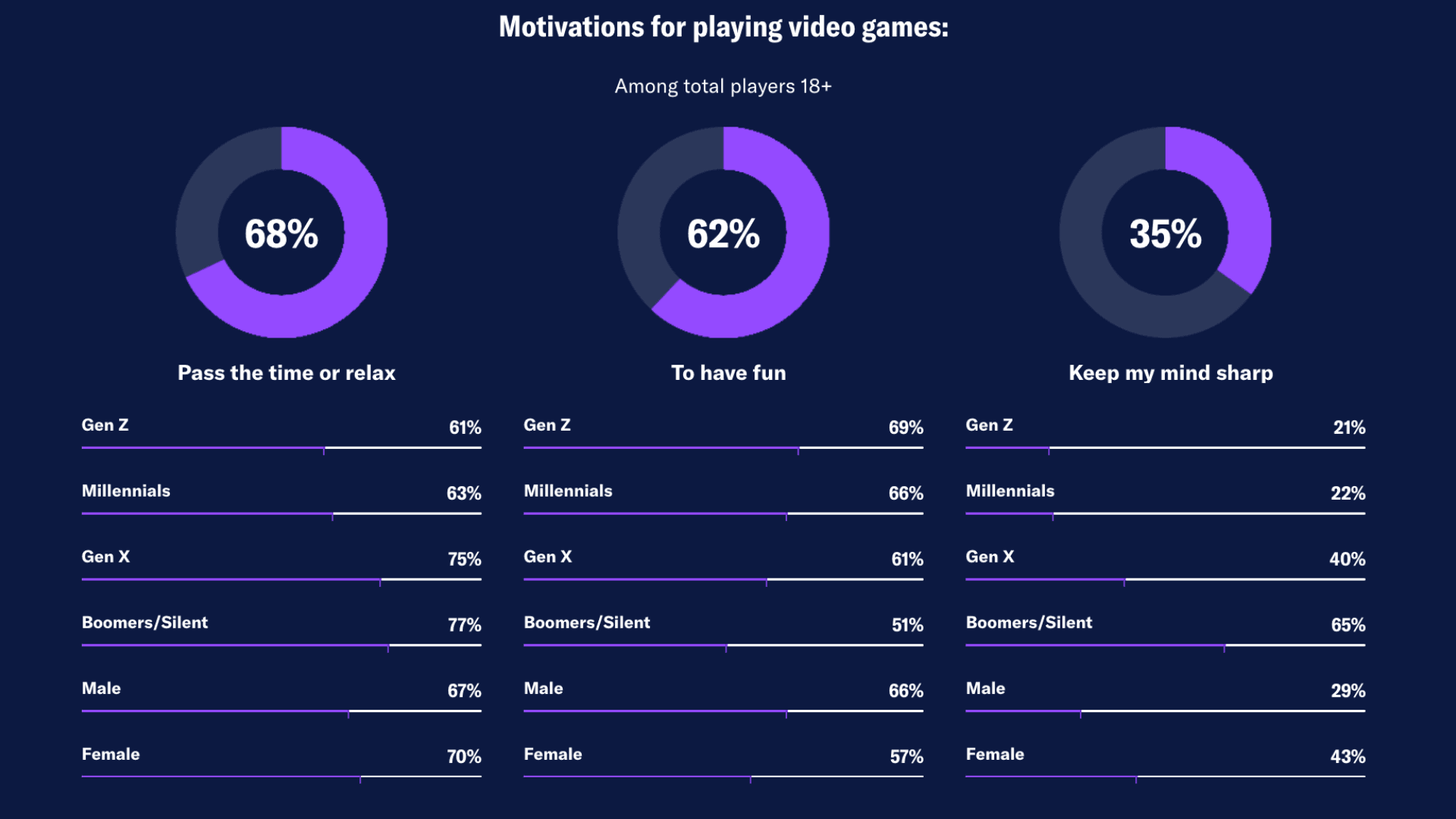
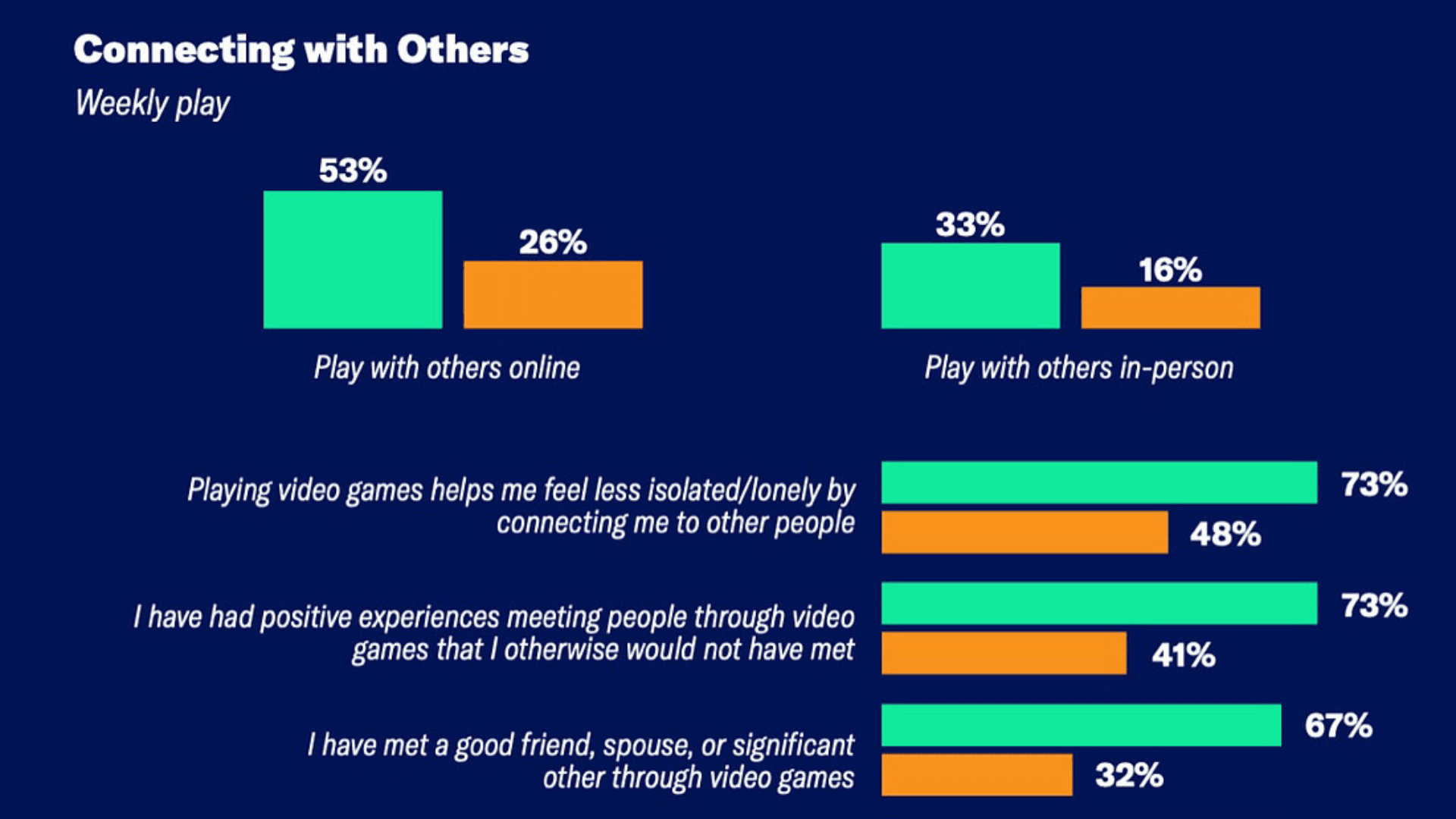
Players under 35 are more likely to play online and use voice chat, showing a stronger connection to multiplayer environments and social features. Those over 55 prefer single-player experiences and puzzle games. Younger players also link gaming more directly to emotional benefits like reducing loneliness, maintaining friendships, and staying in touch with family.
Emotional and Cognitive Benefits Remain Strong
Most players believe gaming provides meaningful personal value. Stress relief, mental stimulation, and creating inclusive spaces for people of varying abilities rank among the most common benefits. Many players also say games improve their mood and help them manage daily responsibilities. These views are especially pronounced in emerging markets, where players often describe significant emotional support from gaming.
Gaming as a Collaborative Space
In most surveyed regions, players say gaming strengthens their relationships with friends and family. A notable share of respondents play at least once a month with grandparents, a pattern that would have been rare just a few years ago. While most countries responded positively about offline co-play, South Korea showed less enthusiasm for in-person gaming sessions.
Skills Carried Beyond the Screen
Many players recognize the real-world impact of skills developed through gaming. Creativity, problem-solving, teamwork, and cognitive growth are among the most frequently cited benefits. Around half of respondents say gaming has had a positive effect on their education or career, and a significant number report that it has directly improved their professional performance. These attitudes are especially strong in MENA regions, where gaming is often seen as a pathway to opportunity and upward mobility.
Regional Trends and Emerging Patterns
Globally, mobile dominates and puzzle games remain the most popular genre. Players in Nigeria, Egypt, and India report stronger emotional benefits from gaming compared to those in North America or Europe. Online play is more common in Brazil, Nigeria, Mexico, and China, reflecting cultural differences in how gaming functions as a social tool.
Industry Tools Evolving with Player Behavior
The report also highlights new tools designed to support shifting player habits. Xsolla's adaptive offer chains, commerce-enabled Discord bot, and push notification features represent how web3-era infrastructure is reshaping digital storefronts and player engagement. These tools help developers build flexible commerce systems that respond to the increasingly dynamic nature of player behavior.
Frequently Asked Questions (FAQs)
What is the average age of gamers in 2025?
The average player worldwide is 41 years old, reflecting a mature and diverse gaming audience.
Which gaming platform is most popular worldwide?
Mobile is the most widely used platform, with 55% of players using it as their primary gaming device.
Do men and women prefer different game genres?
Yes. Women show stronger preference for puzzle and casual games, while men gravitate more toward action, shooter, fighting, and sports titles.
What benefits do players associate with gaming?
Players most commonly cite stress relief, cognitive stimulation, improved mood, and stronger social connections as key benefits.
Do games have an impact on career or education?
Around half of players say skills developed through gaming have positively influenced their education or career.
Which regions show the strongest emotional connection to gaming?
Emerging markets like Nigeria, Egypt, and India report the highest emotional benefits, including reduced anxiety and improved mood.
How common is multiplayer and co-play across regions?
Online and local co-play are more common in Brazil, Nigeria, Mexico, and China compared to Europe and North America.