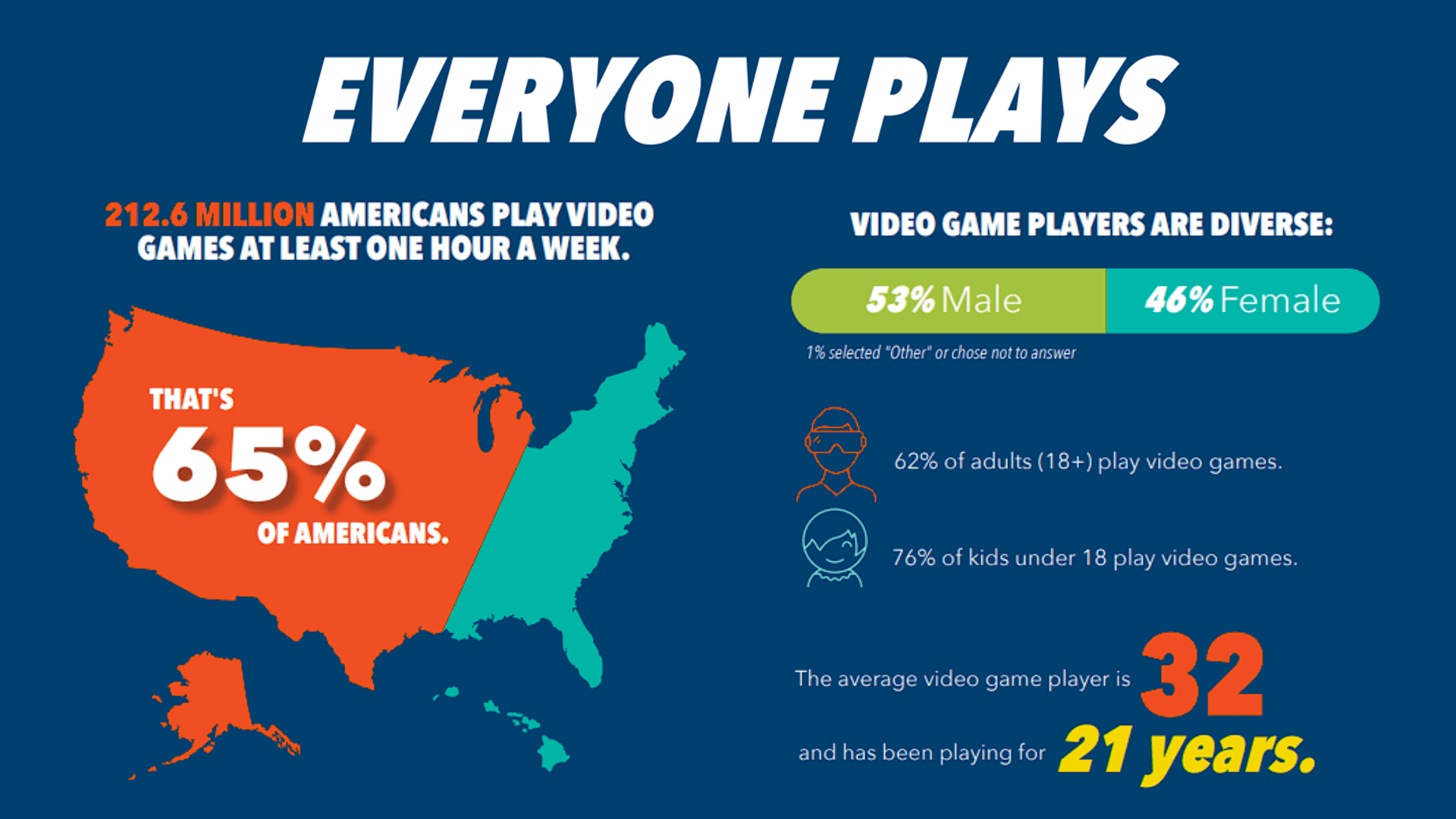

New data from the Entertainment Software Association's 2025 annual report shows video games have become a defining leisure activity in the United States. More than 205 million Americans play games, and the numbers reveal participation across every age group, income bracket, and demographic category. The report tracks how people use games, why they play, and what impact gaming has on social connection, mental engagement, and family life.
Entertainment Software Association's 2025 Report
Who plays games
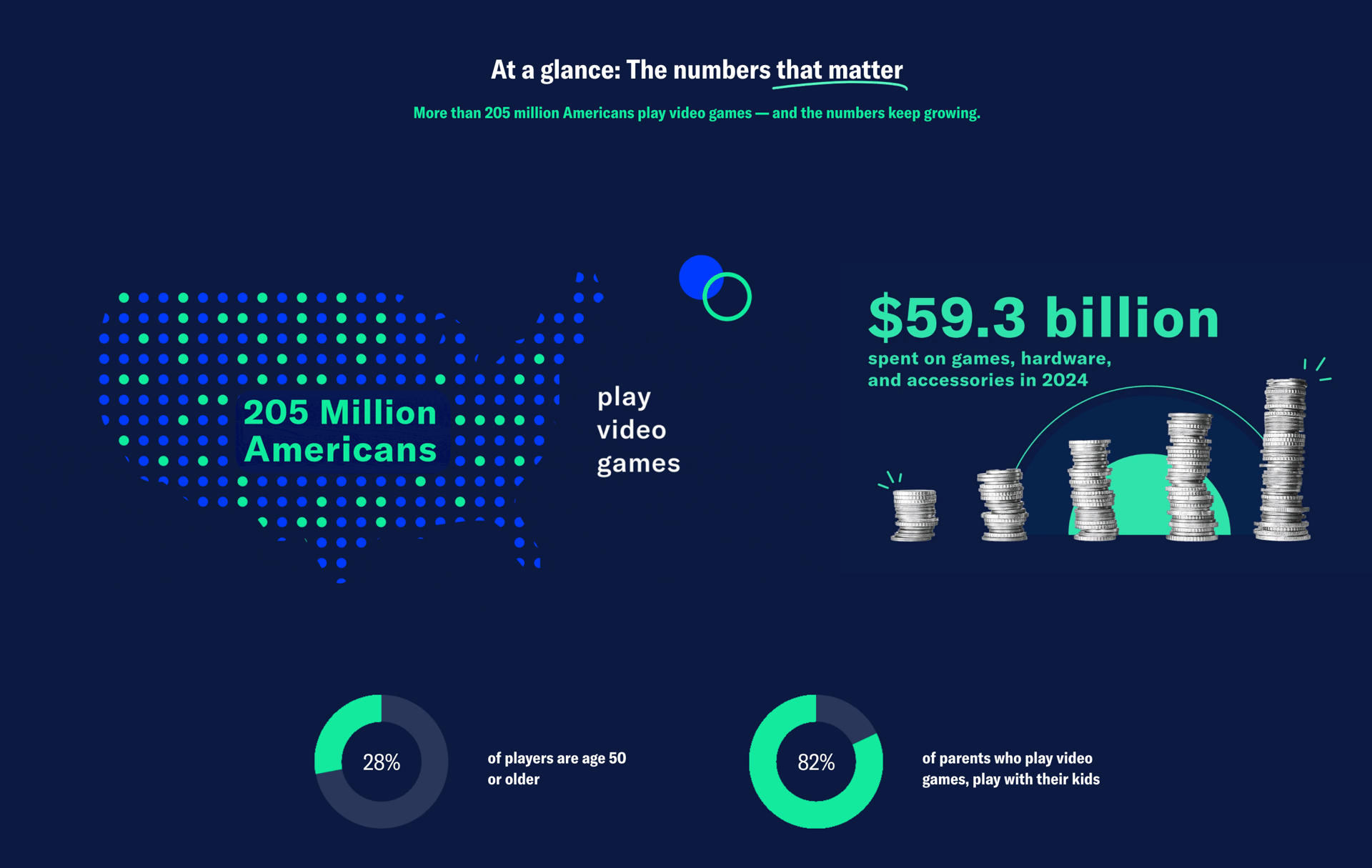
Gaming isn't a niche hobby anymore. The data shows 205 million Americans play games, with 28 percent of that group aged 50 or older. That's a significant chunk of older adults treating games as a regular part of their routine. Among parents who game, 82 percent play with their kids. Participation cuts across gender and orientation categories, reinforcing that gaming is now a default form of entertainment rather than something tied to a specific demographic.
Why people play
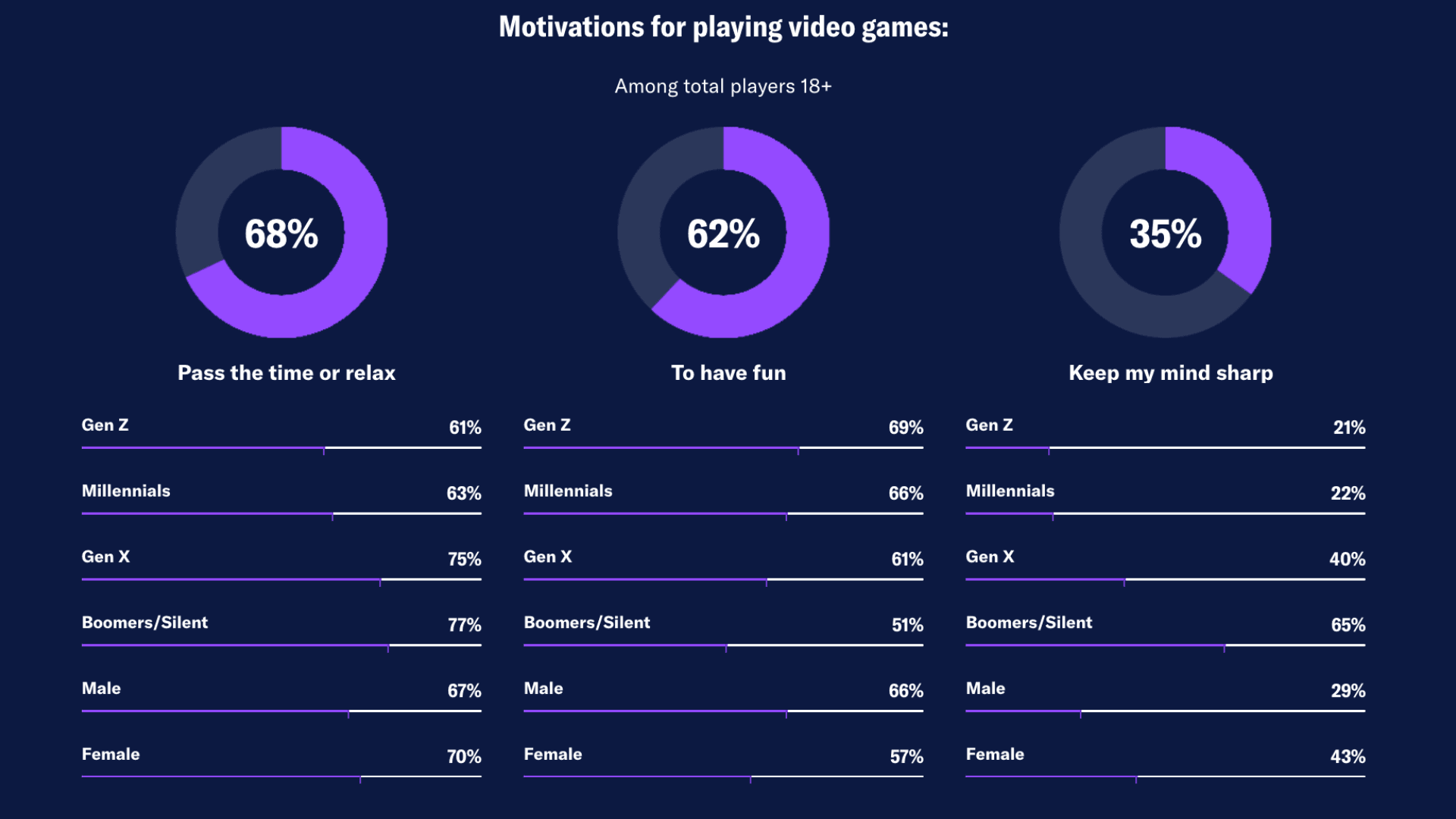
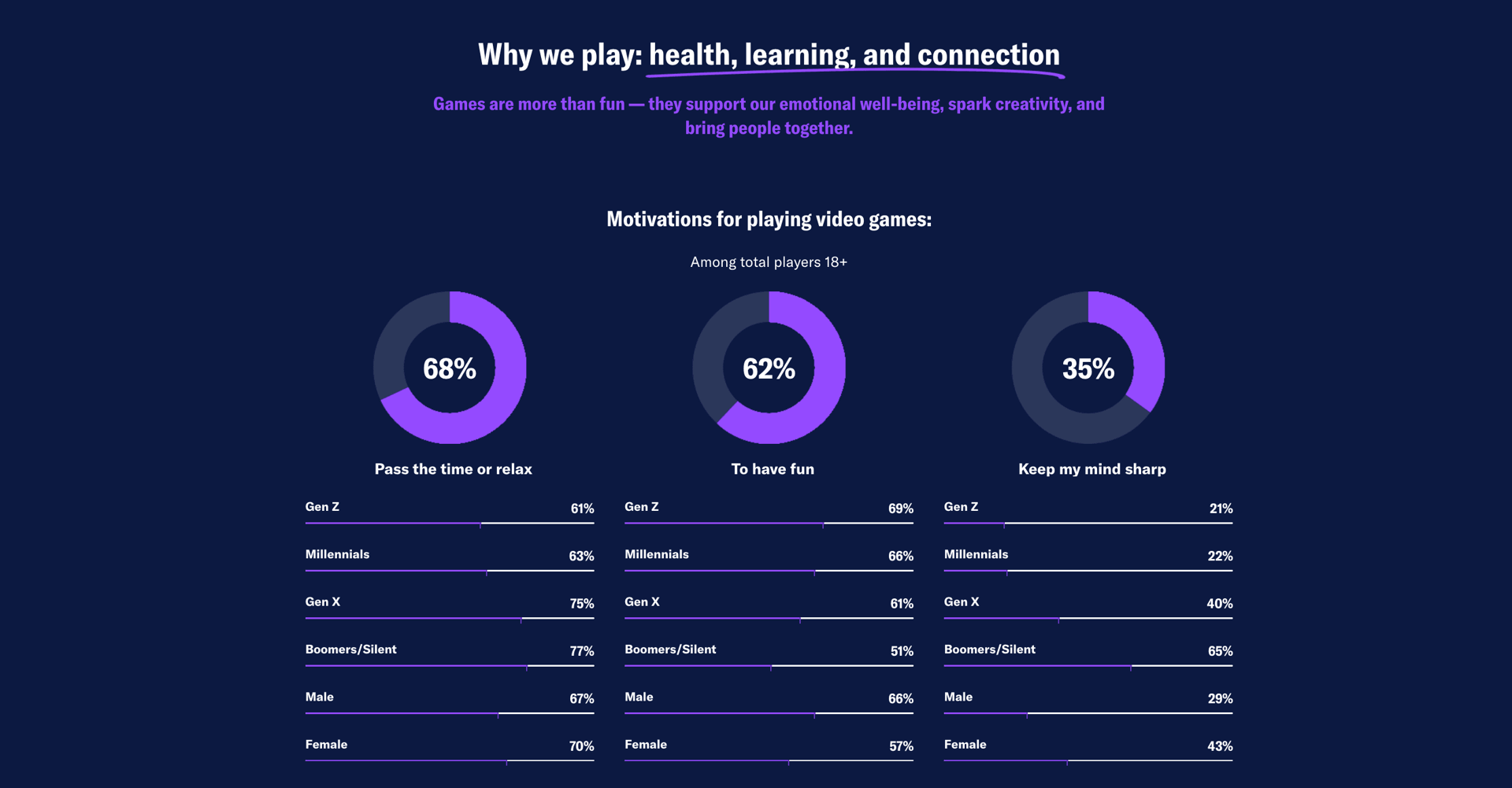
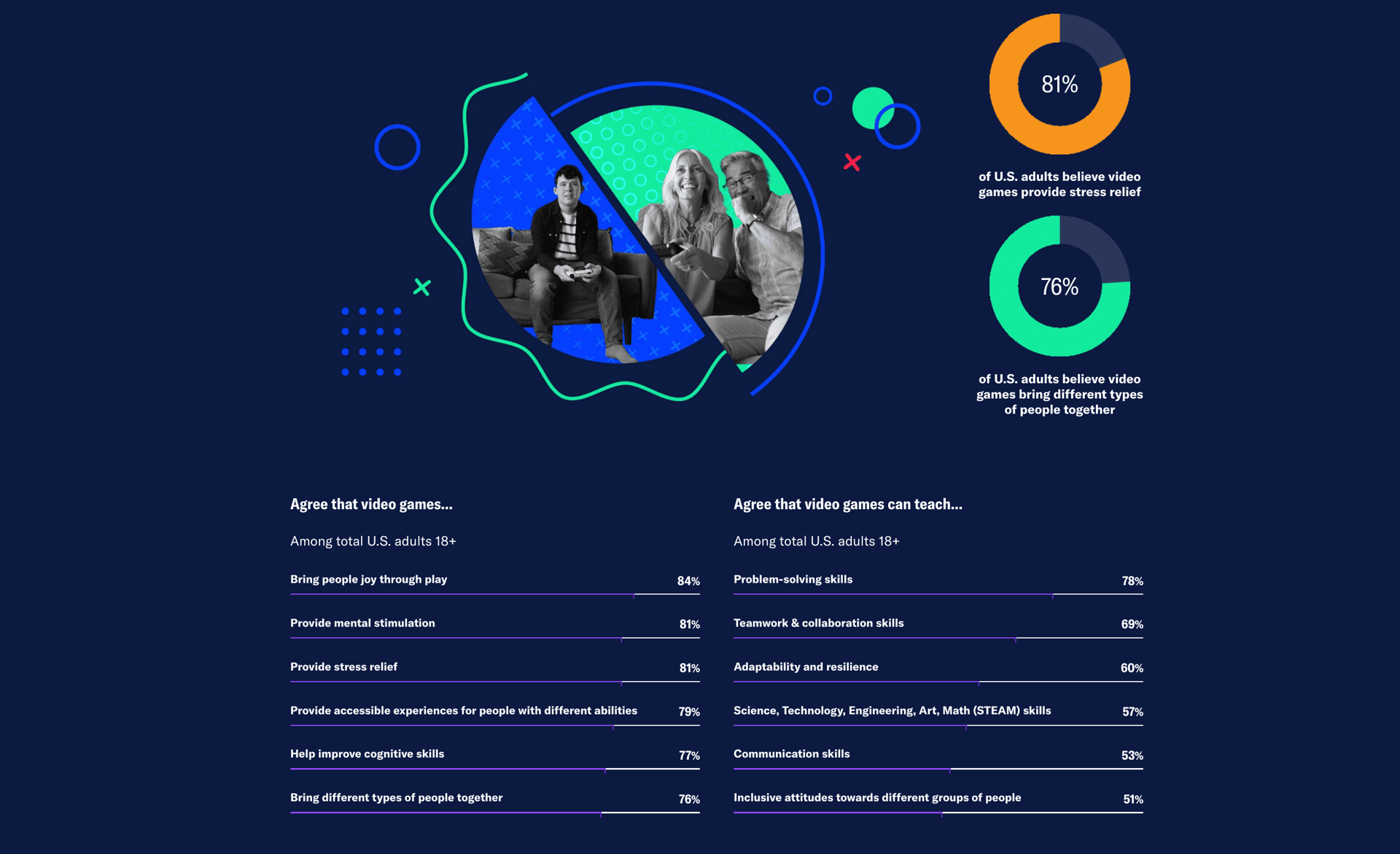
The motivations split by generation but share common ground. Among adults, 68 percent play to relax or pass time, and 62 percent play for fun. Older players lean toward keeping their minds sharp, while younger players prioritize entertainment. Public attitudes back this up: large majorities of U.S. adults believe games provide stress relief and mental stimulation. Many also see games as teaching problem-solving, teamwork, adaptability, and STEAM skills. The perception that games offer cognitive benefits is widespread, not fringe.
Entertainment Software Association's 2025 Report
Social connection through games
Games function as social infrastructure. High percentages of Gen Alpha and Gen Z play with friends, and more than half of all players game with others weekly. Online play spans every age group: 89 percent of players ages eight to ninety have played games online. Players report meeting new friends through games, staying connected with existing friends and family, and in some cases forming significant relationships. Gaming supports both casual hangouts and deeper social bonds.
Entertainment Software Association's 2025 Report
Games shape other media habits
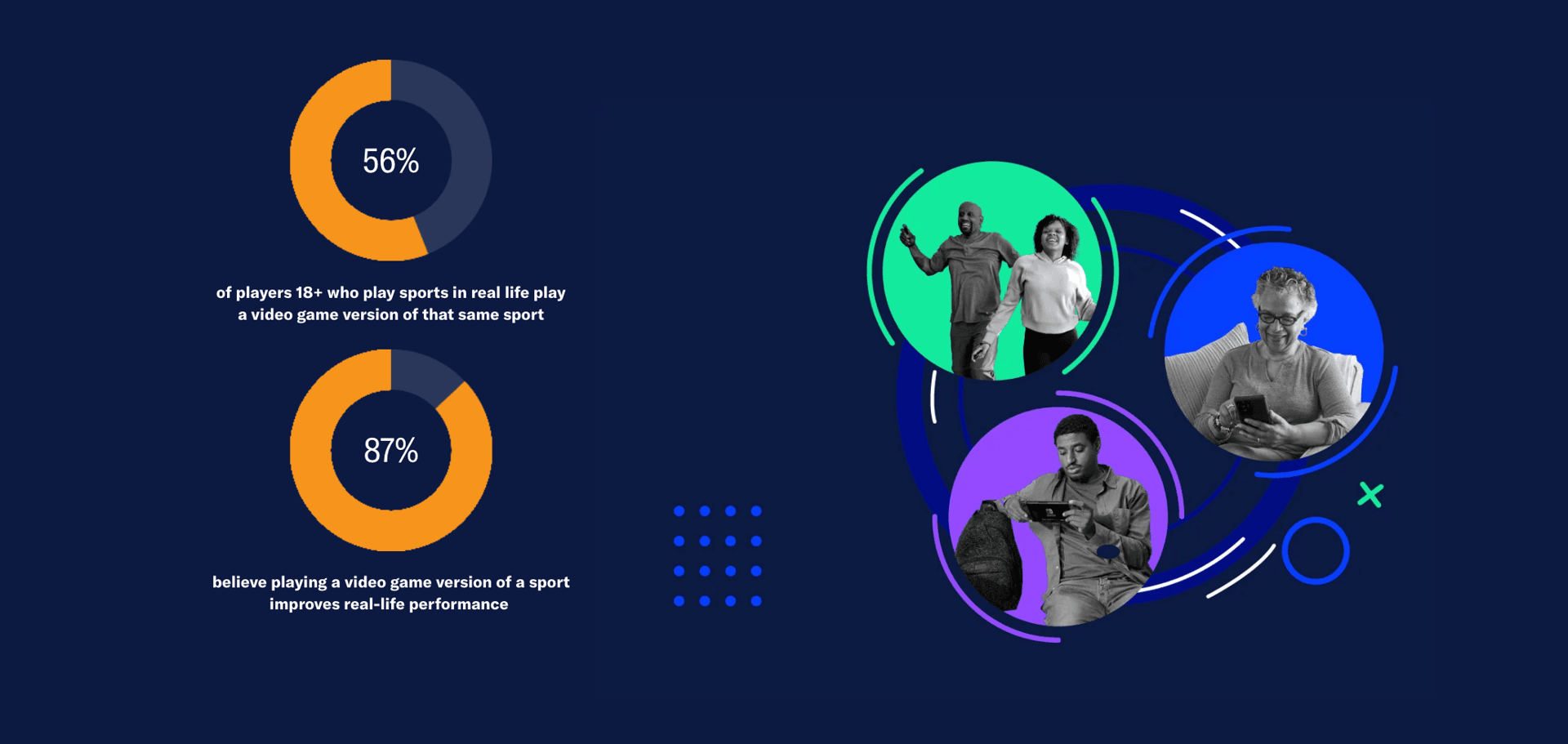
Video games influence what people watch and listen to. A portion of players discover music, TV shows, or movies through games. Among adult players who participate in real-life sports, many also play video game versions of those sports, and a majority believe playing sports games can improve real-world performance. Games don't exist in isolation. They shape entertainment choices and leisure habits across other media.
Entertainment Software Association's 2025 Report
Parents use ratings and controls
Among parents whose children play games, most know about ESRB ratings and use them to guide game selection. The data suggests parents maintain active oversight of what their kids play and have access to tools designed to support age-appropriate choices. Parental engagement with content guidance is common, not exceptional.
Accessibility remains a priority
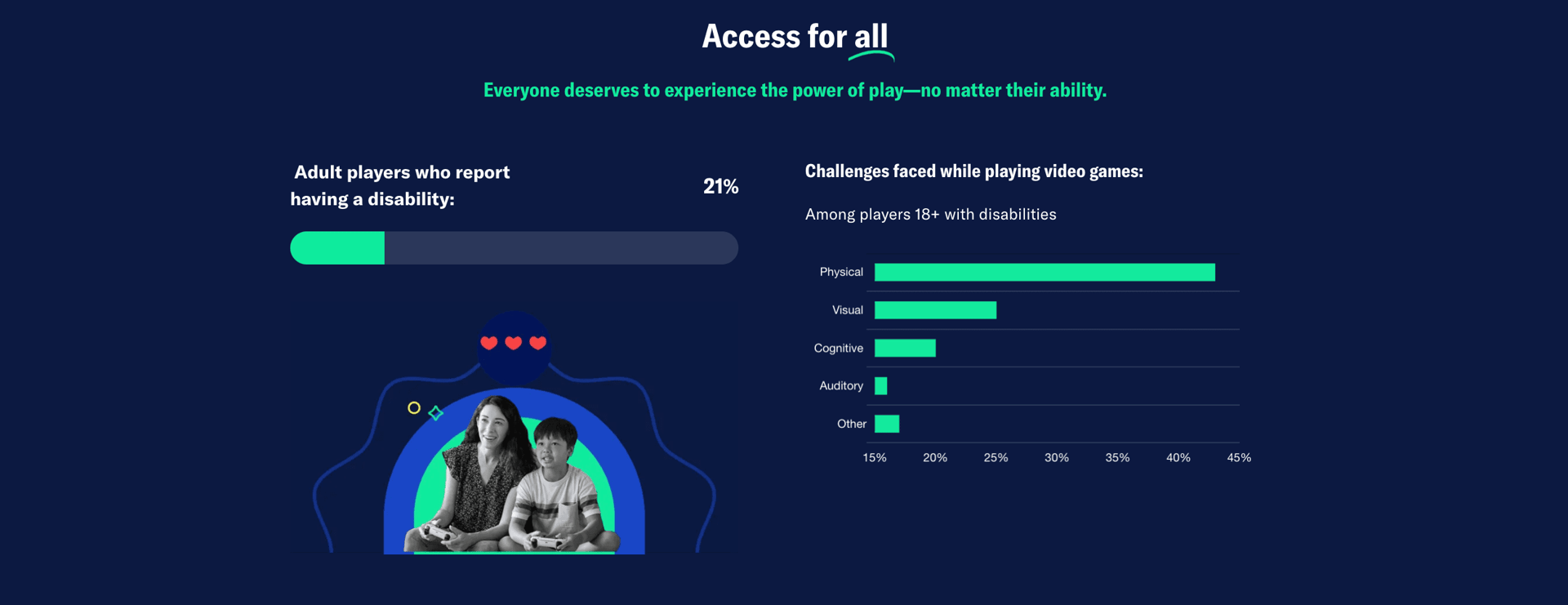
Twenty-one percent of adult players report having a disability, and the report identifies common barriers they face. In March 2025, the ESA launched an Accessible Games Initiative that introduces a tagging system to inform players about accessibility features in games. The goal is clearer information for consumers and better access for people with differing abilities. The initiative signals that accessibility is becoming a standard consideration rather than an afterthought.
Entertainment Software Association's 2025 Report
Industry spending and scale
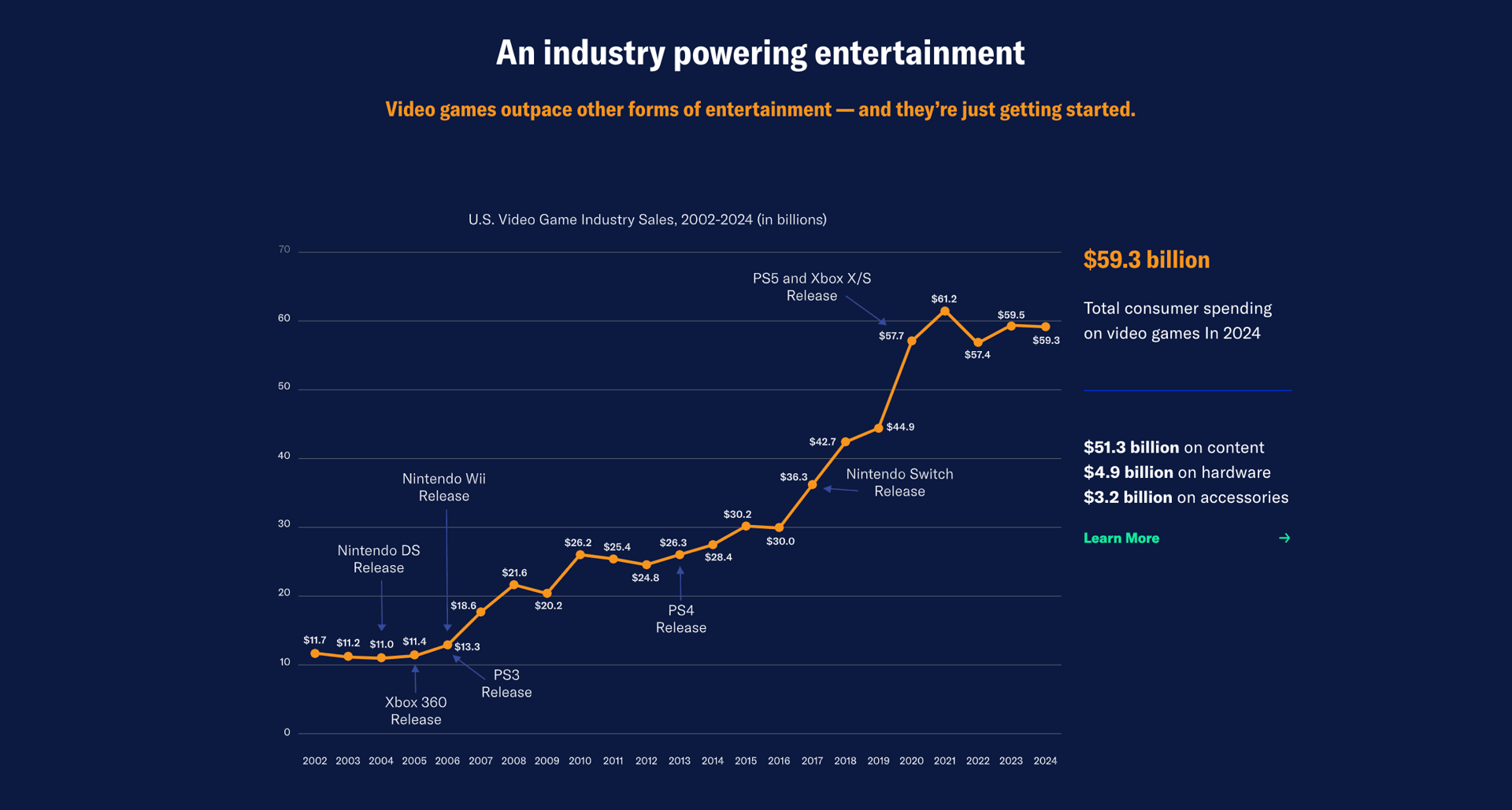
The U.S. video games industry ranks among the top entertainment sectors by consumer spending. Total spending in 2024 hit $59.3 billion: $51.3 billion on content, $4.9 billion on hardware, and $3.2 billion on accessories. The report lists top-grossing titles across console, PC, and mobile platforms, showing both blockbuster releases and the continued commercial strength of mobile gaming. These figures place gaming firmly within the broader entertainment economy.
Related research
The ESA also released a 2025 Veterans Survey examining how games support stress management, social connection, and wellbeing among veterans during and after service. Past reports are available for comparison, offering a longitudinal view of how gaming participation and attitudes have shifted over time.
Entertainment Software Association's 2025 Report
What this means
The 2025 report confirms gaming is a mainstream activity with measurable social, cognitive, and economic impact. Participation spans generations, accessibility information is becoming standard, parents actively use ratings and controls, and consumer spending remains strong. The data paints a picture of an industry that has moved from niche to default, with cultural and economic reach that continues to expand.