

About 1 in 5 games released on Steam last year carried an AI content disclosure. That number sounds manageable until you see what it does to sales.
New research from Ross Burton, PhD and Head of Product and Data at Game Oracle, examined nearly 10,000 Steam releases to measure exactly how AI disclosure labels affect commercial performance. The findings are stark: the label functions less like a transparency notice and more like a warning sign that pushes buyers away.

Use code TRYHARD33 at checkout to redeem this offer before code expires again.
Get 33% Off GAMES+ Subscription
What the numbers actually say
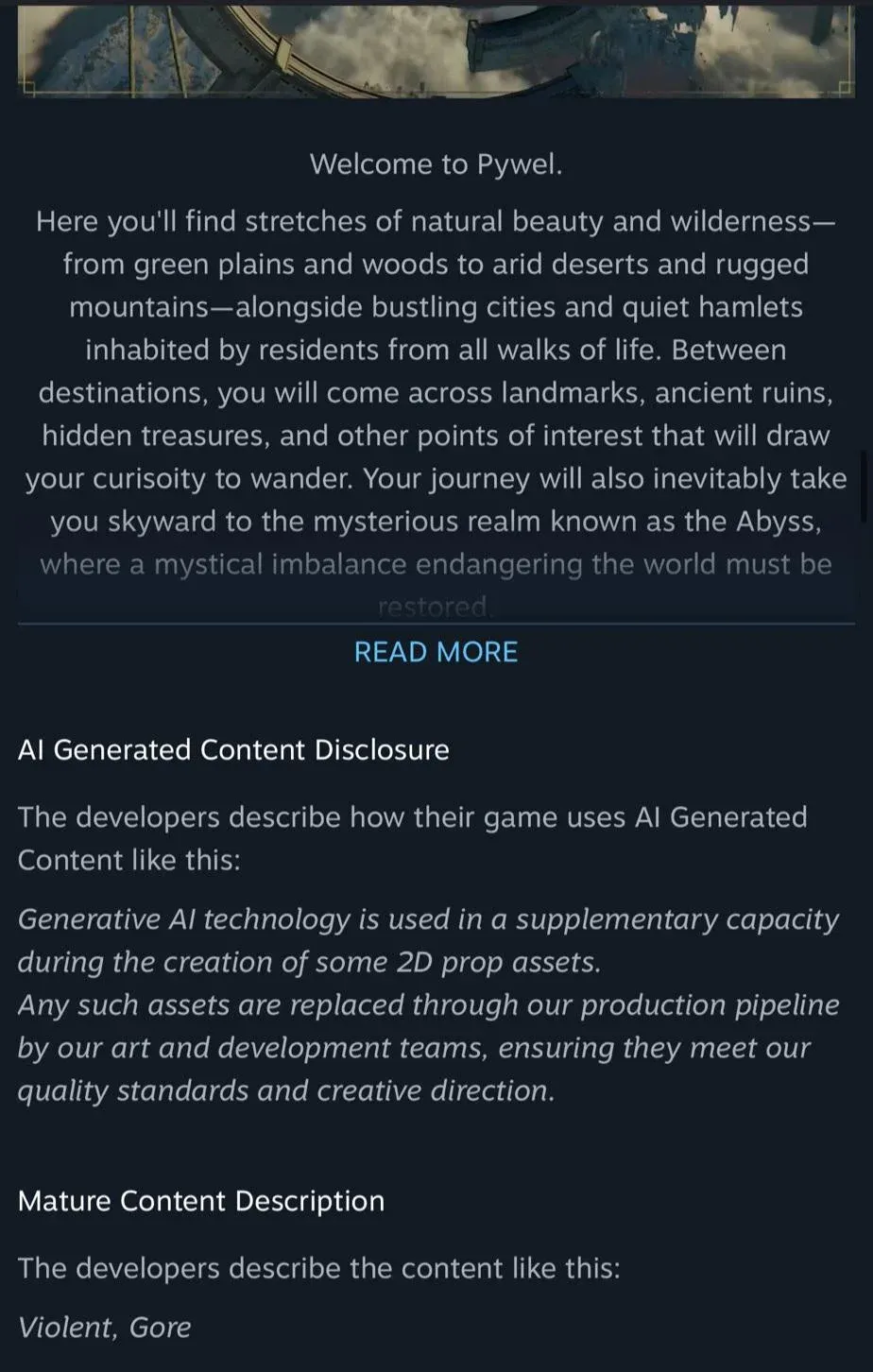
Approximately 21% of all games released on Steam in 2025 carried an official AI-generated content disclosure. That is a significant chunk of the market, and it reflects just how quickly studios, large and small, moved to fold AI tools into their production pipelines.
The key here is that the disclosure itself appears to be the problem, not necessarily the quality of the game underneath it. Buyers browsing Steam are making snap decisions, and an AI flag in the content warnings column is shifting those decisions away from a purchase.
The conversation around AI in game development has spent the last two years living almost entirely in the ethical space: Is it fair to artists? Does it devalue human creativity? Those are real questions. But Burton's data shifts the frame entirely. Studios experimenting with AI tools are now facing a measurable commercial penalty, not just a PR headache.
Before the label existed vs. now
Steam's AI content disclosure requirement is relatively recent. Before it existed, players had no standardized way to know whether a game's art, audio, or writing was AI-generated. Some studios disclosed voluntarily, others didn't, and the conversation stayed mostly in forums and comment sections.
Now that the label is a formal, visible part of a game's store page, it sits right next to content ratings and system requirements. Buyers see it at the exact moment they're deciding whether to spend money. That placement matters enormously.
The result is a blunt instrument applied to a nuanced situation. A small indie studio that used an AI tool to translate its game into six additional languages gets the same flag as one that generated all of its character art through Midjourney. Players aren't parsing that difference at the storefront level.
The indie developer problem
This is where the data gets uncomfortable for smaller studios. Large publishers have marketing budgets, brand recognition, and established fanbases that can absorb negative sentiment around AI disclosures. A solo developer or a team of five doesn't have that buffer.
For the indie market, which relies heavily on Steam visibility and organic discovery, a disclosure that discourages clicks and purchases can be the difference between a sustainable release and a financial loss. The tools that were supposed to help small teams compete are now potentially working against them at the point of sale.
What most players miss is that AI tools in game development aren't always replacing artists. In many cases, they're being used for backend tasks, like procedural generation systems or QA automation, that have no direct impact on the creative output a player experiences. The label doesn't communicate that context.
For players who want to dig deeper into games that sit at the intersection of AI themes and gameplay, the Artis Impact buying guide is worth a read. It covers a solo RPG built around AI-driven threats that handles the subject matter in a genuinely interesting way.
Where this leaves developers
The industry is now sitting with a genuine tension. Transparency tools designed to inform consumers are producing financial consequences that may discourage disclosure altogether, or push developers away from AI tools that have legitimate, non-exploitative uses.
Burton's research doesn't prescribe a fix, but the data makes the problem impossible to ignore. A 21% adoption rate with a consistent sales penalty attached means a significant portion of Steam's annual output is already operating at a disadvantage.
The next logical question is whether Steam refines how disclosures are categorized. A label that differentiates between "AI-generated artwork" and "AI-assisted translation" would give buyers more actionable information and give developers a fairer shot. Right now, the system paints everything with the same brush.
For players building their own sense of what AI-assisted games look and feel like, checking out our gaming guides is a solid way to stay informed on titles worth your time. And if you're specifically curious about games built around AI as a core mechanic, the AI Arena advanced model guide breaks down one of the more interesting examples of the genre done right.