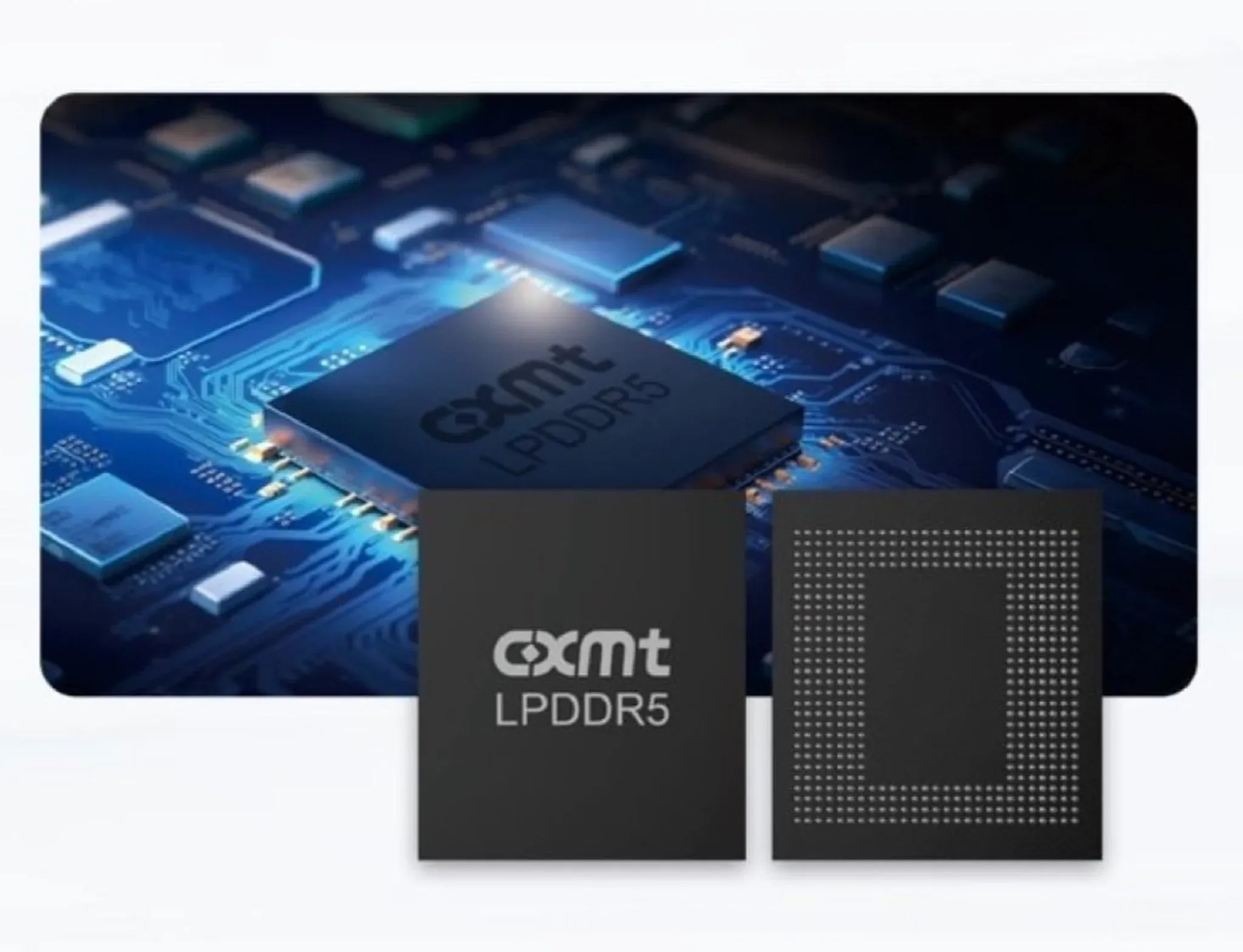


Chinese memory chipmaker CXMT Corp. (formerly ChangXin Memory Technologies) made one of the most dramatic stock market debuts in recent memory this week, with shares jumping 466% on Shanghai's STAR Market on July 28. The company briefly surpassed Tencent Holdings to become the most valuable company listed in mainland China, landing at roughly $490 billion in valuation. Tencent, valued at approximately $519 billion, is Hong Kong-listed, which is the technical distinction that keeps CXMT just below it in the broader rankings.

Use code TRYHARD33 at checkout to redeem this offer before code expires again.
Get 33% Off GAMES+ Subscription
Why this IPO hit different
The numbers around this debut are genuinely hard to process. CXMT's IPO was 212 times oversubscribed. Founder Zhu Yiming saw his net worth jump 300% to $13.9 billion in a single day. The IPO itself is China's largest since 2010 and Asia's biggest of 2026. All of this happened while the broader semiconductor sector was in the middle of a sell-off.
Here's the thing: CXMT makes DRAM chips, the dynamic random-access memory that powers AI data centres, laptops, and smartphones. It is currently the world's fourth-largest and China's largest DRAM manufacturer, holding close to 8% of the global market as of Q4 2025. The three companies above it, Samsung Electronics, SK Hynix, and Micron Technology, collectively hold around 90% of the worldwide DRAM market. CXMT is the only serious challenger outside that trio.
Forecasts put CXMT's global market share at 11% by 2028, up from 9% in early 2026. Revenue projections are even more aggressive, with estimates pointing to a 405% jump this year followed by 64% growth in 2027.
The AI angle driving the frenzy
The timing of this IPO is not coincidental. Global demand for memory chips is accelerating alongside the AI infrastructure buildout, and CXMT is positioned squarely in the middle of that demand curve. The company plans to put IPO proceeds directly into R&D and expanded production capacity.
Apple Inc. has reportedly already started testing CXMT memory chips for devices sold in China, and the company is lobbying U.S. officials for permission to source chips from CXMT and fellow Chinese chipmaker Yangtze Memory Technologies. That is a significant signal about where the industry sees CXMT's technical capabilities heading.
The geopolitical tension is real. Some U.S. lawmakers and Micron have pushed for tighter restrictions on CXMT's access to advanced chipmaking equipment. Washington has not yet settled on a unified position, and that ambiguity cuts both ways for the company's trajectory.
What this means for the gaming and tech hardware world
For gamers and tech hardware enthusiasts, CXMT's rise matters more than it might seem on the surface. Memory chip supply directly affects the price of RAM, storage, graphics cards, and consoles. A more competitive DRAM market, with CXMT eating into Samsung, SK Hynix, and Micron's combined dominance, could eventually put downward pressure on component prices globally.
What most players miss is that every GPU, every next-gen console, and every gaming PC is built around DRAM. When the memory market tightens or a new supplier scales up, the ripple effects reach the hardware shelf at your local retailer. CXMT going from 8% to a projected 11% global share is not just a finance story. It is a supply chain story with direct hardware implications.
The stock pulled back about 3% on Tuesday following the debut spike, which is a fairly standard correction after that kind of opening-day surge. The key here is whether CXMT can sustain its production ramp and close the technology gap with its South Korean and American competitors despite ongoing export control pressures.
State-owned shareholders held 36% of CXMT's shares pre-IPO, which means Beijing's strategic interest in domestic chip self-sufficiency is baked directly into the company's ownership structure. This is not a purely commercial play. It is infrastructure for China's broader technology ambitions.
For anyone tracking how the chip industry shapes gaming hardware costs and availability, CXMT's next few quarters will be worth watching closely. You can also check out our gaming guides for coverage of how hardware and tech trends connect to the games you actually play, from web3 titles like MetalCore's MCG token utility to maximizing your progression in 77-Bit.