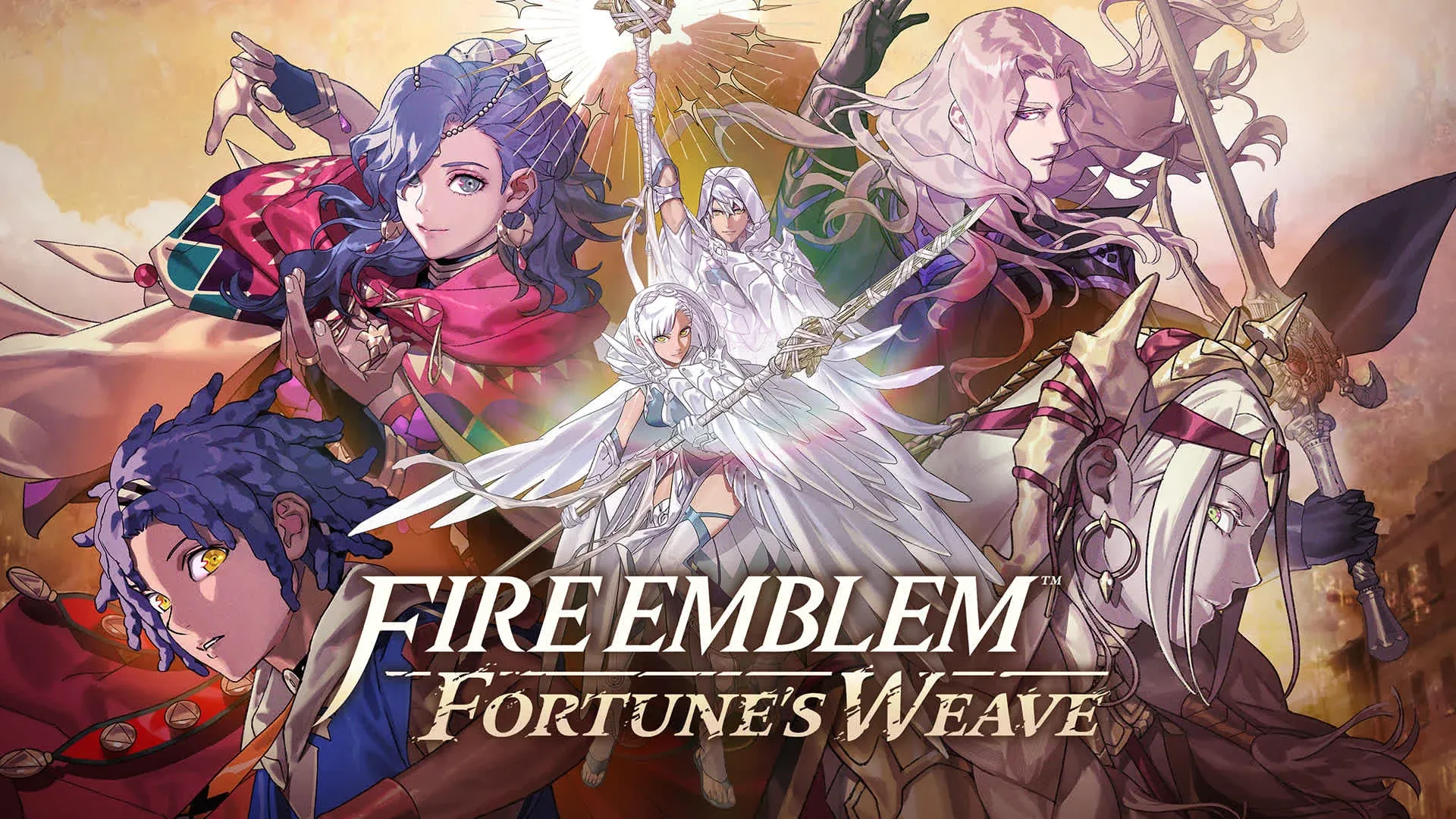


Fire Emblem: Fortune's Weave is doing something the series has never attempted at this scale: four fully differentiated story campaigns running in parallel, each with its own protagonist, mechanics, and narrative arc, all set in the same world and converging at the same grand tournament.
Having played the opening chapters of two of those four campaigns, the scope of what Nintendo and Intelligent Systems are building here is genuinely hard to overstate. This is a strategy games fan's dream and a potential nightmare in equal measure, and the line between those two things is razor thin.

Use code TRYHARD33 at checkout to redeem this offer before code expires again.
Get 33% Off GAMES+ Subscription
Four Flame Lords, four entirely different games
The four main protagonists, called the Flame Lords, can be tackled in any order. You can freely swap between their stories, which is the key design decision the whole game is built around. The two available in the preview, Leda and Theodora, already feel like they could anchor standalone Fire Emblem titles on their own.
Leda is a dancer and back-line bow user whose story opens with her father's public execution. Her campaign is a revenge quest, and her obsession with it shapes every relationship she has. Her attendants and allies see the toll it takes on her, but they follow anyway. It's a tighter, more personal story than you might expect from a game this large.
Theodora is a queen who loses her dominant arm in an ambush orchestrated by her own brother. She eventually receives a magical prosthetic taken from a legendary hero's tomb, and her campaign pivots from survival to proving herself worthy of the crown. The brother is dispatched relatively early. The real conflict is political legitimacy, not a single villain.
Here's the thing: both stories deal with dead fathers and political upheaval, but the emotional texture of each is genuinely distinct. That differentiation is exactly what Fortune's Weave needs to justify its structure, and at least in these early hours, it delivers.
The Heroic Games as a structural anchor
All four protagonists eventually converge on the capital city of Dagsion to compete in the Heroic Games, a tournament that gives the game its central organizing structure. Between qualifier rounds, you have free time to explore the city, take on sidequests, give gifts to potential recruits, and participate in skirmishes.
The recruitment system is one of the more interesting wrinkles. Each protagonist has their own pool of warriors to befriend and add to their forces. Whether you can poach units from rival Flame Lords' rosters wasn't testable in the preview window, but the system looks flexible enough that it might be possible.
Outside of combat, Leda and Theodora have completely different world-map abilities. Leda performs at local taverns to learn new Blaze Arts and sometimes gets tips from audience members about hidden material caches nearby. Theodora deploys Battalions to search for supplies and sends resources back to her people. These aren't cosmetic differences. They change how you interact with the world between battles.
Tactical combat that earns the Fire Emblem name
In battle, Fortune's Weave is unmistakably Fire Emblem. Careful unit positioning, flanking setups, job class management, and weapon triangle awareness are all present. The unique protagonist abilities add a layer on top: Leda's Spellsongs buff allies at the cost of health, while Theodora's Earthen Throw is a straight-line attack that reaches across the battlefield.
There are also dungeon-crawling segments with more traditional RPG combat that appear randomly during map exploration and occasionally as story events. In the preview build, these felt relatively simple. They work as a resource-gathering diversion, but if they stay at that difficulty level through the full game, they risk feeling like busywork.
The comparison to Fire Emblem: Three Houses is unavoidable. Fortune's Weave is clearly positioning itself as a response to that game's success, and the four parallel campaigns map loosely onto Three Houses' school-route structure. What's different is that Fortune's Weave leans harder into distinct combat identities for each protagonist rather than the social simulation hooks that made Three Houses feel like a Persona game wearing Fire Emblem clothes.
Boons of Salvation and the cross-campaign progression layer
For players who plan to run all four campaigns, Nintendo has built in a system called Boons of Salvation to smooth the experience. Completing Milestones earns karma shards that can be spent on universal buffs: XP boosts, increased weapon damage, discounted items. These apply across all four paths.
The practical effect is that progress in one campaign creates a slight tailwind for the next. It won't eliminate the early-game simplicity of each new protagonist's opening chapters, but it should make repeat playthroughs feel less like starting from zero.
Fortune's Weave is scheduled to release on Nintendo Switch 2 later this year. Players who want to get ahead on the series' strategy fundamentals can check out the Fire Emblem: Three Houses strategy guides in the meantime, since the core tactical DNA carries over. The full picture of how these four campaigns pay off when played together is still months away, but the foundation here is the most ambitious the series has attempted.