

Every generation of gaming has had its defining moment of freedom. For most of them, that moment belonged to Rockstar Games.
Grand Theft Auto 6 is almost here, and the anticipation around it is unlike anything else in the industry right now. That's not hype manufactured by a marketing department. It's the weight of nearly three decades of Rockstar consistently delivering open worlds that made every competitor look like they were working from a smaller blueprint. Here's how that happened, era by era.
The top-down years that started it all
Back in 1997, when Rockstar North was still operating as DMA Design, the original Grand Theft Auto landed on PS1 as a top-down crime game spread across three locations: Liberty City, Vice City, and San Andreas. All three names that would go on to define the franchise's geography for decades, present from day one.
The game was controversial immediately. Members of the UK's House of Lords pushed to have it banned from sale. It never happened, and the controversy arguably helped. What most players miss when they look back at that original title is how much structural groundwork it laid: an open city you could navigate freely, missions that gave you objectives without funnelling you through a corridor, and the freedom to ignore all of it and just cause chaos.
GTA 2 arrived in 1999 and added the mechanical building blocks that would carry through the entire series: a health bar, manual saving, side missions, vehicle modding, and collectibles scattered across the city. Unspectacular in isolation, but together they formed the template.
The PS2 generation changed everything
This is where the franchise stopped being a cult favourite and became a cultural force.
GTA 3 in 2001 moved the series into full 3D, and the effect on the open world genre was immediate and permanent. Liberty City felt like a place you could actually inhabit. The story featured a fully voiced cast including Kyle MacLachlan and Michael Madsen. The protagonist was silent, but the world around him wasn't. It was the best-selling game of 2001.
GTA: Vice City repeated that feat in 2002, adding a licensed 1980s soundtrack and neon-soaked visual design that remains one of the most distinctive aesthetic choices in the franchise's history. Ray Liotta voiced Tommy Vercetti. The game sold more copies than anything else that year.
Then came GTA: San Andreas in 2004. The map was more than twice the combined size of Liberty City and Vice City together, with no loading screens while exploring. It introduced swimming, stealth mechanics, character customisation through haircuts and clothing, and RPG-style skill progression. Some players still argue it's the best entry in the series. It outsold everything else that year. The PS2 era saw Rockstar go three for three at the top of annual sales charts.
Handheld spin-offs and the bridge generation
Between the PS2 era and the PS3 launch, Rockstar kept the franchise active through handheld titles. GTA: Liberty City Stories on PSP in 2005 included a multiplayer mode and custom soundtrack support that the later PS2 port quietly dropped. GTA: Vice City Stories followed in 2006 on the same platform.
GTA: Chinatown Wars on DS in 2009 deserves more credit than it typically gets. It returned to the top-down perspective of the original games but with far sharper mechanics, and it demonstrated that the franchise's core design principles worked regardless of camera angle or hardware generation.
GTA 4 and the shift toward grounded storytelling
GTA 4 launched on PS3 in 2008 and took a noticeably different approach. Liberty City was rebuilt with more realistic detail, and the game leaned harder into character and narrative than any previous entry. Niko Bellic's story had weight to it in a way that Tommy Vercetti's or CJ's didn't quite reach.
The mechanics that feel standard now were largely introduced here: the phone as a central gameplay hub, in-game TV you could watch in Niko's apartment, branching story decisions, and the ability to hail a cab and ride passively across the city. Two expansions followed, The Lost and Damned and The Ballad of Gay Tony, which arrived on PS3 together in 2010 and expanded the map's story from different character perspectives.
GTA 5 and a decade of live service dominance
GTA 5 launched in 2013 on PS3 and Xbox 360, then again on PS4 and Xbox One in 2014, then again on PS5 and Xbox Series X in 2022. Three separate console generations, the same game, and it held up each time. That says something.
The game introduced three playable protagonists, the largest map in series history at that point, an optional first-person mode, and multi-stage heist missions that required actual planning and coordination. GTA Online launched one month after the main game in October 2013, initially with technical problems and limited content, but Rockstar kept building on it for over a decade.
GTA Online today supports up to 30 players simultaneously, contains a full story with expansions, racing, businesses, stunt events, and cooperative heists. PS3 servers ran until 2021. A standalone version of GTA Online released more recently. The live service model that Rockstar built around GTA 5 became one of the most financially successful in gaming history.
The key here is what that decade of investment signals for what comes next. If Rockstar spent ten years expanding GTA Online's systems, the online component of GTA 6 will almost certainly launch with more ambition than GTA Online had at its peak. Check out the GTA 6 weapons list to get a sense of the scale Rockstar is working with for the new entry.
What GTA 6 inherits from 30 years of iteration
Every era of Grand Theft Auto added something that became standard across the industry. Top-down freedom in 1997. 3D open worlds in 2001. Map scale and character customisation in 2004. Grounded narrative in 2008. Multi-protagonist structure and live service depth in 2013.
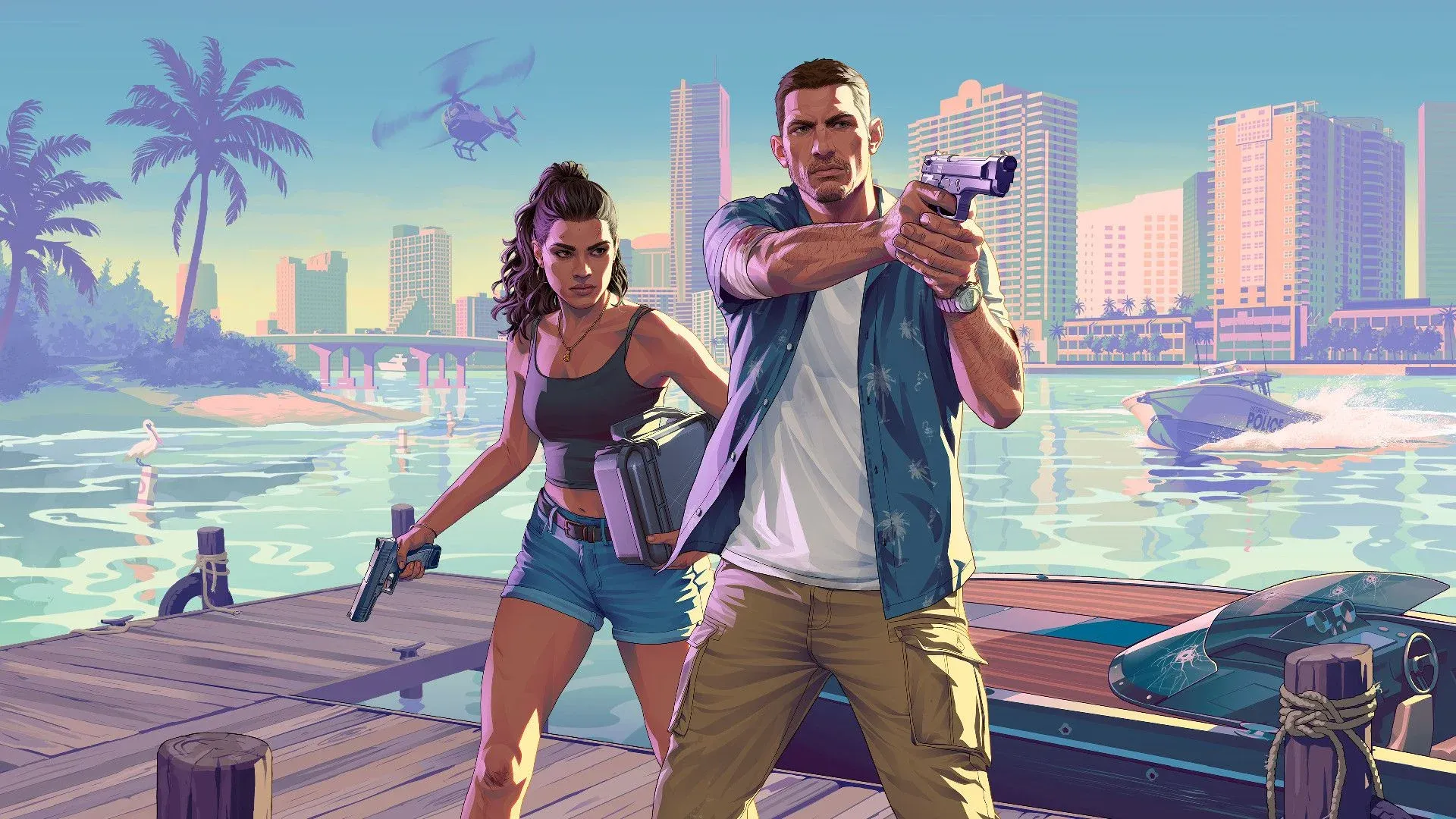
GTA 6 arrives carrying all of that. Jason Duval and Lucia Caminos as dual protagonists continue the multi-character tradition. The return to Vice City brings back the setting that defined the franchise's aesthetic peak. The confirmed details around character customisation, from hairstyles for Jason and Lucia to loadout options, point to a level of personalisation that goes well beyond anything in the series so far.
Thirty years of raising the bar is a significant legacy to carry. If the pattern holds, GTA 6 will add something that every open world game spends the next decade trying to replicate. Pre-orders are open now on PS5 and Xbox Series X|S if you want to lock in your copy before launch.