

Every time you drop into Hyrule and wander off the beaten path, you're experiencing the ripple effect of a design decision made in the early 1980s, one that pulled from PC games most Japanese players had never heard of.
Shigeru Miyamoto has spoken candidly about the origins of The Legend of Zelda in a translated interview with Famitsu, and the story is more deliberate than most fans realize. Nintendo wasn't just making another game. The studio was actively hunting for a way to pull in players who weren't being served by the arcade-style titles dominating the market at the time.
Nintendo's problem with the early NES era
Miyamoto describes the early Famicom period as a moment of real creative pressure. Arcade games and sports titles were the bread and butter, but they had a ceiling. "We had arcade-style games and sports games, but in order to capture the interest of a large number of people, we had to create new types of games," he says. "We wanted to make a different style of game where you don't continue linearly towards the goal."
That last part is the key here. Linear progression, high scores, no save states. That was the standard. Nintendo wanted out of that box entirely.
The solution came through hardware as much as software. The Famicom Disc System, Japan's floppy disc add-on for the NES-equivalent console, made it technically possible to store save data on rewritable media. That capability unlocked a completely different kind of game design. "We wanted a game where the main character was the focus, and we also wanted to utilize save data," Miyamoto explains. "With this challenge in mind we made the Disc System. It was after this that we started to think about game design."
Where the Western RPG connection comes in
Here's the thing most players miss about Zelda's DNA: it wasn't born from Japanese gaming culture at all. While Nintendo's domestic audience was focused on local titles, Western PC RPGs like the Wizardry series were building devoted followings in North America and Europe. These were deep, non-linear experiences with persistent worlds and character progression, but they were practically invisible in Japan at the time.
Miyamoto saw the appeal. "At that time, RPGs on PC were catching on abroad, but they weren't widespread at all in Japan," he says. “Nintendo leveraged the technology it had developed up until that point, and gathered the most interesting elements of these games to recreate them for the Famicom. That's how I came up with a similar game design for The Legend of Zelda.”
So Nintendo essentially filtered the best structural ideas from a genre that its home market barely knew existed, then rebuilt those ideas around its own hardware and sensibilities. The result was something that felt genuinely new to Japanese players while still scratching an itch that Western audiences recognized.
What this means for how we read Zelda today
The admission reframes the franchise in an interesting way. Zelda has always been categorized as its own thing, an action-adventure that sits adjacent to RPGs without fully committing to the genre. But Miyamoto's comments make clear that the Western RPG tradition, specifically its non-linearity and world persistence, was the direct starting point. Nintendo didn't stumble into open-world design. It studied a foreign genre, extracted what mattered, and rebuilt it.
That philosophy, absorb external influences and translate them into something distinctly Nintendo, has defined the company's approach for decades. It's visible in everything from how Breath of the Wild borrowed from open-world design trends to how Nintendo Switch 2 titles are engaging with modern multiplayer structures.
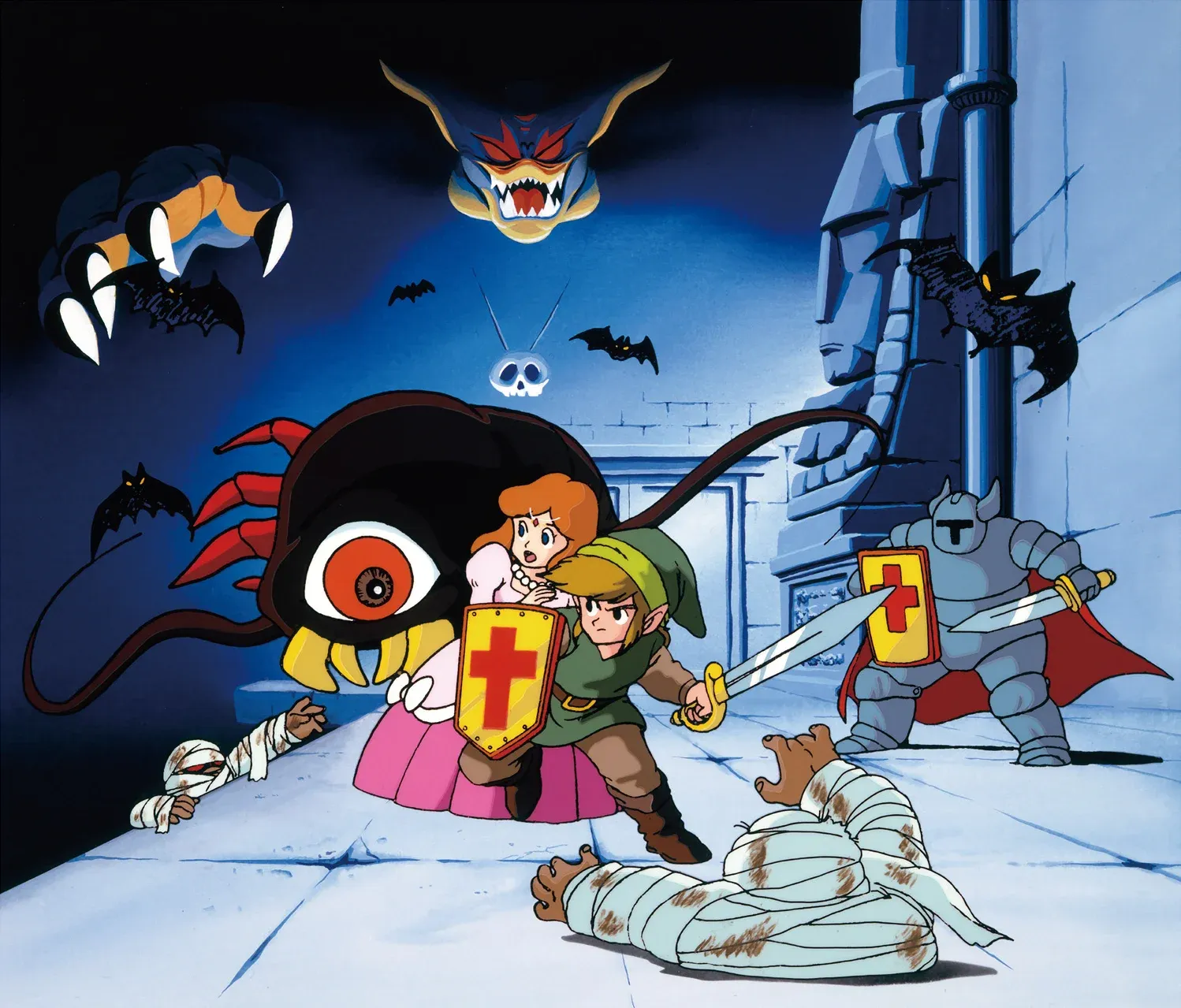
For anyone who wants to go deeper on the original game that started it all, the Legend of Zelda strategy guides are worth revisiting with this context in mind. The non-linear structure Miyamoto fought to build into that 1986 release still holds up as a masterclass in player-driven exploration, and now you know exactly where the blueprint came from.
The broader gaming guides library also puts that legacy in perspective when you trace how the genre has evolved since Link first stepped onto that overworld map nearly 40 years ago.