
To find an indie game publisher, build a playable vertical slice, shortlist publishers that have released games like yours, then use their official submission form to send a short deck, a build and a development budget. First, check whether you need one: if you want marketing rather than funding, cheaper options can let you keep your revenue and rights.

What does an indie game publisher do?
A publisher handles some of the business and release work so you can focus on making the game. Services vary, but commonly include:
- Development funding, often paid in milestones.
- Marketing and PR, including trailers, creator outreach and store page work.
- Platform relationships with Steam, console holders and storefronts.
- Services such as QA, localization, porting and ratings.
Raw Fury says it usually funds 12 to 24 months of development. Its sister studio, Fury Studios, can help with technical work and porting; certain internal work does not count toward a game's recoupable budget (Raw Fury developer resources). Not every publisher works this way, so read the specific offer.
Do you need a publisher or should you self-publish?
The choice comes down to what you lack. You do not need a publisher to release on Steam.
| Choose a publisher if you need… | Consider self-publishing if you… |
|---|---|
| Funding to finish, with no other source available | Can finish with your own money, a grant or other funding |
| Console launch or porting help you cannot staff | Can manage the release and want control over decisions and revenue |
| An established launch and marketing team | Can run your store page and community, or mainly need visibility you can buy as a service |
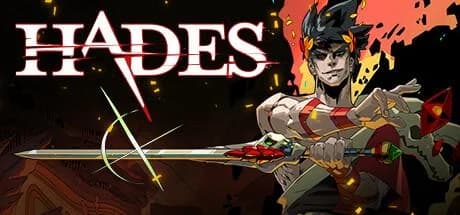
Steam lists Supergiant Games as both developer and publisher of Hades, and Team Cherry in both roles for Hollow Knight.
Steam's entry fee is small: Valve charges $100 per new app, recoupable after the product reaches $1,000 in Adjusted Gross Revenue (Steamworks documentation). Its standard revenue share is 30%, dropping to 25% above $10 million and 20% above $50 million per game, based on Valve's 2018 announcement (GamingOnLinux). Check Steamworks for current terms.
What are typical indie publisher deal terms?
There is no standard deal, and most contracts are private. The best public benchmark we found is Voyer Law's analysis of more than 100 agreements from 2017 to 2025. Its 2025 update cautions that the sample may not reflect current realities (GameDev Reports summary). Clients hiring a law firm may also differ from the wider market: these are reference points, not norms.
| Term | Figure from the Voyer Law 2025 sample |
|---|---|
| Average advance | $674,861; median $300,000; range $20,000 to over $6M |
| Developer revenue share, deals with an advance | 58.2% average; 50% median; 2.5% to 90% range |
| Developer revenue share, no advance | 67.9% average; 70% median |
| Developer revenue share, console porting | 63.1% average; 60% median |
| Advance recouped from revenue share | 93.9% of deals with an advance |
| Developer kept IP | 96.4% of deals with an advance |
| Audit rights included | 83.3% of deals with an advance |
| Average term | 6.84 years with an advance; 49.2% of all agreements auto-renew |
| Sequel rights clause | 63.49% of deals with an advance |
For a historical example, Simon Carless's 2020 review of Raw Fury's published terms found that funding plus a 15% markup was recouped at a 100% publisher rate, followed by a 50/50 net revenue split. It also reported Whitethorn Games' 10% to 25% gross revenue cut and noted that an 80/20 publisher recoup rate was becoming more common than 100% (Game Developer, 2020). Verify today's offers rather than relying on those terms.
How does game publisher revenue share work?
Revenue share usually has two phases:
- Recoupment: the publisher recovers its advance, and sometimes marketing and service costs, often at a higher publisher share.
- Post-recoup split: revenue is divided at the agreed percentage, normally on net revenue after platform fees and approved costs.
In the Voyer sample, only 48.4% of advance deals required recoupment before the developer's first revenue share payout. Check exactly when you would first be paid.
How to find and research indie game publishers
- Start with real releases. Look at Steam pages for games like yours and note their listed publishers.
- Study the track record. Check launches, review counts, update cadence and how publishers talk about their games.
- Read submission rules. Most publishers have a form and specify preferred genres and platforms. Skipping this is a common mistake.
- Talk to their developers. Ask studios they have worked with about communication, payments and marketing delivery.
- Meet them at events. Industry events and online showcases offer introductions, though the submission form remains the main route.
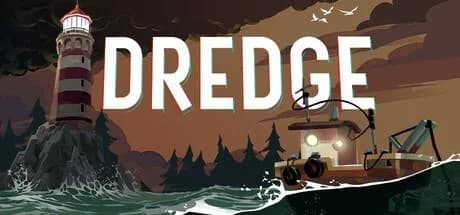
For example, Steam lists Playstack as Balatro's publisher, Devolver Digital for Cult of the Lamb and Team17 for DREDGE.
Match genre, platform and business model carefully. A publisher that has never shipped a game like yours is a weaker bet.
How to pitch a publisher
Make your pitch easy to evaluate. Raw Fury's published guidance offers a concrete template:
- Playable PC build: capture the game's essence and make it understandable to someone outside your team.
- Development budget: provide a USD budget for one PC build, calculated from burn rate multiplied by months remaining.
- Short deck: explain what you are making, why, who you are, where you want to go, what you need and when you will finish.
- Optional extras: a design document, GIFs, playthrough video or concept art.
These requirements come from Raw Fury's pitch page. Practical tips:
- Lead with the game and show the core loop quickly, rather than opening with the studio story.
- Have a Steam page live if possible. Wishlists provide useful evidence; a weak page undermines the pitch. Run it through SteamBuddy first.
- Be specific about your budget and what it covers.
- Pitch several well-matched publishers, not hundreds.
- Keep building while you wait. Negotiation can take months; do not expect an immediate offer.
Publishing contract red flags
Have a lawyer experienced in games review any offer. Attorney Kellen Voyer's GDC 2023 talk highlighted these areas (Game Developer, 2023):
- Broad license scope: limit the license to the game, not its characters or entire universe.
- Double-charged costs: check that internal marketing or QA costs are not recouped twice. Ask for audit rights.
- Vague marketing commitments: put the plan and spend in writing.
- Unpaid DLC risk: negotiate a higher royalty if you bear DLC costs alone.
- IP ownership: Voyer argues publishers should not own game IP and warns that a “50/50” arrangement can function like publisher ownership in North America.
Also watch for:
- Recoup pools larger than the advance: markups, bundled services and marketing costs increase what must be recovered.
- Long terms and auto-renewal: advance deals in the Voyer sample averaged nearly seven years.
- Sequel and competing-game clauses restricting future projects.
- One-sided termination rights: Carless flagged these in Raw Fury's agreement, contrasting them with Whitethorn's two-year renewable term and 30-day notice for both sides.
- Unclear net revenue definitions, or no reporting or audit schedule.
Alternatives if you only need marketing
Many developers approach publishers for visibility, not funding. If that is you, a marketing-only route can avoid sharing revenue or IP:
- Do it yourself first. Our guides to marketing an indie game with no budget and how to market your game cover what to do before spending.
- Plan the timing and budget. See when to start marketing your game and how to set a budget.
- Use a platform-led service.GAMES.GG offers a free game listing, a $500 Indie Spotlight, a $3K Showcase, Steam wishlist campaigns and indie game marketing to its 3M+ registered gamers. You keep your revenue and IP. It provides no funding, porting or QA, so it serves a different need. See GAMES.GG vs a publisher for a comparison written by GAMES.GG.
- Hire a freelancer or agency for a defined job, such as PR or creator outreach.
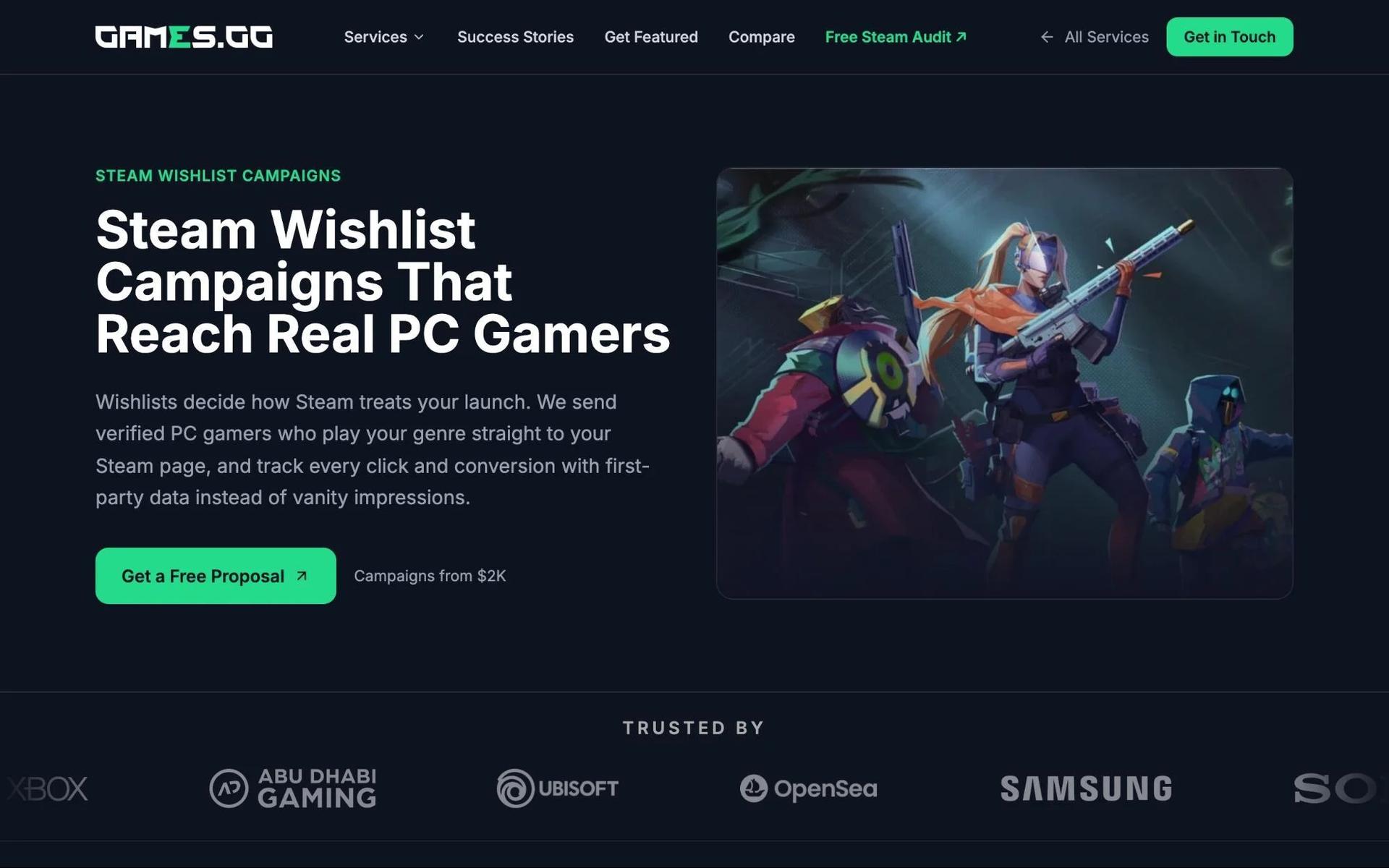
A healthy wishlist count and an audited, high-converting store page can also strengthen a later publisher pitch. If you take that route, you pitch from a stronger position.
Next step: run your Steam page through the free SteamBuddy audit, which scores it out of 100 against 20,000+ games. Then decide whether you need funding or just visibility.